Why must social science be critical, and why must doing social science be difficult?

Raju J Das

Now-a-days, we hear the word ‘critical’ everywhere. It is there even in business schools: there is indeed such a thing as critical business or management studies. Conscious (=conscientious) capitalism, capitalism with a humane face, is presumably born out of such things as critical business studies. If business schools can be critical, can others be far behind? There is critical sociology. There is critical human geography? There is critical anthropology, and so on. Not to be critical almost means stupidity.

What does ‘critical’ really mean? It means being critical of the world, i.e. its social relations and inequalities. It means critical of ideas about the world, the ideas that sustain those inequalities and the ideas that do not conform to (conceptually-laden) empirical evidence. If one says that the place of women is in the kitchen or that people have a natural tendency to be only selfish and to buy and sell for a profit, there is clearly something here to be critical of, because these false ideas have an influence on people’s actual behavior. One must be critical because one cannot assume that what exists = what can exist. Uncritical work, as Alex Callinicos has said, equates what can exist with what does exist, and thus becomes status quo-ist. We must be critical because as Marx says, what appears to be true may not be true, so we need to dig underneath the surface appearances which represent inadequately partial truth and we must be critical of ideas which reflect the surface appearances.

Marx said that one should be ruthlessly critical of everything that exists, of the existing order, ruthless in that one will not be scared of the results of one’s research, nor of the powerful people.

Intellectually speaking, one can become critical of existing ideas about society by asking a series of questions of a piece of work. For example:

  1. Does a piece of work merely describe an event/process or does it explain it as necessarily caused by specific processes?
  2. Does a piece of work give more powers to things/processes than they can possibly bear/have?
  3. Does a piece of work naturalize a phenomenon by treating it as universal when it is in fact historically and geographically specific?
  4. Does a piece of work stress the cultural/ideational at the expense of the material/economic?
  5. Does a piece of work distinguish between necessary causes/conditions from contingent causes/conditions for something to happen?
  6. Does a piece of work treat an event/process as a mass of contingencies or does it treat it as a manifestation/expression/effect of a more general process?
  7. Does a piece of work conceptualize/treat/ analyze an event/process in terms of its necessary conditions and necessary effects (which may change over time)?
  8. Does a piece of work stress harmony and stability at the expense of tension and contradiction?
  9. Does a piece of work ignore connections between things and how their connections form a system which influence the parts or does it stress the difference and disconnection between things at the expense of the connections and similarities?
  10. Does a piece of work stress the individual thoughts and actions as being more important than structural conditions of individual actions/thoughts?

But what is the practical point of being critical? What happens if a professorial colleague makes criticisms of another colleague? One could say that by making (polite) criticisms of the existing ideas of scholars, we can change their viewpoints.  Many people hold the idea that: there are interstices of capitalism which can be used in the interest of ordinary people, and that is a way of fighting against the system and that, more particularly, things such as co-ops, labour unions, NGOs, identity politics, and social-democratic type parties can be used to significantly mitigate or eradicate humanity’s problems. Now: one can critique this idea hoping that the person in question will change her/his existing idea into a more radical idea, and that this will have an impact on radical social change in the world itself.

But this assumption is, more or less, wrong, for the idea underlying the assumption is that radical social change depends on merely change of ideas and that the change of ideas of the professoriate is crucial to radical social change (=transcendence of global capitalism and installment of global economic and political democracy = socialism).

My several years in academia now tell me that it is very difficult to radically change the ideas of colleagues (and most students), although one tries! It is very difficult to make them understand that, for example, the global capitalist class relation is at the root of major social-ecological problems in different localities and in the world at large, and it must therefore be gotten rid of.

A few of these individuals may change their ideas. However, the academic stratum as such will not. As the ideological representative of the petty bourgeois and bourgeois forces, this stratum cannot relinquish its job of defending and protecting the sanctity of private property and capitalist private property. The places the academia occupies within the bourgeois ideological system define their class-role. This or that capitalist can support the cause of socialism by changing her/his side. Engels did. But the capitalist class as a whole cannot commit mass suicide. This applies to the professoriate as well. Consciously or not, they stick to their roles. Their being critical stops at the door of capitalism. At best, they may be critical of the time- and place-specific excesses of the system, of its anti-democratic nature, but not the system as such. They are critical of e-m-c (everything minus capitalism). Besides, for a large part of the professorate (the movers and shakers of the academic world, who are also often the gatekeepers of knowledge), the ideas are material because they have gripped the minds of the professoriate masses: that is, they have invested in their ideas and have made a career out of their existing ideas (e.g. professor X says that ‘labourers – and not just businesses – have an agency in making changes happen in society’ and has a large following with which come many material-cultural benefits), so why will they so easily change their ideas?

And, even if one is able to change their views, the fate of radical social change does not critically depend on what views are held by professors, although their views are not entirely immaterial. The reason is that: they are not the revolutionary class. Only the working class is that class, given proper ideological and political preparation. This is the class which must sell its ability to work for some compensation and which has very little power to decide the conditions of work and how regularly it will be employed. This class produces the source of profit, rent and interest and this class can stop its production. Genuine Marxists critique the capitalist world and ideas about capitalism which the academia holds, from the standpoint of the material suffering and political power of this class, which is an international class. A more correct understanding of society than it has is in line with its class-instinct, its material life situation, both what it is and what it can be.

The main – rather ultimate – practical reason why Marxists should be critical of existing ideas is to contribute to the raising of consciousness of this class, and not the raising of consciousness of professors. The working class (I am including the semi-proletarians in this category) is constantly being ‘deceived’: its thinking is characterized by partial truths and sometimes complete falsehood. This is a most important reason – apart from blatant coercion – why capitalism still continues. The working class takes capitalism as a natural form in which life has to be lived. This class does suffer from false consciousness, bourgeois consciousness. This is why the working class remains politically weak and the capitalist class, strong.

False consciousness is constantly being produced. It is produced for many reasons. These have got to do with two aspects of one mechanism: ‘control’. It is produced because the objective reality of the capitalist society creates falsehood (as Marx indicates in chapter 1 of Capital vol 1). Let us call it the Capital 1 Model. Because of the absence of direct control by working-subjects, over the way in which useful things are produced, because people are having to exchange the things they need for what they have, because they are having to enter market relations to satisfy their need for food and other things, they therefore think that these things by nature have a price tag, that we must always buy the things that are produced for profit in order to satisfy their need. Every person needs food. That is a universal and natural fact. But that food has to be produced capitalistically, by agribusiness or capitalist farmers, is not natural. People think it is. This idea of naturalizing something that is not natural needs critique.

False consciousness is also produced because of the presence of control of the ruling class over the working subjects’ ideas (as Marx explains in German Ideology). Let us call it the German Ideology Model. The ruling class, directly or indirectly, through the state or through civil society agencies (which are the darling of ex-Marxists dressed up as post-Marxists), controls the ideas of ordinary people and makes them believe that, for example, austerity is good, user-fees increase the quality of service, and so on. That this mechanism of control does not always work is a different matter. It is a different matter that coercion is often used to put people in their place, if after having correctly understood the reality they take action to remedy it. Force was used against even mildly anti-capitalist Wall Street occupiers in New York.

False consciousness is also produced because all kinds of petty bourgeois forces and their academic spokespersons come up with strategies which bind the working class with the bourgeois and petty bourgeois forces (e.g. join bourgeois trade unions; vote for social-democratic and even liberal type parties). The working class thinks that following these forces will bring lasting benefits. Let us call this the Lenin model (which insists on the independent political mobilization of the working class).

Because false consciousness is constantly created, there is a need for critiquing the ways in which this is created, who furthers its creation, and who disseminates it. The professors, even when they espouse some critical thought, are, at best, speaking the language of the petty bourgeoisie and left factions of the bourgeoisie (e.g. the enlightened elite who can think about the long-term and are willing to make short-term or localized and reversible sacrifices). The petty bourgeoisie has some hatred for capitalism because large producers crush them but they do not like the property-less workers either. Ideas do not hang in the air. Ideas are ultimately, if not immediately, ideas of classes and class-fractions. Critique of ideas is ultimately a critique of class and class-fractional interests therefore. Since the academia have a class-role to play – defend capitalist property with or without some reforms—their ideas reflect that function and therefore the interests of the class which they defend.

When one critiques the ideas of the academia, one really critiques the class interests they defend. Since their role is to defend these interests, whether by choice or not (and usually a combination of choice and coercion), any amount of criticism of their ideas is not going to bear much fruit. Therefore, the aim of criticism is not to change these people. The aim should be to clarify to the working class the true nature of the society and of the forces that stop the society from being changed. The point is to remove the layers of misconception from the working class which reflect bourgeois and petty bourgeois (including union bureaucracy) interests, which are ideologically produced by the academia, and which are disseminated through media (new and old), and through family, friends, and sometimes even by professors themselves. Consider the professors selling micro-credit, co-ops, ethical trade, unions, democratic revolution, or even ‘socialism in one country’, as solutions to problems of the humanity; and some of them also win prizes and grant money for knowledge mobilization and community engagements. A genuine critique of the ideas held by the academia will therefore be – can only be – from the standpoint of the interests of the proletarians. Capitalism is critiqued by many people. A proletarian critique is a different critique. It is a ‘critique of everything that exists’ type that Marx had advocated. By critiquing the ideas of the academia, genuine Marxists create conditions for the self-realization of the working class as a class, the realization of its own power and of what needs to be changed and how.

If what is said above is true and to the extent that this is true, this has implications not only for what topic one researches but how one researches it. The implication is quite precisely this: research has to be difficult labor. This is so because research has to be critical. It has to be critical for the reasons discussed at the outset (namely: it must uncover things which are not easily seen or felt; it has to be critical of various forms of exploitation and inequality, which are causes of many events/processes we observe, and so on). And, to critique – the labour of critique – is not easy – this is indicated by the 10 questions earlier provided as a sample of questions one must ask in order to be critical.

There is another reason, which is related to what is just said, why research must be difficult. Consider the following five statements.

  1. We research existing conditions (generally speaking).
  2. Existing conditions are present because forces to fight these conditions are absent.
  3. These forces are absent because it is not easy for these forces (e.g. revolutionary leadership; revolutionary ideas, etc.) to be present.
  4. So: our research presupposes difficult conditions, the difficulty of conditions. Difficulty can be thought of as an ontological condition: x wants to be but x cannot be, because of barriers to x’s existence. The current conditions exist because the future conditions cannot exist. Researching the presence of the current conditions is indirectly researching the absence of the future conditions (= the opposite of the current conditions), the absence which is caused by difficult factors.
  5. Therefore: research must be difficult. Dialectics demands this.

The vast majority of the global population, the working men, women and children, live in conditions of barbarism, the barbarism, which is described by the massive un- and under-employment, peasant dispossession, food insecurity, ecological devastation, constant threat of war, aggression and violence, and so on.  If transcending the present conditions of barbarism is a difficult affair, if intellectual and political preparation for this transcendence is a difficult affair, then researching the current conditions need to be – must be – a difficult affair. After all ideas more or less reflect the conditions which ideas purport to describe. Research must ask: why are the current conditions present? What forces support these conditions? What forces are undermining – and can completely undermine – the current conditions? Clearly, the cause of the current conditions and of their reproduction has deep roots. Ideas have to help us grasp the matter (=barbarism) by its roots. And when these ideas catch the imagination of the masses, then these ideas act like a piece of iron. Ideas do indeed matter, if we want to replace barbarism with civilization and sanity. But the ideas, not of any group or class, but of the class which potentially has the power to transcend the present barbaric condition.

Raju J Das teaches at York University, Toronto.

The Faltering Miracle Story of India

Anjan Chakrabarti

Last time Indian economy ran into a major systemic crisis was in the late 1980s; it was a result of and also the final nail in the coffin of state sponsored planned economy. Along with the collapse of Soviet style command economies, it signalled the unsustainability of economic system built on absolute or near total control of state over the economy. That crisis helped spread the philosophy of neoliberalism in India which led to this lesson from the experience of centralized planning: for the goals of rapid economic growth and poverty reduction, state control over the market economy does not work and hence should be abandoned. Since then, structural adjustment program evolved in a gradual process of two decades, giving rise to a competitive market economy that is integrated into the global economy; as against the privileged position of planners, this new paradigm also protracted the supremacy of the mass of homoeconomicus (optimizing economic man, whether as consumers or producers) whose decision making transpiring in and through this global competitive market regime are supposed to generate the economy wide outcomes that are efficient. A connection between macroeconomics and microeconomics is thus made whereby the macroeconomic outcomes were seen as result of microeconomic behaviour in a competitive market economy1; it was believed that such a connection will produce high growth rate regime, stable and reasonable inflation and rapid employment in the industrialized sector (inclusive of manufacturing and services). Among the microeconomic decision makers were, of course, the global capitalist enterprises which, like the homoeconomicus as consumers, were taken as privileged for they were seen as essential instruments of generating high value and hence growth. Evidently, this competitive market economy helped create and facilitate global capitalism in the Indian economy. It is to this structural change that we move next.

Problem over Sharing the Indian Growth Miracle

As it has evolved gradually through an assortment of reforms, this paradigm shift produced a structural remapping of Indian economy taking the shape of circuits-camp of global capital qua global capitalism and its outside world of the third2. This changing map of Indian economy was driven by, among other things, the primacy accorded to global capitalist performance, appropriation and distribution of surplus which, via high growth rate, resulted in the expansion of the circuits-camp of global capitalism; this expansion, not surprisingly, meant a war on, or primitive accumulation of, world of the third3. In other words, process of primitive accumulation ensured that growth has been exclusionary (that is, devoid of trickle down effects), where the exclusion has taken two forms: one, by excluding a vast section of the population from the benefits of rising income growth, a phenomenon symbolized by worsening Gini coefficient, and two, further exacerbating existing social inequities (based on caste, ethnicity, gender, etc.). In fact, the dual phenomena of income equality and social inequity compensated, complemented and reinforced one another to exclude a large section of Indian population (residing in the margins of the circuits-camp of global capital and world of the third) from the benefits of economic growth; while due to measurement problems there is some controversy over the exact trend of income poverty, there is a strong indication that non-income factors of poverty (captured by the statistics of malnutrition, health, education, etc.) may have stagnated or worsened. The overall picture is that of a country of increased prosperity (concentrated in the hub of the circuits-camp of global capital) but growing divide as well.

The event of exclusionary growth was acknowledged and internalized by the policy circle and many economists after the disaster of ‘Shining India’ in the 2004 elections; it was agreed that exclusionary growth must be tempered by an attempt to include the left out population through redistribution of benefits of economic growth; inclusive development aspires to become the new national trope supposedly uniting Indians, notwithstanding their other differences, into a single national project of development in which all are participants and beneficiaries4. Rather than being in conflict, this imagery sees growth and redistribution as complementarity; high growth (that is, a bigger pie) sustains greater redistribution and greater redistribution in the form of more productive investment among the poor is supposed to secure and propel further growth. Global capitalism (circuits-camp of global capital), working via the competitive market economy, is thus not only good in itself because it rapidly expands growth. It also has instrumental value by delivering direct benefits of growth (the trickle-down effect) and indirect benefit of growth (through redistribution) to reduce poverty; the former will function through market (which, in Indian case, even the policy makers agree is weak) and latter through the intervention of the state. At another level we can interpret this imagery and its underlying policy paradigm as trying to combine the capitalist performance, appropriation, distribution and surplus in a global setting that is fundamentally private-centric and the domain of redistribution which is fundamentally state-centric. Thus, Indian state now encapsulates two rationales, one liberal (minimal interference in the competitive market economy, that is, in the circuits-camp of global capital) and the other dirigiste (directly intervening and controlling the redistribution process to world of the third); it combines these to secure the modernization process via the expansion of global capitalism (or, circuits-camp of global capital). This is projected as a truly win-win situation which is a result of the gift of globalization and the benefits derived from it in the form of enhanced wealth creation that the integration of Indian economy into a globalized world has enabled. Not only has the Indian growth miracle permanently arrived, but inclusive development enables the entire country – all population – to share and be a partner in this miracle. It is of course another matter that rulers at different times spare no effort in producing and disseminating pictures (in which nothing can seemingly go wrong) that in the end turn out to be delusional; previously, the picture of ‘Garibi Hatao’ and ‘Shining India’ were two such pictures. As in all case of delusional pictures that promise everything to everybody, this imagery is now in a state of crisis in more than one ways. We discuss one axis of that crisis here.

Microfoundation of Macroeconomics: A recipe to end depression or to begin one

Critical to this imagery is the assumption of high growth; an assumption bolstered no doubt by the actual realization of high growth rate regime which in turn is traced to the creation of a competitive market economy. This in turn has led to a sacrosanct belief and robust defence of the competitive market economy as against state intervention/control, and global capitalism as against national capitalism. However, since 2007, that growth story is in serious danger which in turn forces our attention to areas taken thus far as immune from discussion. In fact, Indian economy’s trouble expands well beyond the faltering growth story. In the last five years, Indian economy has slowly moved into a terrain of a deep crisis, perhaps in the same scale as the earlier one; in the sense that it is threatening to take the semblance of a systemic crisis. This time though, with a drastically truncated role of state vis a vis market and weak trade union opposition, the blame for this crisis can only fall on the combined effects of neoliberal globalization and global capitalism or the mechanism of global capitalist centred production, distribution and consumption of goods and services functioning through the conduit of competitive market economy. Is it then the case that the source of the systemic crisis resides in the illness of competitive market economy? This though is not the accepted position; nor is it yet the point of debate in India.

The Prime Minister Manmohan Singh insists that Indian economy’s fundamentals are robust, and hence its growth story, while faltering in the short run, is protected in the long run. If we accept Keynes’ dictum that ‘in the long run we are all dead’ (by the way, five years is not a very short period either) which in no small part is substantiated by the overdetermined and contradictory processes pulling and pushing the Indian economy into who knows where, then a question crops up. What is meant by saying that the fundamentals of the economy are strong?

Now, surely the Prime Minister is not referring to the macroeconomic fundamentals. A cursory glance at the basic indicators tells a sorry story in that front: growth rate is falling, inflation rate is resiliently high (transpiring, says RBI, mostly from supply side factors which keeps accumulating the problem), falling private saving and investment, growing current account deficit driven mainly by worsening trade deficit, pressure on capital account, declining rupee value and at times volatile exchange rate movement, and increasing fiscal deficit. This is indeed a case of fundamentals gone haywire and, as we are witness to, seem to be resiliently invariant to policy changes (pertaining to fiscal, monetary and exchange rate regimes), that are transpiring rapidly, being fired from all possible directions; this trouble is in fact finding further fodder through the global inter-linkages that is exporting the global problems into India in plentiful forms (the deleterious effects from Europe being the latest addition) thereby aggravating an already difficult situation. The trouble is not merely that the economy is faltering, but that the process is transpiring in a dynamic environment that is private (competitive market economy) and global, in which many processes/variables are not under the control of the policy makers if they are at all known to them in the first place. So much has been talked about the benefits India has garnered from its integration into the global economy; our mainstream friends would like us to be held captive by that picture. Yet, the last five years have shown that there is a cost of this integration too which now can hardly be left unquestioned. A lesson: there is no win-win harvesting from globalization. Like all other entities, the process of globalization is beset with overdetermination and contradiction, throwing up unpredictable outcomes and harbouring unknown possibilities, and for a competitive market economy integrated into a globalized world thus suggests the existence and the need to not only accept the possibility of business cycles, but also of breakdowns.5

If not macroeconomics, it then appeals to reason that the Prime Minister must be referring to the strong fundamentals pertaining to microeconomic environment; this can only mean the competitive market economy materializing from the liberalization policies of the last two decades. The suggestion here is that creating such an economy has succeeded in producing a level effect meaning that the minimum bar on the growth rate has been permanently raised as compared to that of the planning era. As a justification of this position, the high growth rate in the previous decade is presented as a proof. If this is accepted then it follows that the neoliberal policies by creating this competitive market economy have done a service to India. Because of the level of high growth rate, India stands a better chance not only to become richer but also reduce its poverty sharply.6 But then, if we are to accept this, how do we reconcile a sound microeconomic environment with a disturbing macroeconomic picture? How could the two set of fundamentals be moving in opposite directions? Can they in the first place do so? This leads to a deeper issue as the following argues. Let us begin by positing the position of neoliberal economics.

That sound microeconomic picture can co-exist with a systemic failure at the macro level is contrary to the neoliberal dictum which theorizes a picture of macro economy emanating from microeconomics; this is now the consensus of mainstream neo-classical economics. In addition to this frame as being methodologically robust in the sense of capturing the concrete reality, it is further held that a competitive market economy functioning with a supporting but non-intervening state7 will produce better macroeconomic outcomes than otherwise. And, to cap it all, such an economic system rules out systemic failures such as depression; any state interference here will produce an inferior outcome or worse; the role of state is only to ensure that competitive market economy is created, facilitated and secured from outside interference (such as anti-competitive practices, trade union activities, expropriation, etc.) and its own discretionary behaviour (following rules is better than discretionary policies). The confidence entrusted in this new paradigm can be gauged from the following quote in a Nobel Prize acceptable speech by Robert Lucas.

Macroeconomics was born as a distinct field in the 1940’s, as part of the intellectual response to the Great Depression. The term then referred to the body of knowledge and expertise that we hoped would prevent the recurrence of that economic disaster. My thesis in this lecture is that macroeconomics in this original sense has succeeded: Its central problem of depression prevention has been solved, for all practical purposes, and has in fact been solved for many decades. There remain important gains in welfare from better fiscal policies, but I argue that these are gains from providing people with better incentives to work and save, not from better fine-tuning of spending flows. Taking U.S. performance over the past 50 years as a benchmark, the potential for welfare gains from between long-run, supply-side policies exceeds by far the potential from further improvements in short-run demand management. (Robert E. Lucas, JR. 2003)

Coming from arguably the chief architect of modern macroeconomics and the economist principally responsible for demolishing Keynesian macroeconomics, the claim that depression – the term mainstream economics uses to signify economic breakdown as opposed to business cycle or fluctuations around trend which is regular – is over was a colossal claim8; colossal but also one which fell flat with the appearance of the global economic crisis. It showed that macroeconomics has still not solved its self-proclaimed central problem of depression and by corollary that what some such as Paul Krugman calls the ‘voodoo’ economics of supply-side is, to put it mildly, deeply problematical. Paraphrasing Lucas from our vantage point it appears that Marx’s observation of capitalist economic system containing the seeds of its breakdown was true in 1940s as it is now. The trouble is that the ‘voodoo’ economics continue to be the dominant economics, whereby its influence is deeply rooted in the currently policy making circles; even as depression can no longer be denied, the theoretical consensus that had resulted from the anti-Keynesian revolution enacted by supply side macroeconomics continue to hold considerable sway. And this theoretical consensus presents a deeper trouble. It lies in the inherent claim that a global capitalist regime under the conditions of free agents functioning in a competitive market economy with minimal state interference will lead to the disappearance of systemic failure such as that epitomized by depression.

If evidence is any proof (and economists revel in it), then we can conclude that there must be something fundamentally wrong with the axiom of Cartesian methodological individualism in a competitive market economy producing a depression free system. This hypothesis evidently rules out any autonomy to the economic structure which is specified in neoclassical economics as general equilibrium economy. If autonomy of structure is granted then that could carry the possibility of effects and outcomes irreducible exclusively to the optimizing behaviour of the agents interacting through market.9 However, unless we agree that this autonomy exists, it becomes difficult to locate and explain the appearance of the current economic crisis that is now global. That being the case, one of the central hypotheses of neoliberal economics – if individuals are free decision-makers, markets are self-regulating and hence sufficient for the system – becomes moot. Markets do have unique features and effects, but to enable a depression free economy is certainly not its forte. In short, the framework of neo-liberalism or its economic discipline of neoclassical economics cannot explain systemic collapse. In contrast, Keynes and Marx, in their own different ways, insisted on the relative autonomy of the structure, a relative autonomy that can be traced to the structure and, at times, the non-optimizing behaviour of the agents. It has also been suggested by others that parts do not add up to the whole; that the whole also needs to be specified and analysed in terms of its unique features and effects.10 This is not to say that individual decisions and market do not influence the structure (we believe that they certain do), but that structure cannot be seen as mere sum total of individual decisions.

If, in contrast, we accept that indeed microeconomic foundations produce macro economy or even go with our milder proposition that microeconomics do partially, but not totally, influence macroeconomics, then one must confer some quarter of blame (and if we are to follow the framework of neoclassical economics) to the kind of basic economy that constitutes microeconomics. Merely blaming the Indian economic crisis on the global economic crisis (a common refrain among Indian policy makers now) sidesteps the issue we are raising here.11 Since the 1980s, the neo-liberalization of global economy has produced a transformation towards a competitive market economy, a move that was propelled by developed countries (Harvey 2007). But it is precisely in the latter that the globalness of the current crisis originated and spread.12 If indeed we accept that macroeconomic outcomes are a result of agents’ decision-action in a competitive market economy, then surely it is that economy which must be held accountable for the outcome. In other words, instead of the fundamentals of microeconomics being good, they must be seen as deeply problematical and could be held as containing seeds of instability and destruction at a broader level.

The above underscores that microeconomic environment constituted by the competitive market economy populated by free agents can and does produce economic and social disasters, as it has; far from being self-regulating, markets may produce, as it has, self-annihilation leaving people, regions and even nations struggling to survive. Therefore, not only do we get the insufficiency of the neoliberal qua neoclassical framework in locating and explaining depression (as we argued earlier), but we additionally also find its chief logical conduit of explaining the functioning of economic system faltering. Surely, there is something wrong with this microeconomic environment which in turn calls for a rethinking of the basic economic system itself, the way production, distribution and consumption of goods and services materialize under capitalist form. One the other hand, if one still maintains that microeconomic fundamentals are sound, then one will have to concede that there is a dissonance between micro and macro, that macro economy has relative autonomy including possibilities of structural failure. This realization entails the role of state including active policy ones pertaining to control of the economy, if prevention of economic crisis or disaster (or, what Lucas called depression) is considered as desirable objective. Perhaps, the current economic crisis in India shows that both the aspects are true: there is a problem with the basic economic system produced by global capitalism functioning through a competitive market economy and that a role of the state as an active and intervening player in the economy is necessitated. The importance of the first was argued for by Marx whereby he related the macroeconomic crisis (the crisis of capitalism as such) to the contradiction, convulsion and failure of the competitive market economy functioning through capitalist organization of surplus and suggested the abortion of capitalism as a recipe for resolving the macro crisis. He thus favoured a systemic transformation. The second issue was taken up by Keynes when he suggested the role of the state in overcoming recession and ensuring smoothening of business cycles by actively intervening in and influencing the market economic outcomes, a point we saw was fiercely opposed by Lucas and his acolytes. This also shows that while both Marx and Keynes appreciated the relation between macro and micro (albeit in very different ways), Marx argued that systemic instability and disaster cannot be averted except by replacing capitalism as a system and Keynes suggested that the same can be averted, that is, capitalism saved with the active role of state preventing business cycles from turning into possible depression. Not surprising, neoliberalism as an economic-politico philosophy is not just hostile to Marxism, but also to Keynesianism (even as Keynes’ objective was to save capitalism).  Leaving aside their differences, it is perhaps more pertinent to realize that the current economic crisis has demonstrated that the suggestions of both Marx and Keynes, in tandem, need to be taken seriously. Notwithstanding the Prime Minister’s allusion to strong microeconomic fundamentals which is tantamount to taking the competitive market economy as sacrosanct that in turn demands a thin role of state, it is perhaps time to seriously question this conjecture and begin a debate on both the nature of economic system and state; to debate them not distinctly, but in tandem as in overdetermination. It is my position that in the current climate of India, this is not happening, either from the Right or Left.

Conclusion

Policy paralysis appears in a different way here. The policy paralysis is a paralysis of thinking that shuts out any solution other than what is the ‘consensus.’ Competitive market economy with capitalist appropriation and distribution of surplus in a global setting is the consensus in this historical episode that, however, also continues to burden us with a growing set of changes or ‘reforms’ that deepen the very processes and system which are responsible for this crisis. How and in what manner these so-called ‘reforms’ are going to put the Indian economy back on track are issues not touched upon? How they are going to put some sanity into our present unstable and volatile systemic regime is left untouched? Indeed, in a scenario where the malaise is systemic encompassing both the micro and macro, it is hardly surprisingly that the policies are not working. The debate from the radical side is disturbing too, being stuck on the need for the enhanced role of state which is, at times, combined with the nationalist trope of self-reliance. There is hardly any questioning of, and debate on, the issue of systemic transformation and the politics of producing it. Well, we have moved from a state sponsored development paradigm to a private market economy driven paradigm, and found both to be wanting. Changing the role of state (say moving towards a strong state) without challenging the economic system is unsustainable as history has shown us; in fact, both must be addressed together. To put it somewhat differently, both the micro and macro, in tandem, must be made the object of questioning and transformation.

Anjan Chakrabarti is Professor of Economics, Calcutta University. He can be reached at chakanjan@hotmail.com.


References

Chakrabarti, A and Dhar, A. 2009. Dislocation and Resettlement in Development: From Third World to World of the Third. Routledge: London.

Chakrabarti, A and A.K. Dhar. 2012. “Gravel in the Shoe: Nationalism and World of the Third,” Rethinking Marxism, 24 (1).

Chakrabarti A, A.K. Dhar and Cullenberg, S. 2012. Global Capitalism and World of the Third. World View Press: New Delhi.

Harvey, D. 2007. A Brief History of Neoliberalism. Oxford University Press, USA

Lucas, Robert, JR. 1976. “Econometric policy evaluation: A critique”. Carnegie-Rochester Conference Series on Public Policy 1 (1): 19-46.

Lucas, Robert, JR. 2003. “Macroeconomics Priorities”, American Economic Review, Vol. 93, No.1.

Resnick, S. and R, Wolff. 2010. “The Economic Crisis: A Marxian Interpretation”, Rethinking Marxism, 22(2).


NOTES


[1] Under mainstream economics, Microeconomics is the study of choices of individual decision-makers (not matter how large) to fulfil their wants (satisfaction or profit) in the face of scarcity of resources, while Macroeconomics is the study of economic aggregates intending to capture the overall health and behaviour of entire economy (no matter how small). In the former, the emphasis moves to resource allocation and income distribution which in case of the latter is on economic growth, inflation and unemployment.

[2] Our usage of the terms such as circuits or camp of global capital and world of the third follows the theoretical insights of Chakrabarti, Dhar and Cullenberg (2012) and Chakrabarti and Dhar (2009, 2012) who produce a unique frame to analyse the historical phenomenon of modernization in the Southern setting. In the context of our current issue, these terms can be roughly put in the following way. Following liberalization policies in India, spurred by its wide industrial base (paradoxically, a gift of its previous import substitution policy) and fairly advanced higher education system (also paradoxically courtesy of its erstwhile planning system), Indian industries, particularly the big business houses, gradually adjusted to the rules and demands of global competition and, along with new enterprises, mutated into global capitalist enterprises. Through outsourcing and sub-contracting, they forged relation with local enterprises procreating and circumscribed within a nation’s border (the local market) and with enterprises outside the nation’s border (the global market); it is the symbiotic relation through local-global market that allowed the formation of circuits. Specifically, via the local-global market, global capital was linked to the ancillary local enterprises (big and small scale, local capitalist and non-capitalist) and other institutions (banking enterprise, trading enterprise, transport enterprise, etc.) and together they formed the circuits of global capital. Rapid growth of Indian economy propelled by the expansion of the circuits of global capital (inclusive of manufacturing and services) is feeding an explosive process of urbanization, and producing along the way a culture of individualization and consumerism. It is being complemented by new-fangled notions of success, entrepreneurship and consumerism, of ways of judging performance and conduct, of changing gender and caste relations, customs and mores, etc. Resultantly, what appears is a social cluster of practices, activities and relationships capturing literally the production of an encampment: we name it as the camp of global capital. This camp, especially its hub, is becoming the nursery ground of a new nationalist culture bent on dismantling extant meanings of good life in India and replacing it with the tooth and claw model that emphasizes competition, possession and accumulation. We refer to circuits-camp of global capital as global capitalism. Evidently, in the formation, global capital is taken as the privileged centre.

World of the third, on the other hand, is conceptualized as an overdetermined space of capitalist and non-capitalist class processes that procreate outside the circuits of global capital. A large number of these ‘non-capitalist’ class processes are independent, feudal, communitic, slave and communist as also capitalist class enterprises of simple reproduction type. World of the third is thus a space that is conceptually never part of global negotiations; it is outside, if we may borrow a term from Gayatri Spivak Chakravarty, the Empire-Nation exchange, which refers to exchanges within the local-global market connected to the circuits of global capital. In short, world of the third embrace an overdetermined cluster of class and non-class processes procreating outside the circuits of global capital and are knotted to markets as well as to non-market exchanges. Social cluster of practices, activities and relationships connected to the language-experience-logic-ethos of this space constitutes the camp of world of the third. It may be recalled that what for us is world of the third is for modernist discourses (like colonialism, development, and so on) third world: this is the Orientalist moment through which the modern emerges as the privileged centre. Third world supposedly contains inefficient practices and activities; as nurturing excess labour, labour that is presumed to be unproductive and hence a burden on society; as harbouring a large reserve army of the unemployed/underemployed. In short, it is re-presented as a figure of lack. The foregrounding of category of third world then provides an angularity to world of the third thereby foreclosing its language-experience-ethos-logic and discursively producing a deformation of its practices, activities and relationships. One does not get to appreciate the possibility of an outside to the circuits of global capital; one thus loses sight of the world of the third. Instead, what awaits us is a devalued space, a lacking underside – third world – that needs to be transgressed–transformed–mutilated-included. Thus, world of the third is brought into the discursive register and worked upon, but without taking cognizance of its language-logic-experience-ethos. Critically, this foreclosure of world of the third through the foregrounding of third world (or, by substitute signifiers such as social capital, community, etc.) helps secure and facilitate the hegemony of (global) capital and modernity over world of the third. Taken together, a knowledge formation emerges in which global capital and modern emerges as the privileged centres. Chakrabarti et al unravels and critiques this knowledge formation and through the return of the foreclosed world of the third lays down the contour of a contesting way to theorize the Southern context.     

[3] Chakrabarti and Dhar (2009).

[4] Chakrabarti and Dhar (2012).

[5] On being quizzed as to whether India’s integration into global economy has made it more prone to shocks and instabilities, a friend of mine holding a senior position in a financial institution suggested a few years back that one reason why competitive market economy is good is because it enhances the ability of the economic system to absorb and internalize shocks; this is by no means a very uncommon refrain, at least till a few years ago. In short, breakdowns can never happen. I wonder what he has to say now.

[6] Of course, as we have seen, the question of ‘who is exactly becoming richer or becoming richer much faster than others’ has raised a few hackles and is on its own a question of some importance.

[7] Unlike a robust state (of command economies or welfare capitalism) which believes in ‘more governance is good governance’, neoliberalism believes in, at the level of political philosophy at least, ‘less governance is good governance.’ Of course, given the astonishing quantum of plunder, violence and destruction produced in the name of ‘freedom’ that is neoliberal in nature, one must take this refrain with a grain of salt. But then we are discussing its logical conduit here.

[8] It is notable that macroeconomics not only originated in the West, but its central problem is fundamentally that of the modern market economy as well. USA and Europe have been the theatre of macroeconomics and developments there influenced the macroeconomics discipline and the policy paradigm of state not only in Europe but all over the world. In this sense, macroeconomics has been imperial in nature or should we say it is an indispensable component of any imperialist policies bent on modernization. Interestingly, three episodes of systemic breakdown or depression produced three turns in macroeconomics in the West that in turn enforced a switch in macroeconomic understanding and management across the world. The first was the depression of the 1930s that saw the collapse of the classical paradigm (emphasizing the dichotomy between nominal variables such as money and real variables such as output) which disparaged state intervention; this collapse saw the concurrent rise of Keynesianism (emphasizing that the classical dichotomy is wrong, at least in the short run) which maintained that state intervention and active stabilization policy is necessary to prevent depression and this could be done since there is a tradeoff between inflation rate and unemployment and between unemployment and output. The second episode of depression was marked by stagflation in USA (high inflation and stagnating output) in the late 1960s which even in the face of active stabilization policy to exploit the mentioned trade off failed to get the economy out of depression; this failure of stabilization policies saw the collapse of Keynesian economics and the rise of supply side or new classical economics that once again reiterated the classical dichotomy and the inherent inability of the state to improve welfare in the face of active and enterprising individuals. It was shown that not only did the state led stabilization policy fail to improve the welfare, but also that such interventions created inefficiencies of all kinds. Important in this attack was the paper of Lucas (1976) that showed that there is something methodologically wrong in the way Keynesianism poses its own macroeconomic structure; it does so, he claims, by treating the individuals as docile, passive who would not react to changes in the stabilization policies, precisely what the liberals have condemned as contravening the principle of freedom. Arguing that it is fundamentally wrong to treat the individuals as bereft of agency, he showed that with the introduction of stabilization policies, rather than being passive to the changes brought about by the state, the agents will internalize that information and change their behaviour which in totally will produce an outcome very different from (and inferior to) the case in which it is presumed (as under Keynesianism) that individuals behaviour will remain invariant to change in policies. The Keynesians, contrary to what the liberals would emphasize, took the structure as primary and tried to fit in the individual to this structure (the attempt of what came to known as Keynesian-neoclassical synthesis) when the liberal economists such as Lucas and Edward Prescott were emphasizing the method to be the other way round: individual was to be the primary unit from which the structure is to be derived; not surprisingly then, for the neoliberal economists (the new classical/real business cycle school) the neoclassical micro structure became that fundamental ground and (macro)economy was the derived general equilibrium structure over which macroeconomic analysis and policies are to be examined. The invariance principle and inability to posit the microfoundation of macroeconomics constituted the basis on which Keynesian macroeconomics was attacked and the stabilization role of state found wanting; the macroeconomics that developed through this attack and reconstruction via microfoundation become the missile head of neoliberalism in the field of economics and policy making. The third episode of systemic crisis or depression is the global economic crash since 2007 which has turned the table on neoliberal macroeconomics which has claimed that it has solved the problem of depression by legitimizing the creation of a competitive market economy made of private players and in which stabilization policy of state is not encouraged; a systemic crisis that rose not because of state or any third party intervention (since, in the last three decades they were heavily discouraged) but through the very mechanics of the private competitive market economy certainly did not do the reputation of neoliberal macroeconomics any good. What will come out of this crisis in the field of macroeconomics is yet to be seen though no doubt it has exploded the myth of the fundamental proposition of neo-liberal macroeconomics. As it stands now, macroeconomics lie in tatters.

[9] In modern macroeconomics, general equilibrium is after all the point of reference and departure (even in case of New Keynesian economics where markets are shown to be failing to clear as a result of the behaviour of agents in a free market environment).

[10] Micro and Macro divisions are typical of mainstream economics and not of Marx or Marxism. Accepting the importance of not reading or writing on Marx by reducing him to this structure, in this presentation at least, we invoke Marx with reference to this division of micro and macro for the sake of organization that includes an encounter with neoclassical economics. Rather than reducing Marx to neoclassical economics, it is to highlight the uniqueness of Marx’s contribution.

[11] This comes on top of the fact that this blaming is hardly stopping the policy makers from taking ‘reform’ policies that deepen India’s integration into the global economy and hence, by their own confession, must be taken as increasing the possibilities of transporting global crisis into Indian economy. In other words, the ammunition that they are supplying with the intent to overcome the crisis may end up deepening it. At least, the policy makers need to spell out clearly as to why this would not happen.

[12] For a superb analysis of US economic crisis, see Resnick and Wolff (2010).
A Review of “The Socialist Alternative”

Ankit Sharma

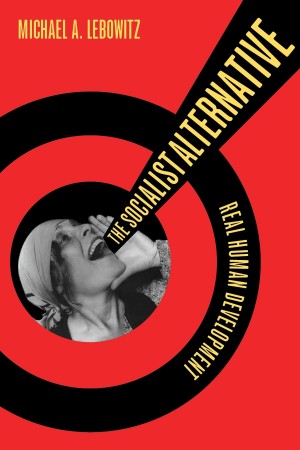
Michael A Lebowitz, The Socialist Alternative: Real Human Development, Monthly Review Press & Aakar Books, 2010

This book is part of Michael Lebowitz’s larger project of demonstrating the ever-existing necessity of a socialist transformation as the revolutionary resolution of class struggle in capitalism. It builds a theoretical foundation for such revolutionary praxis in the specific objectivity of the 21st century. Lebowitz’s previous book, Build it Now, captured and described the specificities of socialist praxis and possibilities in the Bolivarian experience of Venezuela. The Socialist Alternative can be seen as building a coherent model of an alternative by gathering and arranging the elements that are found scattered in that experience.

Like the previous one, this book too is a result of Lebowitz’s rigorous and critical engagement with the ‘socialist’ experiences/experiments of the 20th century. The author clearly critiques the stagist and statist conception of socialism that was based on an ‘uncritical’ takeover of the State and the subservience of the self-activities of the labouring classes to the purpose of strengthening the State. It was this statism that defined the socialist praxes of the 20th century.

Lebowitz also critiques the dwarfish (yet important) experiments of cooperatives and the Yugoslavian practice of workers’ self-management – where, apparently, we find an inversion of the top-bottom approach, and also a kind of workers’ control. Yet this managerial structure failed to develop a “solidarian society” that countered the segmentation and competition among workers, as the logics of commodity production and profiteering continued at the base of those experiments.

The socialist alternative that Lebowitz posits is a process – it is “the path to Human Development” constituted through self-organisational and self-emancipatory practices of the working class. The democratic, participatory and protagonistic activities would reconstitute our everyday lives in this process. “Through revolutionary practice in our communities, our workplaces, and in all our social institutions, we produce ourselves as other than the impoverished and crippled human beings that capitalism produces.” (22) After all, “revolutionary practice” is nothing but “the coincidence of the changing of circumstances and of the human activity or self-change”, as Marx defined it in one of his theses on Feuerbach. Thus, even though ownership over the means of production still remains critical for building socialism, social solidarity and active participation of every human being based upon “the elementary triangle” of social property, social production and satisfaction of social needs are central to Lebowitz’s socialist imagination. It is this centrality of solidarian revolutionary practice that emancipates socialism from its relegation to statism and productivistic technocracy. This is the vision of the “good society”, which put simply is an association where “the free development of each is the condition for the free development of all”.

——————

In Part I, The Socialist Triangle, Lebowitz begins with an analysis of the “wealth of people”, through which he arrives at the first side in the socialist triangle – the concept of social property. He locates the critical centrality of accumulated past labour (the accumulation of tools/instruments of labour and knowledge/skill) and the combination of labour in determining the level of productivity. The “free service of past labour” and the “free gift” of cooperation determine the social productive power. Further, it is the combination of labour that generates the social character of human labour, and thus constitutes even accumulated past labour as “social inheritance” or “social heritage”.

Class struggle in a sense is a contest over this social heritage – “to whom does it belong”? In fact, capitalism rests upon the alienation of social heritage, its mystification as capital and its institution as “an alien power opposed to [man], which enslaves him instead of being controlled by him” (Marx). This normalisation of expropriated social heritage and its mystification as capital is possible because of the wage-form of labour that defines capitalist production. Under this form a capitalist and worker seem to confront each other as equals and workers are projected as sellers of labour who are fully remunerated. Only when the sale of labour(-power) is differentiated from the expenditure of labour-power (labour) that we are able to understand the genesis of surplus value and thus, the nature of capitalist exploitation. Otherwise, in the mystified system, profits and productivity gains are contributed by capitalists and are results of capitalist investments, rather than the products of “the combination of living social labour and of past social labour.”

Social heritage can assert its full sociality only when this mystification is destroyed. Only when it comes under social ownership that it can serve humanity rather than individuals. Thus, is derived the first cornerstone of the elementary socialist triangle. However, the notion of social ownership, for Lebowitz, is not so given, rather it is grounded in the dynamic praxis of socialism – it implies a profound democracy from below that involves everybody in decision-making, who are affected by those decisions. Hence, it cannot be relegated to state ownership, as happened with the 20th century socialist ‘victories’ (or defeats). Also, limitation of ownership to decision-makers allows differential and privileged access to means of production on the basis of one’s location in the productive economy and thus perverts social ownership. Displacing capital by things does not destroy mystification – as its essential element, reification is still prevalent. What is important for socialism is to bring human beings to the centre of production and distribution, and to understand “the development of human capacity” as real wealth, the goal to which the “objective wealth” must become subservient. “This is the real wealth of people – rich human beings.”

Lebowitz differentiates the Marxist conception of human capacities from that of Human Development Reports, which are based on Amartya Sen’s capabilities approach. The understanding of human development in HDRs is circumscribed within a liberal framework that seeks to integrate people on the margins into the so-called mainstream – to make the capitalist system more inclusive. It seeks to remove barriers in the broadening of opportunities (capabilities in this framework are equivalent to opportunities). It certainly questions neoliberal market fetishism, but it empowers the state to complement the market.

In the Marxist framework, on the other hand, the relationship between human development and self-activity or practice, and thus simultaneous changing of circumstances and human activity or self-change is central. “The Production of People” is the process of self-creation of man. From outside to inside the formal or direct production process, every labour process is a production of human capacity. This continuum is clearly visible when popular self-development is the goal. However, even when this goal is not preconceived, as in a bourgeois economy, where labour processes are abstracted from one another (as work from leisure, whereas in fact it is the latter that readies a worker for work), the struggle of workers against capital “transforms ‘circumstances and men,’ expanding their capabilities and making them fit to create a new world.”(51)

Of course, capitalism destroyed the barriers to human development that pre-capitalist societies posed and created the conditions for the development of the rich individuality. But capitalism in order to reproduce itself generates mystifications that cognitively impoverishes workers – “they distort the worker into a fragment of a man”, who is overwhelmed by the creative power of his own labour projected as an alien power, as the power of capital.

Lebowitz here shows how to read Capital to obtain Marx’s conception of socialism – “Read Capital with the purpose of identifying the inversions and distortions that produce truncated human beings in capitalism and we can get a sense of Marx’s idea of what is ‘peculiar to and characteristic of’ production in that ‘inverse situation,’ socialism.” Most importantly, we must not be trapped by capital’s definition of production, since it is here that alienation, distortions, mystifications and fetishism are generated. It is important to reestablish human beings as both the subject and object of production, where “specific use-values … are mere moment in a process of producing human beings, the real result of social production.”(59) It is social production in this sense that is identified as the second element of the socialist triangle. In this production process, the “systematic and hierarchic divisions of labour” that create caste-like segmentations do not have any place. And, “every aspect of production must be a site for the collective decision making and variety of activity that develops human capacities and builds solidarity among the particular associated producers.”(60) It is in this light, Lebowitz critiques the experiments in “real socialism” and foregrounds the Solidarian Society – a new social form based on “protagonism and conscious cooperation by producers”.

Capitalism is based on separation and not association – where “the community of human beings is at its core a relationship of separate property owners”(66) and human development is a result of the competition of self-interests in the market. While Marx considered the experience of cooperatives in the nineteenth century important, but he viewed them as new form still reproducing “all the defects of the existing system” – not going beyond profit-seeking and competition, beyond market and self-interest. The cooperatives must themselves cooperate and become the basis for a “harmonious system of associated labour” where “many different forms of labour-power” are expended “in full self-awareness as one single social labour force.” Lebowitz, rereading Marx’s Critique of the Gotha Programme, finds the continuation of exchange relations (and thus of bourgeois right) as the chief defect of socialism. It is a defect related to the relation of distribution, which conserves inequality (on the basis of relative contributions or work). Each producer, like in capitalism, continues to be the “owners of the personal condition of production, of labour-power” and he has self-interest in maximising his income. The Yugoslav model that the chapter discusses illustrates the problems of the self-managed enterprises that “functioned in the market and were driven by one thing – self-interest. In every enterprise, the goal was to maximise income per member of the individual enterprise.”(74)

Lebowitz considers self-interest as “an infection in socialism”. It “undermines the development of socialism as an organic system”. If this infection is not fought against, it will infect “all sides of the socialist triangle”. Enterprises in order to be profit-maximisers will rely increasingly upon experts and expertise (as happened in the case of Yugoslavia), thus diluting workers management. Labour-power as property would perpetuate inequality leading to a break in solidarity. Resultant differential possession or differential development of capacities combined with self-interest would destroy the common ownership of the means of production. It is only by a conscious and continuous building of the solidarian society, thus fighting self-interest, that socialism as an organic system can emerge. In this new society, “man’s need has become a human need”, there is “communal activity and communal enjoyment”, and “the other person as a person has become for him a need – the extent to which he in his individual existence is at the same time a social being”. Further, “there is an exchange not of exchange values but of ‘activities, determined by communal needs and communal purposes’.”(79)

——————

The second part of the book deals with “the becoming of socialism as an organic system.”(85) Lebowitz considers it important to differentiate between the Being and Becoming of an Organic System – historically viewed a social system grows out of the old system, whose traces persist as defects in the new system, while any system as an organic whole “produces its own premises and thus rests upon its own foundations.”(88) Hence, the three sides in the socialist triangle in their mutual interdependence found socialism as an organic, completed system. However, this organicity of a system is a product of the historical process of “[subordination of] all elements of society to itself and [creation of] the organs it still lack in order to rest upon its own foundations”.(92) Lebowitz brings out a lucid Marxist understanding of this historico-logical process with regard to the emergence of the capitalist system by a rereading of Capital from this angle. He concludes that a capitalist mode of regulation is needed for capitalism to stand on its own foundations. There is no universal mode of such regulation; its constitution is relative to geo-historical specificities. Similarly, in the process of the becoming of socialism a socialist mode of regulation is needed, which will reproduce socialist relations and subordinate all the elements (inherited from the past) to the needs of this reproduction.

In his elucidation of The Concept of a Socialist Transition, Lebowitz begins with a critique of the stagist conception of socialism/communism which distorts Marx’s understanding of socialism/communism as a single organic system in the process of becoming. Under this scheme, a defect inherited from the past that was to be subordinated in the process of becoming was transformed into the foundational principle of the stage of socialism. Human beings were continued to be seen as private owners of labour power, and a right of inequality based upon unequal work capacity was sanctified. Still entitlements were not based upon an individual’s “capacity as a member of society”. Thus, individual material self-interest remained the lever, instead of being considered as a defect that must be fought against and subordinated.

Lebowitz recognises that in the process of their confrontation with capital workers change their circumstances and themselves – they come to understand the limits of economic action and extend their solidarian praxis to subvert capitalist class power. Through their political or class movement they win the battle of democracy and begin to rupture the logic of capital – and thus the process of the becoming of socialism based on the logic of human development emerges. It begins with a “critical rupture in property rights”, with the expropriation of the capitalists by the state in the name of the associated producers. However, such expropriation cannot have socialistic orientation unless there is a transformation of the state itself – i.e., its transformation “from an organ superimposed upon society into one completely subordinate to it”. But such transformation is imaginable only when the associated producers become possessors of production and reproduction – these would be socialist relations of production. In a sense, there must be simultaneous sustained attack on class despotism, on the “systematic and hierarchic division of labour” at both levels – the workplace and the state. And thus in this struggle, will emerge a new socialist mode of production, subordinating “all elements of society to itself”, creating organs specific to it and developing productive forces that reflect new relations of production. But to realise this the midwifery of a socialist mode of regulation is needed. Lebowitz is unequivocal in asserting that this will not be a despotic hierarchical state, but “the political form for the social emancipation of workers”, which will assert workers’ protagonism, not substitute it. It will be “the power of decentralised, democratic, ‘self-working and self-governing communes’ – a state of the Paris Commune type.”(119) Lebowitz cautions that there is no linear irreversibility in this process of socialist transition”: – every step is contested – “the logic of the old system weighs like a nightmare on the brains of the living”:

“Two paths – one going back toward capitalism and one advancing toward socialism. We come, then, to Lenin’s famous question, ‘Who will win?’ There is nothing inevitable about the answer.”(123)

There is no universal path to socialism. Different paths confronting diverse contingencies are directed toward the common goal of the full development of human potential. Lebowitz once again attacks stagism that dismantles the socialist triangle into some sort of universal historical sequence, asserting that such perception does not understand the organic character of socialism – the interdependence of the three sides. Only the recognition of the simultaneity of these elements can help us confront capitalism, which too is an organic system – “To change a structure in which all relations coexist simultaneously and support one another, you have to do more than try to change a few element in that structure; you must stress at all times the hub of these relations – human beings as subjects and products of their own activity.” Lebowitz stresses the conception of revolution as a process – “a process of contested reproduction.”(129)

There is a continuous need to subordinate capitalist relations and create new socialist elements. For this, social force is required in the form of state power. Some concrete proposals, like taxing the surplus value, ensuring transparency, transforming the workday to incorporate time for education for worker management, reorganisation of production at the base involving workers and community assemblies etc are discussed in the book. These are required for facilitating socialist transition in the societies where “the battle of democracy has been fought but not yet won” and where despite workers governments “the balance of forces favors capital”. These seemingly reformist socialist conditionalities put capital on defensive, they constitute despotic inroads on capitalist rights. However, they must encourage class protagonism of the workers or revolutionary practice, or else they would be reduced to statism and eventually help in the re-consolidation of capitalist class power. Workers and neighbourhood councils that foster cooperation and solidarity can act as “the elemental cells of the new socialist state”, as forms of popular protagonism. But for them to stand as viable foundations for a socialist alternative, linkages between them – interconnections among workplaces, within and between communities must be drawn. And ultimately producers must connect directly with their counterparts, the final consumers – i.e., needs and their knowledge must be liberated from “the tyranny of exchange value.” This liberation will eventually lead to continuous expansion of the commons.

The last chapter, Developing a Socialist Mode of Regulation, deals with the conception of the mode of regulation that would facilitate the inroads the new socialist society would make into capitalist sociality by ensuring the reproduction of socialist relations by strictly subordinating the vestiges of the older system. For Lebowitz, this mode is, first, an ideological fight that exposes capitalist perversions, while stressing the cooperative and solidarian practices. Secondly, it involves the creation of institutions that facilitate these practices, like workers’ and community councils. And, thirdly, it means an emergence of a kind of dual state power – the old state despotically dealing with capital and facilitating its own demise, and the new state emerging from below on the basis of the new institutions of popular power and practice. These two states complement one another, yet remain contradictory; so there is a continuous danger of the old consolidating itself, unless the new state expands and develops its elements by normalising and institutionalising socialist accountancy and rationality that focus on human development and needs.

Lebowitz finally asserts that a socialist mode of regulation requires a political leadership and even “a party of a different type” in order “to mediate among the parts of the collective worker, provide the welcoming space for where popular movements can learn from each other and develop the unity necessary to defeat capital.” This party must facilitate (not supersede) the popular initiatives from below. It must be the propagator of revolutionary practice as “the coincidence of the changing of circumstances and of the human activity or self-change” – as the self-emancipation of the working class.

Nepal: Revolution’s Restorative Tangle

Pothik Ghosh

“We can be defeated both by dictatorship itself and by being reduced to opposing only dictatorship. Defeat consists as much in losing the war as in losing the choice of which war to wage.” – The Coming Insurrection, The Invisible Committee

The shelf-life of democracy in Nepal is turning out to be rather short. And instead of adhering to its ideological credo of “uninterrupted revolution” (Mao Zedong), the Unified Communist Party of Nepal-Maoist (UCPN-M) has allowed itself to become a party to this brutal interruption of democracy. The dissolution of the Constituent Assembly (CA), after it failed to give the fledgling republic a Constitution in spite of innumerable extensions, has undoubtedly precipitated a constitutional crisis. Such a crisis, needless to say, has been caused because the interim constitution did not foresee that a situation like the one that currently stares the republic in its young but battered face could ever arise. To see the current situation merely in those terms would, however, amount to barely scratching the surface. What, on the face of it, is an intractable constitutional deadlock is at its heart a political calamity. The soul of Nepal – its social cohesion – is suffering from a virtually incurable fracture.

The UCPN-M-led government may believe that in deciding to call for fresh elections to institute a new CA it has done the best for democracy. Nevertheless, it would be delusional on its part to imagine that making what in current circumstances is a necessary procedural gesture would be sufficient condition for enabling the continuance of democracy in the country.

No number of elections will yield the missing social consensus for a genuinely cohesive Nepal. Envisaging the electoral process as the exclusive driver of democratisation would just not do. Not unless a vibrant politics of radical social transformation, which compels the electoral process and the polity it constitutes to reflect and embody its spirit, is in place. Such transformative politics is capable of generating an effective consensus for social cohesion because it seeks to forge a new, egalitarian form of social unity by challenging and dismantling the hierarchised aggregation of socio-economic strata and socio-cultural identities.

The stiff opposition mounted by the Nepali Congress (NC) and the Communist Party of Nepal-United Marxist-Leninist (CPN-UML) not only against the demand for a strong federal polity being championed by the Maoists and their political allies among the Madheshis and Janjatis, but even against the declaration of fresh elections by the UCPN-M-led government, demonstrates the utter hopelessness of the situation. It also serves to reveal the retrograde nature of the prevailing social consensus insofar as it has inspired and enabled forces such as the NC and the CPN-UML to resist the most obviously basic procedure in a republican democracy – declaration of elections – without any fear of taint or loss. In such a situation, elections – even if the socially dominant classes and castes that back the NC and CPN-UML allow them to be held – is unlikely to yield the kind of progressive mandate required to legitimise the framing of a strongly federalist Constitution.

Unless the prevailing hegemony of competitive identity politics – the source of social division and the absence of a consensus for cohesive Nepali society – is shattered, the demand for a strong federalist constitution, incontrovertibly progressive and democratic, will remain a pipe-dream. The fulfillment of political democracy is clearly linked to democratic transformation of a hierarchical and stratified society. And the politics that seeks to accomplish this transformation can do so by establishing unity among subalternised working-class elements across various social blocs or identities in the commonality of their struggles to not only emancipate themselves from the specificities of their respective domination but through such struggles come together to extinguish the general condition of subalternisation per se. (That, in essence, is what the revolutionary politics of working-class solidarity amounts to.) Such a political manoeuvre, in attempting to disaggregate identities and breach their homogeneity, would fundamentally alter the prevailing configuration of social and economic power in Nepal. It would also create an effective consensus for a federalised republican polity. The demand for federalism would gain legitimacy beyond the marginalised and oppressed identities, whose demand it particularly is, due to the cross-identitarian character of working-class solidarity that such transformative politics would accomplish.

Unfortunately, UCPN-M chairman Prachanda’s recent statement bespeaks no such awareness. His assertion that his party would fight polls on the plank of identity-based federalism and would win two-thirds majority in the new CA is not only thoroughly misplaced but is a tragic revelation to boot. It demonstrates how the Maoists have come to vest such complete and exclusive faith in the electoral process as if it were the demi-urge of democracy in Nepal. Electoral politics, in the absence of a larger movement for radical social transformation, is threatening to undermine precisely that which it is meant to establish: democracy. In Nepal today, it is an embodiment of the ethic of competition that underlies the acutely hierarchised, deeply class-divided and sharply fractured society.

Even more appalling is the fact that the importance of establishing the inextricable link between political democracy and radical social transformation should be so completely lost on the leadership of a political force with a recent and glorious revolutionary past. The Maoists should have known the realisation of federalism as a constitutionally enshrined principle is contingent not on sheer electoral mobilisation, but on the capacity of a political force to situate such mobilisation within the matrix of vigorous transformative politics that delegitimises identitarian competition by seeking to level the social hierarchy that fosters it. The objective basis of their politics in the most subalternised sections of the working people, thanks to their participation in and leadership of the two-decade-long People’s War, ought to have ensured at least this much. That it did not proves their subjectivity is no longer fully committed to the objective basis of their politics.

In that context, the responsibility for the current crisis of democratic consensus in Nepal should largely be the Maoists’ burden. And that, contrary to the suggestion of the preponderant anti-Maoist wisdom on the Indian subcontinent, is not because the UCPN-M has failed to sufficiently accommodate the so-called concerns of such reactionary political forces as the NC and CPN-UML. Instead, the crisis has arisen precisely because it has been too accommodating. The Maoists have, for all practical purposes, accepted the dominance of the traditional social elite by submitting to the hegemonic determination of the latter’s republicanist ideology of competitive politics and hierarchised social corporatist aggregation.

It would, however, be analytically misplaced to overstate this criticism. What is needed is to put it in its proper historical perspective. After all, it was the concerted initiative of the Maoists to deepen and democratise Nepal’s republican political process – made inevitable by the 2006 anti-monarchy Jan Andolan of the NC-led seven-party alliance (SPA) and the Maoists – that compelled the post-Gyanendra mainstream polity to concede to their demand for drawing up a more democratic social contract in the form of a new Constitution. It was this that led to the Comprehensive Peace Agreement between the Maoists and the SPA, the abolition of monarchy and the institution of the now-dissolved CA through elections in which the Maoists too participated. When the SPA had accepted the reinstatement of the Nepal House of Representatives by King Gyanendra in April 2006, Baburam Bhattarai had categorically stated that merely restoring parliament would not resolve the problems and that Maoist guerrillas would continue to fight government forces as long as their demands for the formation of a CA and abolition of monarchy were not accepted. Such a statement proves the Maoists had then been doggedly committed to the democratisation of the emergent republican polity.

Such commitment stemmed from the objective basis of their politics in the demands and aspirations of the oppressed sections of Nepali society for greater democratisation. It meant that the hierarchised aggregation of differentially inclusive identitarianised strata become less hierarchical. The demand for a new social contract was meant to accomplish exactly that. But can such a social contract gain widespread popular legitimacy as long as society is irreconcilably divided along hierarchically and thus mutually competitive identitarian lines?

Aspirations that pertain to certain oppressed identities, no matter how democratic, will not find acceptance among dominant identities unless those identities themselves are disaggregated through a process of opening up of struggles between the dominated and the dominant within each of those identities. It is only then that the oppressed identities and the proletarianised sections within the dominant identities can come together in their common condition of oppression and their common struggle against the abolition of that condition per se. Only when that is accomplished can the democratic aspirations of the oppressed identities find wider resonance with the concerns of the subalternised sections within the dominant identities and win popular legitimacy.

This is the full implication of aspirations and demands such as federalism that the Maoists have failed to grasp in spite of having concertedly raised those demands due to the objective location of their politics among the wretched of the earth. It is time, however, they understood that their struggle to deepen republicanism was no more than a moment in the process of the larger political movement to radically transform Nepali society. Had that been their approach all along, their struggle to deepen the republican political process would have morphed into the next moment of struggle for social transformation without interruption. They should now know that democratisation of a republican polity without radical transformation of society would – even if it were to succeed – inevitably lead to the electoral instrumentalisation of the questions and concerns of the working class by different sections of the socially dominant classes and the ruling elite in their mutually competitive quest for political power. Such instrumentalisation would strengthen homogeneous identities and thus reinforce the hegemony of a hierarchical society and competitive identity politics.

The UCPN-M, so far, has given no sign that it has started comprehending its demand for a constitutionally-ordained federal polity in those terms. As a consequence, what was meant to be the means by which a wide-ranging political movement for social transformation could be waged and energised continues to be reduced to a shibboleth by the party for bolstering its case in a competitive struggle for political power. Something that rather than challenge has only served to reinforce the unequal social basis of such power. Clearly, the Maoists appear to have conflated and confused their politics of radical social transformation with the tactics of the republican moment of such politics. That has, in an ironic twist, rendered republicanism the strategic goal of a political force that professes to stand for revolutionary working-class politics.

The fatal flaw of the Maoist leadership on that score had become evident in 2005-06 itself when the party had begun diverting its political resources and energy from the People’s War campaign in rural Nepal to an urban mass movement that was erupting in the form of an anti-monarchy Jan Andolan. The problem is not that Maoist politics came out of the bush into the cities to become open. Nor can the decision of the Maoists to participate in the mainstream electoral process be faulted as such. At that moment, those were absolutely the right things to do by way of tactics. The real problem lay in the way they went about doing all that.

Whatever critical assessment the Maoists might have had of the Jan Andolan, the politics of their participation in it revealed nothing more than the acceptance of massification that was the dominant ideological and political tendency of the movement. The 2006 Jan Andolan was a movement constituted through an aggregation of different strata of Nepali society against disparate forms of domination inflicted and imposed on them by their common enemy – the monarchy – that nevertheless left the relationships of domination, power and mutual competition among its constituents intact.

The Maoist participation in that movement should have been based on a continuous questioning and practical critique of the concrete forms in which the movement engendered social relations of hierarchy and concomitant ideologies of competition even while the party fought the common battle against the monarchy without yielding an inch. In other words, the Maoists should have been the principal proponents of a revolution within revolution. Instead, blinded by their tactical paradigm of republicanism, they ended up elevating the problem of Jan Andolan into a virtue.

The hierarchised mass, shaped and guided by ideologies of mutual competition among its various constituent strata and/or identities, was assumed by them to be a repository of social unity in its apparently common struggle against Gyanendra’s monarchy. Naturally, they thought that questioning the hierarchies and segmentations internal to that mass would weaken the movement. This was probably also partly prompted by their desire to quickly seize state-power. They probably lost the nerve to undertake the protracted and arduous political odyssey needed for making such seizure contingent on altering the social relations and structure from which emanates the oppressive state-formation of Nepal. But as Maoists they should have known that “revolution is not a dinner party”, or a piece of cake for that matter.

What was required of them was to sustain the movement on the streets of urban Nepal through unceasing political activity driven by independent working-class initiative. Such a movement, if it went on in tandem with the task of framing the Constitution, would have ensured the CA debates successfully culminated in the framing of a new Constitution. More importantly, the debates and the Constitution yielded by them would have been what they ought to be in a substantively democratic socio-political formation: the legislative and institutional reflection of the popular will, which is the unceasing movement on the street towards a higher form of unity and a new order of social cohesion. The Maoists, in choosing to uncritically submerge themselves in the massified zeitgeist of the 2006 Jan Andolan, frittered that opportunity away. The republican political subjectivity they have acquired as a result is borne out by the ease with which they have continually submitted to the demands of the Indian state.

New Delhi, like a watchful big brother in the neighbourhood seeking to protect the purportedly fragile republican balance of power in Nepal, has time and again compelled the Maoists and their government to control and check the advance of their working-class base in the farms, factories and streets of Nepal. The UCPN-M-led government has, at the Indian government’s behest, repeatedly curbed the activities and democratic assertions of such movement-based oganisations as its Young Communist League and labour unions. It has also dissolved the various organs of people’s power it had developed between 1996 and 2006. For the sake of this so-called republican integrity, the Maoist-led government during Prachanda’s premiership even went to the extent of deciding to return the land it had seized from landowning classes in the People’s War phase.

The big-brotherly protection of Nepal’s fragile republican balance of power by India essentially amounts to New Delhi acting as the political executive of Nepal’s Marwari mercantile/industrial capitalists and Bihari rich peasants (of Terai) – connected to the Indian mainland by kinship ties – to safeguard their ill-gotten privilege and socio-economic power. If this is not imperialism, what is? Clearly, the republican distortions of Maoist politics is as much a consequence as cause of India’s imperialistic meddling in Nepal. Of course, the Maoists themselves are primarily responsible for having adopted a republican political subjectivity that has now not only ceased to be radical but is enabling a socio-political project that is downright restorative. But the sustained level and nature of India’s imperialistic interference in Nepal has created conditions that do not leave radical political forces with too many other options.

It, therefore, follows that unless a radical Left-democratic movement is able to gather enough mass and power in India to shatter the settled nationalist consensus from which this country’s ruling class derives the legitimacy to indulge in imperialistic interference in its subcontinental neighbourhood, the future of radical democracy in Nepal is doomed. And damned. The Indian Left would do well to understand that it needs to do much more for the revolution in Nepal than instructing and advising the Maoists and other radical forces there on how to go about their business.

That is, however, not meant to exculpate the Nepali Maoists and discharge them from the responsibility of effecting a revolutionary transformation of socio-economic and political power in Nepal. It is only to tell them that if they do not mend their ways and continue to walk the path they have been walking since 2006, the best they will be able to deliver is a messed-up passive revolution.

A shorter version of the article is published in The Economic Times (June 2, 2012)

‘Arab Spring is part of the General Strike of the South’: An Interview with Vijay Prashad

Vijay Prashad‘s new book, Arab Spring, Libyan Winter (AK Press, 2012) captures the complexity of the Arab revolts – by bringing out the history and historical forces behind them. The book exposes the West’s imperial anxieties and their fear of the organic – the mass character of these uprisings. It demonstrates the resoluteness of the “rebels from below”, that they will not allow the Arab lands to “be the same again”, that they are dissatisfied with the Present and they want something more than the “21st century delusions” that neoliberalism delivers. Most importantly, Prashad’s book reconfirms that “the rebellion from below has its own radical imagination.” The following discussion with the author is an attempt to read the book with him to understand the implications of his analysis of the Arab revolts.

Pratyush Chandra (PC): Even the title of the book suggests you are not comfortable with the euphoric homogenisation of the recent upsurges in the Arab Arab Springworld. In fact, it seems you consider this discursive seasoning/colouring of Arab struggles to be highly ideological, not allowing us to comprehend the struggles in terms of their “deeper roots and grievances”. Do you think this impression about your book is valid? However, as the spatio-temporal interconnections are quite evident and cannot be denied, how do you assess the contextual commonality of these upsurges, and what are the limits of using this commonality as the only key to understand them?

Vijay Prashad (VP): The Arab Spring, or Arab Revolt, or whatever History shall call it, is party to a long-wave of struggle which we can call the General Strike of the Global South. It begins around the late 1980s, perhaps with the Caracazo, the uprising in Caracas, Venezuela, in 1989. Immense pressure on the lifeworld of the ordinary people in the South intensified with the debt crisis of the 1980s. The mandarins of the Global North used the debt crisis as a lever to extract massive concessions from the states of the South, mostly under the name of Structural Adjustment Programs. These included a roll-back in State intervention for social welfare, a selling off at bargain prices of the essential sectors of the economy and the welcoming of private, mostly foreign, capital into all aspects of social life that had not before been governed by the laws of capitalism (such as water delivery, electricity delivery and food delivery, notably bread delivery). This assault on the life of the ordinary people sharply increased deprivation in the South. But the totality of the society was not damaged by deprivation. Small but considerable sections were able to make quite a lot of money as sub-contractors in this phase of neo-liberalism –- they were able to collect a greater share of the rent or were able to operate as the local face of transnational firms. In many of the countries of the South, these sub-contractors were the relatives of the political class (such as Gamal Mubarak, son of Egyptian president Hosni Mubarak) or else they were special elites who had very close ties to the political class (for kin reasons or through extensive bribery or patron-client relations, the latter a familiar story in India). This links the risings in Tunisia and Egypt not just to an Arab context, or an African context, but to one of Global South.

About the discomfort with the homogeneity, this is of course true. The “Spring” does not come evenly. In some places, there was a deep freeze, such as in the Arabian Peninsula. No such opening was to be considered. Neither Yemen nor Bahrain, nor indeed Saudi Arabia, could be permitted to have a democratic opening. In Yemen, it was a “managed transition”, so that Salehism could continue under the tutelage of Hadi, who was the sole candidate in an election (Saleh’s family and regime remain in power, with open door to the US to operate its drones to kill at will in Yemen). In Bahrain, all eyes remained averted as the Saudis and then the Bahrainis smashed the demonstrations. There was no Spring here.

There was no Spring as well in Libya, which had a genuine uprising against a deeply unpopular leader (an unpopularity that Qaddafi earned; his coup in 1969 was very popular, with his policies from the mid-1980s sharply alienating him from his people). How did NATO become a force in the Arab world? This is one of themes in the second half of my book. How did NATO become Arab?

PC: Many left commentators have asserted the democratic revolutionary character of the Arab spring. However, classically a democratic revolution has come to mean (at least in the 20th century) radical social transformations at various levels. It was never merely related to the formation of representational democratic institutions or the recognition of a few formal rights, unless they become vehicles for larger changes in the political economy. What is your assessment of the development in the Arab world in this regard? Do you find the analogies of 1848, 1905, 1968 and 1989 of any use in describing the events today?

VP: The task of a revolutionary regime is not clear-cut. The Arab states of Tunisia, Egypt, Libya, Syria, and others, had and have been governed by a form of state-craft that combines neo-liberal policies and national security regimes. The jail and the private sector are hand-in-glove to dispossess and encage the ordinary people. To cut back on such a complex apparatus that reproduces deprivation and indignity is not easy. We cannot underestimate the power of dignity in these revolts. It was dignity as much as bread that pushed people to take such enormous risks (even in Egypt between a thousand and two thousand people gave their lives for the revolution). The first phase of this uprising was to set aside the culture of fear created by the national security regimes. That has been done. The task that has now come before the people is to reject the authoritarian structures and create new constitutional processes that allow their voices to be central to the formation of national policy. In this phase, the question of economic and social policy will assert itself. The workers of Mahallah, the Independent Union of General Tax Authority Workers: they played central roles in the Tahrir dynamic. Indeed, in May 2012 the Tax workers (the largest union of state government employees) were on strike for better wages, better working conditions and so on. Their demands have not evaporated before the important question of elections and more representative parliamentary institutions. Much the same in Libya, where the workers and unemployed youth have occupied the front gate of the Arabian Gulf Oil Company. They have refused to budge.

The revolts you mention – 1848 to 1989 – are explosive in their impact, but their great impact also took time to germinate. I end my book with a brief assessment of these…how 1968 might not look like it amounted to much, but on the other hand it delegitimised sexism and racism, and a kind of aristocratic idea of culture. No straight lines for revolts; everything is tangled.

PC: As is clear from your analyses the heterogeneity of class and political interests mark the Arab resistances. Taking into account this heterogeneity, the political forces that will emerge victorious will finally depend on the class(es) that hegemonise the movement. Apparently, the political alternatives that are emerging from various resistances right now do not seem to be revolutionary. In fact, most of them are residues of the old regimes. So in what sense, can we take these resistances to be a ‘stage’ in the revolutionary process? Where do we place the working class in the overall resistance?

VP: In each of the North African cases (Tunisia, Egypt, Libya), the working class will play an important role in the near future. If the military does not suffocate the short-term (a genuine concern for Egypt), it is clear that thanks to funds from the Saudis and the Qataris, and a nod and a wink from the US, the various formations of political Islam will probably have an upper hand for now. In Egypt and Tunisia, they have worked hard to build up their organisational capacity (in some ways they were also tolerated. In the 2005 elections in Egypt, the regime most likely allowed them to win to terrify the West into backing off from calls for democracy and so on.). But the forces of political Islam have no agenda for the social and economic demands of the people. They will govern, and if pushed by a vitalised working-class movement, they will fail. When they fail, if the working-class is not organised and vital, it is likely that there is a threat of restoration. That is why the historical task of the Arab revolt now is for the working class organisations and its allies to be prepared for when the moment comes. That is why the concerted strikes and struggles that have been going on are so important: they build the will of the working class not only for the present, which are often struggles over reforms and survival, but for the next great battle, which is for the working-class to become hegemonic over society in tandem with the failure of political Islam to make its mark. Political Islam is fated to fail. It has so little to offer the people. It played an important role in these struggles, with many of its disciplined cadre willing to die, to stand against the neoliberal security state. But that role is going to diminish as it begins to govern, like Hezbollah in Lebanon, as a populist force committed to neo-liberal policies.

PC: The ideological and cultural formation of the earlier ‘social-democratic’ upsurges – whether Baathist or Nasserite – was very clearly secular Pan-Arabism. Are the current movements in West Asia different on that score? Do they even have a cohesive ideological and cultural formation, if not as a totality, then at least in individual terms? Could you please elaborate upon the cultural and ideological formation of the current upsurges in terms of their social content and the materiality of their history/histories?

VP: Well, the Muslim Brotherhood and other forces of political Islam certainly have a cohesive ideological orientation. There are also the liberal platforms, such as the Egyptian Hizb El-Ghad or Tomorrow Party, which are committed to parliamentary or representative democracy and have a modest program on the economy. They are social democratic and secular in their orientation. In Libya, there is less of a basis for such a platform, which is why it is governed by the neo-liberal Diasporics who are beholden to the West rather than to a mass political constituency on the ground; they win their elections in Washington and Paris, not in Tripoli and Misrata. In Egypt, the constituency for this kind of secular social democracy is the middle class, which is substantial and was smothered by neo-liberalism’s characteristic nepotism. The working-class in Tunisia, Egypt and even in Libya, has a focused class dynamic. It is most highly developed in Egypt and Tunisia, where working-class organisations operated despite the authoritarian state, and these organisations have moved from defensive agendas to making much more substantial demands on the transforming states. It is in this process of demand escalation and general organisation of the working-class (and perhaps the peasantry in Egypt) that a clearer alignment will emerge. By the way, in Egypt, the nostalgia for secular Nasserism is not passe. There is an undercurrent that holds that standard aloft. In Tahrir Square, posters with Nasser’s picture could be seen here and there. But nostalgic Nasserism is not what North Africa needs. New ideological coordinates are needed that build a new set of policies to counter both neo-liberalism and the habits of the security state apparatus. Nasserism was a sufficient bulwark against neo-colonialism; it is not going to be enough to tackle neo-liberalism and authoritarianism.

PC: Who knows better than you that some of the states/regimes that have been under attack recently emerged as part of the larger progressive and democratic “third world project”. In fact, the term democratic revolution was often used to characterise their emergence, because they triggered significant political-economic changes (even if with a statist tenor) centred on the post-colonial national interests –- at least in the form of land reforms, the “democracies of bread”, and the constitution and empowerment of the national bourgeoisie. What is it that has happened in due course that we are once again witnessing another series of democratic revolutions, if we may legitimately call them so?

VP: It is my view that the left-leaning movements of the past century -– the socialists, the communists, the Third World nationalists -– all failed to recognise the fundamental aspiration of the people to have a say in their societies and in their state structures. They wanted bread, sure, but they also wanted dignity. You cannot get dignity by having no voice in your society, and being directed by your state. If you do not build a State apparatus that is able to harness the dignity of the population, whatever good policies you have in mind will come to nothing. Socialism cannot be administered from above nor can it come in a hurry. We learn this from the examples of Tanzania and Afghanistan. Both Nyerere and the Afghan Communists saw that the principal matter is to draw people to their agenda, not to set in place the best policies. The confidence of the people must be earned, and people must be drawn into the decision-making and state-building processes. If they are alienated from the State, the entire project is liable to failure. Nasserism was the Arab franchise of the Third World Project. It suffered from all the problems I lay out in The Darker Nations.

The arrival of Bolivarianism is in many ways a critique of the Third World Project’s demise and the rise of neo-liberal states in its place (in Venezuela, in Chile, in Argentina, in Bolivia). The Arab Spring is in line with that upsurge.

PC: You have shown the importance of Qaddafi’s Revolution of 1969, and how it transformed the Libyan society. However, you also detail the insufficiency and degeneration of the transformation. What were the socio-political forces that the 1969 revolution and subsequent changes unleashed that contributed to the overthrow of Qaddafi, or is it simply that those who were ousted by the 1969 revolution, or those who were left out from power, led the current upsurge that displaced Qaddafi?

VP: Qaddafi’s 1969 revolution was remarkable for the ease with which the Colonel’s coup took place. Not a shot was fired against it. The totality of the population, with the exception of the clique around King Idris, was with Qaddafi. I detail how for the first 15 years, Qaddafi followed a massive social policy of transferring assets to the people, and building up a modern state structure, including a national university system. This was a huge advance. But Qaddafi walked into an obvious contradiction: his regime did not diversify the Libyan economy out of dependence on sale of oil to the West, at the same time he made erratic political gestures against the West. Libya was punished by an oil embargo, which crippled the social welfare part of his regime. That led Qaddafi to a reassessment of his policies. Rather than move toward diversification (for which he now had little investible capital), he shifted to make an accommodation with the West. The Qaddafi of the 1980s onwards was in many ways the opposite of the earlier Qaddafi. I detail this story. It takes up the major portion of the book, showing how the class character of the Libyan regime shifts by the 1990s, for instance.

PC: The Libyan winter changed the season for the Atlantic powers. According to you, for them, “Libya provided a unique opportunity”. How is that? You have stressed on the uniqueness of the Libyan situation, as the Atlantic powers always seemed ready to intervene there. But how do you see the recent developments regarding Syria?

VP: Libya allowed for many things. First, it allowed the West to brush off their tainted relationship with Ben Ali of Tunisia and Mubarak of Egypt, not to speak of Qaddafi (it was Blair, Sarkozy and US Congressmen McCain and Lieberman who courted him in the 2000s). Second, it allowed the Saudis to enter Bahrain and crush that uprising. I show how the linkage between Libya and Bahrain works in my book. Third, it allowed NATO to become a force in North Africa, becoming the “mass base” of the Libyan Diasporic leaders, the neoliberals such as Jibril and el-Keib, to assert their position against those who had a genuine mass base, such as Belhaj (the political Islamists). This was the unique opportunity.

On Syria the story is not complex. On February 18, 2012, I asked the Indian ambassador to the United Nations, Hardeep Singh Puri, why there was no appetite for a strong UN resolution on Syria. After all, the violence in Syria seemed to have already exceeded that in Libya. If the UN could pass Resolution 1973 (on Libya), why was it reticent to pass a similar resolution on Syria? Puri pointed his finger directly at the North Atlantic Treaty Organization states. They had exceeded the mandate of Resolution 1973, moving for regime change using immense violence. All attempts to find a peaceful solution were blocked. The African Union’s high-level panel was prevented from entering Libya as the NATO barrage began. Any UN resolution that was sharply worded and that was not explicitly against a humanitarian intervention would open the door to a NATO-style attack. That seems to be the fear. If there is a sense that NATO exceeded the mandate of 1973, I asked, would the UN now consider an evaluation of how it was used in the Libya war? Puri told me that Russia asked the UN Security Council to evaluate Resolution 1973, which means NATO action in Libya. NATO has blocked this. They are reticent to allow any open evaluation as a result of what they see as an exceeded mandate in Libya, and of course the question of civilian casualties (Human Rights Watch released a report on May 14 on civilian casualties by NATO that underlines this question).

PC: While dealing with the attitudes of various international institutions and alliances towards the Arab revolts, you have analysed the BRICS’s position too. As you have shown in your brilliant book, The Darker Nations, there was a unity of purpose, at least initially, among the regimes that came with significant popular legitimacy that constituted the Third World. However, such unity of purpose seems absent behind the emergence of the BRICS and other international alliances among specific “third world” countries. Rather they are multi-level institutionalisation of opportunistic cooperation among competitive forces. How much do you think consistency, multipolarity and polycentricity that we demand from the BRICS are justified? Do you find in this demand an element of nostalgia for the Third World project, for statist anti-imperialism and non-alignment?

VP: The full answer to your question will be found in a book that I am now finishing up, The Poorer Nations: A Possible History of the Global South (Verso and LeftWord). It tells the story of the emergence of the G7, the fight to establish a renewed South after the debt crisis, the emergence of the BRICS, and of a potential South from below. That book has an argument that is hinted at here and there in the Libya book, although the latter is not theoretical and so the argument is only as I say hinted at. The BRICS have afforded an opening, they have moved us out of the suffocation of the Washington Consensus and on unipolarity. They have not created ideological or institutional alternatives to the previous dispensation. That is why they seem to simply ask for entry for themselves rather than an exit from this system. Their ambitions are not great, largely because their ruling elites are wrapped up in neo-liberal ideology and they seek space for themselves alone. In this challenge, they have, as I say, dented the privileges of the North Atlantic. I see their move as simply this, nothing more.

PC: You have succinctly shown throughout the book how neo-liberal forces are attempting internal coups in the ‘democracy movements’. When US diplomat David Mack complains about the Libyans not understanding the meaning of democracy –- that it is not about “housing, food, work and health”, but about elections and the rule of law, it seems the imperialist forces are trying hard to clinch the separation of the economic and the political which neo-liberal globalisation arguably seeks to achieve, thus reducing the political’s capacity to obstruct international capitalist interests. A section of the international left too stresses that the revolts are a step forward from the undemocratic past even if they are able to institutionalise only a few ‘democratic political’ rights. Don’t you think any such gradualism or limitation will be an eventual complete regression to neo-liberal counter-revolution, a betrayal of what you term the radical imaginations of the rebellion from below?

VP: You raise the core point. Will the emergent regimes build a Chinese wall between the Economic and the Political? Will they allow the great sacrifices to provide modest electoral reforms, and not touch the base? It is of course the case that there will be elements within the new political actors that will want only this small advance. Others are not going to be satisfied with it. They tasted the feeling of revolution, and already want more. That is how we must account for the ongoing strikes in Egypt, Tunisia and Libya. These strikes are a portent of the greater social dreams than simply the right to vote. When Tripoli airport was seized in May 2012, those who took it wanted their social and economic wants at the centre of the regime’s concern, not simply the June elections. The latter are important, but not singular. Elections yes, but these do not define the desire for a voice.

It is also true that the old guard will want to minimise both the democratic political and democratic economic openings. They will be backed by the US on the latter, because the US and the NATO states would like to reduce the victory to the political domain, and even there to manage the political so that the more radical Islamists are kept out of office. Moderate Islam will be allowed (we are back to Mahmood Mamdani’s “good Muslim, bad Muslim” formulation). If the rate of strikes intensifies, it is unlikely that the old guard and NATO states will get their way. As with South America, revolution moves from questions of inflation and livelihood to questions of democracy and back again to questions of food and fuel, jobs and cultural expression. Democracy cannot be sequestered to elections alone. It is a much wider concept.

PC: It is clear that the left in the West is quite impressed by the Arab Spring. What do you think is its overall political impact in a movemental sense?

VP: The Arab Spring provided a fillip out of hopelessness in the United States. There is no doubt that the Arab Spring inspired the Occupy movement. The idea of a manifestation, of taking up space in public, came to the streets of New York explicitly from Cairo. But these are all mutually reinforcing events. On a conjunctural level, these are all reactions to the contractions as a result of the Global Recession from 2007, and the Strike of the Bankers. No doubt that the movements in both the Arab lands and in southern Europe excited those in the North Atlantic to act against their own governments and their cousins in the banks. The first impact, therefore, is the end of the Left’s torpor. Where will this head, who knows? It has to be built upon, just as the North Africans are building on their revolts. They have not rested, making t-shirts of Tahrir Square and happy for the experience of the manifestations. Their demonstrations continue. That lesson, that revolts are permanent and endless, has not yet been fully grasped in the North Atlantic. It is the most important lesson.

PC: What are the implications of changes in the Arab World for the Indian subcontinent?  What lessons should the left in India draw in this regard?

VP: The General Strike of the South is yet to come to India. There have been many protests from below, and of course the anti-Corruption development. But India is a complex story. The state allows some space for democratic action, which is to say that it has not fully closed off the electoral space from the people. It is not a one-party domain, where it is easy to say, “Mubarak must go”. In that way, India is similar to the US. Even though one regime might govern for decades (say, Reaganism in the US from 1981 to the present; or Rajiv Gandhiism in India from 1991 to the present), the changes in the actual ruler seems to imply democratic possibilities…. Manmohan Singh is honest, he is not Vajpayee, or Rao; Obama is well-spoken, he is not Bush. One of the tasks of the Left has to be to demonstrate that even though the governments change and prime ministers or presidents change, the regime remains intact, and it is in the character of the regime that the problems reside, not in the personalities of this or that leader. This is a very hard task. So much easier to personify the problem with Assad, for instance, than with Manmohan Singh.

Like Egypt in the 2000s or even Chile in the 1990s and 2000s, there is a diverse Left in India. But unlike Egypt and Chile, the Left in India has not been forced to work together on campaigns. Unity of the Left, even in action, is very limited. Hostility among the Left forces is debilitating in the long run. In Egypt and Chile because of the state repression, the various factions of the Left had to work together. This meant that they forged close bonds despite the differences in their strategic and tactical outlook. These bonds, forged in action, meant that after the repression ended, there was a moment of time when the Left could build a unified approach to governance. The story is the same in Brazil, where despite the great limitation of the PT, the Workers’ Party, the Movement of the Landless and the Communist Party and so on, remain in fractious alliance. Their solidarity in action during the years of the dictatorship created a bedrock of unity, even as they disagree greatly over policy and style.

Finally, the Arab Spring might create space for India to reassess its newfound alliances with Israel and the Gulf Arab states. Would India, the so-called largest democracy in the world, like to pledge its allegiance to a power (Israel) that flagrantly violates international laws in its occupation of the Palestinians and to a set of powers (Gulf Arabs) that believe that democracy is a poison that must be handled with a prophylaxis of repression? This alignment needs to be reconsidered at the very highest levels, and at the ground level. The way the US has tried to break India’s ties to Iran and reinforce its links with Saudi Arabia is illustrative. That is why it is essential, not marginal, to fight the idea of India becoming the “subordinate ally” of the United States. This is a central fight. To say that imperialism is not as important a battle as, say, food prices, is to miss the integral relationship between the political and economic domains, something that has been revived by the Arab Spring and the General Strike in the South. That is its nature, to renew the idea that there can be no economic reforms without a simultaneous general transformation of the political will.

A Review of Henry Bernstein’s “Class Dynamics of Agrarian Change”

Bhumika Chauhan

Henry Bernstein, Class Dynamics of Agrarian Change, Fernwood Press & Kumarian Press, 2010

This book, written by Henry Bernstein, is the first in the Agrarian Change and Peasant Studies series published by ‘Initiatives in Critical Agrarian Studies’ (based at the International Institute of Social Studies, The Hague, Netherlands). Considering the size of the task it takes on in barely 125 pages – of providing an introduction to, an overview of, and a perspective on agrarian formations and transformations under capitalism – it would not have been possible, perhaps, for anybody else but Henry Bernstein to undertake it. His intimate and longstanding involvement in setting the agenda for the debates on the agrarian question allows him to paint the “big picture” of agrarian change in capitalism through generalisation and periodisation, yet remaining extremely sensitive to the specificities of its realisation in diverse spatial-temporal locations.

Marx derived the logic of capital and capitalist transformation by studying the industrial capitalism of northwest Europe – his account of agrarian change was also delimited by this concern. This leaves much space to be filled, as is one of Bernstein’s aims in this book, with an understanding of capitalism and agriculture before and since modern industrialisation. This is furthermore required in order to grasp the richness of Marx’s critique of political economy, and for its internal nurturing by exposing its conceptual and analytical tools to diverse empirical realities. As Bernstein himself states, the initial concerns of the book are “how capitalism developed in primarily agrarian societies before industrialization”, and “how agrarian change has been shaped by industrial capitalism once it was established and spread” (p.9). Of course, many have already made significant contributions in this direction. The importance of this slim volume lies in its attempt to consolidate them into a fairly coherent account of the complexity of agrarian change.

In attempts at understanding the development of capitalism, Bernstein distinguishes between two dominant approaches. The first focuses on understanding diverse national paths to agrarian capitalism. The classic case in this regard is of course the English path which Marx analysed – the crisis of feudalism in the 14th and 15th centuries leading to a change in class structure and the rise of the capitalist tenant farmer. In Prussia the feudal lords themselves became capitalist commodity producers and converted the peasants into wage labourers. In America, engagement in commodity relations led to the emergence of capitalist farming out of the independent small holding farmer, while in Japan and South Korea, the transition was a result of primitive accumulation for industrialisation through taxation of peasantry, without the development of agrarian capitalism (pp. 27-32).

The second perspective traces the “long march of commercial capitalism” since the 12th century towards agrarian capitalism. Bernstein finds elements of this perspective in the works of Giovanni Arrighi, Jairus Banaji and Jason Moore. They argue that if one were to look at international patterns of trade and finance it would be clear that capitalism was world-historic since its birth. In this line of thought, the English transition to agrarian capitalism occurred in the larger context of Dutch hegemony over world-capitalism, while England became hegemonic only after pioneering the Industrial Revolution. Rather disappointingly, this assertion which is apparently central to the theorisation of the development of capitalism is not sufficiently explained or substantiated.

However, despite lacking sufficient elaboration as far as the larger picture of the ‘long march’ is concerned, Bernstein’s exposition of the dynamics of labour and capital within commercial capitalism is nuanced and complex. The key classes in commercial capitalism, he writes, included aristocratic and colonial landlords who organised specialised commodity production, merchants who advanced credit and material to handicraftsmen and other producers of manufactured goods, capitalists in extractive sectors of mining and forestry, and financiers who funded this development. All of them were true capitalists according to Bernstein: they exploited labour for profit, invested to expand production, even through increased productivity, funded new sites for commodity production, and developed new markets for those commodities (p.33). Bernstein lays great stress on the fact that even before the emergence of industrial capital, and outside of the agrarian capital that developed in England, commercial capital in agriculture was already capitalist.

Commercial capitalism also utilised more flexible forms of labour than the ones Marx observed to be predominant in industrial capitalism. Bernstein endorses Banaji’s argument that capital is capable of exploiting labour in a variety of social arrangements and in varied historical circumstances, like in the form of slavery in specialised commodity production in plantations. The labourer may not be entirely dispossessed but loses the ability to reproduce himself outside commodity production. Here, Bernstein uses Robert Brenner’s concept of commodification of subsistence, which is shown to be central to the early trajectory of capitalism, along with the persistence of small farms, especially in the South.

Bernstein goes on to discuss the incorporation of the remaining world peasantry into the capitalist world through colonialism. The colonial state brought new agrarian production structures into the colonies: slave plantations in southern North America, haciendas in Latin America, zamindari and ryotwari in India, trade economies, labour reserves and concessionary companies in Africa. These did not only serve the budgets of the administration and the colonial state, but also led to “forced commercialization”. The peasants of the colonies were now the producers of cash crops for export, food crops for the domestic market as well as for export, and of labour power (workers, who also migrated from farms to plantations, railways construction etc.). The specialised industrial plantations of the nineteenth century experienced the classic type of capitalist commodity production although the majority of agricultural production in colonies witnessed petty commodity production. Undoubtedly, commodity production and commodification of subsistence had set in colonial peasantry in various forms and at various levels.

In this exploration of the relation between capitalism and colonialism, we encounter many debates surrounding colonialism, especially ones that centre on this question, and the connected one of how colonialism contributed to an incomplete capitalist transition in colonies. These discussions invariably keep coming to the issue of capitalist and pre-capitalist organisation of labour. Not all of the varied forms of labour regimes that colonialism instituted in the colonies – forced, semi-proletarian, family labour/petty commodity production and proletarianisation (p.54) – fit the classical model of capitalist production. Most of them were hybrids of ‘forced/unfree’ and ‘free’ wage labour. Those who understand the English path of transition to capitalism as the paradigm for this transition, think of all forms of labour except the ‘fully free’ one, to be ‘pre-capitalist’. Bernstein affirms Banaji’s contention that ‘free’ and ‘unfree’ labours are fluid and ambiguous in social reality, and like others who argue for the “long history of commercial capitalism”, identifies social relations characterising all regimes of labour, established in the South by European colonialism, as capitalist.

Bernstein’s account of agrarian change since the 1870s highlights the role played by upstream and downstream activities in agriculture; it is through such activities that capitalism has penetrated to the most independent of farms. Upstream activities concern the conditions of production such as the supply of inputs and instruments of labour. Downstream activities include marketing, distribution and processing of farm produce. The book shows how with industrialisation, these activities have risen to such great importance that even so-called self-sufficient farmers have come to depend on powerful agents like agri-input and agri-food capital. This dependence has made them ever more dependent on money income for the purchase of means of subsistence: what we have called commodification of subsistence.

With the rise of neoliberal globalisation in agriculture there is a further deepening of commodification. With substantial withdrawal of the State from agriculture (more in the South than the North), transnational agribusinesses have become major agents in organising and regulating conditions of production and consumption within the global food economy (p.81). Along with the commodification of subsistence, Bernstein notes, there has been a new wave of depeasantisation. Much like in other domains, neoliberalism in agriculture is propped upon “accumulation by dispossession,” or to put it in a more orthodox manner, primitive accumulation, which entails the divorcing of the farmer from the means to farm.

That capitalism is still dispossessing the peasantry forces us to take note of an interesting fact: that the dispossession of the peasantry has been a very slow process, that capitalism has for a very long time, allowed a large portion of the population some means of production (in this case, land). This persistence of peasants or the continuing survival of non-capitalist farms is of particular interest to Bernstein as are those movements that strive for their preservation and restoration, movements that neoliberalism has re-invigorated. The issue of the persistence of peasantry, significant for epistemological-methodological as well as political reasons, comes up frequently in the book but receives a detailed treatment in the last three chapters that deal directly with class dynamics in agriculture. It is a methodological issue insofar as the simplistic way of understanding small farmers that grasps class as a sociologically fixed category and makes use of crude binaries, prevalent in even Marxist circles, is undialectical, and is often guilty of shying away from engaging with concrete facts; it is political because only an accurate analysis of class dynamics makes visible the struggle that lies inside the apparently homogenous class of peasants.

Bernstein presents three sets of explanations for the slow pace of depeasantisation. One, peasants themselves have, in various ways and to varying degrees, resisted commodification, dispossession and proletarianisation. But Bernstein finds this explanation to be inadequate because it does not take into account the interests and power of capital; he points out that often indigenous peasants, of their own initiative, turn to commodity production, and eventually capitalist farming (p.97). Peasant response to commodification has not been one of simple acceptance or rejection. It is marked by a complicated process of negotiation. The second set of explanations is that farming consists of certain technical and social aspects that obstruct capitalist investment. Because of this, capital is more comfortable letting the farmer take all risks and burdens involved, preferring upstream to downstream businesses. This second explanation is closely related to the third.

The third set of explanations for peasants’ persistence is that they work to the benefit of capital. Bernstein argues that family farms are not merely to be seen as competing with or independent of capitalist corporations. Many of them are dependent on upstream or downstream corporations and banks via contracts or other arrangements. Following Kautsky, he explains that the peasantry persists, or rather, is allowed to exist by capital, only so long as it helps lower the cost of labour-power (p.94). That is to say, family-worked farms could produce cheaper food commodities and lower the cost of labour power, and hence wage. Furthermore, peasants and small farmers who sell a portion of their labour-power can make do with low wages, because a part of their reproduction is provided for by their farms.

In all such explanations, there is some notion that small farmers are exploited by capital. According to Bernstein there are several notions of exploitation by capital as far as family labour is concerned: “as labour force working with other people’s means of production or as self-exploiting in ways that represent indirect exploitation by capital or at least in ways that benefit capital” (p.101). For some, the agrarian populists particularly, the small-scale farm is to be treated as one class in relation to capital which exploits it. Such notions are further fuelled by the recent spree of peasant dispossession. However, Bernstein argues that the small-scale, family farms are themselves differentiating into classes with the increasing penetration of capital, and not all of them are at the losing end.

To explain this assertion, Bernstein explores the class dynamics of family farming. This requires us to first understand the process of commodification in family farming. He asserts that the tendency of capital towards generalised commodity production does not imply that “all elements of social existence are necessarily and comprehensively commodified. Rather it signifies the commodification of subsistence: that reproduction cannot take place outside commodity relations and the discipline they impose” (p.102; emphasis original). And as has been demonstrated already, commodification of subsistence is characteristic of small farmers. Small farmers are also (before further differentiation) petty commodity producers, and petty commodity production in capitalism combines the class “places” of capital, in the form of land, tools, seeds, fertilizers etc., and labour, in the form of families/households. There is then, in petty commodity production, a contradiction between these two class places, that is between the reproduction of capital and the reproduction of labour; money, on the one hand, has to be allocated for rent and replacement of other means of production, and on the other, for consumption.

This contradiction, Bernstein asserts, is the source of differentiation among small, ‘non-capitalist’ farmers. Rich peasants or emergent capitalist farmers expand themselves as capital and tend to employ wage labour. Those struggling to reproduce themselves as capital as well as labour are the poor farmers. The contradiction of the two class places in petty commodity production is most apparent in the poor farmers when they try to push down the scale of consumption of the family, the labour, in order to keep ownership of land, the capital. The middle farmers are those who can reproduce themselves as capital on the same scale of production, and as labour on the same scale of consumption. These relatively stable petty commodity producers are at the heart of agrarian populism and its notion of self-sufficient farmers. They are of special interest to Bernstein since even these seemingly self-sufficient farmers usually exploit wage labour.

After explaining the class position of small farmers, Bernstein goes on to explain how these farmers are integrated into capitalism even outside the farm. The emergent capitalist farmer invests in upstream and downstream businesses like crop trading and processing, rural retail trade, transport, advancing credit etc. Poor farmers, it has been seen, cannot survive without selling their labour power wherever possible. Even medium farmers engage in off-farm activities including labour migration. Such off-farm activity is necessary for many medium-farmer households if they are to avoid proletarianisation. The facts are that there are no self-sufficient family farms that neither hire nor sell wage labour, and that all three classes of farmers are engaged in the wider capitalist market. And these facts clearly go against the assertions of those who claim that (1) there are ‘non-capitalist’, self-sufficient ‘small family farm’, and (2) they need to be guarded against capitalist penetration. Bernstein effectively demonstrates that there is no self-sufficiency in family farms, and capital has already penetrated to the roots.

So, if one places the agricultural sector, as one should, within the larger context in which it is truly situated, that is, if one takes into account the determinations beyond farming and agriculture, then the diversity of class formations in the countryside of the global South (the very many in-betweens we encounter: semi-proletarians etc.) begins to become comprehensible. As such, Bernstein speaks of classes of labour: “[t]he social locations and identities the working poor inhabit, combine and move between make for ever more fluid boundaries and defy inherited assumptions of fixed and uniform notions of ‘worker,’ ‘famers,’ ‘petty trader,’ ‘urban,’ ‘rural,’ ’employed,’ and ‘self-employed'” (p.111). He also distinguishes between different “classes of capital” on the basis of different “interests and strategies of capital in particular activities and sectors like industry, finance or agriculture and on scales from local to regional, national and international” (p.112). By this logic, the corporate agribusinesses and the “rich peasants” are different, yet part of the same capitalist class.

In the final chapter, Bernstein arrives at the political aspects of class struggle. Class exploitation, he writes, is not experienced in any pure form, but is mediated through specific identities like “urban/rural dwellers, industrial workers/agricultural labourers, urban craftsmen and women peasants, men/women, mental/manual labour, young/old, black/white, regional, national and ethnic differences and so on” (Gibbon and Neocosmos 1985 cited on p.117). Differentiating between “struggle over class” and “struggle between classes” (p.117), Bernstein concludes that the former is a condition of the latter, that is, the struggles over class of the working poor are inflected and restricted by social divisions such as religion, caste, colour and gender. The struggle between classes can only be successful subsequent to the working class resolving the social divisions within. He asks us to appreciate the complexity of the experience of the circumstance of oppression.

Bernstein’s thrust in the book is on uncovering the class reality of the small-farmers, refuting positions that assert that a homogenous class of independent farmers exists, and exposing farmers’ movements that claim to represent all farmers but actually serve the interest of the rich peasants. While these are very relevant theoretical and political issues that need to be addressed, a greater attention could have been given to the task of providing a more thorough perspective on agriculture in general and its overall class structure. The book also lacks adequate empirical support for assertions regarding the contribution of off-farm activities to the household income of family-farmers. Furthermore, despite being so concerned with the South, there is not much said on the various positions articulated within the mode of production debate on Indian agriculture (excepting Banaji’s); another oversight for a book aiming to make new students of agrarian relations familiar with important works and debates. Additionally, a small issue with the style of the book is that its simplicity at times ends up giving a very simplistic sense of very complex processes and experiences to the unfamiliar reader.

However, for the not so unfamiliar reader, and for the activist, for people, that is, who are aware of the numerous compounded issues that the agrarian working class, and the working class in general, faces, Bernstein’s book provides a ‘big picture’. Instead of focusing on one or a few problems of the agrarian population, like so many works on agrarian change have already done, Bernstein attempts to create a broader perspective about capitalist transformation in agriculture.

Politically, the book makes several significant contributions, not perhaps in saying something very new, but certainly in reiterating some very important things. In focusing on the fact that capital may exploit labour in many ways, including, without completely divorcing it from the means of production, the book tells us, like a few have tried to in the past as well, that the working-class may be found in many locations. Bernstein understands class as a process, intersecting with other determinations like gender, age, caste, ethnicity etc. In recognising the fluid nature of identities in this world of complex experiences, denying the exclusivity of class and yet insisting on its universality, such an analysis can only bolster our understanding of working-class unity, and ways of its construction.

The Political Aesthetic in the Works of Adorno and Benjamin

 Yasser Shams Khan

This paper deals with the dilemma concerning the relationship between politics and aesthetics. The following analysis will consider the concept of the political aesthetic and its expression in the works of art by interrogating the related but contrasting theoretical frameworks offered by Adorno and Benjamin: while Benjamin conceptualises the revolutionary potential of technically advanced popular forms of art, Adorno is in favour of the artistically advanced but elitist avant-garde literature. The polarities of these two perspectives, as Adorno puts it, are but “torn halves of an integral freedom, to which however they do not add up” (Adorno and Benjamin, 2007: 123). It is this concept of freedom and the struggle for freedom that will raise the question of the relationship between revolutionary praxis and aesthetic contemplation, within which is embedded the question of how the ‘political’ is represented in the aesthetic domain, and conversely, whether the concept of aesthetics itself is an expression within the socio-economic and political domain.

The ‘political’ and the ‘aesthetic’ are two antithetical concepts conflated together in the expression of the ‘political aesthetic’. The ‘political’ is commonly associated with the immediate, socio-economic i.e. historical reality (1): not just what we see and observe from a phenomenological perspective, but the dynamic distribution of space and time (2) within which individuals associate into collectives engaging in praxis, commitment and transformation of existing forces of production and their concomitant relations of production. The ‘aesthetic’ is understood in the Kantian sense as a “system of a priori forms of determining what presents itself in sense experience” (Ranciere, 2006: 13). In other words, ‘aesthetics’ is the realm of forms, the spiritual realm of ideas, of a priori categories which help us in understanding (verstehen) the sense perceptions of reality as it is. Within this framework ‘politics’ and ‘aesthetics’ can be seen as antithetical concepts: where one is the realm of commitment and praxis, the other is the realm of contemplation, as well as distraction. How then do we explain what is the ‘political aesthetic’? Is it the reconciliation (versöhnung) of contradictory concepts? Or, is it the reflection of the political (understood as the social structures and relations of society) as content within the work of art? I will attempt to deal with these two questions in detail below taking the latter as my initiating point of interrogation of the works of Adorno and Benjamin.

If we consider art as a reflection of society we come across certain theoretical dilemmas. Firstly how do we explain the form of mediation between society and its aesthetic representation in the work of art? To use the socio-economic background instrumentally as an apparatus of explanation of aesthetic content is to take too reductive a view of the aesthetic object, completely removing any subjective element (subjectivity which is objectively determined(3) which forms the basis of the emancipatory potential of the speculative and autonomous domain of the aesthetic. The first thing to recognise here is the autonomous nature of aesthetics and politics as “two incommensurable realities, two independent codes or systems of signs, two heterogeneous or asymmetrical terms” (Jameson, 1974: 6).

The second thing to bring up is the purpose this autonomy of aesthetics is put to serve, which interestingly enough also functions as its premise: freedom of mankind from historical determinism and, more importantly, necessity. The purpose of the political aesthetic in the present, for Adorno, serves as a critique of what is: the contemporary state of society, or more precisely, late capitalism. But a critique of what is, implicitly or explicitly, presupposes the possibility of the expression of the new, the Other or negative of present society, the utopia against which the present is judged and criticised. But the conceptualisation of the new poses a philosophical paradox: how do we imagine the ‘new’ when we are caught within ‘identity’, which does not offer us the possibility to go beyond that identity; or how do we conceptualise the ‘new’, the other of what is, by using the concepts and theoretical tools which are themselves a product of the epistemology of the present?

As an answer to the above question Adorno proposes Negative Dialectics as a method in which the concept (a product of the contemporary epistemology) is retained, but through a process of dereification and constellative critique, the non-identity of the concept is brought into play with its identity, which is then reinserted into totality or the master narrative of capitalism. Thus within this mode of thinking, the external reference, the socio-economic background (late capitalism) is “less to interpret… than to rebuke interpretation as such and to include within the thought the reminder that it is itself inevitably the result of a system that escapes it and which it perpetuates” (Jameson, 2007: 30). However, Adorno posits the experience of the ‘new’ not as a temporal category which implicitly debunks all that is prior to it as obsolete or negated as traditional, reactionary and conventional; the “[new] is at one with aesthetic experience, it is itself in some deeper way the work’s ‘truth content'” (Jameson, 2007: 163). I will briefly return to what Adorno means by the work’s truth content, but what needs to be emphasised here in order to grasp the concept of the ‘new’ is the doctrine of nominalism inherent in Adorno’s negative dialectics and his theory of aesthetics.

Nominalism is a philosophical tendency that denies the existence of abstract universals in favour of particulars. Universal concepts exist subsequent to particular things and not as generalities which subsume particular works. Negative dialectics then is not an objective, general method in the traditional sense but an approach which considers the particularity of each object. Similarly Adorno considers the individual work of art as the ‘windowless monad’ which in itself contains the truth-content, which, paradoxically, is unavailable in the general concept of Art as such. The universal tends to subsume the particulars within it as mere manifestations of the same identity, thus when the very concept of the ‘universal’ is debunked, then every particular becomes unique and unlike any other and so can be said to be ‘new’ in this fundamental sense.

What becomes evident from the above discussion is the incommensurability between the universal and the particular. The relationship between the universal and the particular is contradictory yet indispensable and related, retaining the Hegelian dialectical framework of the identity of identity and non-identity. ‘Contradiction’ itself becomes the very framework of Adorno’s aesthetics. What we need to emphasise then is not only the contradiction between concepts (say between aesthetics and politics) but also within those concepts themselves.

‘Politics’ being the realm of the everyday, commitment and praxis is in this sense the realm of freedom, where one acts according to one’s whims; but our actions, our thoughts, and the very form of praxis is itself socially and historically determined. The antithesis between freedom and historical determinism is best expressed by Kant’s third antinomy. Praxis, the will to act, becomes circumscribed by the objective conditions of historical determinism. What we posited as contradictory to ‘politics’ is ‘aesthetics’, which itself has contradiction as its principle of construction: the contradiction between form and content, between subject and object as well as between the particular (individual work of art) and the universal (Art in general). Adorno considers ‘form’ as ‘determinate negation’ i.e. the consciousness of contradiction which enables us to think about art as aesthetic and anti-aesthetic simultaneously. Art is autonomous (aesthetic) yet it is also social (anti-aesthetic):

Art becomes something through its in-itself [autonomy], and it becomes in-itself by means of the social force of production effective in it. The dialectic of the social and of the in-itself of the artwork is the dialectic of its own constitution to the extent that it tolerates nothing interior that does not externalise itself, nothing external that is not the bearer of the inward, the truth content. (Adorno, 1997: 248)

The nature of this contradiction between art as autonomous and art as social necessarily brings us to the dichotomy in modern society between contemplation and manual labour/work which obviously introduces the class relations existing within society in the form of division of labour. The producers and consumers of art are people from a privileged class, whereas the workers are either disinterested, or if interested at all, then only in the products of the culture industry (which Adorno does not consider as genuine art but an industry) which provides gratification and recuperation between work hours.

This dichotomy between contemplation and work can also be reformulated as one between aesthetics and praxis in which the profound guilt of art can be identified. The pessimism of Adorno’s aesthetics is owing to its “commitment to a social perspective in which the inconsequentiality of the aesthetic is an inescapable fact of life” (Jameson, 2007: 132). The guilt of art (its inconsequentiality) is an expression of its ultimate failure, the ultimate dissatisfaction of the promise of happiness that it offers and it is this dissatisfaction that is the truth-content of the individual work of art. The most authentic works reveal the incommensurability of contradictory terms: the projected harmony in the symbolic realm of the aesthetic is historically unrealizable in a time when there are actual existing contradictions inherent within the capitalist mode of production. Utopia is then the projected harmony of contradictions: the freedom from the instinct of self-preservation, from the necessity of dominating nature for the purpose of survival. Adorno stresses this point in his study of the dialectic of enlightenment. Enlightenment is identified as a tendency to construct the new in terms of a projected past stigmatized as archaic, traditional and obsolete. Adorno and Horkheimer identify this tendency as the always-already in myth as well. Myth and magic were means to dominate nature for the sake of self-preservation; myth thus forms the ur-history of rationalism which is the contemporary means to dominate nature for the same purpose. Utopia then is the absence for the need of self-preservation, the need for sociality and concomitant repression of inner nature. Work in late capitalism becomes the means of self-preservation and its privilege over contemplation is the ideology of the system to reproduce itself. Adorno’s aesthetics then repudiates the work and fallen praxis of the business community of the present age and turns towards the higher form of praxis, not in the effect of the work of art but in its truth-content:

Contrary to the Kantian and Freudian interpretation of art, art-works imply in themselves a relation between interest and its renunciation. Even the contemplative attitude to artworks, wrested from objects of action, is felt as the announcement of an immediate praxis and … as a refusal to play along … Art is not only the plenipotentiary of a better praxis than that which has to date predominated, but is equally the critique of praxis as the rule of brutal self-preservation at the heart of the status quo and in its service. (Adorno, 1997: 12)

If we consider the political aesthetic in terms of the affirmation of the present and one which valorises the function of work/praxis of art in situations of immediacy and in the realm of day to day struggle, then for Adorno, this is merely a dogmatic attempt to subsume individual works of art for political motifs. The truth content of the work of art is better grasped within individual works of art exposing the contradictions within the aesthetic form as determinate negation rather than the expression of content and bluntly stated polemical politics. The autonomy of the work of art which separates it from the social but also endows it “with its capacity to be profoundly historical and social as history and society itself” (Jameson, 2007: 187) through negation also limits its political potential within the field of commitment and praxis in the hope of revolutionary transformation of the social order. Praxis is not a part of the aesthetic and that is the ultimate failure of art, which results in the guilt of art.(4)

If for Adorno the political aesthetic is not a possibility of praxis in the world but a form of higher praxis through ‘second reflection’ and negation, then for Benjamin, the aesthetic holds the political potential to form a link of class solidarity between the modernist artist and the industrial proletariat. We will now explore the other side of the coin, the political aesthetic in the technically advanced popular forms of art.

In the epilogue of his 1936 ‘Work of Art’ essay, Benjamin elaborates the way the practice of politics has been aestheticised; he ends enigmatically by stating that “Communism responds by politicising art”. I will return to the question of the relationship between technology and art which becomes the vehicle for the expression of the political aesthetic, but after circumscribing briefly the theoretical framework which Benjamin occupies.

We will take the statement about the “politicising of the aesthetic” as our point of initiation. Benjamin claims that aesthetics, despite being autonomous, needs grounding in one form of praxis or another(5). He begins the first section of the “Work of Art” essay by stating that “[in] principle a work of art has always been reproducible” (Benjamin, 1969: 218). Earlier the work of art was grounded in ritual and so it was reproduced for ritualistic purposes; but with the subsequent decline of the aura, the work of art shifts its position entirely, especially in the age of technical reproducibility:

At the very moment in which the criterion of genuineness fails to apply to the production of art, the entire social function of art rolls over. Into the place of its founding in ritual, its founding in another praxis has to step [hat zu tritt]: namely, its founding in politics.” (GS 7.1:357, quoted in Fenves, 2006: 67)

When the “criterion of genuineness fails to apply to the production of art” means that in the age of technical reproducibility authenticity and uniqueness are no longer qualities of the artwork. Benjamin’s central preoccupation, despite his varied interests has been the decline of the aura and of authentic experience. Whether it’s his work on Leskov in The Storyteller, or on Baudelaire (Some Motifs in Baudelaire, Paris-Capital of the Nineteenth Century), his ‘Work of Art’ essay or his essays on language (The Task of the Translator, On Language as Such and on the Language of Man) and history (Theses on the Philosophy of History, Theologico-Politico Fragment), Benjamin’s main concern has been the loss of experience of man in the modern urban city. When politics has been aestheticised, that is, when man has become so alienated from himself that he no longer experiences his own destruction with dread, rather, caught in the phantasmagoria of aesthetics, he willingly pursues his own end; that is when aesthetics, through its autonomy and alternate mode of praxis offered by its politicization, is proposed as a solution. Benjamin mourns the decline of the aura(6) in art but it is a necessity for the politicization of technically advanced, mechanically reproduced art which has the revolutionary potential for the arousal of critical class consciousness in the masses. Jameson (1974: 82) writes about the dialectic of nostalgia at work in Benjamin, where “nostalgia as a political motivation is most frequently associated with Fascism”, but it also expresses a deep dissatisfaction with the present “on the grounds of some remembered plenitude” and can be used as a weapon to furnish an adequate revolutionary stimulus.

We will refer to Benjamin’s writings on Baudelaire to explicate what we have said above, but before doing so it is crucial that we understand the significance of the concept of ‘allegory’ as an interpretative tool of analysis. Allegory can be considered a legacy of the medieval exegesis of the Old Testament in the light of the fulfilled prophecies in the New Testament (Jameson, 1981). Within the medieval system four levels of interpretation are identified which allow for a comprehensive approach to the text: the literal, allegorical, moral and anagogical. The allegorical provides not only a deeper meaning, but an opening of the literal historical meaning of the text to multiple meanings and symbolic references. The moral refers to the personal while the anagogical returns us full circle to a collective, historical dimension; the relationship between the moral and anagogical is mediated by the allegorical. Allegory becomes significant especially in Benjamin for whom the relationship to the past becomes a potent weapon in relation to the present. We return to the dilemma concerning the thinking of the ‘new’ in the present. For Benjamin, the present is subject to the ruin of time, and the future, or the ‘new’ is inconceivable with concepts and tools derived from the present epistemology. The past then offers potent critical tools because of its disjunction with the present. As Hannah Arendt notes in her ‘Introduction’ to Illuminations, “[W]hat guides [Benjamin’s] thinking is the conviction that although the living is subject to the ruin of time, the process of decay is at the same time a process of crystallization”, from which what was once living suffers a sea-change which can be brought to the surface of the present as “thought fragments”. Allegory thus becomes a kind of experience and an apprehension of the world in decay after the fall; a recognition not of its overflowing fullness but its lack (Cowan, 1981). When something is allegorical, then it means that its true meaning is elsewhere distinct from its supposed ‘proper meaning’. The first precondition of allegory is the existence of truth, and the second is its absence. Truth in modern society, for Benjamin, exists only in absence. In fact Benjamin draws the distinction between factual knowledge (Erkenntnis) and truth (Wahirheit) stating that the former is possessable and available for presentation, whereas the latter can only be re-presented (Darstellung); thus the significance of constellation as an allegorical mode of representation of truth, truth which is present but inaccessible directly.

For Benjamin, Baudelaire was the last allegorist, the last poet in whom one could find remnants of baroque allegory. He was a lyricist in an age when the writing of lyrics was becoming all the more difficult and impossible because of the decay in experience. For him, living in contemporary Paris was nothing less than an alienating experience best expressed in his poem Le Cynge (The Swan):

Paris changes… But in sadness like mine
Nothing stirs – new buildings, old
Neighbourhoods turn to allegory,
And memories weigh more than stone. (Baudelaire, Les Fleurs du Mal: 91)

Here allegory as intuition in the form of the poet’s nostalgic persona searches for a Paris no longer present, except in allegorical fashion in the image of the swan, or in the relics of an age long past. Allegory transforms things (new buildings, old neighbourhoods) into signs directing us towards the truth beyond itself. Paris becomes the allegory for hell from which it is necessary for mankind to be salvaged and the means for salvation lies in the messianic moment.

The idea of the political aesthetic in Benjamin’s work can best be described in terms of his concept of Messianism (Hamacher, 2005). According to Benjamin historical time is directed towards the attainment of happiness, but the pursuit of happiness is always a non-actualised possibility, a possibility missed in the past which then becomes a possibility for the future: “The further the mind goes back into the past, the more the mass of that increases which has not yet become history at all” (quoted in Hamacher, 2005). The Messianic power offers redemption of the non-actualised possibilities in the hope of realising them. The ‘new’ then refers to the missed possibilities in the past, which precisely by virtue of being missed never became a part of the past and so remain an open possibility of the present:

“To articulate the past historically does not mean to recognise it “the way it really was” (Ranke). It means to seize hold of a memory as it flashes up at a moment of danger. Historical materialism wishes to retain that image of the past which unexpectedly appears to man singled out by history at a moment of danger… In every era the attempt must be made anew to wrest tradition away from a conformism that is about to overpower it.” (Benjamin, 1969: 255)

In the above passage, Hamacher (2005: 46) notes, Benjamin combines “historical cognition and historical action because… they both point towards the same goal, namely the seizure in the present of the missed possibilities of happiness of the past”. Here we recapitulate Adorno’s assertion of the impossibility of the reconciliation of contemplation and action in the modern state because of the internal contradictions of capitalism. But in Benjamin’s notion of Messianism, the Messianic is precisely that which “consummates all history” (Benjamin, 1978: 312). The now-time (jetszeit) of the messianic fulfilment of happiness is an arresting of the moment of history, “where thinking suddenly stops in a configuration pregnant with tensions” (Benjamin, 1969: 262). What this configuration refers to is the constellation, formed in stasis, in the now-time. The uniqueness of the possibility of actualisation of every missed possibility of happiness forms a monadic image, more popularly described as the dialectical image:

“The past can be seized only as an image which flashes up at the instant when it can be recognised and is never seen again… For every image of the past that is not recognised by the present as one of its own concerns threatens to disappear irretrievably.” (Benjamin, 1969: 255)

The dialectical image offers this possible correspondence between the “the image of the past” and the moment of its recognisability: “between a time that offers itself to cognition and a time in which this time becomes accessible” (Hamacher, 2005: 56), or in other words, the possible reconciliation of contemplation and praxis in the Messianic monad.

What then is the relation between technology and art, which for Benjamin, holds the potential for a truly revolutionary aesthetics? I surmise from the above discussion that technology holds the potential to not only revolutionise techniques in artistic production but also in artistic perception. The mass appeal and reception of popular forms of art like films which deploy advance technology to shock the viewer holds the potential to develop in them the appreciative sensorium which would enable them to recognise in past images what earlier went unnoticed. The revolutionary techniques of zooming in, slow motion and montage offer the shock of the unfamiliar in the familiar, the estrangement from what was recognisable, similar to the shocks one experienced in the modern city as ‘a man of the crowd’ (7) or the nostalgia and sense of alienation experienced in Baudelaire’s lyrics, including the effects of surrealism on realism itself.

What then can we conclude about the ‘political aesthetic’? From the above discussion it becomes clear that there are certain assumptions which both Adorno and Benjamin take for granted despite their varying positions. Firstly their approach to the Marxian contradictions in capitalist society is based on the traditional interpretation of Marxian categories.(8) The dialectic of forces of production and relations of production gave rise to the possibility of a new social order (by the development of technology, instrumental reason and bureaucracy) based on a centrally planned economy which was not necessarily socialist. Even according to Benjamin, it is private property that binds technology due to which the proletariat revolution becomes difficult and war becomes the pretext for the exploitation of these productive forces.(9) It is, after all, the idle, distracted proletariat, that will rise in revolution. The origin of the discourse of revolutionary potential in Adorno and Benjamin also can be located within the romantic tradition (10) which “invests aesthetic experience with emanicipatory potential” (McBride, 1998: 465). Where for Benjamin, the film created mass subjectivity thus allowing for the possibility of critical judgment grounded in social subjectivity; Adorno’s autonomous artworks would provoke reactionary responses from subjectively alienated viewers. What remains unclear is that why the critical faculty of the collective subject is inherently progressive (ibid, 469).

For me, the problem of the ‘political aesthetic’ remains a conundrum as neither possibility (that of technically advanced mass art or abstrusely difficult and convoluted avant-garde art) has shown itself potent enough to follow through what both Adorno and Benjamin theorised as the culmination of the authentic aesthetic experience. Where for Adorno the consciousness of the contradictions in form was the representation of the work’s truth-content, for Benjamin, truth itself was never within the work but was present in absence, to which we could only approach through allegory in the constellation generated by dynamic allegorical meaning of the work. I think both theorists offered us the insights from which to recognise the third element which would mediate the relationship between aesthetics and politics: and that third element is interpretation. It is the political and critically conscious interpretation that could mediate, not necessarily reconcile, the two contradictory concepts. Interpretation, as Benjamin identifies philosophical writing to be, is a form of representation (Darstellung) itself, motivated by its own historical contingency and nominalistic approach, but distinguished from poststructuralist pluralism as it is determined by a periodisation of history. This interpretive allegory allows us to relate the aesthetic-political dilemma in the present age to the dichotomy between private and public and the psychological and the social. Without this interpretive allegory, praxis is reduced to work for the system and not against it, and so, maybe for a genuine praxis, one that is collectively mobilised (but not one in which the individual succumbs to the collective losing his qualitative, authentic sense of being and experience) we need to go through the experience of the aesthetic, to come out of it through the other side, equipped with a critical consciousness and gestalt view of totality within which our collective praxis would be circumscribed.

Notes:

(1)  According to Aristotle, “Man is by nature a political animal” where politics, related to the polis, refers to all aspects of a citizen’s life, and not just the institutions of government, and other related ideological programmes.

(2) Look at the idea of the ‘distribution of the sensible’ in Jacques Rancière (2006).

(3) “Only the subject is an adequate instrument of expression however much, though it imagines itself unmediated, it is itself mediated. However much the expressed resembles the subject, however much the impulses are those of the subject, they are at the same time apersonal, participating in the integrative power of the ego without ever becoming identical with it” (Adorno, 1997: 113). Also see Jameson, “This is a defense of the objectivity of the subjective which clearly holds fully as much for artistic production as for its reception… the ideological vested interests of a group [the personal] also… expressed the objective tendencies of the social system itself.” (Jameson, 2007: 126)

(4) Adorno’s position is strictly in opposition to the Brechtian as well as the Marcusean sense of the political potential of the aesthetic where it is “commodification, and the consumption desires awakened by late capitalism, that are themselves paradoxically identified as the motive power for some deeper dissatisfaction capable of undermining the system itself.” (Jameson, 2007: 142)

(5) This position has been taken by Peter Fenves (2006).

(6) Particularly in ‘The Storyteller’ (in Benjamin, 1969).

(7) See, ‘On Some Motifs in Baudelaire’ (Benjamin, 1969: 155-200)

(8) For a very insightful critique of Critical Theory, see Postone (2003).

(9) “If the natural utilization of productive forces is impeded by the property system, the increase in technical devices, in speed, and in the sources of energy will press for the unnatural utilization, and this is found in war.” (Benjamin, 1969: 242)

(10) See, McBride (1998), who locates, both, Adorno’s view of autonomous art and Benjamin’s views on mass art, within the romantic tradition and its reflection on the role of subjectivity in politics and art.

References

Adorno, Theodor . Aesthetic Theory. Ed. Gretel Adorno and Rolf Tiedemann. Trans. Robert Hullot-Kentor. London: Continuum, 1997.

Adorno, Theodor. Negative Dialectics. Trans. Dennis Redmond. 2001.

Adorno, Theodor. The Culture Industry: Selected Essays on Mass Culture. Ed. J. M. Bernstein. Trans. J. M. Bernstein. London: Routledge, 2001.

Adorno, Theodor. Lectures on Negative Dialectics: Fragments of a Lecture Course. Ed. Rolf Tiedemann. Trans. Rodney Livingstone. Cambridge: Polity Press, 2008.

Adorno, Theodor and Walter Benjamin. “Presentation III.” Aesthetics and Politics. Trans. Harry Zohn. London: Verso, 2007. 100-141.

Adorno, Theodor W. and Max Horkheimer. Dialectic of Enlightenment: Cultural Memory in the Present. Ed. Gunzelin Schmid Noerr. Trans. Edmund Jephcott. Stanford: Stanford University Press, 2002.

Baudelaire, Charles. Les Fleurs du Mal. Trans. Richard Howard. Boston: David R. Godine Publishers, 1983.

Benjamin, Walter. Illuminations. Ed. Hannah Arendt. Trans. Harry Zohn. New York: Schocken Books, 1969.

Benjamin, Walter. Reflections. Ed. Peter Demetz. Trans. Edmund Jephcott. New York: Schocken Books, 1978.

Benjamin, Walter. Charles Baudelaire. Trans. Harry Zohn. New York: Verso, 1999.

Cowan, Bainard. “Walter Benjamin’s Theory of Allegory.” New German Critique 22 (1981): 109-122.

Fenves, Peter. “Is there an Answer to the Aestheticising of Politics?.” Walter Benjamin and Art. Ed. Andrew Benjamin. Continuum, 2006. 60-72.

Hamacher, Werner. “‘Now’: Walter Benjamin on Historical Time.” Walter Benjamin and History. Ed. Andrew Benjamin. New York: Continuum, 2005. 38-68.

Jameson, Fredric. Marxism and Form. New Jersey: Princeton University Press, 1974.

Jameson, Fredric. The Political Unconscious: Narrative as a Socially Symbolic Act. Ithaca, N.Y.: Cornell University Press. 1981.

Jameson, Fredric. Late Marxism: Adorno or The Persistence of the Dialectic. London: Verso, 2007.

McBride, Douglas Brent. “Romantic Phantasms: Benjamin and Adorno on the Subject of Critique.” Monatshefte 90.4 (1998): 465-487.

Postone, Moishe. Time, labour and Social Domination. Cambridge: Cambridge University Press, 2003.

Ranciere, Jacques. The Politics of Aesthetics. Trans. Gabriel Rockhill. London: Continuum, 2006.

A Review of Victor Serge’s “Revolution in Danger”

Viplav

Victor Serge, Revolution in Danger: Writings from Russia, 1919-1921 (Translated & edited by Ian Birchall), Haymarket Books, 2011

The pamphlets collected here were written during the Russian Civil War. They were read by Victor Serge’s anarchist comrades as justification for Bolshevik authoritarianism and excess, while his new comrades possibly saw in them an anarchist hangover and germs for future deviation.

Victor Serge has been known mainly for his anti-Stalinism. More recently, his novels have become an attraction for their description of contradictions, bureaucratisation and degeneration of the Russian Revolution. However, he is seldom recognised for the originality of his understanding of revolutionary tasks in general, and their realisation in the Russian scenario. Hopefully, this collection will be an impetus for critical inquiries into his ‘revolutionary theory’.

Specifically, if something survived in Victor Serge throughout his life, it was his commitment to libertarianism. He saw his road to Bolshevism as something borne out of this commitment, rather than as its dilution. Writings from his initial Bolshevik days which have been compiled in this book demonstrate two things. Firstly, they represent Serge’s struggle to explain his involvement in the Russian Revolution, during the turbulent days of the Civil War, to himself and to his anarchist comrades. Serge seeks to show how it entailed the furthering of the revolutionary libertarian cause, not its abandonment. And secondly, the texts provide an important insight into lesser known aspects, or tenets of Bolshevism and the Russian Revolution, which opponents conveniently forget, while supporters in their doctrinaire zeal to draw definite lessons, are incapable of tracing – uncomfortable with the multiplicity, and even contradictory political currents that constituted Bolshevism and the Russian Revolution. Of course, histories of anarchism never forget to show its active presence in the Russian Revolution, especially in initial months. In fact, individual libertarian groups found some representation in the Comintern in its initial days. But an inquiry into Victor Serge’s life and works would go further in tracing the libertarian current in the rebirth of Bolshevism during the Russian Revolution.

The first two pamphlets are reports of specific days in Petrograd in the year 1919. They are about the revolutionary defense of the city against the whites. The significance of Petrograd lay in the fact that its labouring population was in the front ranks of leadership of the Russian Revolution, and when the Provisional Government was dismantled, power came into the hands of the Petrograd Soviet. The Petrograd Soviet was the epitome of the revolutionary transition. Being “a front-line city”, “the city of the revolution”, Petrograd was “permanently in danger” – “The air you breathe there is more vibrant than elsewhere. You can feel the nervous tension and the awakening of a crowd living on permanent alert”. (65)

Like John Reed, Serge wrote these pamphlets in struggles and on the streets. He successfully located the politics of the times in the everydayness of city-life – political ideas and ideals are constituted and reconstituted in day to day happenings, thus shifting their significations radically. This has given the texts, as the translator and editor of the volume, Ian Birchall, rightly, notes, “the freshness of immediacy and, even more, the power of revolutionary enthusiasm… they convey a vivid sense of what it was actually like to experience the first years of the revolution.”(3) However, unlike Reed’s, these texts would be read much more in an ideological manner, as parallel to these narratives runs a continuous and intense self-inquiry into the role of these events in (re)defining the particular politico-ethical legacy, from which the author came. Thus, Serge’s pamphlets are definitely more than mere good or even radical journalism. Serge himself asserts in one of the pamphlets that “his observations and reflections are those of a Communist formed in the libertarian traditions of the Latin countries.” (60)

In fact, it is this legacy of activism that allows him to appreciate the immediate and the spontaneous in the revolution, even in its most difficult phase, when the planned unity of action and thought was considered the greatest virtue, and whose ossification ultimately constituted “the tragedy of a social revolution”. His continuous stress on the “this-time”-ness of “violence, authority and constraint” – of “Red terror”, “dirty jobs”, “sadness”, “draconian measures” dissolves the purported absoluteness and linearity of the revolutionary course in Russia. The Russian situation in Serge’s pamphlets becomes full of possibilities – interplay of necessities, dangers and hope. “Certain necessities of struggle, which it is always difficult to accept in the abstract, stand out clearly just as they followed logically from the events.”(17) After all, “Anarchy is not an ideal formula: it must be life and can be born only from action.”(51)

The grasp of the instantaneous leads him to appreciate the role of the Communist party – its efficiency in organising internal defence – “to mobilize cadres and members, something which was done within a few hours.”(74) He reflects,

“The party at this time is the only organization capable of inspiring, channeling and directing the energies which have just triumphed (and moreover let us note that it maintains its unique situation in dictatorial fashion), but it is nonetheless true that they exist outside it, that they constitute its strength only because it represents them knowingly, because it is, in short, only one of the means of the revolution, in some sense the most powerful lever of the proletariat.”(98, emphases mine)

As clear in this rethinking of the role of the party, Serge’s endeavour was essentially to grasp the revolutionary needs from below – how the situation was building up on the ground, and how specific organs and agencies were appropriated, modified or challenged to suit these needs. It was also an endeavour to explain how an anarchist like himself gravitated towards Bolshevism, despite his continued stress on anti-authoritarianism, direct action, morality and other libertarian motifs. In fact it is this continuity that made Serge capable of capturing those (anomalous) characteristics of the Russian Revolution, which others have generally neglected or could not take account of, usually due to various kinds of ideological baggage. With the examples of Anarchist revolutionaries who were active in the Russian revolution Serge pronounces the same virtue that gathered the Marxists, Blanquists and Anarchists in one fold during the Paris Commune of 1871 – “that in the face of the common enemy, the great revolutionary family – where there are so many enemy brothers – is one; and that at the most critical moments, class instinct wins out over ideological deviations and sectarian spirit. In these times of struggle, the most serious divergences of opinion become secondary; for the very life of the first socialist society is at stake.”(99)

The final pamphlet in this collection is not a narrative of events, but a reconceptualisation of Bolshevism and the lessons of the initial years of the Russian Revolution in a language which can speak to the libertarians. Serge, in 1921, already speaks of “the tragedy of a social revolution being contained within national frontiers… [which] is thus stifled and reduced to playing for time with the enemy within and without.”(118) However, he does not yet consider the situation completely hopeless and perhaps thinks that the mobilisation and integration of anarchists at this juncture will rescue the Russian Revolution from implosion, “elevating, ennobling and enlightening the spirit of the communism of the future”.(119)

Serge was never completely cut off from his Anarchist comrades. Many of them had already written obituaries of the Russian Revolution and wanted to have nothing to do with it, but a section represented by none other than Peter Kropotkin (greatly respected by Lenin) was more self-reflective. Kropotkin found the revolution advancing “in its own way, in the direction of the least resistance, without paying the least attention to our efforts…. That is why it is a revolution and not a peaceful progress, because it is destroying without regarding what it destroys and whither it goes. And we are powerless for the present to direct it into another channel, until such time as it will have played itself out… Then – inevitably will come a reaction.” Kropotkin found even the “governing party” to be powerless, “being carried along by the current which it helped to create but which is now already a thousand times stronger than the party itself”. The only task that he envisaged at that juncture was “to use our energy to lessen the fury and force of the oncoming reaction”, along with the task of gathering “together people who will be capable of undertaking constructive work in each and every party after the revolution has worn itself out.” (Kropotkin, 1920, emphases original)

In one of his letters written in 1920, Kropotkin asked Lenin, “Don’t your comrades realize that you, communists (despite the errors you have committed), are working for the future? And that therefore you must in no case stain your work by acts so close to primitive terror?…I believe that for the best of you, the future of communism is more precious than your own lives. And thoughts about this future must compel you to renounce such measures.”

It is not incidental that Serge’s pamphlet sought to confront exactly those questions that Kropotkin raised in his speeches and writing during the year 1920. Obviously, Serge knew quite well what irked the libertarians most, and it was nobody’s case to present the Russian Revolution and Bolshevism in any triumphalist manner. Hence, at the outset he accepts all the descriptions that Kropotkin and others painted of the Russian scenario as true. Serge speaks of people who “are fighting on the various front lines of Soviet Russia, those who are carrying out the humble, melancholy, dangerous—and sometimes immoral—tasks of the revolution”. He clearly states that it would be unfair to give all credit for the revolution to Bolsheviks – “Social Revolutionary propagandists and terrorists, whose courage was unstinting; anarchists and Mensheviks, whom no persecution could stop” must not be forgotten. It is they “who, before the time of Bolshevism, actually practiced revolution”.(124) Only on the eve of the Russian Revolution did the Bolsheviks come out of their “relative obscurity”, to emerge “as a movement to the left of socialism – which brought it closer to anarchism – inspired by the will to achieve the revolution immediately.”(126)

According to Serge, the Bolsheviks, by calling themselves communists, by declaring the incompatibility of the ideas of communism and the state, by rejecting bourgeois democracy and patriotism, by advocating the immediate expropriation of the possessing classes, by publicly recognising the need to use violence and the principle of terrorism, renounced the traditions of social democracy, and thus came closer to anarchism. Serge’s understanding of new Bolshevism is corroborated by the fact that the same Lenin who talked about the wide gulf between socialism and anarchism, rejecting any unity with anarchists in 1905 was “drawing a parallel between anarchism and Bolshevik views” and admitting that “the concept of anarchism was finally assuming concrete features” in 1918. Lenin further stresses, “When the masses were themselves taking up arms to start an unrelenting struggle against the exploiters, when a new people’s power was being applied that had nothing in common with parliamentary power, it was no longer the old state, outdated in its traditions and forms, that they had before them, but something new, something based on the creative power of the people. And while some anarchists spoke of the Soviets with fear because they were still influenced by obsolete views, the new, fresh trend in anarchism was definitely on the side of the Soviets, because it saw their vitality and their ability to win the sympathy of the working masses and arouse their creative energy.” (Lenin, 1918)

However, for Serge, the new Bolshevism could be understood only by a “new anarchism”, devoid of the “obsolete views” that Lenin spoke about, and which in Serge’s words, were “the notions of yesteryear”, a result of “an incapacity to distinguish words (the old words) and things”, “a sad lack of a sense of reality”. This new anarchism must accept “as a whole the set of conditions necessary for the social revolution: dictatorship of the proletariat, principle of soviets, revolutionary terror, defence of the revolution, strong organizations.” (133) So what remains of libertarianism? Its worth for Serge is precisely in the libertarian critique/struggle through actions and words against crystallisation or institutionalisation.

Serge remained very conscious of “the internal danger of the revolution” building up around the revolutionary government and the power, which is “by its very nature, conservative and hence reactionary.” The crystallisation of the workers’ state and of state communism had to be challenged vehemently. Only this would ensure a continuous movement towards “spontaneous order, to the free association of free workers, to anarchy”. Serge puts the revolutionary attitude towards the state in a typically Leninist style (almost paraphrasing what Lenin said while advocating the independence of trade unions and workers organisations against Trotsky’s proposals):

“Thus as far as the old question of state control, so often disputed between socialists and anarchists, is concerned, the experience of the social revolution in Russia leads us to a twofold conclusion: first of all the necessity of taking hold of the state, a powerful apparatus of coercion; and secondly the necessity of defending ourselves against it, of relentlessly working for its destruction, perhaps at the price of a long and laborious struggle.”(151)

Serge gives a very clear summary of the major problems of the Russian Revolution arising out of statism that were already visible during those early years, which in turn was symptomatic of the crystallisation of the workers’ state. He argued that this statist authoritarianism, taking the form of “the obsession with commanding, prescribing, decreeing, ordering and bullying… has been one of the major causes of the cruelties and of the mistakes of the Russian Revolution.” (157) One of the greatest problems that the revolution faced at that moment was the growing “subordination of the creative apparatus (industry) to the destructive and murderous apparatus (the state)” – this is how Serge characterised the nationalisation drive sans workers’ control (154). However, revolutionary successes, according to Serge, came hardly due to authority or the state – in fact, laws and coercion came across as impotent many a times. “The soviet state is not preserved by its apparatus of compulsion, but by its apparatus of agitation and propaganda, and above all because it is the most basic expression of proletarian interests.”(158)

For Serge, it is in the task of developing a committed critique (in Marx’s sense) of “these conditions” or of the dynamic reality of the revolution that the libertarians could play a major role, because they were equipped with an anarchist philosophy that “proposes a morality”, relatively insulating them from the temptation of power. Ian Birchall in his introduction does well to note that for Serge the concept of morality was a corrective to Second International Marxism and was to be found in his account of the revolutionary defence of Petrograd, as in the following passage:

“One day, when these things are discussed with a concern for justice and truth, when, in the society of the future that we shall ultimately build, where all the wounds of humanity will have been healed, then the revolution will be praised because it never, even in its most tragic days, lost the concern for art; it never neglected rhythms, fine gestures, beautiful voices full of pathos, dream-like settings, poems, anthems played on the organ, the sobbing notes of violins. Never. And I cannot help discovering in this obstinate quest for beauty, at every hour of the civil war, stoicism, strength and confidence. Doubtless it is because the Red city is suffering and fighting so that one day leisure and art shall be the property of all.”(30-31)

Serge’s writings are definitely historical documents that help us in confronting the problems of the Russian Revolution. They at least indicate that the Bolshevik successes did not reside just in the strength and wisdom of personalities, but in their reemergence as a movement that could help realise in the initial years, the spirit of revolution in its wholeness (which unavoidably includes radical contradictions). The Bolsheviks could recognise and unite the various levels of experience and consciousness of the Russian working masses – the various revolutionary traditions are, in fact, “in the last instance” nothing but representations of this diversity of the working class praxis. The cohesive richness of the initial revolutionary experience cannot be explained simply by calling Bolsheviks opportunists, as many libertarians have done, rather it was a realisation of what Serge calls the four-word essence of Bolshevism – “the will for revolution”, which definitely had a libertarian ring to it.

References:

Kropotkin, P. “What is to be done?”, 23 November 1920 & “Letter to Lenin”, 21 December 1920. Reprinted in Peter Kropotkin, The Conquest of Bread & Other Writings (Ed. Marshall S. Shatz), Cambridge University Press, 1995.

Lenin, Third All-Russia Congress of Soviets of Workers’, Soldiers’ and Peasants’ Deputies, January 10-18 (23-31), 1918.

Corruption and Class Discontent: The Contours of Bourgeois Political Forms and State-Formation

Maya John

Early this year a relatively unknown 74-year old Gandhian, Kisan Baburao Hazare (also known as Anna Hazare), shot to fame for raising a campaign against corruption. For days on end, Anna Hazare haunted our television sets, and details of his campaign greeted us every morning in almost all newspapers. Perhaps some of the readers of this article were avid supporters of the crusade he led, and perhaps some were vocal or even silent critics. However, now that the high point of the campaign has passed and tempers and anxieties have ebbed, a calm and composed assessment of anti-corruption campaigns may be pursued. This paper is one such endeavour to sum up and assess the contours of the ‘India Against Corruption’ campaign. A special focus of the paper is on the process, whereby anti-corruption campaigns conflate the discontent of exploited and oppressed classes with the interests of the economically dominant class, i.e. the class of capitalists. This subsumption or conflation of differing class discontent is intrinsic to anti-corruption campaigns and it is this process which provides such campaigns their distinctive nature. It is argued here that the ‘India Against Corruption’ campaign corresponds with the interests of international as well as Indian capitalists. For the capitalist class an “efficient” and “incorrupt” administration has become a necessity to sustain on-the-ground implementation of pro-capitalist policies and laws. This demand by the capitalist class for a strong state has emerged in the context of growing mass discontent among India’s poor, as well a large section of India’s middle class (1), against brutal capitalist appropriation of public resources. In a well-formulated political manoeuvre, Indian and international capitalist lobbies have hand-picked and promoted NGO leaders in a bid to use them as authoritative pressure groups whom the state is compelled to consult in the process of policy formation and implementation. These selected leaders have been superimposed on the masses, as a result of which the discontent of the masses has been conveniently misdirected towards the capitalist understanding of corruption, and hence, towards a bourgeois resolution of the problem.

Hijacking mass discontent, anti-corruption struggles like Anna Hazare’s campaign work towards restoring faith in the given bourgeois political structure, i.e. by projecting that a “pure” and “incorrupt” form of such a structure is even possible. Overshadowed by the anti-corruption rhetoric is the fact that the intrinsic nature of the bourgeois political system is to preserve capitalist exploitation and oppression of other classes. Precisely because anti-corruption crusades are devoid of an understanding of exploitation they are campaigns that exist under bourgeois hegemony. However, movements that are hegemonised by the bourgeoisie still manage to hitch mass discontent to the wagon of capital. The paper explains this disturbing trend in terms of the particular form in which the bourgeois political system has evolved. This form has allowed the bourgeois state to control many mass upheavals by coopting certain class forces and individuals within mass movements. Such cooption is often pursued by selecting and placing leaders in a privileged position vis-à-vis the masses, thereby, providing them a tangible stake in bourgeois democracy. Cooption is also made possible by misdirecting the petty bourgeois discontent, which exists in mass movements, towards an oligarchic tendency integral to bourgeois democracy.

The (Dis)content of Anti-Corruption Campaigns – A Class Analysis

Judging from the Campaign’s propaganda, corruption was portrayed as a generalised problem experienced by all (the working class, the middle class and capitalists), and hence, uniting all. In other words, a strong notion of equivalence in discontent was the driving force of the Campaign. In reality, this carefully thought-out political manoeuvre to establish such equivalence sought to conceal and sideline the major contradictions between the interests of the different participants. Let us examine how the anti-corruption rhetoric is shaped by the needs of the capitalist class, and how it simultaneously obscures class antagonisms.

A bulk of support for anti-corruption campaigns and initiatives comes from capitalists, business entrepreneurs and the likes. Without a doubt, for corporate firms and capitalists the major concern is to prevent corrupt practices like bribery from jeopardising the prospects of individual capitalist firms in the competition for contracts, natural resources, etc. Furthermore, each capitalist who resorts to bribery is also confronted by the contradiction that comes with corruption, i.e. its value-enhancing effects and its value-reducing effects. Corruption, also identified in bourgeois terminology as “rent”, is a portion of surplus value that can enhance value creation by winning for the individual capitalist greater access to market procurements, tenders, credit, licenses, and facilities like irrigation and subsidised electricity to capitalist farms and manufacturing units. In addition to these, corruption also facilitates the transfer of public assets and natural resources to an individual capitalist firm. However, a potential risk is that bureaucrats and politicians fail to deliver after receiving bribes since corrupt agreements are usually legally unenforceable. Corruption also initiates value-reducing effects for other individual capitalists in the field, especially when it is monopolistic capitalist houses that resort to such practices. The profitable gain of one capitalist house cuts significantly into the profits of competitors. In the case of big capitalist houses with monopolistic tendencies, illegally procured advantage by them is particularly troubling for smaller competitors and other big capitalist firms.

Eventually the capitalist class as a whole emerges as a united force against corruption because of the loss entailed by other capitalists in the process of corrupt dealings. Meanwhile, individual capitalists continue to face a prisoner’s dilemma: while it is agreed that all may profit from transparent procurement and good/honest code of conduct, it is still appealing to be the only one to deviate from such behaviour, and hence, to procure maximum profit. It is this dilemma and the desire to rise above it that is articulated in the collective mood of the capitalist class. This collective mood is highly critical of corruption and is expressed in the anti-corruption focus of national and international bodies like ASSOCHAM, FICCI, WTO, IMF, World Bank, etc. It is also endorsed by governments across the world. For example, in October 1995, Commerce Secretary Ron Brown, presented a CIA report to the US Congress, claiming that between 1994 and 1995 the US lost 36 billion dollars worth of business deals due to bribery and corruption.(2) The report urged the US Government to pressurise trading partners into a joint initiative to “level the playing field for all competitors”. Undoubtedly, the desire to level the playing field was the key intention behind the 1997 agreement signed by ministers of the 29 constituting nations of the Organization for Economic Cooperation and Development (OECD).(3) According to this agreement, the 29 OECD member-nations were to enact laws by April 1998 to check bribery. In addition to corporate bodies and governments, even research institutes on management development as well as business consultancies are popularising corruption theories based on capitalist concerns. One such research project devised a Transparency International Corruption Perception Index (1996), which was based solely on the subjective evaluation of business entrepreneurs!

What is evident in such agreements, government reports, publications and initiatives of international bodies such as the IMF, World Bank, UNDP, etc., is the capitalist solution to the problem of corruption. For the capitalist class the solution to corruption lies in the introduction of anti-corruption legislation, and more importantly, in the replacement of discretionary (government) control over prices, production, distribution, etc., with the market mechanism. To elucidate, capitalists posit that further liberalisation of the economy, i.e. free play of market forces, will reduce bureaucratic power and rent-seeking behaviour of public officials. The influence of this “solution” has spread far and wide with powerful international bodies like the World Bank, IMF, etc. actively promoting the case for liberalisation in their conferences and summits (4), and making it one of the preconditions for loans they provide to “developing countries”. The pressure from capitalist lobbies in this regard is immense, which is why we find governments increasingly push for further liberalisation. Our own country’s prime minister, Manmohan Singh, addressed the Planning Commission during the height of Team Anna’s campaign, i.e. on August 20, 2011, in which he linked the question of combating corruption to the need for second-generation reforms, namely, tax reforms, reforms in the insurance and banking sector, enhanced FDI in retail, etc. Interestingly, Anna Hazare was completely silent when the prime minister spoke of second-generation reforms as a solution to corruption. It seems that on this point both of them think alike.

What is important to note about this perception that liberalisation is the solution to corruption is the exact context in which it has developed. In India today, a combination of native and foreign capital controls the economy. These capitalists have control over several key natural resources (land, oil and gas reserves, mines, water bodies, etc.) and are in the process of continuously acquiring more of such resources. To enable this process, the capitalist class has ensured that the state creates policies to restrict government control on the economy, thereby, allowing for greater appropriation of public resources by private companies. State policies have been influenced in this manner through several channels. To begin with international bodies such as the World Bank and IMF have pumped in loans and aid in return for certain structural change in the country’s policy-making. In addition to this, several countries representing interests of monopoly houses have consciously extended diplomatic support, military assistance and collaborated with Indian capital through various trade agreements, with the express purpose of transforming state policies in favour of liberalisation of the Indian economy. Due to the pressure from native and international capital, state policies have been geared towards privatisation, denationalisation, elimination of subsidies and budget austerity, which is characterised by the structural adjustment program (SAP), i.e. reduced state expenditure on the social sector.

Needless to say, at such a conjuncture where laws facilitating primitive accumulation are already in place, and where individuals/companies have gained access to these resources, the need then emerges for capitalists to create a level playing field among themselves. In other words, once the big bribe has been paid in the form of loans, aid, etc. to pave the way for policies supporting private appropriation of public resources, the need to further bribe so as to gain access to such resources becomes untenable in capitalist rationale. Furthermore, there now emerges for the capitalist class the necessity of a legal system that enforces laws of contract, inheritance, etc., and basically, guarantees protection of capitalist wealth whether it is gained illegally or legally. It is through this very same legal system that a definition of corruption is imposed on society, which is based directly on the capitalist perception. First, the capitalist perception identifies the use of public office for public gain as uneconomic, and a process that should be restricted. Secondly, this perception restricts the meaning of corruption to the practice of using public office for private gain. Thus, because the legal definition of corruption (5) is based on this capitalist perception it ends up legitimising privatization, denationalisation, as well as places the onus of corrupt activities entirely on public officials/bureaucrats while absolving capitalists of indulging in the same.

In sharp contrast to this legal (bourgeois) definition of corruption is the perception of the working class whose understanding of the term is based on discontent arising from problems that have immediate impact on their subsistence. The concern with inflation, for example, is heavily couched in the perception that the government is consciously allowing companies to cheat people by hiking prices of essential commodities in the interest of minting profits. Indeed, through skewed export policies, revised Mandi Acts, and laws permitting forward trading as well as the entry of big companies in retail trade, the government has gradually allowed private companies tremendous control over distribution, and hence, the legal right to hoard. Evidently, from the working class perspective, hoarding and consequently even the policy framework that allows for this practice is a form of corruption. However, their perception regarding price rise is not recognised as corruption by bourgeois law, which by its very logic legitimises the control of private companies in the retail trade. As a result, we find that the working class perception does not jell with the legal definition of corruption.

Another important part of what can be identified as corruption from the working class perspective is unemployment and the violation of “protective” labour legislation. For the working class, corruption is not a phenomenon that can be restricted to the immoral act of using public office for private profit. For them corruption also includes nepotism. This is understandable considering that the pressure to seek favours for employment does not stem from the “lack of suitable” qualifications in workers, but from the process of privatisation that generates fewer jobs. For example, private companies displace and dispossess thousands of poor peasants and adivasis in their bid to gain access to resource-rich lands. These adivasis and poor peasants are dispossessed by private companies that shamelessly claim to offer them jobs in their production units. The ground reality shows that an insignificant number of jobs are created, whereas the number of adivasis and POOR peasants displaced is markedly higher. Clearly, in the interest of private appropriation of resources, companies snatch people’s livelihoods in the garb of bringing “development and employment” to an area. Furthermore, these very same private companies consciously create unemployment by compelling fewer people to put in longer hours, and hence, to do more work. Majority of India’s employed population works for these private companies, which extract 12 to 14 hours of work, and also exploit their employees by violating several fundamental labour laws such as those pertaining to minimum wages, overtime compensation, the right to unionise, etc. None of these illegal practices were or are the concern of Team Anna, as is evident in Arvind Kejriwal’s admiration for the Delhi Metro. Interestingly, the same Delhi Metro is currently one of the chief violators of labour laws (6) in the country! Thus, it is evident that in the process of generating fewer jobs and defying labour laws, private companies brutally over-exploit the workforce they employ. The violation of labour laws by capitalists constitutes corruption from the working class perspective. In contrast, the capitalist class perceives labour laws as “favouring” workers, and hence, believes that circumvention of these “biased” laws is legitimate action and not corruption. It is in the interest of capitalists to transcend the condition in which they have to bypass labour laws, and it is with this sense of their interest that the capitalist class is pushing for the dismantling of labour laws altogether.

A similar contradiction between the working class and capitalist understanding of corruption is visible in the case of slum demolition, and the clamp-down on street hawkers. In both cases the impoverished working class pays bribes to local officials so as to prevent crackdowns on their homes, sources of livelihood, etc. Of course, for the working class this compulsion to bribe officials in return for the right to inhabit the city and to earn is a source of great discontent. Ironically, even builders and big retail companies are vocal critics of bribes extracted by land development officials and municipal officers of the government. On the surface, there may appear to be equivalence in discontent and understanding of corruption. However, no such equivalence exists. This is because the working class articulates a discontent that stems from being denied the right to inhabit the city. In contrast, builders and retail giants articulate a discontent that stems from their concern with the circumvention of slum clearance and anti-hawking laws. What is important to note, therefore, is that capitalists have a direct interest in discrediting bribery since it helps dispossessed groups to gain access to local organs of the state, and thereby, to be in a position to evade laws constituted in the interests of private capital. In this context, it is all the more necessary for the working class to fight against legislations like slum clearance acts, amended rent regulation laws that favour landlords, municipal acts that crackdown on hawking, etc. In other words, for the working class, the struggle against laws that create objective conditions for their oppression logically comes before any anti-corruption struggle. Likewise, the interest of the working class lies in struggles to prevent privatisation of the social sector, rather than in anti-corruption campaigns that do not perceive this privatisation as corruption. Let us examine how.

It is a fact that because the state is dismantling many of its production units (via a gradual process of privatisation) due to pressure from corporate bodies, it has very limited capital to invest in the social sector. With the withdrawal of the state, private companies – which are in constant search for newer and newer avenues of investment and profit-generation – have stepped into the field of education, health, etc. As a result, education and health policies driven by ideas of profit-generation have become norms of the day. This privatisation of the social sector has facilitated the collapse of government-subsidised health and educational institutions. On one hand, government schools and hospitals are limited in number, are understaffed and are run without proper infrastructure and facilities; and on the other, private schools, colleges and hospitals have sprung up, offering essential “social” services for considerable amounts of money. Clearly, it is only if you have the money now that you will receive better education or treatment. Needless to say, from the working-class perspective this rampant practice of ‘pay more for better education/treatment’ amounts to a bribe. For them as well as for a significant section of the middle class, the existence of profit-minting private schools and hospitals is as much corruption as the use of public office for private profit.

The instances discussed above show that a deep contradiction exists between the working class and capitalists on the question of corruption. First, the legal definition reduces corruption to bribery, embezzlement, black money, etc., thereby, excluding many practices, which the working class considers as corruption. Precisely because the legal definition is devoid of an understanding of exploitation, the legal perspective on corruption becomes redundant for the working class and other oppressed classes. Secondly, one of the key reasons why capitalists extend support to anti-corruption campaigns is to curb petty “corruptions” that the labouring masses use to circumvent pro-capitalist laws. Understandably then, rather than focusing on corruption, all those who are exploited or oppressed by the capitalist class stand to gain much more by fighting against laws that legitimise capitalist exploitation in the first place. Instead of becoming the fighting force of anti-corruption campaigns, the working class and other oppressed classes need to consider transcending the legal understanding of this practice.

Having said this, should the working class and middle class simply deny or wish away the frustration that stems from “babudom” prevalent in government offices? Of course, there is no point denying the fact that the procedure required for a ration card takes time, or that things work slowly at railway reservation counters. However, the sense of delay should be contextualised. We must consider the fact that the reason for such delay lies in the lack of sufficient office staff to man elaborate government schemes. Similarly, at rail reservation counters the shortage of staff as well as the technicalities involved in ticketing are the main cause of delay. More importantly, the frustration with “babudom” should be connected to the fact that we desire things to be done in the limited time we have in hand. In reality, our interests lie in pushing for greater employment of staff at government offices, as well as the provision for more casual leaves to attend to our own work. Indeed, if we do not engage with the problem of “babudom” in this larger context then our frustrations will continue to be used to undermine the remaining vestiges of the public sector. It is not being argued here that with substantial increase in the number of government staff employed in government offices, the tendency of “babudom” will automatically decline. The need still remains for machinery whereby government offices are monitored by the people themselves. It is only through such control that bureaucracy can be kept in check. Interestingly, despite its tall claims, the Jan Lokpal Bill drafted by Team Anna offers no such mechanism. Instead, the Lokpal is conceptualised as yet another government office manned by bureaucrats (who will be selected by a few elites), and which will function like an oligarchy.(7) Ultimately, the solution to bureau (office)-cracy (rule) cannot be more bureaucracy. Instead, the solution to bureaucracy lies only in more democracy.

Clearly, the misuse of working-class and middle-class frustration is the key strategy of campaigns such as ‘India Against Corruption’. It is a fact that for a long time now workers, landless labourers, poor peasants and adivasis have been struggling against growing dispossession, displacement, privatisation of the social sector, unemployment and brutal exploitation. However, the understanding of corruption embodied in the law (be it the UPA government’s version or Team Anna’s version of the legislation) is not a summation of these struggles. Instead, the legal understanding of corruption is superimposed on other more radical perspectives on corruption. Furthermore, the anti-corruption campaign imposed a particular form of leadership on the people, i.e. a leadership chosen from among NGOs, funded by bodies such as the World Bank, and aggressively promoted by the corporate media.(8)

Of course, what still remains to be explained at this point is why, despite a contradiction in interests and in the understanding of what constitutes corruption, did the masses rally around the ‘India Against Corruption’ campaign. The answer to this lies in the Campaign’s concerted efforts to project equivalence in discontent and goals by consciously positing a more flexible definition of corruption on the ground, which would appeal to the masses. For example, the Campaign attracted the support of the masses by playing on popular sentiment relating to problems such as price rise, poverty, etc. Meanwhile, it continued to negotiate with the government using a narrower legalistic definition of the term. Another deliberate strategy of Team Anna, which worked well for mass mobilisation, was to position corruption as the central predicament from which other problems originate. Therefore, an in-depth causal explanation of corruption (which would have pushed the debate towards exploring other definitions of corruption and to engage with other views surrounding the question) was downplayed, and instead, the campaign focused on solution prescription, i.e. a legal mechanism of addressing the issue. This is why the campaign evolved around a legal text, i.e., the Jan Lokpal bill, and was heavily based on the question of who had tabled a more “effective” version, Team Anna, NCPRI, or the government. This approach emphasising formal solutions reflects a tendency to marginalise debate on the question of causes. The fact of the matter is, the more you talk on causes the more do things get articulated in a more precise and uncompromising language. Solution prescription, on the other hand, is characterised by pragmatism and accommodation. After all, the Jan Lokpal bill (posited as the solution for corruption) has not broken ground by defining corruption in any way that is different from the existing Prevention of Corruption Act. It uses given legal norms provided in the Act as the yardstick to distinguish corrupt from non-corrupt acts.

In addition to these efforts, Team Anna consciously tried to project the existence of common interest embedded in “common” culture by resorting to an aggressive nationalistic cultural crusade. Indeed, a discourse pregnant with nationalistic imagery and slogans enabled Team Anna to unite disparate forces on a programme that actually favoured the dominant economic class (a point elucidated below). The slogan “Bharat Mata ki Jai”, for example, forged a symbolic unity between unequal citizens by conveniently projecting them as children of one mother.(9) Furthermore, when teamed with certain developments within the class of the petty bourgeoisie, such nationalistic ideology is known to elicit massive support from the petty-bourgeoisie.

This brings us directly to the question of what shapes middle class participation in social and political movements. The middle class or petty bourgeoisie is situated between two distinctly polarised classes, i.e. the capitalist class on one hand, and the working class on the other. As a class, it oscillates between an affluent position, which brings it closer to the capitalist class, and a position of impoverishment which brings it closer to the working class. This oscillation from one class position to another has created a tendency in the petty bourgeoisie to vacillate on issues, and to be co-opted, very often, by bourgeois ideology. In this context, we find that when it comes to corruption, the petty bourgeoisie identifies an external force, i.e. the political class as the culprit. Meanwhile, it will always project itself as an unwilling participant in corruption who gains little in the process. At such a juncture, the middle class may emerge as one of the most vocal critics of corruption.(10) The upwardly-mobile segment of the petty bourgeoisie is, in particular, a vehement critic for it perceives corruption as a contractual violence. This segment of new rich that has benefitted significantly from liberal reforms is open to the idea of further reform, and hence deeply suspicious of the state. To them almost any form of payment to the government is equivalent to their money being “stolen” by a public office. Of course, in slightly different circumstances, the very same petty bourgeoisie can be extremely silent on the question of corruption.

Because of its oscillating class position, the petty bourgeoisie functions narrow-mindedly. As reality would have it, at many conjunctures the interests of the petty bourgeoisie are in consonance with the interests of the property-owning class which extracts surplus value. At such conjunctures the interests of the property-owning class and petty bourgeoisie are positioned in contradiction to the interests of the labouring classes who generate surplus value. In other words, the fact that it gains at the loss of the working class and other oppressed classes (poor peasantry, dispossessed tribals, etc.) is not a problem for the petty bourgeoisie as it is conditioned, in many cases, to calculate its interests in direct opposition to that of the working class and other oppressed classes. For example, a middle-class youth working as an HR (Human Resources) manager for Maruti Suzuki knows for a fact that his further promotion depends on his skilful strike-breaking and arm-twisting techniques. There is no doubt that he will calculate his own interest and get promoted. Similarly, government employees who enjoy a cushioned existence due to the provision of several exclusive benefits to them by the state are prone to develop an indifferent if not intolerant attitude towards working-class struggles that raise the question of exploitation. As a result, if the middle class stands to gain, it will stand by the law that identifies only certain practices as corrupt and that legalises others. If it stands to lose, it will become a vocal critic. If we draw on the example of private schools, we will find that the middle class vacillates between a position in support of and a position against private-school education. The segment of the middle class that can still afford expensive private tuitions and private schooling will see nothing wrong in the “pay more for a better education” policy of private educational institutions. For the significant section of the middle class that increasingly finds it difficult to pay for private tuitions and schooling, the demands of private educational institutions will gradually come across as corruption and a practice antithetical to education values.

Moreover, the oscillating class position of the petty bourgeoisie generates a tendency for this class to be easily drawn to Fascist-nationalistic ideology. The petty bourgeoisie’s support for fascist-nationalistic ideology is an expression of their hostility towards, both, big capital, which threatens to pauperise them and the proletariat whose class position they are increasingly compelled to inhabit. Considering that a significant portion of India’s petty bourgeoisie is beginning to feel the pressure of persistent liberalisation, the ‘India Against Corruption’ campaign with its highly nationalistic overtones quickly became an outlet for venting petty bourgeois frustrations. Realising this Team Anna bombarded their Campaign with nationalistic imagery. In fact, deliberate references and analogies to India’s Freedom struggle were continuously drawn to the extent that Anna was projected as independent India’s “Mahatma” and the movement itself as India’s “second freedom” struggle. When criticised for using many conservative and reactionary nationalistic images/slogans, the Campaign deftly responded by putting up images of Bhagat Singh at its central protest venues and resorting to slogans like ‘Inqilab Zindabaad’. Of course, every time ‘Bharat Mata ki Jai’ was sloganeered, the slogan ‘Inqilab Zindabaad’ lost its meaning.

What we can conclude from the immediate discussion above is that, due to its contradictory class position, the middle class cannot be the fighting force in any movement that seeks to eradicate corruption in its totality. The tendency for this class to be coopted by bourgeois ideology is immense, and it is precisely for this reason that the bourgeoisie keeps the middle class as its key fighting force in movements it seeks to hegemonise.

Bourgeois Solutions to Mass Discontent

Coopting the middle class/petty bourgeoisie and positioning them in a non-antagonistic relation to the dominant economic class is just one of the ways in which the bourgeois ruling elites blunt challenges that seek to displace the dominant class’s control on the state. The economically dominant class, i.e. the capitalist class, reproduces its power even in conjunctures where opposition to it has led to growth of representatives from subordinate classes in the parliamentary structure. How have the ruling elite managed the rigorous instrumentalisation of the bourgeois state as a weapon of capitalist class interest, despite allowing the subordinate classes the right to vote and representation? Of course, the bourgeois state mediates between the capitalist class and dominated classes, as well as between conflicting competitive interests of the different sections within the capitalist class, in formally universalistic terms, clearly expressed in the motto: “Equality before the law”. However, since this mediation takes place in a social web woven by the relations of production dominated by the capitalist class, this formally universalistic intervention tends to reproduce the power of the capitalist class as a whole.

Many have identified the role of bribery, nepotism, etc. as the means through which the power of the capitalist class is reproduced by the bourgeois state. It is, indeed, a fact that bribes and inter-personal relations between capitalists and state leaders play a significant role in ensuring representation of the dominant economic class’ interests in the state apparatus. Scam after scam as well audits of bourgeois parties’ accounts reveal a lot about how political leaders are bought over by capitalist enterprises. Similarly, the tendency of businessmen to become politicians (and vice versa), as well as the tendency of businessmen, bureaucrats and politicians to share the same class position (11), provide the dominant economic class a firm footing in the representative form of politics as it exists today. An equally important role is played by bourgeois ideology that informs bureaucrats and politicians of what is right and wrong, what is possible, etc., and hence determines their conception of the legitimacy of capitalist interests.

Having said that, it is important to highlight the fact that if the aforementioned means are overemphasised then the more formidable and intricate forms of bourgeois intervention in the state are unnecessarily overshadowed. In fact, an overemphasis on bribery has wrongly led dissenting voices in society to believe that a clamp-down on corrupt practices will lead to autonomy of the state from control of the capitalist class. Unfortunately, many such dissenting voices fail to identify the intrinsically bourgeois form of the state. In reality, bribery and corrupt practices within given state apparatuses like Parliament are often expressions of the competition between individual capitalists. Even if such practices are removed, Parliament and other state apparatuses will continue to embody the common class interests of the capitalist class. This is because the particular form in which the bourgeois state exists, allows the state remarkable powers to integrate opposition voices and pacify movements.

The more sophisticated and intricate forms of bourgeois intervention that instrumentalise the state as a weapon of capitalist class interest are actually reflected in the integrative powers of the bourgeois state. The bourgeois state integrates outstanding individuals/notables, both from the dominant economic class as well as the dominated classes, in a process that can perhaps be described as the “natural selection” of leaders. In moments of political crisis (i.e. when radical movements are on the rise), the state prioritises the integration of notables from the subordinate/dominated classes. Typically, these notables are lawyers, ex-bureaucrats, heads of voluntary organisations, leaders of trade unions, intellectuals, etc., who consciously project a non-elite aura about themselves. There are two important aspects to this integration process, namely, (i) the severance of links between the masses and their leaders in the process of integration, and (ii) the transferring of the task of ensuring continued political domination of capital from Parliament to the upper levels of the state administration, and to ‘policy-planning groups’ that are heavily influenced by private lobbies of the capitalist class.

The severance of links between the masses and the leaders and sympathetic intellectuals of mass movements is a creation of the total structure and modalities of the state. This severance plays itself out in cooption of leaders and intellectuals of mass movements—a process which converts them from being representatives of the masses to “ideal/pure” representatives who go beyond “particular interests” and hence embody “universal interest”. In other words, in the process of negotiation, nomination to policy-formation committees and even elections, the leaders of mass movements learn to speak the language of reform. Indeed, the bourgeois democratic structures (Parliament, etc.) and modalities (negotiation, elections, constitution of “expert” committees/commissions, etc.) allow the masses the space to be heard only through representatives. By putting the leaders before the masses, bourgeois democracy then essentialises the masses-leader distinction, and creates the objective condition for leaders/representatives to decide on behalf of the masses. Being in the privileged position to decide on behalf of the masses, representatives then develop a tangible stake in this form of politics. They are able to actively exercise this privileged position precisely because the modalities of bourgeois democracy work towards sustaining them in this position. In addition to this, the privileged position of representatives is nurtured by a strong tendency in petty bourgeois participants of mass movements to be led from above by an “ideal”, “virtuous” representative whose “unwavering neutrality” will negotiate between conflicting interests of the petty bourgeoisie.

To elucidate how “civil society” groups, acting as an interface between the state and the masses, are ultimately reduced to instruments of state control over the masses, rather than instruments which mass movements can use to break bourgeois rule, let us examine certain intricacies of (bourgeois) state administration. It is important to note that the bourgeois state apparatus is divided into an executive and legislature that stand independently of each other. As a result, the executive enjoys vast powers to integrate dissenting voices, as well as incorporate bourgeois class interests through the constitution of unelected yet official ‘policy-planning groups’ that propose/recommend legislation etc. to various branches of the state apparatus. The selection to these high-powered ‘policy-planning groups’ inculcates both a competitive spirit among notables riding the waves of mass movements, as well as conformity with ruling ideology. By winning themselves a position in these coveted “think-tank” bodies, these notables become imposed leaders/representatives of the masses rather than leaders with an organic link to the masses. Another dominant trend within bourgeois state administration is the formation of policy-planning committees/commissions that are directly constitutive of capitalists and corporate lobbyists. Their recommendations have tremendous say in the policies implemented by various state departments.(12)

Having delineated some of the important mechanisms through which the bourgeois ruling elites blunt challenges that seek to displace their control on the state, let us turn to Team Anna’s campaign and see how it fits into this given scheme of bourgeois politics. First, Team Anna’s April campaign evolved around a struggle of notables who were competing for the coveted position on a joint committee that would be constituted through an executive order of the state. This is well reflected in the Campaign’s pamphlets, especially the first pamphlet, where the demand for the formation of such a committee was formally stated. Recollection of events will also show that Team Anna was quick to respond to the UPA government’s call for a joint committee, consisting of an equal number of representatives from the government and from Team Anna. This is why, in a matter of four days (!), Team Anna was willingly present at the negotiating table. Later in July when negotiations stagnated, it was because Team Anna increasingly felt their recommended version of the Lokpal Bill was losing ground to other competing versions, namely the government and NCPRI’s versions. Thus, concealed behind the spectacle of “challenging” the given political structure, were Team Anna’s conscious efforts to reinforce the bourgeois representative form of politics. Team Anna stood not for ‘power to the people’, but for greater “participatory governance” that is based on providing hand-picked notables, a privileged consultative status — a manoeuvre that fits well with the particular form in which bourgeois democracy exists.

Secondly, Team Anna’s campaign against corruption elicited support most significantly from the petty bourgeois class, in particular, from the segment that was based in urban areas. This support base also reveals a lot about the bourgeois nature of the campaign. The middles class, as discussed above, is characterised by a contradictory class position. As a consequence, they are often in the objective condition to deny the need of class struggle, and even the existence of classes. Hence, they tend to locate “good” and “bad” people in every class (for example, a good capitalist and a bad capitalist is a typical petty-bourgeois categorisation that is not based on a notion of class but on bourgeois morality). Since the petty bourgeoisie fail to think of themselves as a class, the identification of their interests begets no community feeling. The atomised existence of the petty bourgeoisie makes them identify their interests in individualistic, competitive and moralistic terms.(13) Highly insecure about whether someone from within them can represent their interests, the petty bourgeoisie develop a tendency to search for an organising force outside/above them. The delegation of authority to an outside force, whose interests rise above the “petty” issues of the middle class, is a tendency that ultimately upholds the bourgeois representative form of politics and also paves the way for over-centralisation of the state. This tendency is what played itself out in the ‘India Against Corruption’ campaign. The petty bourgeoisie saw in Anna a saviour-master — a figurehead who was characterised by innocence/purity, and who was a glorification of rustic, peasant and rural virtues. For the petty bourgeoisie, Anna became an idol on whom all virtues that were lacking in them were transplanted. Needless to say, Anna’s anti-corruption crusade jelled well with the middle-class desire for protection and arbitration by a neutral, incorrupt state, of competitive middle class interests.

Now that the ‘India Against Corruption’ campaign has been understood in the context of certain complexities with which bourgeois politics and the bourgeois state function, it is important to note other related reasons for Team Anna’s rise to prominence. One of these reasons pertains to how NGOs have increasingly become an ideal platform from which notables are selected by the bourgeois state and are subsequently used to erode the radical potential of many mass movements.

NGOs & Participatory Governance

It is a well-known fact that the ‘India Against Corruption’ campaign was a platform constituted by a number of NGOs. The key members of Team Anna (Kejriwal, Bedi, etc) are leaders of several NGOs, and have at some point or the other also been part of “expert” bodies/committees that are constitutive of “civil society” members, bureaucrats and state ministers. Indeed, most of these “civil society” members are desirous of being part of unelected yet official, high-powered committees and commissions that are formed to recommend policy-making models to the state. The problem with such commissions and committees lies in their promotion of an ensemble of politics in which elected representatives from different political parties are overshadowed by a league of experts/technocrats in the process of policymaking by the state. With privatisation the state has been pushed into a position of greater dependence on private funding and on the growing consultative status of NGOs (a status buttressed by powerful funding agencies and also by many politicians seeking to promote their henchmen). As a result, the tendency of the government to hand-pick “personnel” to manage difficult situations is on the rise, and this is reducing the role of traditional parties in the process of policy-formation. This tendency is in sync with some of the distrust nurtured by the middle class with respect to electoral politics. For the middle class, the sidelining of electoral politics and the search for newer ways to enter the system in order to clean it up have become more “effective” measures. Of course, this is a tendency geared towards elitocracy, i.e. a politics that forever seeks to empower a class of experts/technocrats/guardians above even the elected representatives of the masses.

Let us examine more closely the problematic nature of NGO politics. The first thing to note about NGOs is the fact that their growth parallels the withdrawal of the state from responsibilities which are intrinsic to it. It is important to understand why exactly NGOs ride the wave of privatisation. When they first emerge, most NGOs are little known voluntary organisations that are involved in localised self-help programmes and social work. However, it is from this very pool of voluntary, philanthropic organisations that big financial organisations such as the World Bank, International Monetary Fund (IMF) and Ford Foundation begin to pick leaders for their flagship “welfare” programmes.(14) These recruits and their NGOs are pampered with generous funding, awards and fully-paid trips to leadership training workshops where they imbibe principles such participatory management and good governance. Hand-picked, felicitated and awarded, NGOs run by such recruits move quickly into the limelight, becoming bodies that coopt many dissidents through elaborate volunteer programmes and campaigns.

The problem with principles such as good governance, participatory management, etc. is that they are intrinsically connected to various measures adopted by the World Bank (15) and IMF to facilitate the free play of market forces in developing countries.(16) The World Bank is well known for the role it played in the liberalisation of India’s economy. It has and continues to structure government policies in India through the structural adjustment program (SAP) — the implementation of which is a necessary rider to the loans it provides developing countries like ours. SAP is characterised by reduced state expenditure on the social sector, which then prepares the ground for private investment (and profit-generation) in this sector. These responsibilities are also sub-let to NGOs (17) that are funded by capitalist houses and organisations. In other words, Kejriwal and Bedi’s NGOs are beneficiaries of a corporate lobby (World Bank) that has spearheaded privatisation of the social sector, as well as crucial state resources. Such are the “hidden” stakes involved in generously giving not just funds but also much-hyped awards to NGO leaders.(18)

Interestingly, these NGOs receive generous funding from the World Bank to raise the issue of corruption and lack of transparency in administration. This pattern of funding seems more than coincidental and is, in reality, indicative of how seriously the World Bank seeks to establish NGOs as stalwarts of good governance that should get consultative status when it comes to government policies. Indeed, its funding has provided staying power to many NGOs like that of Kejriwal’s, and has also provided them the legitimacy to become a party that should be consulted by governments. This is why we see NGO personnel increasingly become part of many flagship project-preparations of the government (projects relating to the drafting legislation like the RTI Act, NREGA (19), the Food Security bill, etc.) as well as part of premier consultative bodies like the National Advisory Council (NAC), which is headed by the ruling UPA-II chairperson, Sonia Gandhi. Clearly then, through their numerous beneficiaries the World Bank and IMF indirectly influence (and stay informed of), policy preparations in the country.

Finally, another problem with NGOs is the fact that they raise issues in complete isolation from the question of class exploitation. Attempts to raise an issue as a question of class exploitation are consciously undercut by NGOs, which project such attempts as “irrational”, “unfeasible” and “unnecessarily agitational”. In the place of revolutionary class politics that pitches the working class against its exploiter, i.e. the capitalist class, NGOs promote a paradigm of politics that seeks to galvanise “people” against the state (sarkar). In other words, NGOs consciously project a loosely defined, external force, better known as “sarkar”, as the enemy of the people, i.e., the aam aadmi – a paradigm of politics that conceals prevailing class differentiation.

Leaders & THEIR Masses: Upholding Bourgeois Democracy

On perusal of the debate surrounding the ‘India Against Corruption’ campaign, one comes across views that emphasised an anti-systemic aspect to middle-class participation in the movement. Unfortunately, these observations are way off the mark for they belittle the nature of bourgeois hegemony as exercised over the ‘India Against Corruption’ campaign. Middle-class participation, for one, was deeply influenced by a very typical form of bourgeois politics, i.e. Gandhism. Typically, this form of politics relegates the masses to a position of spectators. Above the spectators looms large the immense powers of an individual leader (such as Gandhi in previous era, and Anna in today’s context). It is to the leader that the masses transfer their political being — (remember, the ‘Anna tum sangharsh karo, hum tumhare saath hai‘ slogan?). Of course, with the transfer of all powers and the authority to negotiate, to the leader himself/herself, a movement of such nature, leaves little space for the masses to be proactively part of decision-making, strategy-building and strategy-assessment processes. Whilst the masses may indulge in spontaneous actions and articulate certain demands in the process of the movement, their voice and actions are quickly suppressed. In fact, movements such as these are withdrawn precisely at the moment where possibilities of autonomous mass action from below are on the rise. During the colonial period the Non-Cooperation movement, for example, was withdrawn on Gandhi’s insistence at a conjuncture when autonomous mass action from below surfaced as a threat to bourgeois form of politics. This pattern was repeated throughout the national liberation movement.

Interestingly, some observers of the ‘India Against Corruption’ campaign have tried to trace autonomous mass action in the campaign by highlighting certain demands that emanated from the middle-class agitators, such as the demand for greater democratisation of the parliamentary system, the demand for electoral reforms, etc. For some observers the radical autonomy of the middle class was also reflected in the fact that it was actively discussing law, and hence, deciding the law’s content. However, this so-called autonomy of the masses is questionable. First, not one self-formulated demand from the masses was incorporated in the Campaign. Secondly, despite many political commentators hailing Anna’s crusade as the awakening of the middle class —an awakening that created an acute political crisis for the Indian state, the prevailing political system was upheld once again by middle class youth who voted during the Delhi University Students Union (DUSU) election. Considering the scepticism created by the ‘India Against Corruption’ campaign, middle-class youth should have boycotted the election en masse, or, voted in candidates from groups other than the mainstream parties. As we all know this did not happen.(20) Of course, the example is not comprehensive. Yet it is indicative of how compromised the participation of the middle-class masses was. The middle-class masses did not actively position themselves in opposition to the status quo, even after being in confrontation mode. Isn’t this why, despite the Campaign making no substantial gains, they melted away with Anna’s call to withdraw the struggle?(21)

If this is so, what do we make of demands for greater democratisation of the parliamentary system, for electoral reforms, etc., that emanated from the Ramlila Maidan? Yes, these demands rode the wave of discontent that stemmed from the masses. Undeniably, the mood surrounding the Campaign was characterised by a deep distrust in the credibility of the government. At that moment the masses seemed to be pointing their fingers at all politicians, at the entire scam-ridden UPA government, and most of all, at the undemocratic process of law-making. They wanted the laws to be made according to their needs and not in accordance with the calculations of the political class. On the face of it, such concerns may come across as an expression of a realm of politics, autonomous of (completely untouched by) Team Anna’s influence. However, on closer examination this evaluation is hard to sustain.

First, as pointed out by others, the anti-corruption ideology was Team Anna’s ploy to reinstate the faith of the masses in the given political system The focus of Team Anna’s approach was to clean up the current political system (embodied in Parliament) rather than replacing it — the logical conclusion of this being that a cleansed (incorrupt, more scrutinised) bourgeois political system is the answer to all concerns raised by the masses. Secondly, the anti-corruption ideology and strategies of Anna’s campaign did not seek to assert the sovereignty of the masses. In every Anna, Kejriwal or Hegde speech, if we read between the lines or simply refer, for that matter, to the Jan Lokpal bill, we find that it is not the people who will reign supreme, i.e. make laws (or, as in the case of the Lokpal, become judges). Far from envisaging a system of direct democracy where laws and policies of the state are decided by the masses, Team Anna’s strategies reflect a conscious effort to delegate such responsibilities to certain “well-informed citizens” (members of “civil society” groups), technocrats, etc. These experts, who are independent of mainstream political groupings, have been projected by Team Anna, as the necessary alternative to humbug politicians. Presumed here, of course, is an “innate incapability” of the masses to do the same. Without doubt, these experts, technocrats, etc. with their pedantic knowledge of existing laws and familiarity with the procedures of law-making, will advocate bourgeois interests by functioning within the ambit of the parliamentary system. The masses, in return, will continue to be distanced from the helm of affairs.

In other words, the demands for electoral and parliamentary reforms encapsulate a desire of the big bourgeoisie and a section of petty bourgeoisie to expand the current ambit of decision/policy-makers to include their direct representatives. Such demands hardly indicate that ‘pure ideals of democracy’ are being expressed. Indeed, such manoeuvres are nothing but repetitions of earlier struggles within the bourgeoisie for greater say in governance. An appropriate example comes to mind, and that is the struggle of the emerging Indian bourgeoisie for a greater stake in colonial governance. Between the late 19th century and early 20th century, the semi-feudal colonial state was time and time again compelled by the emerging Indian bourgeoisie to give it a greater share in the political structure. There was nothing anti-systemic in the Indian National Congress’s demand for Indianisation of administrative services or in its demand for Dominion Status. There was, in fact, an understanding that the British would rule (govern) better if they sub-let their responsibilities of governance to select (bourgeois) representatives/administrators. Hence, right up to the early 20th century there was only talk of changing the content and not the form of the colonial political structure. Eventually the colonial state, which was tied to the interests of British capital as well as that of feudal notables and elites of the colony, came to adjust its political structure due to growing powers of the Indian bourgeoisie. One cannot but help see a parallel in today’s developments. Today too, talk of parliamentary reforms, strong anti-corruption laws, power to the people, etc., has emerged in the context of a massive growth in the resources and wealth of India’s capitalist class. Let us not forget that demands for greater transparency, accountability and adjustment (not transformation) of the parliamentary system are being raised at a particular conjuncture, i.e. when India’s capitalist class is emerging as a big player in the global capitalist economy. For the capitalist class as a whole, an “efficient” and “incorrupt” administration is necessary for on-the-ground implementation of policies and laws that are based on its interests.

To sum up, plans of adjusting and reforming the parliamentary system are far from anti-systemic, and reflect efforts to reinforce the prevailing system. In this context, momentary discussions on law by a section of the middle-class masses should not be overemphasised, especially, when the mass of working class and a significant portion of the middle class continue to be distanced from the process of law-making. How can we celebrate such moments when India’s working class and a large portion of the middle class continue to be pushed into a non-political existence by long working hours, stressful work regimes, etc.? After all, which factory worker, construction worker, school teacher, vegetable vendor, IT professional, etc. has the time to participate in law-making? With the average work hours touching 12 to 14 hours a day, most of the country’s working population is in no position to participate in political decision-making. Their political existence is reduced to voting in a government once in five years. That once their vote is cast the people/voters have no say in policy decisions is a fact reflected most cruelly in their almost complete ignorance of legislation passed and issues debated in Parliament. Ironically, in order to amass support from the masses as well as misguided ‘Left’ individuals/groups that supported the ‘India Against Corruption’ campaign, Arvind Kejriwal opined that direct participation of the masses should be pursued through gram sabhas and “town-hall meetings”.(22) While saying so he completely elided the fact as to who would actually have the time to participate, especially when at the local level the economically dependent and caste-oppressed populace is forced to act as a captive population to the “upper”-caste rural elite and capitalist employers. Has Anna Hazare’s campaign really created one objective condition for their participation in the political process?

First Time as Tragedy, Second Time as Farce

Needless to say, discontent of the working class and other oppressed classes cannot be addressed by the prevailing political structure. The current form of representative politics, embodied in Parliament (and also seen in most mass movements), has not empowered the working class or middle class to debate state policies and to ratify legislation themselves before they are implemented. In fact, it has absolved the masses of these responsibilities and delegated them to “better-informed” representatives whose “business it is to solely do politics”. The parliamentary structure is, hence, based on a class of representatives who enjoy the exclusive right to define, affect and solve social problems. A political structure that provides such exclusive rights without any form of participation of the people creates the objective condition for such representatives to indulge in a politics that is antithetical to the interests of the masses. Unsurprisingly, this particular form of politics has increasingly become a lucrative business for the specially created class of representatives.

Unfortunately, perpetuation of the aforementioned political structure has been integral to several movements in this country, including that of Anna’s. This is due to the hegemonic control exercised by the bourgeoisie in almost all these movements. After successfully hegemonising the Indian national liberation struggle, India’s bourgeoisie has continued to hijack the discontent of the masses in the interest of its own internal struggles for greater control on the state. Indeed, the period of the 1960s, 1970s and 1980s witnessed heightened conflicts between different sections of the Indian bourgeoisie under the aegis of the federal form of state. By this time a rank of regional bourgeoisie had emerged in stiff opposition to the big/All India bourgeoisie. A classic example of this internal struggle within India’s capitalist class is the Jai Prakash Narayan movement, ironically projected as the country’s second freedom struggle. This movement emerged in the context where regional capitalists and the class of rich peasants clashed with the big/All India bourgeoisie in the process of diversifying their capital. The conflict between different sections of the bourgeoisie was the predominant force behind the mass movement that erupted. Rich peasants and the regional capitalists drew on caste ties, as well as hierarchical relations such as those between rich peasants and dependent labourers, to mobilise a mass movement around their particular demand, namely, protection and support of the state for greater capital accumulation and diversification pursued by them.

Intrinsic then to the bourgeois-dominated populist movements is the tendency to use the interests of the masses as a smokescreen for assertion of bourgeois class interests. Every such movement has framed the discourse on social problems keeping in mind the interests of the bourgeoisie. Consequently, the outcome of such movements has been the farcical repetition of the same tragedy, i.e. mass upsurge stemming from class discontent — its hijacking by bourgeois political forces through incorporation of leaders and sympathetic intellectuals into ever-expanding state structures — distancing masses from leaders and gradual displacement of the radical goals of the masses — reducing the movement’s agenda to the quest for an ideal representative and reform — perpetuation of representative form of politics at the cost of direct democracy — therefore, government change, not revolution — followed by cynicism and sense of betrayal among the masses. This cycle will repeat itself till the working class and petty bourgeoisie are able to break the control of bourgeois hegemony on their spontaneous movements, i.e. by realising that their own class interests lie in transcending the politics of reform and in pushing for transformation instead.(23)

Increasingly, the discontent of the masses requires a different form of politics that breaks the vicious cycle of farcical repetitions. Working class organisations preparing for a transformative form of politics need to retrieve earlier experiences of the working class movement so as to popularise formidable achievements in direct democracy. What was central to most of these achievements was the conscious endeavour of the revolutionary forces to gradually reduce the working hours of the people. This measure created the feasibility of political participation by the people, making it in fact a way of life. Furthermore, by devolving legislative powers and other responsibilities of governance to local bodies, active and direct political participation became a rational and desirable practice for the masses. Hence, a transformative form of politics (such as direct democracy) has to be bolstered by returning time to the masses. To go beyond the parliamentary system and return power to the people requires the smashing of capitalism itself. It is only by putting an end to capitalist exploitation and oppression of the working class and petty bourgeoisie that the revolutionary political potential of the masses can be actualised. For this, the working-class movement needs to tap into the discontent of the working class and proletarianised section of the petty bourgeoisie that is imbricated in the anti-corruption ideology. It is through this that claims for greater participatory democracy within capitalism can be exposed as an opportunistic play of words — empty slogans that make our neo-Gandhians (Anna and Kejriwal) appear as radical well-wishers of spontaneous mass movements.

Maya John is a research scholar and political activist based in Delhi University. She is working on the history of labour laws in India.

Notes:

(1) In this paper the term middle class and petty bourgeoisie will be used interchangeably. This section of people exists in between the two basic classes present in capitalism, i.e. the working class and capitalist class. The middle class is an extremely heterogeneous category consisting of shopkeepers, white-collared, relatively high-salaried employees, self-employed professionals, etc. The common characteristic shared by these heterogeneous elements is the fact that they all share (with the capitalist class) a portion of the surplus value created by the working class.

(2) See The Wall Street Journal, 12 October, 1995. The Strait Times, Singapore, 8 March 1996 raised this amount to 45 million dollars.

(3) See The Times, 28 May, 1997.

(4) See, The State in a Changing World: World Development Report, 1997, OUP; Corruption and Good Governance, Discussion Paper No.3, UNPD, Management, Development and Governance Division, New York; Unproductive Public Expenditure: A Pragmatic Approach to Policy Analysis, IMF Pamphlet Series 48, Washington D.C.

(5) See, The Prevention of Corruption Act (1988), section 2—Definition. Another contentious issue mentioned in section 19 of the Act prescribes initial sanction before investigation. This same contentious section is being retained in Jan Lokpal Bill where prior sanction of the Bench of Lokpal is still prescribed.

(6) See, Mehboob Jeelani, “The Insurgent”, Caravan, September 2011. Jeelani reports Kejriwal’s immense admiration for the Delhi Metro system. In reality, despite being the principal employer, the Delhi Metro does not regulate payments made and work schedules created by contractors to whom it has released tenders for construction, security, maintenance, etc. As a result, most construction workers, security staff and cleaners/housekeeping staff working for the Delhi Metro continue to be denied minimum wages, overtime compensation and an eight-hour work schedule.

(7) According to several estimations, the Lokpal will be one of the biggest government departments, with investigating/prosecuting vigilance officers; appellate grievance officers, support staff for these officers; etc. numbering some 2,19,640 persons or more. Furthermore, with the large spectrum of punitive powers Team Anna wants the Lokpal to have, the elaborate set-up would end up costing the exchequer nothing less than Rs 10,000 crore annually! Overlooking this point, certain organisations such as the CPI(ML) Red Star have come to highlight only certain procedural aspects of the Lokpal, i.e. its unelected nature, as a problem. However, this argument by focusing on procedure over content amounts to a trap. It misguides the working class movement to extend support to this Leviathan. Similarly, Udit Raj, although legitimately arguing in favour of reservation in the Lokpal Office in order to safeguard SC/ST government employees, ended up supporting the same.

(8) The corporate media has increasingly resorted to innovative ways of bringing to the limelight little-known NGOs, philanthropists, etc. through “leadership” hunts. It has also been investing in programmes that promote “charismatic” middle-class educated youth through reality shows that are in the constant search for “talent”. The Times of India, for example, funds the “Lead India” and “Social Impact” campaigns, in which successful and well-educated middle class youth as well as business entrepreneurs are felicitated for “commendable achievements” in their respective fields. This practice helps promote a particular tendency within the middle class, i.e. the tendency to idealise “enigmatic” persons, and to perceive talent as well as leadership as qualities inhabiting only a select few people. Indeed, the middle class often seeks to resolve some of the angst and insecurities that stem from its class position, through this practice of idealising individuals and transplanting all virtues that are lacking in it on to these select few individuals.

(9) This ideology of common national interest uses and reinforces “upper caste” elite notion of “merit” and “efficiency” which is evident in Team Anna’s flirting with anti-reservation and anti-Dalit tirade.

(10) The dominant middle class’s reificatory perception of corruption as bribery and embezzlement identifies only a part of the money in circulation, leaving aside the larger amount of money accumulated by over-exploitation of workers. Take the case of the scam surrounding the Commonwealth Games that only highlighted the billions of rupees circulated through bribery, etc., but not the more significant amount of wealth accumulated by capitalists through their over-exploitation of workers during the Games. Likewise, the report on the 2G spectrum scam brought to light how bribes amounting to Rs 2000 crore were passed on to the telecom ministry by different bidders. However, what is more important to note is that companies such as Reliance, Essar, etc. were in such a position to bribe the ministry because they earned much more than what they offered in bribes. So, while bribes to ministers and top bureaucrats amounted to Rs 2,000 crore, the overall profit raked in by companies was a whopping Rs 1 lakh crore! Baba Ramdev not so long ago created a riotous situation by demanding all black money be returned to India. It was his concerted effort to shift the focus to Swiss Banks when the source of the undisclosed wealth (in terms of its generation) lay in India itself. As a result, what is conveniently concealed by the reificatory notion of corruption is the brutal process whereby capitalists exploit workers and displace poor peasants and adivasis so as to attain huge super-profits.

(11) To elucidate, many politicians, bureaucrats and businessmen are from wealthy (millionaire) families and undergo the same kind of high-quality education. Many are, in fact, alumni of the same elite institutions and are part of the same social circles.

(12) In India such policy-making committees emerged way back in the late 1930s. For example, the National Planning Committee, headed by Jawaharlal Nehru and consisting of businessmen and “experts” was formed in 1939 in the endeavour to devise a framework for future economic planning. Then in 1942 a six-member committee was formed under the initiative of Tata and Birla. This committee consisting of six most prominent industrialists in the country produced the Bombay Plan, which specified a blueprint for state expenditure. Policy-making committees have emerged as a bigger trend in contemporary times, as is evident from the following pool of recommending bodies: (i) the three-member Investment Commission (2004), which consisted of Ratan Tata (as Chairman), Deepak Parekh (prominent financier and director of many companies) and Ashok Ganguly; (ii) Economic Advisory Council to the Prime Minister in which the chairman enjoys a rank equivalent to a Cabinet Minister; (iii) National Knowledge Commission (2005) consisting of two prominent corporate leaders, Sam Pitroda and Ashok Ganguly.

(13) For example, shop-keepers/small-scale retailers do not often identify their interests in opposition to big capital whose commodities they sell. Instead, a conflict of interest and competition exists within shop-keepers themselves, since enhanced sales of one means loss of business for another. Similarly, the ‘new rich’ segment of the petty-bourgeoisie does not stand in opposition to big capital (unless unionised in work places, etc.). Instead, they stand in a competitive position vis-à-vis each other for access to limited resources like subsidised education.

(14) See The World Bank’s Partnership with Non-Governmental Organizations, World Bank, Washington DC, 1996. Also see, James Petras, “The Ford Foundation and the CIA: A Documented Case of Philanthropic Collaboration with the Secret Police”, http://www.rebelion.org/hemeroteca/petras/english/ford010102.htm.

(15) See “People’s Participation”, World Bank Discussion Papers No. 183, World Bank, Washington DC, 1992, & “Participatory Development and the World Bank”, World Bank Discussion Papers, Washington DC, 1992, pp.10.

(16) See Aurora, Shashikala, Gayathri, et al, “New Economic Policy, Voluntary Organization and Rural Poor”, Economic and Political Weekly, April 2, 1994.

(17) See Jagdish Bhagwati, “The Design of Indian Development”, & Deepak Lal, “Economic Reforms and Poverty Alleviation” in I.J. Ahluwalia & I.M.D. Little (ed.) India’s Economic Reforms and Development: Essays for Manmohan Singh, OUP: Delhi, 1998.

(18) The following are examples of awards given to prominent individuals in Team Anna: (i) the Ramon Magsaysay Award (funded by the Ford Foundation which is supported by corporate houses like Ford Co., etc.) to RTI “activist” Arvind Kejriwal, (ii) the Ramon Magsaysay Award to “social worker” Kiran Bedi, and (iii) the Jit Gill Prize (funded by the World Bank) to the then relatively obscure local activist, Anna Hazare.

(19) NREGA is based on the theoretical postulation that in underdeveloped economies, capital formation can be “effectively” pursued by drawing on the semi/unemployed rural population. This rural unemployed force is employed in construction work, etc., and is paid wages that merely sustain the bare minimum needs. Thus, the rural unemployed force becomes a cheap source of surplus value. Since schemes such as NREGA are introduced on a large scale, i.e. on a national scale, they help generate considerable capital formation. This development benefits capitalists significantly. For example, roads built under the NREGA scheme enhance the distribution networks of private companies in interior regions of the country. In actual terms, NREGA is a by-product of the Vakil-Brahmanand model of development—a model that features prominently in developmental plans of the current Prime Minister, Manmohan Singh. This model of development stems from earlier theoretical postulations of “liberal” economists like Nurkse and Lewis. See, Ragnar Nurkse, Problems of Capital Formation in Underdeveloped Countries, Oxford: Blackwell, 1953, and Arthur Lewis, “Economic Development with Unlimited Supplies of Labour”, Manchester School, Vol. 2, May, pp. 129-91. Here it is also worth noting that the RTI Act is restricted to public bodies, as a result of which the inner functioning of private bodies (including NGOs) continues to be concealed from the public eye.

(20) One of the reasons for consistent participation of youth in the student elections held in Delhi lies in the fact that the city houses many “centres of excellence”/central government-run educational institutes. Because of this educational status of the capital city, all mainstream parties very consciously root their politics among the university youth. This year, the middle-class university youth voted in an NSUI candidate (the student wing of the Congress) for the post of president, and candidates from ABVP (the student wing of the BJP) to the remaining posts. Ironically, the NSUI made a comeback this year by winning the post of president. If we look at the voter turnout for this year’s election, it more or less matched last year’s turnout (33% for 2011 and 35% 2010), as well as the overall voter turnout of the past three years.

(21) On August 28, 2011, Anna concluded his fast with a compromise in hand, gaining nothing substantial for the masses. Subhash Kashyap (constitutional expert) and former Lok Sabha Secretary-General in an interview to Frontline (September 23, 2011, pp. 18) magazine opined that the government has conceded nothing, and the biggest achievement of the negotiations is that Anna has broken his fast!

(22) See, Arvind Kejriwal’s interview in Frontline, September 23, 2011. In this interview he continued to emphasise that corruption was not a problem created by corporate houses. He in fact argued that corporate houses were the victims of corruption.

(23) Having said this, what should the organised Left do at conjunctures when movements under bourgeois hegemony, emerge? The answer lies in a form of alliance building in which different sections of workers scattered across different social spaces, are united. The Left would gain most by first strengthening existing movements that embrace expansive hegemony of the working class, and then, positioning these movements in confrontation with bourgeois movements. If such working class movements are lacking (as is the case presently), the Left needs to concentrate on building them. If a strong working-class movement existed at the time of Team Anna’s campaign, it would have raised slogans against capitalist exploitation of various classes. In the process it would have gradually exposed the ‘India Against Corruption’ campaign for its bourgeois content and form, and would have won over workers and a large section of the middle class that were influenced by Anna. Here the fighting force of the movement would have been the working class, and it is the hegemony of the working class that would have been asserted. As a result, rather than an anti-corruption campaign that sought to reinforce the prevailing form of politics (in terms of cleaning up the parliamentary system as opposed to replacing it), a new form of politics would have been the agenda — destroy capitalism and the parliamentary system.

Incarcerating Prafulla Chakraborty and Cooperation Ethic

Anjan Chakrabarti

“The emancipation of the working class
must be the act of the workers themselves.”
Rules of the First International

On 16th October 2011, the veteran 71-year-old trade union leader, the chief advisor of the Kanoria Jute Mill Shramik Sangrami Union, and exponent of cooperation ethic, Prafulla Chakraborty, was arrested on the trumped up charges of attempting to murder a worker of the Kanoria Jute Mill and disturbing industrial peace. He was remanded in judicial custody for seven days; since then he has been on indefinite hunger strike. My objective in writing this piece is not merely to protest his arrest which many have rightfully done, but to argue that the arrest involves something more sinister, which needs to be scanned and opposed. Specifically, underlying his arrest is an attack on cooperation ethic and the institution of the economic collective (1) which Prafulla Chakraborty has personified for the last few years, most definitely in the case of the Kanoria Jute Mill.

This arrest of Prafulla Chakraborty telescopes an attack on the idea of cooperation ethic and represents a move on part of the state-capital nexus in West Bengal to repress the possibility of its appearance among workers. As such, this arrest-attack is an assault on any possible alternative economic imagination the workers may dare to cultivate and/or experience. Among other conditions, (global) capitalism ideally also requires a docile body of workers who would not only be dependent on capitalists, but would also be unable to imagine any relation other than that of this dependency. It is not just the presence of the common that is the target of the logic of capitalism (via primitive accumulation), but more sinister is the attack on the very idea of the common, especially new institutional forms that the cooperation ethic encapsulates. A challenge to this is typically met with ferocious repression campaigns supported by well-grounded ideological apparatuses, as Maruti Udyog and Kanoria Jute Mill workers, in very different circumstances, found out; they have made their respective struggles visible by articulating their own, at times very innovative, practices of resistance. Evidently, Prafulla Chakraborty and the Kanoria Jute Mill Shramik Sangrami Union have disturbed the consensus by challenging the given order of things and its underlying presuppositions; hence the need to exorcise them. That is also the reason why anybody who shares the politics of challenging this consensus needs to understand and condemn the arrest of Prafulla Chakraborty as a political attack against the cooperation ethic and the economic collective. The point is to not to attack the state government per se, which the Union is not doing anyway (which it cannot afford to do, and is in fact not interested in), but to defend the cause of a possible alternative economy based on the cooperation ethic, in which the collective of workers is in charge of the product it creates and of the wealth that comes consequently. The cause espoused is based not on negativity, but fundamentally, on the positive constructivist terrain of freeing themselves from the clutches of anybody else.

The bone of contention is the 81 years old Kanoria Jute Mill which was re-opened in August 2011 after almost five years of closure and handed back to the old promoter-capitalist. This move was trenchantly opposed by Mr. Chakraborty and the Kanoria Jute Mill Shramik Sangrami Union. It would not be totally inappropriate to remind the readers about the plight of the workers of the Kanoria Jute Mill, which is situated in Uluberia in Hoogly. After a struggle spanning two decades, with recurrent setbacks and betrayals (both from inside and outside), facing trenchant opposition from state governments (the so-called Left as well as the Right), from mainstream political parties and from trade unions with vested interests, putting their faith in the promoter-capitalist and seeing it being dashed time and again (the mill has been closed at least eight times since 1992), the vast majority of the workers have now finally come to the understanding that they must take over and run their mill as a collective. It is a lesson they have learnt through their own bitter experience/struggle. The issue for them, at least as espoused by the Kanoria Jute Mill Shramik Sangrami Union, is not merely to own the enterprise, but to be in a decision-making capacity, especially concerning the process of appropriation and distribution of any surplus that they create.(2) Their goal is not merely to create and maintain workers’ unity, but also to produce the imagination of a creative unity based on cooperation ethic which, by default, is opposed to any dependency relation vis-à-vis the promoter-capitalists (or even the state). Whether they ultimately achieve success or they fail, it cannot undermine the strength of their belief in the virtues of the economic collective. In his capacity as adviser to the Kanoria Jute Mill Shramik Sangrami Union, Prafulla Chakraborty has been in the frontline of this ground level movement, campaigning relentlessly among the (for last five years, unemployed) workers about the virtues of cooperative ethic and its institutional form in the economic collective. Given that the initial movement, inaugurated in 1992, has fragmented into parts, claims of whether the Kanoria Jute Mill Shramik Sangrami Union has majority support often reverberates; the Union has even floated the idea of holding ballot based election among the workers to find out who the real representatives of the workers are, a move supposedly resisted by many other trade unions, some now evidently siding with the promoter-capitalist. Notably, this dedicated cultural movement trying to transform workers’ consciousness in favor of cooperation ethic, and that by taking into account the history of the movement itself in the process, has been conducted in a peaceful and dialogical manner. It is thus evident that the demand for an economic collective has risen organically from within the ranks of the workers of the Kanoria Jute Mill.

After the change in government in West Bengal in 2011, there was hope that things would take a different turn, at least in the case of the Kanoria Jute Mill. However, it seems from the initial moves on the industrial front that the new government is bent on pursuing the politics of class collaboration, which, given the existing defensive position of the workers in West Bengal (a situation to which, unfortunately, the CPI (M) led Left Front government contributed), cannot but further decrease the bargaining capacity of the workers; with their backs to the wall, the industrial workers of West Bengal are now being asked to work peacefully for/with the capitalists, and agree to whatever condition is fixed by the state-capital nexus. For example, the Labour minister retorted, “If a factory closes down, the workers are affected the most. The new government believes in negotiations to keep factory gates open. Kanoria Jute Mills will run on mutual co-operation among the owner, government and the workers. Strikes called on trivial issues will be dealt with strictly,” (The Telegraph August 23, 2011) Paradoxically, on today’s globe, that is fast turning against global capitalism, a turbulence which is engulfing the workers of our country elsewhere too, the West Bengal industrial workers are being asked to pledge a dependency relation with state-capital, which de-facto constitutes a demand for surrender. At best, there seems to be an attempt to ensure that the state represent/take the voice of workers to representatives of capital, and the autonomy of their voice stop mattering. Through class collaboration, the ruse of mediation (state/party/etc. usurping the right of workers to speak) once again seems to be reiterating itself in West Bengal.

Against this changed background, the West Bengal government went into a pact with the existing promoter-capitalist of the Kanoria Jute Mill and helped open the mill; a tiny fraction of the total workforce of over 2000 was taken into confidence in this regard and till now only 300 have been employed. A need was felt on the part of capital/state here to nip at its bud the very idea of cooperation/collective and make it seem an absurd or impractical thought. This is essential to bring the workers to the side of the constructed capital-state consensus. Because he trenchantly opposed this move along with many of the workers (the workers have even written a letter to the chief minister), Prafulla Chakraborty was arrested on the murder charge and sent to jail; notably, along with the murder charge, another pretext used was complaint filed by a promoter-capitalist for disturbing industrial peace. How can we make sense of this move other than to see it as an attempt to defeat and indeed erase the possibility of a worker run collective and re-impose the given consensus of dependency relation so that the owner-capitalist can operate freely? Perhaps it is also a signal to the workers in West Bengal in general not to think along the lines of cooperation/collective and accept the politics of class collaboration.

It is important to highlight and rebut the reasoning being used by the Labour Minister (who coming from a Left background was expected to be more sensitive to the plight of the workers) against the idea of a workers-run collective for the Kanoria Jute Mill. He asserted, “There are some leaders who want to form a cooperative to run the factory. But, closure of the New Central Jute mill that was being run by a cooperative society proved that such a society could not keep a jute mill functional for a long period. I would request these leaders to sit for a discussion instead of creating a situation that would hamper the normal functioning of the mill.” (The Statesman, 16th October 2011) He is partially correct. Indeed a collective enterprise may fail; even the Kanoria Jute Mill if run as a workers collective may fail since failure of an enterprise happens due to multiple internal and/or external reasons (these include even something as uncontrollable as product obsolescence). But other private enterprises fail too and quite regularly. The average life span of a large enterprise is 50 years and that of a medium or small one less than seven years. Even the average life expectancy of a multinational corporation – Fortune 500 or its equivalent – is 40 to 50 years.(3) Why pick up the instance of a failure of one cooperative enterprise to call the whole idea of a collective defunct. What about the current wave of instability across the globe, epitomized by rampant plant closure and labour shedding (to name a few effects) within the system of private capitalist enterprises that are turning communities, even whole nations, into wasteland? Secondly, since 1992, the Kanoria Jute mill has been closed at least eight times by this promoter-capitalist; in other words, it has failed 8 times. What about this recurrent failure? Is it the policy of the state to reward such kinds of tested failures? Thirdly, it is often argued, and the Labour Minister shares this view, that economic collectives, even if favourable on a small-scale, are inadequate for large size enterprises. This argument seems to be stuck in the warped beliefs of the 1960s and 70s. All I can do here is to refer to the cases of, to name only a few, the Mondragon Cooperative Complex (MCC) in Spain which is a federation of workers’ collectives (4), the experiments of Kibbutz in Israel (some successful, others failures), the case of our own Amul (that at least shows how a different organization system tuned to large scale production can be successful), and the recently created or taken over collectives in Latin America; some of these, such as MCC, are totally private while many others (owned and run by the workers or/at least with their active participation) depend on state for support (especially for credit). Instead of the state-capital solution undertaken for the Kanoria Jute Mill, we wonder why the state cannot, for once, take the side of workers, plan with them in detail (meticulous planning in this case is fundamental for its success), handover the mill to a cooperative run by workers, ensure the initial infusion of substantial credit (maybe, as an initial one time grant) that is indispensable for the survival of the enterprise and save a whole community from despondency and decline (for the economy of the entire area is largely dependent on the Mill). As of now, though, this route looks unlikely.

Finally, it is time for many in the Left who are opposed to cooperatives to come out of the 1970s style cliché thinking. The world has changed and is now changing faster. Across the globe, the end of Soviet style centralized planning system, the fast disappearing despotic orders, and the current destruction of social life wrought by capitalism makes it apparent that there is no alternative left for the industrial workers (and the unemployed, retirees and the community they belong to) other than to create and run their own economy. This realization is not only evident in Latin America where the influence of the cooperative movement is widespread (5), but it is now also growing rapidly across the continents including in the USA. And, with this arises the realization that this transformation cannot be enacted merely by opposing capitalism, but must include in that opposition the constructivist idea that would snap the dependency relation with capital and perhaps establish a different relation with the state. It must contain the germ of a new ethical economy it would give rise to. I know of no way this can be done other than by the creative union of workers/participants and hence the importance of cooperation ethic and the institution of economic collective. Prafulla Chakraborty believed in this opposition-construction route and it is also the reason why he was put behind bars. Let us at least realize that the injustice of this arrest is also the injustice of repressing the cooperation ethic, the institution of the economic collective and of an ethical economy based on this ethic and institutional form. The struggle for workers-run economies and the right to think of these must be asserted. It is no less urgent than the task of opposing global capitalism and its networks.

Anjan Chakrabarti is Professor of Economics, Calcutta University. He can be reached at chakanjan@hotmail.com.

Notes:

(1) By cooperation, I mean creative unity, that is, the in-common of individuals, here, the workers. In-common refers to a common which is neither you nor me, but a fusion/creation which contains you and me. Here, the mentioned unity is a creation of you and me and yet is distinct from you and me. Therefore the creative unity is a constantly reiterated outcome of thought-decision-action of otherwise free and active individuals. Importantly, this kind of unity only appears through our practice; that is, through how we exercise it rather than whether we possess it. Institution/structure created on the basis of this ethic of cooperation is what I refer to as collective. So, for example, the collective created by workers to produce goods and services with cooperation ethic is an economic collective. Evidently, given cooperation ethic, decisions concern the enterprise of economic collective must be participatory; the term exclusion here is oxymoron to the meaning of cooperation ethic of creative unity. In the usual jargon, this distinction between cooperation ethic and collective is not maintained leading to all kinds of confusion, which we try to avoid here. This distinction also highlights the need to differentiate between the types of collective; a typical state run collective which operates on principles of excluding the workers from decision making would turn out to be inconsistent with cooperation ethic and hence by that criteria is to be rejected as inappropriate. From what I understand, the Kanoria Jute Mill workers espouse a collective based on cooperation ethic. Notably, the influence and presence of economic collectives in India too has a long history, not merely among Marxists but perhaps more pervasively among Gandhians. Other figures such as Rabindranath Tagore remained a steadfast supporter of cooperation ethic. While these trends may have had differences regarding the path and content of collective, one cannot but be captivated by their commitment to it. Thus, cooperation ethic and economic collective is very much part of the critical tradition of India.

(2) It does not entail that the workers would do all the jobs themselves (especially in case of a large collective); it is recognized that a body of workers at a given time may not have the capability to perform all the tasks. Indeed, depending upon the requirement, the members of the collective, by consultation, may hand over the authority to decide on and operate certain processes inside the enterprises (technical, accounting or otherwise) to one or a group of persons deemed as experts; this partial transfer of decision-making is however neither permanent nor non-scrutinized since whatever decision may be arrived by the expert groups would be subjected to further deliberation by the workers which again is done cooperatively and whose decision-authority is final. Many other possibilities can be envisaged; just as capitalist enterprises has over the years invented and worked upon various methods of organization within its specified paradigm, so would economic collectives. Not even in the capitalist enterprise is the daily decisions done by capitalists (say, board of directors) or top management; they are delegated. However, the minimum condition of economic collective is that no policy conclusion regarding the enterprise can be arrived at without the participation/consent of workers (and maybe even including other stakeholders); moreover, the wealth created would also belong not to any group of individuals such as under capitalist enterprise but the workers as a whole. See Mondragon Cooperation Complex in Spain for an example of a one worker-one vote model that develops the organization of a large economic collective along the mentioned time. Also, see Richard Wolff, “Taking Over the Enterprise: A New Strategy For Labor and the Left” in New Labor Forum 19(1): 8-12, Winter 2010.

(3) See, ‘The Living Company’ in Bloomberg Business Week, www.businessweek.com.

(4) Founded in 1956, MCC by 2008 had around 92000 participants with one worker one vote model, profit sharing and business contact/trade spread across multiple countries. Its operations include high technology, machines, tools, auto parts, co-operative banking, an insurance company, retailing, and even a recent “Electric car/Sustainable mobility” project. MCC displays a long-term resiliency which refutes the claim that workers run collective, especially on a large scale, is a recipe for failure. Of the 103 cooperatives created between 1956-1986, only three were shut down, a remarkable survival rate of 97 per cent of three decades (Whyte, William Foote and Kathleen King Whyte, Making Mondragon: The Growth and Dynamics of the Worker Cooperative Complex. Ithaca, NY: ILR Press, 1988, 3). On the details of workers cooperation, see J-K, Gibson-Graham, “Enabling Ethical Economies: On Cooperativism and Class” in www.communityeconomies.org and the MCC homepage. It is notable that faced with a growing crisis that turned into an assault on the workers, the United Steelworkers (USW)—North America’s largest industrial union—and Mondragón Internacional, S.A. came to an agreement in 2009 to collaborate in establishing Mondragón-style manufacturing collectives in the United States and Canada. These collectives are to be governed by the “one worker, one vote” model of MCC.

(5) See the movie, ‘The Take’ (2004) by Avi Lewis and Naomi Klein on the movement of takeover of closed factories in Argentina by workers through formation of collectives