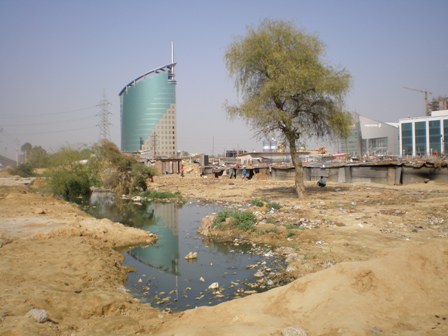
What is ailing University Democrats!

Delhi State Committee,
Krantikari Yuva Sangathan (KYS)

…THE INTELLECTUALS WILL ACCOMPLISH NOTHING IF
THEY FAIL TO INTEGRATE THEMSELVES
WITH THE WORKERS AND PEASANTS…

Mao Tse-tung

NOTE: This is a review and summation of the proceedings of the forum, University Community for Democracy (UCD). UCD is constituted of different individuals who may or may not belong to organizations. Apart from some dominant tendencies which we have criticized below, the forum has some well-intentioned individuals who have increasingly become discontent with UCD’s functioning. We have prepared this piece for internal discussion within our organization, but due to requests from certain friends in UCD, we are going public with it. It encompasses many points of criticism which we often raised in UCD meetings.

Recently, some University teachers and students in the north campus of Delhi University have been running a campaign under the banner of the UNIVERSITY COMMUNITY FOR DEMOCRACY (UCD). To use the words of the campaign’s founding members, the campaign is committed to fighting against “shrinking democratic space in the University”. The focus of the campaign has particularly been on the eviction of college students from university hostels, in the wake of the Commonwealth Games. A section of “left” intellectuals and “progressive” activists can be seen allying themselves with this forum. It has become fashionable for some to be seen in its meetings and, for those who navigate more in the realms of virtual reality, to trail the forum’s activities in cyberspace.

However, in the very beginning in UCD meetings there have been activists and organizations that have questioned the constituting logic of the forum. Most of such criticism was swept under the carpet as mere issues of modus operandi or as divisive tactics. The validity of the criticism raised was often lost to many of the forum’s participants who were hostile to organization structure, and hence, to criticisms coming from organizations. Even when some of our points of criticism were noted they were hardly addressed in a manner that reassured us of UCD’s commitment to the issues raised. The following pages are a delineation of this unfortunate fact.

At a time when the Commonwealth Games (CWG) are the focus of the media, many activities of the UCD come across more as publicity gimmicks than anything else. It is important for many of the forum’s participants to be seen resisting the Games but to do that they have to mobilize people on issues close to them. With little understanding on the issues concerning different people, UCD raises them in an opportunistic vein, just so as to galvanize different issues and use them. In reality CWG is the starting point and be all and end all of their resistance. And no matter how earnestly UCD denies it, this has been their strategy because right now the Games are the highlight of the season. Even before the University opened and the campaign could take proper shape; there were overt attempts to reach the media for coverage (such as forming media coordination teams and releasing press statements).

Even the “relay hunger strike”, or rather “skip one’s lunch” strike was no exception (it is interesting to note that UCD members sat on “hunger strike” from 9am to 9pm, which basically means they did not sacrifice their breakfast and dinner—In reality a relay hunger strike is continuous, and, thereby, includes people sitting on hunger strike twenty four hours—the term relay refers to somebody ending their hunger strike and another person taking their place). Since a “hunger strike” by University students and teachers is an eye-catching story for the media, it was more important to be seen in this act of drama even if the demands of those on “hunger strike” stood thoroughly misplaced. Sadly, so as to project a significant gathering at the venue of the “hunger strike”, students were actually subjected to authoritarian tactics by teachers supportive of UCD. These teachers, acting as pied-pipers and humming the threatening tune of internal assessment, drew their hapless students to the venue by taking their classes there. Students (the majority of whom were oblivious to the issues raised), were obviously not taken into confidence when they were made to come to the “hunger strike” site.

The fact that the demands of those on “hunger strike” were misplaced reflects nothing but a sheer lack of seriousness and understanding on the issues raised. It was the form in which the “relay hunger strike” raised certain demands that was highly problematic for it reeked of sheer opportunism and sectarianism. Let us take the example of rent regulation raised during the “hunger strike”. Firstly, UCD began its campaign with absolutely no concrete demand of rent regulation. The forum was forced to pick up the issue of rent regulation in addition to the issue of hostel eviction because it was constantly accosted by the majority of students who had never even lived in college hostels, and had for a long time been faced with the problem of escalating rents. There was also urgency in making rent regulation an active demand of the UCD campaign because some other organizations had already launched a full-fledged campaign on rent regulation in the city. Hence, it was more in a competitive spirit than with any serious commitment and understanding on the issue that rent regulation became part of UCD’s charter of demands.

To further delineate the opportunism with which the issue of rent was finally raised by UCD, we would like to bring the reader’s attention to the fact that although they are now talking of rent control; escalating rents are actually being conceptualized as a University neighbourhood problem rather than a general problem for migrants coming to the city (for further illustration of this point please see CSW and KYS’s paper). This is precisely why UCD’s “hunger strike” targeted the audience in Arts Faculty (a transit point for the student/teaching community), and not any tangible authority (which in this case should really have been the Government of Delhi). And this is why the best that UCD can do on the issue of rent is to demand rent regulation from the Dean of Colleges! Quite rightly, their delegation was informed by the Dean of her incapability to regulate rents since this was way beyond the University authorities’ jurisdiction and responsibility. We return to the fundamental question— why does the University remain the centre of UCD’s resistance when authorities beyond the Vice Chancellor are to blame, and when there are many people apart from students/teachers who are adversely affected by unregulated rents? To the reader who might still believe that raising the issue of rent regulation at the University level is perhaps what is immediately feasible for UCD, we have one question—has the life of the minority ever drastically changed without a transformation in the life of the majority? For example, can an individual educated woman today feel hundred percent secure and confident in a work space when the majority of women in society are still perceived as objects of sexual consumption and undeserving of career opportunities? Friends, the answer is no and experience has taught us that.

The question of the sectarian political approach of UCD was raised several times in the meetings. As argued by us in such meetings, issues and demands should really be raised in a way that they appeal to a larger section of people affected by the state’s inaction and its collusion with private business interests. In this way we connect concerns, struggles and militancy of different sections of people who are often segregated from each other due to the functioning of the system in place. For example, the student community and workers find themselves separated by work schedules, their class backgrounds, spatial settings/norms (in terms of workers being restricted to the space of factories/work sites and students to the space of their classrooms), etc. As a result we need a politics that paves the way for a combined struggle by the different oppressed sections of society. And it is only a combined struggle that can create an effective front of resistance to the onslaught of oppression and exploitation we are witness to. However, more than a generalized struggle against recent developments in the city, UCD’s initiatives are more sectarian than anything else. In fact, their particularized (University-CWG-centric) struggle is nothing but the substitution of the generalized working class struggle by ‘middle’ class intellectualism.

Mobilization of workers and strengthening of the working class movement is essential because in our society it is the working class that is in the majority. Its labour creates profit, rent and basically all the resources in society. Understandably then, if the working class fights back the whole system is paralyzed. Apart from the fact that it is the direct object of the most fundamental and determinative form of oppression and exploitation in capitalist society, the working class is the revolutionary class also because its interests do not rest on the oppression of other classes. In fact, precisely because its objective interest for its own emancipation is the destruction of class, it can create conditions for the liberation of all human beings in the struggle to liberate itself.

Thus, contrary to the middle class intellectual’s popular perception of the working class as just another identity asserted along with numerous other identities, the working class is actually a social positioning and not an identity. It is a position which is spread over different kinds of identities, and determines how and when the different identities will assert themselves. It is ultimately through the position of the working class that different identities can be united and radicalized into a wider anti-systemic struggle that goes beyond the form in which society exists. Realizing this, ‘old’ socialism has maintained the working class as its base and has constantly assessed the dynamics of the process of class in order to pursue its politics. ‘New’ socialism on the other hand, has made students/intellectuals their constituting base. In reality, however, students/intellectuals are divided amongst different class trajectories. To put it more accurately, students abstracted from their class position have come to be envisaged as agents of ‘new’ socialism. Indeed, ‘student radicalism’ which is actively promoted by ‘new’ socialism is a by-product of making students an identity devoid of class.

It is a fact that students who join universities like Delhi University (DU), are from different classes. The trend in DU is that students from working class backgrounds generally join the peripheral and evening colleges of DU. They are mostly youth who: a) have studied in government schools, b) come from the Hindi medium background, c) who do not usually get admission to college hostels considering their 12th class schooling, d) are those who really struggle to cope with rising college fees and English medium teaching/coursework. Students from petty bourgeois backgrounds are quite the opposite—a significant number of them have studied in respectable public schools, get admission to the best north and south campus colleges of DU, and are generally the first to get admission to the limited college hostels of DU.

As a result of this abstraction of students’ class backgrounds, forums such as UCD end up raising issues of students in a manner which isolates them from the issues of the working class. This reduces the possibilities of unity between the student community and the working class. To delineate this fact it is best to highlight the issue of rent regulation again. Rather than identifying rent as a problem affecting the student/teaching community as well as workers (most of whom live on rent near industrial belts in Delhi), UCD chose to raise the problem of rent only within the ambit of the University area, and demanded rent regulation from University authorities alone. By refusing to raise rent as a generalized concern of migrants in the city, UCD has simply encouraged the student community to see this as a problem specific to them. Having effaced the issue of class struggle in the immediate locality (the immediate locality being issues of working class youth/students/construction workers, etc. in the University), UCD now seeks to locate the working class and its struggle in a far off resettlement colony called Bhalaswa. Unfortunately, judging by recent email correspondences between UCD and students of the Women’s Development Cell (WDC) in Miranda House, the trips to Bhalaswa are being envisaged by the students more as extra-curricular activities. This indicates that UCD’s form of politics is really incapable of building a long-standing and formidable unity between the student community and working class. Its politics, in fact, inculcates within students a PHILANTHROPIC approach to working class issues, and little or no realization of the significance of class struggle for the transformation of our society. Instead of unity and combined struggle, UCD’s form of politics inculcates a perception/political tendency in the student movement to i) see the working class as a “mass of laboring poor” and not as a class which embodies itself even in the student constituency, ii) to perceive the issues of the working class as markedly different from those of students, and at most, only momentarily connected/’aligned’ with issues of students.

It is not only that the ‘new’ socialists deny the class background of the student community. They also, by denying students their varied class position, end up trying to mobilize only those who come from petty bourgeois backgrounds. As a result, organizations in UCD, such as New Socialist Initiative (NSI) are never seen raising issues of Dalit students who struggle to get admission in DU, of working class students who struggle to pay escalating college fees, or basically, any problem faced by students coming from government schools. In reality, for them, issues of those studying in peripheral/evening colleges or of those studying through correspondence/non-collegiate board are supposedly beyond the concerns of student activism. It is the issues of students studying in the big north campus colleges that are the central concerns of such organizations. For example, such organizations strictly function according to the University calendar. They will be active only during the actual academic session (i.e. between July and March when classes are on), and, will be mostly seen organizing seminars—these being a hot favorite of students from petty bourgeois backgrounds, who enjoy debating theories thrown at them in class. Furthermore, their campaigns in the University are centered on certain pet issues of students studying in a select few north campus colleges. These include protests against college hostel rules; night vigils/candle-marches to ‘take back the night’ or presumably to establish a ‘safe’ university campus somehow; etc. One wonders, how such campaigns actually address the concerns of the majority of students—many of whom do not stay on campus and are denied hostel admission due to the ‘lack of merit’.

Of course, when we as participants in UCD argued how necessary it was to mobilize the working class which is in the majority of those exploited in the name of development, grand events like CWG, etc., our point was noted. UCD posters soon began to carry slogans highlighting exploitation of workers, and as a gesture workers are now talked about in some of the UCD meetings. But the form in which workers’ issues are being raised by them is fundamentally paternalistic and patronizing. In a sympathetic mode the forum speaks of workers and other vulnerable sections of society, but no workers are part of the joint forum. Neither does the forum do anything to promote workers’ self-organization, nor does it participate in workers’ struggles. Making patronizing trips to resettlement colonies in the city, just so as to “investigate” and “report” the plight of slum dwellers, are more measures to appease angry activists in UCD and clear one’s conscience than to draw a formidable, active and organic link between the University community and the working class.

In fact, the recent trip to Bhalaswa was merely a gesture—a move to forge, in haste, some semblance of an alliance with the working class. No way does such a gesture promote self-organization by workers. In the case of Bhalaswa, UCD immediately began promoting a group working in the area, of whose politics they have little knowledge. In fact, in the interest of ‘alliance making’ they have refused to interrogate whether the group really represents the voice of the oppressed in Bhalaswa or is just another bourgeois oppositional group. Similarly, UCD has not taken on the responsibility of assessing, themselves, the actual class dynamics working in Bhalaswa. It is simply assumed that all those residing in resettlement colonies/slums like Bhalaswa belong to the same class composition, whereas the ground reality is more complex. Clearly, UCD’s form of politics, i.e. ‘alliance-making’ is highly problematic. This is because it simply absolves the forum of questioning the constitutive logic and politics of the organizations/groups it is allying with. It also absolves the forum of the responsibility of organizing those constituencies of people themselves. Thirdly, such form of politics leaves ample space for a lot of opportunistic maneuvering. In other words, the forum can move in and out of such alliances, depending on their own calculated interests. An important question arises here, what will happen to these alliances once the CWG are over? Well, expectedly, they will dissipate as quickly as they emerged. The analogy of a cinema hall is perhaps apt to explain this inevitability—just like everyone comes to watch a film in the theatre, cry/laugh together and then go their separate ways, most UCD groups/individuals will move on from the momentary ‘alliances’/joint initiatives they have made during the drama of CWG. A few of them, of course, will leave with plum NGO jobs in hand, and an ‘activist’ image that they can thrive on.

Hence, the point that we are trying to drive home is, that UCD can talk about workers and claim to be radical right through, whereas students/teachers continue to run the show while workers are merely expected to follow and indulge in experience-sharing. Workers’ issues then become just another ingredient to be added to cooking pot of resistance. Friends, the fact is that the forum’s form of intervention is limited to the university community responding on workers’ issues but doing nothing otherwise to help build workers’ self-organizations. Is it not true then that the University democrats finds workers’ issues “good” when they are OBJECTS of reform and concern but not when they are SUBJECTS of the struggle against the system? Here it is perhaps best to highlight the recent struggle of construction workers at the Miranda House CWG work site and UCD’s response—or rather lack of response to it. Friends, since the beginning of August construction workers and their trade union have been protesting against the Miranda House officials for non-payment of the workers’ long-standing dues and the violation of several labour laws. The same day that UCD began its “relay hunger strike”, workers down the road were protesting against their severe exploitation under various CWG construction projects. UCD failed to respond and join the struggle. The message, therefore, sent out was clear enough—we will participate only when we are in charge and not workers, and we will raise workers’ issues only as an addition to our never-ending list of “democratic” demands. Considering this, are not the issues of workers’ rights being raised in tokenism, i.e. only when it suits them?

Interestingly, some participants in the University Community for Democracy, who openly claim their “left” leanings, have unhesitatingly claimed in meetings that there is nothing wrong in particularizing the struggle since the University is their ambit of movement and sense of being. What we perhaps need to add here is the fact that when they are particularizing the struggle to the University, they particularize it even further by only raising issues of a select section of the University community. Such an approach defers the need to generalize issues of struggle, which is why people end up raising struggles in isolation. Such campaigns lose steam, credibility and relevance since they do not tap on certain organic links between their concerns and those of other affected sections in society. Of course, the aforementioned approach is nothing but opportunistic. By keeping the campaign University specific such participants aim for greater projection of themselves in the student community and media (which prefers to highlight University issues any day). By investing all their energy at the University level such participants seek a radical projection of themselves during DUSU elections, etc. This, beyond doubt, is a calculated move by many so called left intellectuals and groups in UCD. It is reflected in the larger party politics of such groups, and also in the double standards maintained vis-à-vis the entry of NGOs in the forum’s programs.

CPI(ML) Liberation, the parent party of AISA (a “left” student organization), in the interest of electoral victories has been allying with the RJD and sometimes with the JD(U). One moment it can be seen opposing the traitor Communist Party of India-Marxist (CPM) in Bengal, and the next moment it can be seen allying with the CPM in the Bihar Assembly elections! The same kind of double standards was replicated when we opposed the entry of NGOs in the protest meeting held on 30th July and AISA supported us, but then went on to invite the same NGO person to their own program against the Commonwealth Games on August 2, 2010! Needless to say, with elections round the corner crowd pulling tactics become more important. We know for a fact that there are reservations within AISA’s own cadre about participating in UCD, yet it continues in the forum for electoral gains.

It is very disturbing that NGOs which are bodies hugely funded by exploitative governments or by multinational corporations, are provided space on platforms of resistance against exploitation. The history of NGOs tells us that they are compromised bodies which sway on issues depending on the terms and conditions of the funding they receive. They have become a big employment recruitment network and that’s about it, for their work amongst people is channeled more towards ‘welfare’ than towards transformation of society. Instead of using its own agencies to provide for people, the state has been retreating from the social sector, leaving the space open for NGOs. NGOs simply use the limited funding released by governments and non-government organizations so as to absolve the state of its larger responsibilities. And to do this they unhesitatingly exploit a cheap labour force. For example, NGO workers (‘activists’) on the ground receive a meager salary compared to NGO employees in the higher echelons.

Interestingly, by arguing that NGO people are “well-versed” in issues/“are radical”, and by promoting them as speakers, UCD is actually creating a hierarchy of knowledge. And this hierarchy is nothing but a replication of capitalist division of labour in which intellect takes precedence over action/organization building, and the suave, Oxfam funded NGO spokesperson replaces the ‘not so articulate’ trade unionist/ political activist.

There are two more disturbing things to note about UCD’s campaign. One pertains to its search for an alternative accommodation for evicted students, and the other to its “free left” image. In its initial meetings, some UCD members pushed forward the search for an alternative accommodation. The first pamphlet printed by the UCD spoke of the need to build communes in places off campus. In fact, a team met with the management of a Gandhian trust (funded by Ministry of Social Justice) which ran a hostel near Kingsway Camp, called Gandhi Ashram. The place soon began to be promoted via e-mails etc. almost like any other private accommodation; the purpose being to provide a space for those still desperately looking for affordable accommodations and also to provide a space for regrouping when things got rough during the campaign. Ironically, the Gandhi Ashram hostel is meant for poor Dalit school students who were obviously going to be displaced if college students moved into the dormitories. No one seemed to reckon with this inevitability while the plan was still being hatched.

What we also found disturbing about the Gandhi Ashram plan was the desire of creating an isolated “democratic” space. The message being sent out was nothing but we can create our own isolated commune-like space in this big bad world. This approach stems from the sectarian University-centric politics of the UCD highlighted above, and also from a non-revolutionary conceptualization of commune life. For many participants in UCD, the commune with its base in Gandhi Ashram was an apparent ‘pre-figuration’ of a new society, whereas it was far from that. Commune was being envisaged as a centre of ‘counter-culture’—an oasis in capitalist wilderness. Interestingly, this is a very familiar trope—it is based, both at once, on a vision of a transformed society without real hope for a process of transformation. This is because it is based on the vision that the lives of a minority can magically change without transforming the whole. This is, after all, how (phantom) revolution itself, is envisaged according to the pipe-dreams (joint-dreams?) of petty bourgeois students/intellectuals who enjoy the comforts/security of generous remittances from home—‘let us, at least, as a small privileged community enjoy revolution making’.

Of course, as pointed out by us in the meetings, it was nothing but ridiculous that UCD spoke of building a commune in a place which was actually going to be charging the students Rs. 1500 per bed and where 6 to 8 women students would have to live per room. How can a commune work within a market structure, and how can a place which gives you no control on the rules and regulations to be implemented, become a progressive, commune-like accommodation?! Despite these criticisms, UCD went ahead and would have signed a MoU with the Gandhi Ashram management, if it wasn’t for the sheer lack of students interested in the place. In fact, just so as to get students to join the bandwagon, emails were sent out exaggerating the facilities available at Gandhi Ashram. In the interest of pulling a crowd, the green lawns of the Ashram were highlighted. Meanwhile, it was downplayed that no fooding would be available at the place and that this was going to be a dormitory system. Indeed, such concealment amounts to lying.

Lastly, as we would like to point out, it is a shame that the University Community for Democracy prides itself for its “Free Left” image. It is typical for such a forum to claim its steadfast commitment to ‘democratic issues’. However, in reality, their idea of democracy is based on the empty notion of dialogue and communication. Democracy is, unfortunately, abstracted from its link with socio-economic forces which is why it becomes more difficult to build a consistent anti-systemic movement. We see this problematic notion of democracy manifested in the very first pamphlet released by UCD. What was repeatedly highlighted in it, as a problem, was the fact that recent developments in the city as well as at the level of the University were not discussed before implementation.

Ironically, despite all their claims, most UCD participants stand for a façade of democracy and democratic functioning. For example, many emails and curt replies to questions raised in the meetings reflect the emerging dogma that only “pragmatic” things should be discussed in meetings (pragmatic issues being those that will help UCD attract more people). Thereby, it was constantly demanded that the ideological issues be shunned, and in a very undemocratic way, that is precisely what happened in meetings. The question is, what is it that UCD will do with the people who are immediately attracted to its campaign. Aren’t they supposed to work on these people and ideologically bring them closer to progressive politics? What does one read into this persistent impatience with ideological issues? Why do they behave as if the campaign is running against time? One can only presume that they want their whole show to be unfolded before CWG! In that case there is really no long term commitment to the issues being raised, and those that join the UCD campaign are just being perceived as faces/numbers to be posited against the Games, rather than thinking human beings who have the potential to link their immediate concerns with long term politics.

Furthermore, due to its “free left” image, we find that most UCD participants enjoy asserting their “individual” form of participation vis-à-vis an organizational one. As a result, UCD has succeeded in joining a lineage of platform and forum hopping so common to bodies that are dominated by individuals. The simple fact is platforms will be unsteady as long as “radical” individuals refuse to put their “radical-ness” to the test and bring themselves under the discipline and responsibility of organization/party structure. Left fronts and left organizations cannot make individuals their fighting force and leave untouched/un-mobilized the majority of those exploited, i.e. working class. After all, what is the best form of protesting against the Commonwealth Games? Is it not by organizing the large number of workers employed under CWG projects and mobilizing them to stop work at the numerous construction sites? Indeed, this is the most effective way of exposing the Games for what they are, and certain organizations and trade unions have been doing this since the very beginning of CWG construction work.

Having said this, it must begin to seem obvious somewhere to the reader why UCD has raised the issue of workers’ rights more in the spirit of opportunism. What else can be expected when there are group’s dominating UCD, such as New Socialist Initiative (NSI), that have no work amongst workers, i.e. no trade union to speak of, and basically do nothing to promote workers’ self-organization. In their book of strategy workers issues will always be raised so as to appear radical/cool in front of impressionable students than to actually organize workers. Their politics will, in fact, promote workers’ rights and NGOs in the same breath. It is a fact, that NSI has more presence in the NGO network than in the existing workers’ movement. This is because most of their members work for NGOs, and hence, have an objective interest in promoting them. This is why on the day of the protest meeting on 30th July NSI took additional effort to put together a program in Ramjas College, inviting a now well known NGO person. Of course, we didn’t see that kind of effort put in when it came to extending solidarity to the construction workers’ struggle in Miranda House College. The fact is that groups such as NSI have work only in the University and are inactive in any other constituencies of people, especially the working class. At a time when there is an uproar regarding the Commonwealth Games, their attempt to oppose the Commonwealth Games is doomed to be student-centric and University specific. And even when they do raise the issues of the university community it will be done so opportunistically, and the issues raised will be those that cater to a select section of the university community.

Friends, ask yourself—would you rather stand by opportunistic and sectarian politics that takes for granted the issues/concerns of the majority, or would you rather stand by the combined struggle of workers and students? Friends, it is high time we recognize that NGO-ised, petty-bourgeois dominated campaigns are more enemies than friends in the struggle for emancipation. It is time to stop doing the fashionable and to be seen doing the productive. It is time to play the role of the harsh critic and to organize a formidable combined struggle against the oppression and exploitation prevalent in our society.

JOIN THE STRUGGLE TO KEEP THE SPIRIT OF EQUALITY AND JUSTICE ALIVE! LONG LIVE REVOLUTION !!
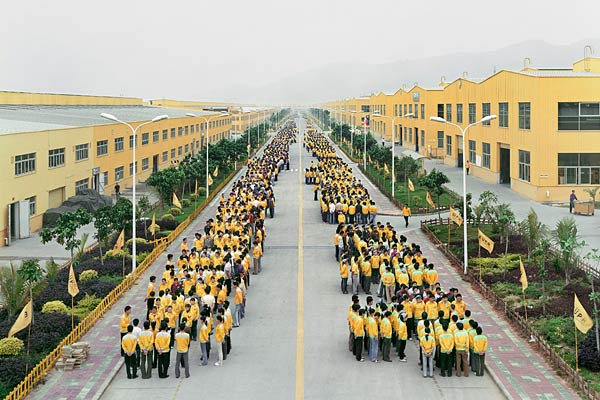
No Room of One’s Own: The Housing Question in Delhi

CAMPAIGN FOR RENT REGULATION & MORE HOSTELS
A Joint Campaign of Centre For Struggling Women (CSW) and Krantikari Yuva Sangathan (KYS)

Over many years Delhi has become a city of migrants. Students in search of a decent education and unemployed people in the desperate search for work have poured into the city in large numbers. The Government conveniently attributes the city’s growing crime rate, stress on resources, its ‘landscape degradation’, etc. to this movement of people. It adamantly refuses to acknowledge the fact that the condition city-dwellers find themselves in today is actually the creation of its own anti-people policies and the protection it provides to the landlord/rentier class in the city. To elaborate, the Government’s account of the challenges before the city clearly conceals the fact that the major crisis for city-dwellers, i.e. lack of housing and the need to pay high rents, is the result of landlords owning properties in excess and overcharging those who cannot afford their own housing. Precious little is done by the Government to check the excesses of these property owners in the city. Initiatives to collect property taxes are taken back almost as soon as they are launched and, pro-tenant clauses in the Delhi Rent Act are openly flouted.

The state’s collusion with landlords and the builder mafia is apparent in many ways. This is best reflected in a policy approach supportive of slum demolition, the lack of rent regulation, selling of government land at throw away prices to builders, little or no investment in the building of students’ hostels, highly priced government housing schemes (such as those introduced by the Delhi Development Authority), and in fact, the sheer lack of sufficient housing projects being launched by the government. Due to this undeniable nexus between the interests of the state and that of landlords, it is students and workers who suffer. Migrant labourers who come to the city are forced to live in sub-human conditions in slums or, to crowd into small rented rooms, paying most of their earnings as rents. Students coming from afar are also compelled to live on rent since most colleges in the city provide little or no hostel facilities. They too cut rent costs by sharing small rooms with each other—an atmosphere hardly conducive for study. In other words, the majority of students’ and workers’ monetary subsistence (money received from home and wages, respectively) is appropriated by landlords in the city.

It is important to note that the number of workers and students living on rent is no small number and that, it in fact, constitutes the majority of city dwellers. The magnitude of exploitation in this regard is hence, far from insignificant, and is extremely disturbing. Is this really what a city should be like—a place where most are either homeless or, are slum dwellers living in the constant fear of being ‘relocated’ (displaced), or are those forced to reside in private lodgings for high rents? It is time we locate the root cause behind the pathetic living conditions of students and workers in the city. This piece aims at providing a perspective that shows how things are connected and work to exclude the majority of people from resources and opportunities, and the right to a good healthy life. It is being circulated in the context of our launching a city-wide campaign for rent regulation and the provision of more hostel facility for students who come to study in the city. This Campaign, in fact, is part of ongoing struggles that CSW and KYS have been organizing in the past. These struggles have focused on the concerns of tenants, and basically, the most oppressed section of people working and living in the city. As a youth organization Krantikari Yuva Sangathan (KYS) has extensive work in working class colonies across Delhi. It has collectivized women and youth of these working class areas on issues such as lack of water and electricity supply, the poor condition of government schools in these neighbourhoods, and the apathy of the local administration/police with respect to heinous crimes committed in such colonies. Similarly, Centre For Struggling Women (CSW) has been in the forefront in organizing militant struggles in the University of Delhi for basic infrastructure like hostels. Due to struggles launched by CSW in the recent past, prestigious colleges like St. Stephen’s have had to provide hostel facility to their women students. It is to be noted here that colleges like St. Stephen’s provided the hostel facility only to men students—something which encouraged many women students to give up taking admission in the college. Of course, with the extension of this facility to women students, the age-old chauvinistic culture that prevailed in the college was put to the challenge—in 2005 CSW’s member, Maya John, became the first woman President of the college. The current Campaign For Rent Regulation & More Hostels derives inspiration from CSW’s struggle to provide hostel for all and their earlier Campaign For More Girls’ Hostels, Safe Neighbourhoods And A Safe City.

We hope that what is argued below convinces all who read it, of the need for collective struggle. Indeed, it is only through collective struggle that we can actually expose and challenge the system in place.

WHY PEOPLE MIGRATE TO DELHI:

Why Students: The reason why students migrate to Delhi in large numbers is that there is an acute shortage of government funded universities in India. Those that exist are in a poor condition and fail to accommodate the ever growing number of students aspiring for higher education. The reason behind this shortage of government universities and the poor condition of those that do exist is the paucity of government funding. Investment in education is less than 3% of the GDP! Furthermore, educational policies of the Indian state have been geared towards commercialization and privatization of education. Successive central and state governments have, for example, unhesitatingly recognized private colleges/universities. As a result, private educational institutions have spread everywhere, outnumbering affordable government-run colleges/universities. By strengthening the presence of private colleges/universities vis-à-vis government ones, governments have made education so costly that it has become inaccessible to the majority of Indian people. As a result students flock to the handful of government colleges/universities located in cities like Delhi.

The poor investment in education by successive governments has also led to the deterioration of regional universities, and hence, encouraged the creation of centres of excellence like Delhi University, Jamia Milia Islamia and Jawaharlal Nehru University. It is only with balanced and inclusive development of different regions, that students will have well-established regional universities to study in. For this, of course, our governments need to spend more on education and the social sector as a whole.

A large number of educated youth also flock to Delhi in the hope of securing government jobs. The city is now “home” to many who crowd into small rooms just so that they can receive “coaching” for various competitive examinations. However, most of these youths are forced to go back empty handed after 5 to 6 years of such preparation, simply because there just aren’t enough government jobs to be had.

Why Workers: Unbalanced and non-inclusive development of different regions in the country has also affected employment opportunities of people drastically. In regions across India (Orissa, Jharkhand, Chattisgarh, Bihar, Bengal, Maharashtra, etc.) the Indian state rules in the interests of Indian and multinational companies that seek to plunder natural resources and to raise a cheap supply of labour from the ranks of displaced tribals, agrarian labourers and poor peasants. Government after government, in its collusion with private business interests has snatched agricultural land, forests and other resources from poor peasants and tribals. Half hearted attempts at land reform and the withdrawal of various agrarian subsidies have brought ruin upon poor peasants, pushing them to commit suicide or to join the ever increasing rank of agrarian labourers. Even in “well developed and rich” states like Gujarat, Delhi and Punjab, exploitation is rampant and, industrialization and corporate farming (the usual indices used to calculate such states’ development record) are based on the ruination of the most vulnerable sections of rural society.

On being denied their lands, rivers and forests, those displaced are compelled to turn to cities like Delhi where employment at construction sites, factories and sweatshops, restaurants/bars, etc. can be found. Needless to say, the wages earned are abominably low and are a cause of much distress.

HOW THE MAJORITY OF TENANTS LIVE IN THE CITY:

With their limited monetary resources, both students and workers compromise with their health and well being when taking up lodgings in Delhi. So as to pay the escalating rents students crowd into small rooms just so that they can share the rent with others. This uncomfortable living is complemented by poor fooding since most students try and survive the day on one or two meals alone. In such living conditions students find it difficult to concentrate and study properly—something which impacts their class performance greatly. One has only to visit places like Nehru Vihar, Gandhi Vihar, Christian Colony, Sangam Park, Gurmandi, Munirka, etc. to come face to face with students living like this. Of course, there are some students who take better places on rent but there too students face problems such as harassment by landlords/neighbours. Rents are arbitrarily increased and landlords get students to vacate suddenly on the pretext of something or the other.

For women students such private accommodations are even more precarious since landlords and male neighbours feel free to sexually harass them. This is why almost every woman student staying on rent has a horror story to narrate and feels vulnerable in such places. Some students, like those from the Northeast, are deliberately charged higher rents by landlords and, women northeast students are made victims of the worst incidents of sexual harassment. A very large number of students and youth in search of work come from places like the northeast. This migration clearly indicates the sheer lack of investment by the Indian state in these regions. Due to lopsided development in states like the Northeast, students are compelled to come to metropolitan cities like Delhi to study. Similarly, the paucity of jobs in these regions compels many to migrate in search of employment. For example, a large number of nurses who work in hospitals across Delhi come from the northeast states. Once here they earn a limited amount as salaries, most of which then goes to pay off rents.

The fact that a large number of students are compelled to live in off-campus housing is not only because a large number of them come to Delhi to study, but also because most colleges of Delhi University (D.U.) do not provide hostel facility. Shockingly, out of D.U.’s 76 colleges, only 11 provide hostels for outstation students! Considering this, most students who come to study in institutions like this can be found living in private accommodations. Affordable and comfortable hostel facility rather than being a fundamental right has become a privilege for which only a select few are eligible. It is worse for women students since they are denied hostel facility in many co-educational colleges which only provide this essential facility to their men students.

Just like students, workers who migrate to the city desperately search for affordable housing. Most end up living in slums where basic amenities like water and electricity are scarce. Safety and hygiene are a distant dream in such settlements since most of them have come up along the slopes of open drains and empty land beside the Municipality’s garbage dump-sites. These slums are either being pulled down by builders who want cheap land for their real estate business or, are burnt to ashes since fire fighting authorities take their own sweet time in reaching places where the poor reside.

Many workers also live in cramped accommodations in colonies near industrial belts of the city. Earning only between Rs. 2500 and Rs. 5000, they are forced to part with a large amount of their meager earnings as rent. What they pay for is a small room in which they and their five to six member family, resides. Needless to say, in these cramped conditions, discomfort breeds, tempers fly and unhappiness grows. Here too as tenants, workers and their families are devoid of basic facilities like water and electricity. It is a fact that in many such colonies, people are forced to queue up for water and the electricity supply is cut for nothing less than 6 to 10 hours a day. Undeniably, private power distributors in Delhi practice very selective load shedding, often choosing working class colonies over other posher areas. In working class colonies like Baljit Nagar where KYS has been extensively working, water reaches many houses every third day! In this regard KYS has spearheaded a militant struggle against the Delhi Jal Board Authorities as well as the water (tanker) mafia that operates in the locality. Similarly, in the same locality women’s lives were reduced to hell when rumour of a serial killer, i.e. Hammer-man, made its way into the public domain. Realizing the discontent and fear prevalent in the youth and women in the locality KYS carried out an investigative inquiry, following which it organized a huge protest outside the Delhi Police Headquarters. Through its inquiry the organization proved that rather than a serial killer on the loose, who attacked women and miraculously escaped the notice of other family members crowded into the small rooms/houses in Baljit Nagar, the assaults (and in two cases, murder) were actually incidents of domestic violence. As a result of the pressure applied on the Delhi Police, arrests of guilty family members began to be made shortly after.

Apart from high rents, workers and students’ problems are compounded by the poor condition in which the public transport system exists. With the acute shortage of Delhi Transport buses most of the time commuters are travelling in crowded buses, endlessly waiting for buses at stands/depots, etc. As a result, the travel to and fro from their workplaces/institutions to their homes is nothing short of a nightmare.

RECENT DEVELOPMENTS THAT HAVE MADE IT WORSE FOR TENANTS:

Recently, over the past two years as Delhi’s authorities have hurriedly prepared for the Commonwealth Games, conditions for tenants in the city have worsened. The preparation for the Games has, indeed, allowed the state to crack down on the most vulnerable sections of society. Construction workers, most of whom are migrants, are being overworked and underpaid at the various Commonwealth sites. The homeless, labourers, hawkers, and now students have had to pay the brunt for the massive construction work and subsequent redirecting of funds. Slums have been demolished and ‘relocated’ overnight, street vendors have been denied their rights, and now students too have been recently evicted from their college hostels in the wake of the Commonwealth Games!

The face of the Commonwealth Games is really less about the games, and more about the herding of poor people into ill-equipped resettlement colonies (in the hope of concealing the city’s poverty), cracking down on rickshaw-pullers and street vendors, evicting students from college hostels, and the brutal exploitation of cheap labour for the massive construction projects. It is time for introspection—when this country has little to boast of in terms of a mass sports culture, why should we sacrifice and celebrate these Games?! It is a fact that the same Indian state that is pouring funds into the Commonwealth Games’ fund, does little for its sporting community. So far governments have done little to build new stadiums and have invested precious little in the upkeep of existing sports infrastructure. New stadiums are built, old ones are renovated and Indian sportsmen are provided world class training only around certain “spectacular” events like the Asian Games some years ago and now on the occasion of the Commonwealth Games. In other words, a consistent and dedicated investment in sports is missing.

It is also a fact that till today sporting facilities are missing from the majority of government-run schools, killing the potential of so many young people to learn and specialize in sports. We find no sports centres in most colonies built by the government, especially JJ (Jhuggi-Jhopdi) colonies. The result of this is that only a select few (those who happen to study in good private schools or, live in posh localities that run sports clubs), indulge in sports. The majority of Indian youth learn to play in dry drains and the narrow streets of working class colonies. They cannot even dream of being professional sportsmen.

Of course, under the garb of the Commonwealth Games, landlords have hiked rents considerably. They had done so earlier too, when the Delhi Metro reached certain areas of the city. As expected, nothing was done then and nothing is being done now to control the fleecing of tenants. In its hurry to meet the deadlines of the Commonwealth Games, both the central and Delhi government have turned a blind eye to the growing problems of tenants. In fact, they have added massively themselves to the problems of workers and students by, consistently increasing the prices of essential commodities (pulses, vegetables, milk, petrol, diesel, electricity and even water) and taxes like V.A.T. By conveniently quoting the rising prices of water and electricity, landlords in the city have further dug into the pockets of workers and students living as tenants. They have also come up with disgusting practices like compelling their tenants to buy provisions from provision stores run by them in the locality!

On average rents have gone up two to three times this past few months. For students paying a rent of Rs. 3000, are now being charged an extra two to three thousand rupees. If they resist they are asked to vacate the accommodation. Realizing that students from colleges affiliated to D.U. have vacated their hostels temporarily, landlords have hiked rents, knowing there will be plenty of takers for their lodgings. Needless to say, these events are going to have long term repercussions for students even when the Commonwealth Games are over. The escalated rents are here to stay, as no PG is going to come down from a hiked rent of say Rs.8000 to Rs.5000, post the Games.

OUR APPEAL:

Since the problem of high rents, eviction, displacement etc. is a general one and affects not just one group of people in the city, it is important to address not a particular set of persons but the majority of city dwellers. Issues and demands should be raised in a way that they appeal to a larger section of people affected by the state’s inaction and its collusion with private business interests. In this way we connect concerns, struggles and militancy of different sections of people who are often segregated from each other due to the functioning of the system in place. For example, the student community and workers find themselves separated by work schedules, their class backgrounds, spatial settings/norms (in terms of workers being restricted to the space of factories and students to the space of their classrooms), etc. Of course, groups that can and should unite also find themselves segregated by wrong kinds of politics. By following initiatives that seek to particularize and defer the need to generalize issues of struggle, people come to raise struggles in isolation. Their militant campaigns lose steam, credibility and relevance since they did not tap on certain organic links between their concerns and those of other affected sections in society.

Hence, rather than particularizing the struggle against recent developments in the city, we must link up with connected concerns so as to expose how the “particular” (be it in terms of experiences, mobilization, etc.) is a false or exaggerated projection of the reality. The demand for rent regulation and affordable subsidized housing for all is a call that addresses all those living as tenants in the city. It is a potent cementing force in this regard. Of course, apart from raising common general demands, we must actively and consistently reach out to all those who are affected. Our action plans should include concrete mass mobilization of the different affected parties rather than mere information-gathering exercises, occasional meetings with them, etc. The latter is more patronizing in its approach to groups being reached out to. It cannot be our strategy to connect with the larger audience of people affected. Hence, the Campaign for Rent Regulation and More Hostels is working towards raising common concerns actively amongst different sections of people living as tenants in the city. We seek to encourage the student community in universities like D.U., not to raise the issue of rent, eviction, etc. within the limited sphere of the university alone, but also to become active participants in ongoing struggles raised by others faced with the same problem. We also aim at encouraging the student community to connect problems they face with larger questions of poor resource allocation, denial of opportunities by the system, etc. This is why we believe that demands such as provision of more hostels for students, housing for all, the removal of draconian economic policies like privatization of education and Special Economic Zones Act (2005), etc. are crucial for the Campaign. By raising these issues students are fighting the actual source of their exploitation and are strengthening the working class movement. Indeed, by supporting long standing demands/concerns arising from the working class movement, initiatives taken by students no longer remain sectarian (particularistic) in nature.

Friends, it is time we object and fight against people’s labour becoming someone else’s profit. By raising the issue of escalating rents we should realize that we are tapping on widespread social discontent. As tenants in the city, we, workers and students, cannot continue to watch our hard earned wages and limited monetary resources, line the pockets of greedy landlords in the city. It is time for collective struggle against landlords. We must realize that no longer can our individual battles with landlords bring us relief. We must step forward to give our individual struggles a collective form. It is only through collective struggle that we can pressurize the local government to administer its duties and regulate rents in the city as well as provide subsidized housing.

THE WAY AHEAD:

Indeed, our struggle against the rentier economy must not limit itself (in terms of ideas, visions and action) to certain immediate goals that are set. Our collective struggle must see this popular discontent and despair as stemming from the inequalities that capitalism breeds. Our fight is, hence, against a system that allows private business interests to control the economy and social life. The Campaign For Rent Regulation and More Hostels is just one of the forms our struggle against the system shall take. Through this particular struggle we must realize the significance and need for other larger struggles.

Of course, to fight a system we need a road map, and it is here we believe that the movement for socialism, both in the past and the present, will be our best guide and source of inspiration. This collective struggle by students and workers can draw much inspiration from socialist societies that built cities where homes were provided to all and where living spaces were redesigned so as to emancipate womankind from the burden of domestic chores (responsibilities that were earlier considered solely those of women). Socialist societies, despite several failures, have constantly endeavoured to provide the majority a home to live in and have developed community life in ways never imagined. In countries such as Cuba, the now dissolved USSR, etc. properties held in excess were confiscated and distributed to those who had lived as tenants for years as well as those who were homeless. Furthermore, socialist states invested heavily in construction of housing complexes, community/sporting/recreational centres, schools, colleges, hospitals, and entire cities—the driving force being the desire to accommodate the needs of all, as well as the desire to provide the majority the best of opportunities. It was in these very housing complexes built in socialist societies that individual kitchens (where women slaved away at back-breaking housework), were removed and community dining halls were created for each such housing complex. For certain segments of the society, such as students, endeavours were made to inculcate commune living and lifestyle.

We cannot create these progressive changes in our immediate social world but we can aspire for them and pave the way for their development and acceptance. For this we must begin to desire holistic and systemic change. We must realize that the actual resolution of the housing question lies within the struggle for and creation of a new socio-economic structure. In this light the Campaign For Rent Regulation and More Hostels is one step in that direction.

We Demand
• Rent Regulation by Delhi’s Rent Controller
• Provision of Hostel facility for students in every Delhi University college
• Funds allocated for renovation of existing hostels, be used for building larger capacity hostels.
• Construction of more working women’s hostels
• Provision of subsidized housing for all
• Institution of a judicial commission to inquire into the condition of tenants in Delhi
• Provision of more affordable public transport (U-specials, L-Specials, etc.)
• Public audit of the Commonwealth Games’ accounts

We Condemn
• Slum demolitions
• Hike in rents by landlords across the Delhi
• Eviction of current hostellers from college hostels
• Promotion of private accommodations
• The plunder of collective resources by private business houses.
• The anti-people policies of the Indian state

Labour laws violated in Miranda House College Commonwealth Games construction site

Alok Kumar, Secretary
Delhi Nirman Mazdoor Sangharsh Samiti

Since the beginning of August, the Delhi Nirman Mazdoor Sangharsh Samiti has been mobilizing workers employed in Miranda House College against their exploitation. The trade union has been mobilizing workers since the commencement of construction work at the various Commonwealth Games work sites. It is, in fact, the only trade union of construction workers in the city. Despite the difficulties in mobilizing an unorganized work force like construction workers, the union has constantly made successful interventions. The struggle of workers at Miranda House marked its fifth successful intervention in Commonwealth Games construction sites. The details of the Miranda House struggle follow.

On August 6, 2010 the workers sat on a dharna outside the college, following which they took out a rally around the University campus. The latter was aimed at reaching out to construction workers employed at other work sites in Delhi University. On not receiving a response from the Miranda House authorities on their demands, the workers decided to sit on dharna outside the college office on August 12. They were supported in their struggle by the college students and members of the Miranda House Staff Association such as the Secretary, Ms. Nandini Dutta. The struggle was also supported by women and youth organizations like Centre For Struggling Women (CSW) and Krantikari Yuva Sangathan (KYS).

The workers and students/teachers, under the banner of the Delhi Nirman Mazdoor Sangharsh Samiti, were protesting the non-payment of wages due to the workers. They were also protesting several other violations of labour laws such as those pertaining to payment for overtime, mandatory weekly rest, etc. The workers at Miranda House had not been paid for the entire one month and four days for which they worked at the college. Furthermore, the rate of payment fixed by the contractor, Ms. Payal was well below the legal minimum wage rate. Unfortunately, despite the fact that the contractor defaulted in paying the workers and continuously violated several labour laws, the principal employer, i.e. the college Principal, Ms. Pratibha Jolly refused to step in and release the workers’ arrears. She, in fact, tried to act as a negotiator between the contractor and the union, something which the union vehemently opposed. Under the pressure applied by the union, on August 4, a small part of the workers’ dues was released with no further surety provided by the college administration to look into the other key demands of the workers. The protest held by workers on August 6, fell on deaf years.

Finally, after waiting till August 12, for a formal response from the Principal, the workers and the union decided to sit in protest, once again, against this high-handed and insensitive behavior on the part of the principal employer. As a backlash the college administration called in the Delhi Police who immediately started intimidating and manhandling the workers and students sitting on protest. Meanwhile, inside the college committee room, the Principal, the contractor, etc. refused to negotiate a written agreement. After much deliberation it was agreed to get the accounts together, for which the union sat down. Exact calculations of the payments due to the workers, and that too at Delhi’s daily minimum wage rate, were made and submitted for negotiation by the Delhi Nirman Mazdoor Sangharsh Samiti.

While the negotiation proceeded, students and workers addressed Miranda House students who had congregated. In the discussion that took place it was pointed out by the Union as well as others present that it was shameful the way Miranda House hostellers were evicted from the hostel last moment (i.e. just two weeks before college reopened), followed then by this blatant and heartless exploitation of labourers employed at the hostel renovation site. The assembly of students and workers present was also formally addressed by Sri Narendarji, executive member of Indian Council of Trade Unions (ICTU) and the Secretary of Delhi Nirman Mazdoor Sangharsh Samiti. Alok Kumar, Secretary of the Delhi Nirman Mazdoor Sangharsh Samiti, in his address, congratulated the workers for their endeavours and stated that the union’s initiative would now be to bring together workers from all the different work sites in the area. He spoke of intensifying the struggle and speculated that if the workers demands were not met by Miranda House Principal and the contractor, then the workers would not hesitate in striking work in the college.

It is clear from this instance that workers are willing to mobilize and use the strength of their organizations to fight back against their brutal exploitation. As members of the construction workers’ organization, we seek support of other democratic and progressive sections in this fight for justice.

Addendum

LIST OF LABOUR LAWS VIOLATED BY CHIEF EMPLOYER i.e., PRINCIPAL OF MIRANDA HOUSE & THE CONTRACTOR, Ms PAYAL

Principal of Miranda House, Ms. Pratibha Jolly, is the principal employer and she is the one who is the key violator of set labour law norms.

• According to section 21 (2) of The Contract Labour (Regulation and Abolition) Act, 1970, every principal employer shall nominate a representative duly authorized by him to be present at the time of disbursement of wages by the contractor and it shall be the duty of the representative to certify the amounts paid as wages. In section 21 (3) it is further emphasized that it is the duty of the contractor to ensure the disbursement of wages in the presence of the authorized representative of the principal employer. As delineated in Section 21 (4), in case the contractor fails to make the payment of wages within the prescribed period or make short payment, then the principal employer shall be liable to make payment of wages in full or the unpaid balance due. [See Cominco Benani Zinc ltd. v. Pappachan, 1989 LLR 123 (Kerela).

• The Building and other Construction Workers (Regulation of Employment and Conditions of Service) Act, 1996. Section 45 specifies that if the contractor fails to make payment of wages then the employer/principal employer is liable to make all the payments. Also see The Payment of Wages Act, 1936, section 3 (2).

• Section 30 of the Building and other Construction Workers (Regulation of Employment and Conditions of Service) Act, 1996 prescribes proper norms for maintenance of registers and records. For liability of principal employer in this regard also see Minimum Wages Act, 1948, section 18 (1) and section 21 (1), (2) of The Contract Labour (Regulation and Abolition) Act, 1970

Other Norms violated by both principal employer and contractor:

• Section 28 (1) (b) of The Building and other Construction Workers (Regulation of Employment and Conditions of Service) Act, 1996 prescribes a day of rest in every period of 7 days with payment for the day of rest.

• Section 28 (1) (c) this Act of states that if work is carried on the day of rest, a worker is to be given the overtime rate specified in section 29.

• Section 29 (1) prescribes that any work above the normal work day should be given twice the ordinary rate of wages.

• The Minimum Wages Act, 1948, Section 17 prescribes that when an employee is employed on piece rate, the amount of wages paid cannot be less than that paid for minimum time rate. Also see Section 3 (2) (d).

• Section 25 prescribes that when a contract or agreement is being made between employer and employee whereby the employee relinquishes or reduces his right to a minimum rate of wages or any privilege or concession accruing to him under this act, then such a contract/agreement shall be null and void, and employees have to be paid according to the legally prescribed minimum wage.

• Section 12 (2), Comments (ii) states clearly that where a person provides labour or service to another for remuneration which is less than the minimum wages, such labour is “forced labour” within the meaning of article 23 of the Constitution and thereby entitles the person to invoke article 32 or article 226 of the Constitution of India.

• Moreover, there was a violation of many other norms mentioned in Building and other Construction Workers Act. There are no provisions made for facilities like crèches, canteen, latrines/urinals, accommodation, drinking water, etc. Prescribed safety and health measures are also being violated.

• The Contract Labour (Regulation and Abolition) Act, 1970 in Section 29 (2) prescribes that every principal employer and every contractor has to exhibit notices of particulars like the hours of work, wages, nature of duty, etc.

• According to The Equal Remuneration Act, 1976, women workers are liable to be paid equal wages.

• Supreme Court Guidelines (in Vishaka Judgement 1996) prescribe the constitution of anti-sexual harassment complaints committees in every workplace. The construction site in Miranda does not have such a committee in place for the women workers employed.

Support to Mamata Banerjee’s 9th Aug Rally: A Capitulation to the Rightist Forces

Amitava Bhattacharya
General Secretary
Mazdoor Kranti Parishad

Following the Singur-Nandigram movement, the most important movement in West Bengal is that of Jangalmahal including Lalgarh, where an unprecedented mass upsurge rocked the entire nation. The terrible mass-agitation of the tribal population against the police repression unfolded the history of the prolonged deprivation of these people. Not only the state of West Bengal, but the whole of the country solidly stood by this movement.

The most important feature of this movement was that it surged forward on its own, defying any interference by the established parliamentary parties. This movement was born as a continuity of the people’s protest against the SEZ project of the Jindals at Shalbani, a project nurtured by the support of CPI (M), Congress and Trinamool Congress. When the Left Front government led by CPI (M) came to power for the seventh consecutive term, it became all the more rabid to make West Bengal a hunting ground for the native and foreign big capital. It started the forcible land acquisition. To achieve this aim, notorious gangs of hoodlums were formed by CPI(M) everywhere. All this started happening during the rule of UPA-1 and the Congress shamelessly abetted these activities.

The other party of the ruling class, the Trinamool Congress fully utilized Singur-Nandigram movement for the purpose of its political upheaval. This party was absolutely in favour of the ‘SEZ Act, 2005’ while it was a partner of BJP led NDA alliance. During the rule of the UPA-2 also this party played the most ‘suitable’ role as the partner of the congress government. This party never opposed the nefarious “Operation Greenhunt”, nor did it play a proper role against unprecedented price rise that has been making the life of the common people unbearable. Opposing the forcible land acquisition in Singur for TATAs, Mamata Banerjee took the centre stage anew in 2006. She fully made use of this movement to promote her parliamentary gains only to betray it later on. She used the spontaneous movement of Nandigram in the same manner. With the help of the Congress, Ms Banerjee and her party TMC once again tasted the ministerial power during the rule of UPA-2.Now the aim is to capture power in West Bengal in 2011, when the State Assembly election will be due.

Against the unscrupulous scramble for power of the parliamentary political parties safeguarding the interest of the big capital, both Indian and foreign, the struggle of the Jangalmahal has instilled new life into the revolutionary movement. The revolutionary prospects of the left once again became an object of serious discussion. The CPI(Maoist),the main political force behind the movement on the other hand, took initiative to convert this mass upheaval into armed war against The State, which is, in fact, their declared political position. In course of time various guerrilla actions, small or big, became the principal form of this movement. By sending the joint forces on 18th june,2009, both Central and State government tried to suppress this people’s movement. The armed hoodlums of CPI(M) also joined hands in this campaign of torture and mayhem on the oppressed people.

The largest partner of UPA 2 government Trinamool Congress demanded that the entire area be declared a “disturbed area” and the Indian Army be deployed, in the pretext of the presence of the CPI(M) hoodlums. And now while taking the full protection of the Joint Forces to organize her meeting, she very hypocritically demands their withdrawal.

This movement has incurred heavy losses by the pincer attack of The Joint Forces and the CPI(M)’s own armed gangs. The CPI(Maoist) has been regularly carrying annihilation of persons suspected to be police spies. Under the circumstances, Ms Mamata Banerjee on 21st July has given the call “Lalgarh chalo”. At the outset it was decided that meeting of Lalgarh would be held in the name of TMC alone. Later on she declared that the meeting would be held in the name of “Santrasbirodhi Manch” (Anti Terror Platform).She invited The Congress Party to this congregation. She invited the intellectuals also who desire a “change” of power. A section of them declared their wish to join the meeting. To add to the significance of this meeting, the PCPA, opposing it at the outset, later on decided to join it. This organization subsequently went whole hog to make this meeting a success. To cap it all ,The top-ranking Maoist leader Kishenji gave statement to make “Didi’s rally” a success.

It is known to us that at times a movement has to temporarily retreat. But for a movement which is declared to be a decisive battle against the state, a movement which is considered a high level movement for the transformation of the society by its leaders, is it not a dangerous “tactics” for it? We do not think it proper for the highest leadership of The Maoist Party to support a section of the ruling parties of the state, against which the war has been already declared.

We think the role that the sham leftist CPI(M) has been playing as the representative of the ruling and exploiting classes is leading the countless toiling people to the loss of faith in the red flag. They are being compelled to have recourse to the rightist force. Such a juncture in our contemporary history is really very agonizing. At such a critical hour, to plunge into the lap of the rightist forces for a momentary gain is not only a mistake, but extremely harmful so far as the building of a revolutionary alternative is concerned. Taking historical lessons from the mass movements of Singur, Nandigram and Lalgarh , let us resurrect the revolutionary tradition of the left movement and forge ahead towards greater people’s movement.

Toiling for the Commonwealth

Ankit Sharma and Paresh Chandra

In the 19th century, the one time British Prime Minister, and renowned novelist, Benjamin Disraeli, wrote a novel called Sybil: The Two Nations; this was one of the first explorations of the polarisation of wealth and power that capitalism breeds, how inside a single country, coexist the fabled halls of plenty and extreme hunger. Today, in India, one does not even need to compare the metropolis and the margin (the “Maoist afflicted territories”) to comprehend the existence of two such nations – it is to be seen in the Capital itself.


Commonwealth1


Commonwealth2


In the last decade the name of Delhi has become synonymous with “development”; fancy flyovers, expressways, wide roads, metro services, etc. symbolise the form of development that Delhi aspires toward – development that will make Delhi a “world class city” of the new millennium. And all this at the cost of neglecting completely, the fulfillment even of basic necessities of life for many living in and around Delhi. At present, it would seem on glancing at mainstream newspapers, that the development of a city is to be measured in terms of the number of shopping malls it has, or the number of millionaires, or the width of roads and so on – in short, everything which relates to the richer section of society. A supplement of one India’s leading dailies declares Delhi to be the city of the 21st century, moving ahead of other Indian cities like Mumbai and Kolkata. This declaration, ostensibly, is based on the one hand upon Delhi’s new born pride, the Metro, and on the other on the city’s status as the “melting-pot” of all Indian cultures (possibly because the industrial zones rising around Delhi attract workers from all over the country). Not a paragraph to bring out the conditions under which these workers live or labour.

With majority of the population, the labouring and languishing poor altogether out of contention, India indeed seems to be shining. Even if the class that actually reaps the benefits of such development comprises 10 per cent of the nation’s population, the number is still in excess of a 100 million. It is easy to stay within this constituency, represent and celebrate its interests, and still call oneself the representative (government, or daily) of a nation. Of course, there are times when even large sections of the richer nation inside India, the so-called middle classes are affected for the worse, by policy or development plans. But such is the inertia of their past comforts, and such is the influence of the state, that they are able to while away times of duress dreaming of riches to come. All their responses are programmed by the state, in forms the state can control, and in the final instance they are comfortable even in this relative discomfort, and they do not feel pressed to speak up.


Commonwealth3


Coming to the immediate, we find that all of Delhi’s resources are being invested to prepare for the staging of the Commonwealth Games; all of the city’s development plans are spread around this event. Several new roads are being built, new stadiums are coming up, a concrete “village” big enough to house the people of many slums has been constructed for the athletes.  A city facing one of the biggest water shortages in all its history is going to fill up massive swimming pools. For three years in a row college grounds have been made unavailable to students, putting an end to a lot of sports activity (evidently this is how the CWG is going to encourage sports). Thousands of students, who can barely afford the subsidised hostel rates, have been thrown out of their hostels, forced to find accommodation in expensive areas around the university. The Chief Minister has come out in the media declaring that the people of Delhi will have to pay for these Games in the form of increased taxes, rise in the prices of public transport, and so on (supposedly, all people in Delhi are rich enough to pay this tiny price for the sake of the nation’s and the city’s glory). However the main thrust of the current piece is to spare a glance at that side of Delhi which is altogether ignored by all, including the media.

Commonwealth4
Commonwealth5

Large numbers of migrant labourers have shifted base to Delhi because of the work become available due to the large scale infrastructural development leading up to the Games. This huge influx of migrant labourers , in addition to the ones already living in slums and worker localities around the city, has led to greater competition amongst them, on which private contractors hired by the government are thriving. These private contractors are able to control wages and working conditions, obviously to the disadvantage of workers. Workers at CWG sites earn anything from Rs.200 to Rs.700 for eight hours of work in a day depending upon level of skill, much more, it can be argued than the minimum wage fixed by the government. Using this data the mainstream media is often found trying to prove that the government is generating employment for these workers as well as helping them earn a livelihood. Often, it is added, that the workers are also being provided with a place to live, in temporary settlements near construction sites. But, as is always true in such cases, a different order of truth altogether ignored by the media exists behind this façade. These workers have no job security, hired on a day, fired on the other. In fact, most of them are hired on a daily or weekly basis. If hired for longer durations they face irregularities of payment. They do not have the freedom, as a result to work elsewhere during this period, or to leave this work, for the fear of having to forfeit wages earned.  Sometimes workers are paid not according to the duration of work, but quantity of it – this much pay for this much work (for instance, this is usually the case for road construction workers). In this case the work day extends upto ten hours or more; this, one can understand, is the cost of the alacrity needed to finish the project in time for the Games.


Commonwealth6
Commonwealth7


Commonwealth8

Owing to irregularities of the kind mentioned above, workers are forced to shift their families close to the work-site where their wives too enter the labour market, hoping to find greater financial security for the family. Female workers get paid amounts much lower than what men earn for the same work. Where the fixed minimum wage is Rs.203, female workers are usually paid as little as Rs.130 for eight hours of work. When the supply of workers increases this drops down to Rs100 or less.  Furthermore, mothers have no choice but to keep their children close by while they work; a more hazardous environment to bring up a child is hard to imagine, because immediate danger of hurt is compounded with assured health trouble in later life. Children already nearing adolescence actually work alongside their mothers; a little more in the family’s pocket.

Commonwealth9


Commonwealth10

Why should all the members of a family work when one member is already earning more than the fixed minimum wages? Clearly, the life that a single man’s wage affords is not quite so good. The minimum wage allows a worker to reproduce his labour power and is by no means suitable remuneration for the work he does; to be able to do even a little more than merely exist (even if that something is as seemingly inconsequential as owning a transistor) more than a single person’s wage is needed. So the whole family sets to work, at jobs that hardly pay anything even as they break their backs. Whether they work or not is not a choice, is clear enough to see, but even choosing the work they do is not an option – do what you get.

With increased migration and the fall in wages caused by the resultant increase in competition living condition of workers have also suffered. As the wages fall well below the minimum required for their subsistence the workers are forced to live in temporary settlements near work sites, settlements hardly suited to be inhabited by human beings. The differentiation between skilled and un-skilled labourers seems to continue in these settlements, where un-skilled workers are made to stay pretty much anywhere (tents beneath flyovers, or on the roadside, or next to metro-pillars and so on). Skilled workers are at least able to afford a place in some sort of slums or worker localities, or are provided with tin shelters near construction sites. Of course this relative privilege hardly amounts to anything; 4 to 5 skilled workers stay in tin rooms hardly 6 feet across. Often these temporary tents or rooms serve as living quarters for the entire family; proximity to the worksite definitely adds to health problems that workers and their families face.


Commonwealth11


Commonwealth12


Commonwealth13


Commonwealth14


There is no direct supply of water to these localities, forcing the workers to use water stored in unclean cans which used for construction purposes; the problem is even greater for the quarters which are not that close to any big site, as they are forced to buy water form tankers. Furthermore, these settlements are not legal and once the work is complete the workers are forced to evacuate.

Commonwealth15

Workers cannot afford to waste any part of their wages on daily commuting; another reason that forces them to leave close to worksites is their shift timings (for instance the workers constructing roads stay in tents near the site because they are required to work all through the night stopping in the early hours of the morning). These conditions negate the possibility of any “family life,” a middle-class term altogether alien to the lives of these workers. Even if the family stays together, everybody works: the man, the woman, and the children, giving them no chance to spend any time together, let alone “quality time.” A set of people involved in the construction of the structures that will allow India to “proclaim itself on the world-stage” as a rising “super-power” and a “quasi-developed-country” are reduced to a status little higher than the tools they use.

Photos by Ankit Sharma

Misery is Relative / Comparison of Minimum Wages in Delhi and London

GurgaonWorkersNews no.28 (July 2010)

The following text is devalued with increasing speed: the global crisis and subsequent struggles shake the global wage scale. In June 2010 the Indian government ‘free-floated’ the petrol and diesel prices, fueling the already double-digit inflation. In the UK the government increased the VAT by 20 per cent and cut wage-subsidising benefits. The collapsing Euro inflates the Rupee. The struggles in China and Bangladesh put pressure on wages in the global low-income zones. We will see whether class struggle and crisis will re-shape the global wage-division, old concepts like ‘workers’ aristocracy’ and most of the concepts of ‘integrated’ working-classes ‘in the imperialist nations’ will help little to understand. We need global proletarian debates.

The following ‘relative’ comparison of Delhi and London minimum wages and their respective purchasing power would be a rather tedious endeavor if seen as a purely statistical enterprise or poverty competition. It would result in the usual ‘statistical findings’, e.g. that if you are inclined to become a well-groomed truck-driver with a passion for cheap daily newspapers and road-side cups of tea you should move to Delhi; whereas for any other reasons you should make it to or stay in London – if you can – because you will earn roughly four and a half times as much in terms of purchasing power. If you were a textile company manager looking for low wage zones your perspective might be a little more blunt. You would compare the absolute wage difference between a potential minimum wage worker in London’s East End (around 1,200 GBP per month) and those of a worker in Delhi’s Okhla industrial zone (around 76 GBP per month). The fact that in absolute terms the London wages are about sixteen times higher will make investment decisions a fair bit easier.

We compare the workers’ wages to consumer goods and services. This in itself will tell us little about the actual social position we find ourselves in once we depend on this wage and have to sell our labour power for it. How does our wage compare to the income of people in the city around us? Will we feel ‘excluded’ from wider social life and life-styles? How does the wage compare to the general ‘productive social wealth’, the material power to set in motion bodies and minds for profitable purposes or mass destruction? We compare wages which are set by two different states, wages which are defined as ‘minimum’ in terms of the local, moral, historic minimum level of reproduction for a worker. One local context is the capital of an ‘ex-colony’, the capital of a developing country, the regional centre of an emerging global industrial cluster. The other local context is the capital of an ‘ex-empire’, the centre of historical Industrial Revolution, with 250 years of industrial working class history. The centre of world finance, real estate bubbles and a declining manufacturing base. This also means that Delhi area is dominated by a work-force which – in general sense – knows how many acres of wheat you can reap in a certain amount of time or how many shirts or metal parts a worker can produce per day. Productive workers from mainly rural backgrounds have a rough notion how their productivity relates to wages they receive and prices they have to pay. London is characterised by mainly ‘unproductive labour’: a cleaner might know how much money their company charge the client, they know about exploitation on an immediate level, but less on a social scale.

Workers’ wages and their consumption level tell us something about the ‘stage of capitalist development’, if we agree that one of the characteristic outcomes of industrial working class struggle is that after the class wars of mining, railway building and machine and weapon manufacturing workers a following generation of workers is able to buy ‘industrial goods’ in form of long-lived consumption goods like radios, fridges or washing machines. We also have to mention the ‘sources’ of our consumer products. In Delhi we refer to the most common trade-form for basic food items, vegetables or durable consumer goods: small traders. The prices in London are based on prices of large super-market chains for daily goods and internet price comparisons for durables – because this is how proletarians shop in general. We leave it to a different research to find out whether the demise of small traders and the consequent drop of general wage level due to increased competition will be compensated by ‘cheaper’ large-scale and ‘more direct’ trading.

When we compare London-Delhi wages relative to food items, the London wages are about five to six times higher, if we compare them in relation to the mentioned ‘durable consumer articles’, London wages are fifteen times higher. The astonishing fact is the relative ‘expensiveness’ of agricultural goods’ in India, compared to ‘basic manufactured items’: While I can buy five times as much rice of my London minimum wage, I can ‘only’ buy three times as many shirts or shoes. This is only partly due to higher relative petrol prices in India, which form a decent chunk of food prices. Apart from room rents – which are a peculiar issue – it is personal services such as cooked food or hair cuts where a minimum wage in Delhi can command as much personal service labour as the wage in London. This tells something about the low levels of service proletarian wages in the Indian metropolis! Out of good attitude we put ‘global goods’ into the equation, e.g. Nescafe, Mc Chicken, Nokia mobile phones or IPods. We can see that the ‘wage division’ widens when it comes to these ‘global goods’ – which doesn’t mean that the Delhi young proletarian would not have access to the ‘use value’ of these goods. Let’s not argue about the use value of a McChicken, but of Chinese Fake-Brand MP3-Players or Handy-Cams. Apart from the ‘old school’ consumer durables like fans, gas-cookers and bicycles, the modern proletarian in Delhi owns a mobile phone with gadgets. We suggest the thorough article on Sanhati: “Do 600 Million Cellphones Make India a Rich Country”

But let’s stick to the basics: the level of minimum wage as means of reproduction for a worker. Behind this phrase a political field of question opens up. In London the nominal/direct wage does not cover reproduction, in the sense that in case of illness, unemployment, old age the state has to guarantee an additional part of income. The London minimum wage is hardly a ‘family wage’: the state has to top up in terms of child benefits etc. In Delhi these ‘welfare provisions’ only exist on paper, in 90 per cent of cases workers won’t get unemployment or pension money, neither health care. For most workers in Delhi the minimum wage has to cover parts of these future or ‘accidental’ costs. In a purely economical sense we would have to add these monetary benefits or service costs to the London minimum wage. On the other hand a London worker is very likely to be ‘fully proletarianised’ in the sense that s/he hasn’t got a ‘second home’ in a village and no access to – however small – a piece of land and wider family network which could act as a basic security net. We can argue whether it is not the other way around – that the urban wage has to finance the maintenance of the small piece of land and the rural family members. Fact is that many workers in Delhi industrial areas try to save money – first of all on rent – in order to be able to ‘save money for the home’. Ideally a ‘single worker’ – who is either unmarried or whose family lives in the vilage’ will try to save half of his or her monthly wage. The most common life perspective – or illusion – is that the urban industrial wage work is a temporary stage and that there is a future as semi-peasant / shop-keeper etc. in the village.

When it comes to rent and living arrangements the ‘village’ plays a role. In London only ‘migrants’ would stay five people to a room, no separate kitchen – which is the norm in Delhi, not only for families, but also for unrelated young workers. In this way they can drop the rent share of their total wage to under 10 per cent. In London you might rent a room in a shared flat, giving you access to a kitchen and a toilet, which will cost you around 50 per cent of your wage. In the relative wage comparison we took all three different scenarios into account: comparing the most common set-up; comparing ‘a single worker’ to ‘a single room’ according to the respective local ‘workers’ housing standards’; comparing ‘a single worker’ to ‘a single room’ according to London housing standards. The main obvious result is that compared to other ‘goods’ rent in London is relatively high and the main reason for why the relative wage levels are ‘only’ four to five times higher. Who would have thought?! At this point the quantitative state of mind leaves us clueless: Is it expression of a higher living standard to live in a London Stratford bed-sit, while your two-weeks dead neighbour starts to send his whiffs through the mortar?

What about the ability of workers in Delhi and London not only to be a categorial part of global working class formation, but to take part in it in a physical and communicative way. We can compare costs for flights Delhi-London and costs for an hour spent on the internet and we can see that a flight belongs to the ‘fridge/washing machine’-category out of reach for most Delhi workers, while the internet is closer to home. Here again, we reach other forms of exclusion. Even if a worker in Delhi would be able to save money for the flight, that does not mean that s/he will get a visa. Even if a worker in Delhi can surf on the net, the fact that the Hindi sites are still rather insular compared to the ‘global electronic village’ of the the English speaking Indian upper-class is not an ‘economical’ problem. Which does not mean that the worker in Delhi would not have the means for ‘political mass-expressions’, see prices for printing a small newspaper or for sending it by post. On a similar relative price level range the products of ‘knowledge circulation cum mental domestication’ such as daily newspapers or cinema. In terms of access to career paths to leave the minimum wage misery it looks rather bleak for proletarians on both sides of the globe. A truck driving license might be within reach, but won’t solve the initial problem. The worker in Delhi would have to save around 833 years in order to afford the two years fees for a MBA (management degree), while the worker in London might make it in 20 years. Great.

How do these wages relate to themselves in the historical dimension, does the gap close or widen over time? Difficult question. We can assume that since it’s introduction in 1997 the relative minimum wage in the UK fell – which was 3.60 GBP at the time. But did it increase in Delhi? Minimum wage in Delhi 1990 was around 900 Rs. The early 1990s were turbulent times in terms of inflation, up to 18 per cent annual consumer price increase in 1994 to 1996. If we assume an average annual inflation of around 8 per cent for 1990 to 2010 period, the wage of 900 Rs would have had to increase to 4,177 Rs by 2010 to compensate. Here the fundaments of statistics become drift-sand. Since 1990 the share of temporary and casual jobs, the amount of jobs through contractors increased rapidly, while more and more permanent workers lost their jobs. May be the minimum wage has increased in real terms, the general conditions of industrial workers in Delhi have hardly improved. In what kind of ‘working class position’ would a London minimum wage be situated in Delhi? If we take a common commodity basket (rent, food, clothes, transport, consumer goods – according to average share of total wage), we come to a medium wage ratio of 4.5 times higher wages in London. This would mean that the ‘equivalent’ to the London wage in terms of purchasing power would be around 23,400 Rs per month in Delhi. What kind of wage workers in Delhi would earn this kind of wage – which would place them into widely hailed ‘emerging Indian middle-class’? Some call centre workers earn that kind of money. Permanent workers in the automobile industry earn this much, partly more. We can see that major wage differences run within the industrial areas of Delhi as much as within the global working class. We can also see that the ‘wage question’ is everything but an ‘economical question’, but – in the end – a question of social-historical power, of class power. Let’s stop calculating!

But whoever wants to know how we calculated things: We could see a rather shaky exchange rate between Rupee and British Pound during 2009 – 2010. At the end of November 2009 the rate was 1 GBP / 78 Rs. Since then the British Pound steadily declined in value – or rather, the Rupee got appreciated. On 3rd of May 2010 the rate was 1 GBP / 68 Rs. For the total wage calculation we take the minimum wage for industrial helpers in Delhi May 2010 of 5,200 Rs per month based on an 8-hours day and a 6-days working week. We have to emphasise that only a fraction of workers actually get this wage, most workers earn less or have to work considerably longer hours for it. We base the London hourly minimum wage of 5,80 Pounds on the same monthly working times.

Monthly Minimum Wage Delhi: 5,200 Rs / 76.5 GBP
Monthly Minimum Wage London: 81,600 Rs / 1,200 GBP
Exchange Rate 3rd of May 2010: 68 Rs / 1 GBP

Item [Kilo Rice]: Price Rs in Delhi [22 Rs] / Price GBP in London [1.10] – Amount of Items I can buy with monthly wage in Delhi [236] / London [1091] (London Wage this times higher/lower than Delhi Wage [4.6])

Food

Kilo Rice: 22 Rs / 1.10 GBP – 236 / 1091 (4.6)
Kilo Wheat Flour: 14 Rs / 0.3 GBP – 371 / 4,000 (10.7)
Kilo Potatoes: 10 Rs / 0.5 GBP – 520 / 2400 (4.6)
Kilo Pasta: 35 Rs / 0.8 GBP – 149 / 1,500 (10)
Kilo Red Lentils: 48 Rs / 1.2 GBP – 108 / 1,000 (9.2)
Kilo Chickpeas: 80 Rs / 1.3 GBP – 65 / 923 (14.2)
Kilo Sugar: 35 Rs / 1 GBP – 148 / 1,200 (8.1)
Kilo Carrots: 20 Rs / 0.85 GBP – 260 / 1412 (5.4)
Kilo Apples: 40 Rs / 1 GBP – 130 / 1200 (9.2)
Kilo Milk: 26 Rs / 0.75 GBP – 200 / 1600 (8)
Kilo Joghurt: 45 Rs / 2 GBP – 115 / 600 (5.2)
Liter Bottled Water: 12 Rs / 0.7 GBP – 433 / 1714 (4)

McChicken: 52 Rs / 1 GBP – 100 / 1200 (12)
Nescafe 50g: 63 Rs / 1.5 GBP – 86 / 800 (9.3)
0.5 Liter Bottle Coke: 20 Rs / 0.6 GBP – 260 / 2,000 (7.7)
Bottle Beer: 50 Rs / 1.3 GBP – 104 / 923 (8.9)
10 Cigarettes 30 Rs / 3 GBP – 173 / 400 (2.3)

Consumer Goods

Shirt: 150 Rs / 15 GBP – 35 / 80 (2.9)
Shoes: 250 Rs / 20 GBP – 21 / 60 (2.9)
Plastic Bucket: 60 Rs / 3 GBP – 86 / 400 (4.6)
Block Soap: 13 Rs / 0.6 GBP – 400 / 2000 (5)
Second-Hand Bicycle: 500 Rs / 30 GBP – 10 / 40 (4)
Nokia Mobile Phone: 1,500 Rs / 25 GBP – 3.5 / 48 (13.7)
Cheap Television: 5,000 Rs / 30 GBP – 1 / 40 (40)
Flat-Screen Television: 10,000 Rs / 110 GBP – 0.52 / 11 (21.1)
Fridge: 8,500 Rs / 100 GBP – 0.6 / 12 (20)
Washing Machine: 7,000 Rs / 120 GBP – 0.7 / 10 (14.3)
Dell Laptop Inspiron 14: 31,400 Rs / 500 GBP – 0.16 / 2.4 (15)
IPod Classic 80GB: 12,000 Rs / 179 GBP – 0.43 / 6.7 (15.9)
125cc Honda Motorbike Stunner CBF: 57,000 Rs / 2,300 GBP – 0.091 / 0.5 (5.5)
Basic Ford Fiesta 1.6: 650,000 Rs / 12,000 GBP – 0.008 / 0.1 (12.5)

Personal Service

Fresh Squeezed Fruit Juice: 20 Rs / 1.8 GBP – 260 / 666 (2.5)
Tea in Cafe: 4 Rs / 0,8 GBP – 1,300 / 1,500 (1.2)
Basic Meal: 20 Rs / 3 GBP – 260 / 400 (1.5)
Haircut: 20 Rs / 8 GBP – 260 / 150 (0.6)

Housing

Monthly Room Rent (three to a room): 400 Rs / 400 Rs – 13 / 3 (0.23)
Monthly Room Rent (working class room): 1,100 Rs / 400 GBP – 4.7 / 3 (0.64)
Monthly Room Rent (same standard): 5,000 Rs / 400 GBP – 1.04 / 3 (2.88)
Monthly Electricity Bill: 40 Rs / 30 GBP – 130 / 40 (0.3)

Transport

Innercity Bus Journey: 15 Rs / 1.2 GBP – 347 / 1,000 (2.9)
500 km Train Journey: 200 Rs / 60 GBP – 26 / 20 (0.77)
Flight Delhi-London AirIndia: 20,000 Rs / 310 GBP – 0.26 / 3.9 (15)
1 Week Thailand (Mallorca) incl. Flight: 15,000 Rs / 180 GBP – 0.35 / 6.6 (18.8)
Liter Petrol: 48 Rs / 1.2 GBP – 108 / 1,000 (9.3)

Knowledge Circulation

Daily Newspaper: 4 Rs / 1 GBP – 1,300 / 1,200 (0.77)
National Letter Stamp: 5 Rs / 0.41 GBP – 1040 / 2927 (2.8)
Soft-Back Book (Penguin): 200 Rs / 9 GBP – 26 / 133 (5.1)
Cinema: 50 Rs / 7 GBP – 104 / 171 (1.6)
Hour Internet: 15 Rs / 1 GBP – 347 / 1,200 (3.6)
Print of 7000 Copies 4 Pages A4: 4,000 Rs / 400 GBP – 1.3 / 3 (2.3)

Career

Truck Driving License: 1,600 Rs / 1,400 GBP – 3.25 / 0.86 (0.26)
MBA Two Years Fees: 1,000,000 Rs / 49,900 GBP – 0.0052 / 0.024 (4.6)
Three Years Apprenticeship Mechanic: 187,200 Rs (three years no income) / free

A socialist manifesto for education

Dave Hill

The author is a supporter of Socialist Resistance and was the Trade Unionist and Socialist Coalition parliamentary candidate for Brighton Kemptown in the June 2010 British general election. He offered his alternative to the market driven education “reforms” of the other parties.

I have spent my lifetime as a teacher in `challenging’ primary and secondary schools and in teacher `training’ and in universities trying to tackle inequalities in schooling- inequalities that result in millions of working class children having far less educational opportunities- and subsequently, usually lower paid jobs- than the children of richer parents, especially the 7% who go to private schools- and snap up most of the highest paid, elite, jobs.

The very choice of what and how it should be taught, how and what schooling should be organised, how any whom it should be funded, and where and how the funding should be targeted, and a consideration of `who wins and who loses’ through all of the above, are all intensely political. And we want that politics to be in the interests of the millions not the millionaires!

I come from a working class family brought up in some poverty, for example on Free School Meals (like a million others!) in St. Martins’ St., off the Lewes Rd., Brighton. I went to Westlain Grammar School, my brothers to underfunded secondary modern schools, such as Queens Park and Moulscoomb. Three times as much was spent on the education of grammar school students (which educated 20% of state schooled children) than on Secondary Modern students (which educated nearly all the other state school children under the then selective school system)! My children went to local state schools. The inequalities I have witnessed- and lived- as a child, and as a teacher and socialist political activist, have led me to spending my life fighting for greater equality in education and society, and against racism, sexism and against homophobia.

What an indictment of our divisive education system that students from private schools are 25 times more likely to get to one of the top British universities than those who come from a lower social class or live in a poor area. And that (in 2008), only 35% of pupils eligible for free school meals obtained five or more A* to C GCSE grades, compared with 63% of pupils from wealthier backgrounds. This stark education inequality mirrors that in our grossly unequal society.

It is incredible, actually it is only too believable, that in Britain today, the richest section of society have 17 years of healthy life more than the least well-off in society. The minimum wage should be raised by 50%. How can people- decent hard working people like some in my own family, live on take-home pay of less than £200 a week! And there should be a maximum wage, too! Nobody, banker, boss, or buy-out bully, should be on more than £250,000 a year- (and this figure should reduce progressively so that within 10 years no-one is taking more than four times the average wage, nobody should be creaming off £27 million or £90 million a year for example! Certainly not when there are 4 million children living in poverty! I was once one of them. I was helped by the welfare state. We need our public services. We need to improve them, not cut them, not attack them.

All three parties, New Labour, LibDem, Tory, dance to the music of big business. All are promising cuts. Whatever they say, those cuts will hit schools, children, and the quality of education in our state schools. Already we are seeing staff cuts and course closures in universities up and down the country. In Brighton, for example, both Brighton and Sussex Universities are promising to cut out the nurseries, and Sussex to chop over 100 jobs. Brighton University is proposing to cut its Adult Ed art courses. Vandalism! Cutting popular and widely used public services!’

And don’t believe cuts are necessary. They’re not! Cutting the Trident nuclear submarine replacement programme, bringing troops home from Afghanistan and Iraq, stopping the Identity Card programme, and collecting even some even of the £120 billion in taxes unpaid by the rich… yes, £120 billion! And raising taxes high earners…would mean cuts are not necessary at all!

But you won’t hear that from the other parties, just from Socialists, like the Trade Unionist and Socialist Coalition, and from Respect.

A socialist manifesto is:

1. Cut class sizes (they are currently some of the largest in the rich world- much larger than in private schools for example). According to OECD research Britain is 23rd out of 30 developed countries in terms of large class size. Other countries such as Finland have a maximum class size of 20. Finland is widely seen as providing an extremely high quality of education. For a maximum class size of 20 by 2020 in both primary and secondary schools!’

2. Abolish league tables and abolish SATS (some external testing is necessary, but SATS so very often restricts teaching to `teaching to the test’, and results in undue stress (and an increase in bedwetting, compared to the pre-SATS era, for example).

3. Restore local democratic control of `Academies’. They should be run by the democratically elected local councils, and keep to national pay and conditions agreements. Why should rich businessmen and women take control of any of our schools? Let’s keep the added investment- but it’s the government that pays for that added investment anyhow! Let’s keep and enhance the added investment, but distribute it fairly between all schools. Our schools and the children in them are not for sale! Nor, through uneven funding for different types of school (e.g. academies) should some schools be set up for success at the expense of others being set up (and underfunded) for relative failure.

4. Private profiteering out of our schools! Bring the education services hived off to private profiteers back into either national or local private ownership! These include Ofsted, Student grants, school meals, cleaning and caretaking.

5. Free, nutritious, balanced school meals for every child to combat poor diets, obesity, and… yes… for some children… hunger!

6. Restore free adult education classes in pastime and leisure studies as well as in vocational training/ studies

7. Restore free funded residential centres and Youth Centres/ Youth clubs for our children so they can widen their experiences of life in safe circumstances and enhance their education beyond the confines of the home or city.

8. For a fully Comprehensive Secondary School system, so that each school has a broad social class mix and mix of ability and attainment levels.

9. For the integration of Private schools into the state education system- so that the goodies of the private school system are shared amongst all pupils/ students. All schools to be under democratic locally elected local council control. No to Private Schools. No to religious groups running schools. No to big business / private capital running our schools and children!

10. Free up the curriculum so there can be more creativity and cross-subject/ disciplinary work.

11. Get Ofsted and their flawed tick-box system off the back of teachers. The results of Ofsted are to penalise even the best schools (outstanding in every aspect- other than in SATS attainments) in the poorest areas.

12. Encourage Critical Thinking across the curriculum. Teach children not `what to think’, but also `how to think’. Including how to think critically about the media and politicians.

13. Teach in schools for ecological literacy and a readiness to act for environmental justice as well as economic and social justice Encourage children to `reach for the stars- and to work for a society that lets that happen- a fairer society with much more equal chances, pay packets and power, and about environmental and sustainability issues.

14. Proper recognition of all school workers, and no compulsory redundancies. For teachers, secretarial and support staff, teaching assistants, school meals supervisory assistants, caretaking staff, there should be workplace democratic regular school forums in every school. Regarding jobs (for example the threatened job cuts at Sussex University- and the `inevitable’ job cuts in every? school after the election- no compulsory redundancies- any restructuring to be conditional on agreement with the unions.

15. Setting up of school councils – to encourage democratic understanding, citizenship, social responsibility, and a welcoming and valuing of `student/ pupil voice’.

16. Ensuring that schools are anti-racist, anti-sexist and anti-homophobic- making sure schools encourage equality, welcome different home and group cultures.. As part of this, anti-bullying practices in every school must be fully implemented, to combat bullying of all sorts, including racism, sexism, homophobia, and bullying based on disabilities. And this should be not just in anti-bullying policies, but also be part of the curriculum too!

17. An honest sex education curriculum in schools that teaches children not just `when to say no’, but also when to say `yes’, a programme that is focuses on positives and pleasure and personal worth, not on stigmatising sex and sexualities.

18. No to `Faith Schools’ and Get organised religion out of schools. If Christians, Jews, Muslims, Hindus, Zoroastrians, or whichever religion wishes to teach religion, let them do it in their own time, places of worship (Saturday/ Sunday schools) or in their supplementary or complementary schools. Teach ethics and spirituality by all means, and teach about religions. But no brainwashing. Teach a critical approach to religions.

19. Broaden teacher education and training so that the negative effects of the `technicisation and detheorising’ of teacher training (that were the result of the 1992/1993 Conservative re-organisation of what was then called teacher education- subsequently retitled teacher training). Bring back the study and awareness of the social and political and psychological contexts of teaching, including an understanding of and commitment to challenge and overturn racism, sexism, homophobia and other forms of under-expectation and discrimination- such as discrimination against working class pupils.

20. A good, local school for every child. No school closures! “Surplus places” should actually mean lower class sizes! And increased community use of school facilities.

21. A completely fully funded, publicly owned and democratic education system from pre-school right through to university. Education is a right not a commodity to be bought and sold. So, no fees, like in Scandinavia, Cuba, Venezuela, Bolivia, where education up to PhD level is free. No university of further education/ vocational training fees, and a living grant for students from less well-off backgrounds/ income.

In my jobs, firstly as a teacher, and now as a Professor of Education (and writer/ editor of 17 books on education and equality) I have been round hundreds of schools. Many of them are brilliant. Schools in the poorest areas, schools in better off areas! Brilliant. But, with better funding, smaller class sizes, an end to the destructive competition between schools (if every school is a good local school) and with more professional judgement being allowed for teachers- then I look forward to a time when all state schools match the class sizes and results of the currently more lavishly funded private schools’. And working class kids – black, brown, white- get the fair deal currently trumpeted- but in actuality denied- by all three major parties.

Prof. Dave Hill, The Trade Unionist and Socialist Coalition (TUSC) parliamentary candidate for Brighton Kemptown. He teaches at Middlesex University and is Visiting Professor of Critical Education Policy and Equality Studies at the University of Limerick, Ireland. This article appeared in Socialist Resistance on 15 April 2010.

China: Some thoughts on Foxconn and the Honda strike

Lang Yan, China Study Group

While I was walking around the Shanghai World Expo on a weekday a couple of weeks ago I met a group of workers from a nearby clothing sweat shop. Their company had sent them to the Expo for the day (for which they had to trade their only day off, Sunday). They were too tired to enjoy the Expo as they worked 14 hours a day, six days a week. While this may seem like a nice gesture on the part of the company, the workers also explained that the company was moving much of their production to another building that week, because a worker burned much of the factory down after not being paid on time. I heard this story just as the news of the Foxconn suicides began to break into the media and shortly after that the Honda strike began.

Within public discussion, the Honda wildcat strike has transformed the meaning of the Foxconn suicides. Early interpretations of the Foxconn suicides tended to argue that the suicides should either be understood as individual psychological issues and as copycat suicides, on the one hand, or a result of the particularly brutal and alienating conditions at Foxconn, on the other. Some marshaled statistics to show that there were no more suicides at Foxconn than the social average when one considers the size of Foxconn (for example, see Tom Holland “Why there’s less to the suicides at Foxconn than meets the eye” and Michael R. Phillips “Foxconn and China’s Suicide Puzzle Workers: may not be taking their own lives for the reasons everyone thinks”). Statistics average out, in other words, the social difference of the militarized factory space; Foxconn was treated as a normal social space, a city. (For a discussion of suicide rates and Foxconn, see EastSouthWestNorth #19. Notable also is that the Chinese rate of suicide for people 15 to 34 is quite high. See Suicide main cause of death in 15 to 34-year-olds.)

Analysis of the social and work conditions at Foxconn also appeared. The particularly militarized and alienating work environment at Foxconn is a result of capital’s relentless drive to lower assembly costs and the Asian subcontracting regime; reform-era China and the CCP have been a willing partner in that effort. Activists and scholars have argued that Foxconn is one of the worst factories in terms of it labor regime, with a very long (usually about 70 hours) work week (since the pay structure means that workers must work a lot of overtime) and a very rapid assembly line. Foxconn was able to become the world’s largest assembly company exactly because of its harsh Taylorist production process, which cuts up the process into highly regimented movements, its ability to intensify labor exploitation and its repressive management style (See this article by Andy Xie for some analysis and background on the Taiwanese management style). There are reports that Foxconn initially responded to the suicides by pushing workers to sign contracts that they would not commit suicide, and stating that their families would not receive compensation if they did. It went so far as to state that suicide harmed Foxconn’s reputation.

But the successful Honda wildcat has changed the discussion. The suicides and the strike are being put into the context of changing labor relations in China, with many now arguing that Chinese labor is at a turning point.

For example, NPR’s Marketplace (Honda, Foxconn workers demand more power) argues that a “labor shortage in China is empowering workers to demand better wages and treatment at their workplaces….” In a discussion of the Honda strike, Reuters notes that “[s]ome other foreign companies have begun to address workers’ discontent over pay and working conditions. Taiwan’s Hon Hai Precision Industry Co Ltd for instance plans to raise salaries by about a fifth at its Foxconn International unit, maker of Apple Inc’s iPhone, as it struggles to stop a spate of suicides and quell public anger.” Foxconn has said that it will raise base salaries by 30% now with more raises to come in the near future. Clearly this wasn’t only caused by the suicides, however. Foxconn was planning a salary increase earlier in the year in response to the difficulty hiring workers due to labor shortages.

The Honda strike (workers’ demands included wage increases from about 1,500 yuan (less than $220 US) to about 2,300 yuan ($337 US) for higher paid workers) is likewise getting more press than any other worker action in recent years.

China’s economic stimulus has given large subsidies for car sales, and car manufactures are attempting to rapidly increase production in China. Honda plans to add a third to its Chinese production by 2012. But its integrated production process is vulnerable to strike activity. This is particularly true of transmission plants, which are highly automated and expense to construct. Thus they are usually put in the most stable regions, notes the New York Times. But the stability of the Chinese working class is now in doubt. According to the Wall Street Journal:

“The strike has exposed unexpected vulnerabilities in Honda’s China supply chain. Because of the relative absence of labor unrest in China, Honda makes do with only one source of transmissions there, the Foshan factory that supplies roughly 80% of demand, according to Mr. Fujii. The rest are brought in from Japan. Typically, Honda insists on at least two suppliers of parts, partly to protect against any industrial action that might cripple production.”

While quick to tamp down any political interpretation of the workers’ activity, the New York Times argues that in the beginning the state allowed media coverage of the strike because it wants to push up internal demand. On the other hand, the China Daily (in an article now taken off their website) used the strike to editorialize that the Chinese state needs to do more to raise the wages of workers. Since the end of the strike, Chinese media coverage has continued while broadening its analysis. At the same time, the government seems to be increasing its efforts at raising the wages and internal consumption. This follows several years of increased investment for rural China, which means there is less pressure for peasants to migrate out for work.

Broader Implications: First question looking forward:

What does this mean in terms of the changing Chinese political economy? A few points: Increasing wages in China could help rebalance the global economy. As their wages increase Chinese workers will be able to spend more (the wage share of GDP fell from 56.5 percent in 1983 to 36.7 percent in 2005). A rise in internal demand will mean a drop in the savings rate in turn forcing a rise in the savings rate in the US. This will likely also mean inflation, which is already a problem with the huge Chinese stimulus, yet inflation is also another way–other than a direct change in the exchange rate–for the Chinese state to rebalance its trade relationship with the US. The power of the export manufacturers in China seems to have been able to keep the state from changing the exchange rate to any great extent, but inflation might help take care of this for the state. Of course inflation will eat into wage increases and possibly lead to more social unrest. Meanwhile, the Beijing government announced on June 3rd that it was raising the minimum wage by 20% in response to inflation–the past few years it was raised about 10% per year. Other regions are following suit.

The June 7th issue of The Economic Observer (Jingji guancha bao) has articles on the labor situation noting that both the Honda strike and the situation at Foxconn are symptoms of a broader change going on in the Chinese labor market. One article argues that China has reached the “Lewisian turning point”. Arthur Lewis argued in 1954 that, for a period of time, developing countries could rely on rural surplus labor to keep wages from rising. This would allow them to industrialize without wage inflation. But once rural surplus labor is absorbed by the industrial economy and the labor market unifies wages will begin to increase more rapidly. The influential economist Cai Fang has been predicting this shift for some time, and in 2007 edited a volume on the turning point called “The Coming Lewisian Turning Point and its Policy Implications.”

Arthur Kroeber argued in the March issue of China Economic Quarterly that China’s cheap labor regime was coming to an end and that wage inflation will drive up the consumption share of GDP. In the planning for the 12th Five Year Plan, the CCP itself emphasizes this rebalancing and the important role that raising the wage share of GDP should plays in the process. At the same time, some commentators seem to be taking this argument a bit too far. Andrew Peaple states that “the dynamics of China’s economic development are moving inexorably in favor of the country’s workers.” While this will change the shape of the Chinese economy, its effect on capital will be mixed. Higher wages will mean more consumption, helping many companies as much as it hurts. But the assembly and clothing industry in the Southeast will be hit hard, as those plants are both more easily moved to other, cheaper-wage countries and have thinner profit margins. It is too early to say what this transition (of the Chinese economy and of the Chinese labor process) might mean more globally.

A second question looking forward:

Does the Honda strike indicate increasing self-activity of the working class in China? Certainly the example of the success of workers in the Honda strike in winning some wage increases (initially about 24% but in the end much more) might spread to other workers in China. Also, the strike itself was very highly organized, leading to the participation of about 1,900 workers (including a large number of low-paid interns). The workers seemed split, however, when gave in to a lower wage increase than initially demanded. The People’s Daily reports that the hold out group was involved in a confrontation with representatives of the state union, the ACFTU. (The local ACFTU seems to be playing a more conservative role–by protecting Honda–than even the state-run media.) The World Socialist Website details the attempts by the company to split the workers by putting pressure on the interns to sign no-strike pledges in return for smaller wage increases. According to The China Daily, the strikers also demanded changes in work conditions, more transparency in company finances (this seems like a reflection of the history of worker democratic involvement in enterprise management in China), and a change in union representatives. The New York Times points out that workers complained that Japanese employees at the Honda plant make about 50 times that of Chinese workers. It is likely that nationalism has also played a role in how this strike has been reported in China. Most of the workers held out, however, and the agreement reached will lead to high wage increases. Kroeber talking Reuters stated that “Foreign investors have been lulled into a false sense of security that China has a docile work force. There’s nothing intrinsically docile about the Chinese labor force. There was a period when everything was kind of fine; now we are entering a period of more constraint.” Following the Honda strike, workers at a Hyundai factory near Beijing went on strike, but returned to work after they were immediately promised wage increases. Over 5,000 textile workers in Pingdingshan, Henan have been out on strike since May 14th at a factory privatized in 2006.

As the WSWS notes of the Honda strike:

The strike is a sign of sharpening class tensions in China amid the worsening global economic crisis. While China’s economic growth rate continues to be high, propped up by huge stimulus spending, the gulf between rich and poor is widening. Last year there were 98,568 labour disputes filed in Chinese courts, up 59 percent on the previous year. Most disputes, however, were not reported.

It remains to be seen, however, how successful the CCP’s attempt at economic transition will be. We need to know how much of China’s growth and job creation is due to the stimulus and how sustainable it is. The unsustainable property market is creating an investment bubble. Just as likely as transition to a consumer-based economy, inflation could lead to stagflation once the property bubble bursts and the initial affects of the stimulus wear off. The real question is what then for the activity of the Chinese workers. They are clearly learning important lessons now. The fundamental question is whether their new found strength will lead to a break from the domination of capitalist accumulation or not.

GurgaonWorkersNews: Newsletter 26

GurgaonWorkersNews – Newsletter 26 (May 2010)

Gurgaon in Haryana is presented as the shining India, a symbol of capitalist success promising a better life for everyone behind the gateway of development. At a first glance the office towers and shopping malls reflect this chimera and even the facades of the garment factories look like three star hotels. Behind the facade, behind the factory walls and in the side streets of the industrial areas thousands of workers keep the rat-race going, producing cars and scooters for the middle-classes which end up in the traffic jam on the new highway between Delhi and Gurgaon. Thousands of young middle class people lose time, energy and academic aspirations on night-shifts in call centres, selling loan schemes to working-class people in the US or pre-paid electricity schemes to the poor in the UK. Next door, thousands of rural-migrant workers uprooted by the agrarian crisis stitch and sew for export, competing with their angry brothers and sisters in Bangladesh or Vietnam. And the rat-race will not stop; on the outskirts of Gurgaon, Asia’s biggest Special Economic Zone is in the making. The following newsletter documents some of the developments in and around this miserable boom region. If you want to know more about working and struggling in Gurgaon, if you want more info about or even contribute to this project, please do so via:

http://www.gurgaonworkersnews.wordpress.com
gurgaon_workers_news@yahoo.co.uk

In the May 2010 issue you can find:

1) Proletarian Experiences –
Daily life stories and reports from a workers’ perspective

*** Three Communists in Gurgaon
The industrial development and proletarian unrest in Gurgaon did not remain unnoticed. We talked to three communists who decided to focus their political activity on the vast landscape of working class formation. The comrades are part of the revolutionary Marxist-Leninist left, belonging to three different political organisations.

*** Service?! What the hell! / Reports from Service Proletarians, Street Labour Markets and Factory Workers in Gurgaon
Some voices of security guards and drivers, metal and textile workers. Some voices from workers looking for a job at corner labour markets, harassed by the police and other thugs.

2) Collective Action –
Reports on proletarian struggles in the area

*** Inflationary Proletarian Struggles
While opposition parties arrange token protests against the price hikes, workers on the ground battle for higher wages. In March 2010 Delhi government announced 33 per cent increase of minimum wages, but this hike hardly ever reaches shop-floor reality. In the aftermaths of the minimum wage increase we observe various spontaneous proletarian actions in Gurgaon and Okhla industrial areas. The combination of an interlinked (automobile) industry and organisational efforts like Faridabad Majdoor Talmel can become future lines of coordination and generalisation of the unrest.

*** Update on Struggles of Permanent Automobile Workers at Sanden Vikas and Exide
The first-tier supplying industry of the automobile industry is heating up under the double pressure of increasing demand of the assembly plants on one side and the more confident claims of the workforce on the other. The recent struggles at Denso, Sanden Vikas and Exide express the difficult position of a young permanent work-force: they appeal to the classical union form of struggle hoping to secure an increasingly precarious position. These classical forms detach them from the wider casual and temporary workforce and therefore from the true ‘material’ power-base.

*** Waterwars, Energy Crunch and Revolting Villages
Groundwater levels in Gurgaon drop dramatically, gobbled up by industry and upper-middle class life-style. Water and energy flows are diverted away from workers’ and peasants’ spheres. We document some struggles of ‘villagers’ against the lack of resources and oil-pipe-line projects crossing their fields.

3) According to Plan –
General information on the development of the region or on certain company policies

*** The Social Tsunami Impact / Snap-Shots against Capital-Class-Crisis
This is an attempt to introduce a regular update on general tendencies of crisis development in Indian – motivated by Greek shock-waves, naked shorts and potential spillovers. Apart from short glimpses on the macro-level of things we focus on general trends in agriculture and automobile sector: the current demise of the past and the toxicity of the future.

4) About the Project –
Updates on Gurgaon Workers News

*** Glossary
Updated version of the Glossary: things that you always wanted to know, but could never be bothered to google. Now even in alphabetical order.

Developing Unrest: New Struggles in Miserable Boom-Town Gurgaon

Gurgaon Workers News

Gurgaon, a satellite town in the south of Delhi has become a symbol of the ‘Shining India’. People are dazzled by the glass-fronts of shopping-malls and corporate towers and fail to see the development of a massive industrial working-class that lies behind this ‘post-Fordist’ display of consumerism. Together with other industrial centres like the Pearl River Delta in China and the Maquiladoras in Northern Mexico the Delhi industrial belt has become a focal point of the formation of the global working class.


A local form of the global working class

The industrial areas of Gurgaon have seen the emergence of a specific form of class composition – hundreds of thousands of (migrant) garment workers work side by side with similar numbers of automobile workers (working in the assembly lines of India’s biggest automobile hub) and young call-centre workers, sweating under head-sets. We are forced to re-think our traditional understandings of who ‘workers’ are, how they struggle and how this struggle can become a process of self-empowerment, moving towards self-emancipation.

Specific structures of industries and the nature of the composition of work-force push us, first of all, beyond regional and national frameworks. At the most obvious level this happens because of the global market. In the spring of 2008 the Rupee reached its peak value in relation to the US-Dollar, and caused bad export conditions. The garment industry in Gurgaon dismissed thousands of workers and shifted orders to ‘low currency’ countries like Vietnam and Bangladesh. In autumn, the same year the Rupee plummeted; with it crashed American and European markets, sending shock-waves into the industrial areas of Gurgaon: credit crunch for real estate, cutting down of garment orders, slump in US-banking services. Workers belonging to certain locations, who might have otherwise thought that they had little in common with chai stall owners, faced a situation very similar to these owners – cut in bonuses and piece-rates, end of free company meals and transport and threat of job cuts. The potential for a socially explosive tea-party of English-speaking youth working night-shifts at call centres, migrant garment and construction workers and young skilled workers in car-part plants emerged in the Industrial Model Town – a mass base for an actual ‘internal threat’.

There is a second level at which the ‘collective work-force’ needs to be understood beyond the boundaries of factory walls or and units. This level is shaped by local, regional and global divisions of labour. Maruti Suzuki connects its assembly lines and welding-robots with production units of hundreds of outsourced suppliers via transport chains, these networks reach the work-shop slum-villages of Faridabad and the green-field industrial areas along the National Highway. Assembly plants around the globe depend on parts manufactured in Gurgaon by companies like Rico and Delphi. IT and BPO offices cooperate closely with branches overseas, while production in the huge garment factories is supplied via supervisor middlemen with piece-work from working (wo)men stitching ‘at home’.

At a third level, the nature of the work-force cannot be grasped in localized forms. The majority of workers migrate into the area, moving back and forth between urban industrial life and the village. Wages are too low to reproduce a nuclear family in Gurgaon and most workers leave their families in the villages. Similarly it is almost impossible to survive a long period of unemployment, or for that matter, a long period of strike in Gurgaon. Though disintegrating, the village still functions as the main backup in times of unemployment. The introduction of the National Rural Employment Guarantee Act (NREGA) or the general development of the agricultural market reverberates in the working conditions in Gurgaon. Workers arrive in Gurgaon with hopes, which in most cases are dead soon. They survive 16-hours shifts by keeping in mind village misery and paradoxically, also by glorifying it. Their hope of ‘not having to be a worker anymore’ expresses itself in plans to open a shop back home. Reality forces us to find a collective and social expression of this urge to abolish our existence as ‘workers’.

A major element of this ‘worker’ existence is the casualisation of work-force. In winter 2000/2001 Maruti Suzuki used a minor labour dispute to lock-out the permanent work-force, and replaced it through compulsory ‘Voluntary Retirement Schemes’ with temporary workers. This has also happened in other companies, to the point that 70 to 80 per cent of the average factory work-force is nowadays hired through contractors. Due to their mobility (or lack of stability) these workers are less interested in struggles for long running wage agreements and company pension schemes. They have ‘short-term’ desires and their anger too is directed at the immediate. The remaining casual and permanent workers are often young workers trained in various ITI-campuses all over India, employed with much less job security and at lower wages than the old permanent work-force. In the garment factories the skilled tailors working at piece-rate, producing ‘full-piece’ garments are increasingly being put under pressure by chain-systems employing 20 less ‘skilled’ workers to produce the same garment using a greater division of labour based on CNC-cutting and embroidery machines. In Kapashera, a workers’ dormitory ‘village’ where about 200,000 textile workers and families live close to the main industrial area, dozens of ‘CNC-courses’ and six week basic tailoring courses are offered by small-scale informal schools.

In this complex scenario the majority of workers do not face a single ‘company boss’ in a formal way; they face a multiplicity of bosses. Due to the real estate boom which catapulted local farmers out of their fields into landlordism and business, a specific coalition of the local political class, landlords, labour contractors, police and company-hired goons became a repressive front ready to quell expressions of workers’ unrest. This local front of the ruling class is complemented by a faceless front of multi-national investment and central government policies.

Old Type of Struggles: Locked-Out in Dead-Ends

Under these general conditions, struggles which remain within the boundaries of the classical company/trade-union structure normally end in defeats and/or institutionalisation. There have been many ‘union’ struggles in Gurgaon in the last few years and they seem to follow a certain pattern.(1)

There is discontent among permanent workers as well as workers hired through contractors. In most cases some ‘under-the-surface’ struggles pre-date the ‘official conflict.’ For instance, at Honda HMSI ‘spontaneous’ canteen occupations took place before the ‘official’ struggle for union recognition began. In this phase certain sections of workers get in touch with union officials hoping that registration of a union will strengthen their position. Representatives emerge; member-lists are required for the application. The company tries to put pressure on the emerging ‘leadership’ and in many cases provokes a situation where suspension of ‘outstanding’ workers can be declared. In many cases companies ask the remaining work-force to sign individual letters of ‘good conduct’, trying to single out the supporters of the struggle. Unions, interested only in their self-propagation ask the workers not to sign: a struggle within the classical framework is easier to organise once workers are victimised, although their actual power might be greater once they are back inside the factory. An unofficial lock-out takes place; often workers hired through contractors, who expect little gains from a company union, either enter the factory or additional workers are hired to keep up production. Often these new workers are hired from the local population of the surrounding villages – another division between them and the mainly migrant, original work-force. Companies are usually prepared for the lock-out and subsequent problems in production, either by piling-up extra-stock or by getting parts from other suppliers. ‘Unofficial unrests’ get structured into classical forms, often managed by the main union advisors; protests in front of the factory gate, demonstrations, meetings with political leaders – the martyrdom of workers becomes an opportunity for leaders to stage themselves. In most cases the conflict gets limited to a single company, and attempts to connect to the wider struggle are not made. The state and companies are easily able to deal with these ritualistic forms of struggle, either through repression or through entangling it in a long legal dispute. The results of these disputes usually exclude the workers hired through contractors who were also part of the initial struggle. Furthermore, the cases for re-instatement of victimised workers often run for years. The recognition of a company union is followed by silence.(2)

Once in the trap of a lock-out workers can do little more than wait for the next symbolic show of solidarity. In the case of the recent lock-out at the Maruti fuel-pump supplier Denso, in Manesar, thirty-six union members were suspended on 17th February 2010 and about 500 workers refused to sign papers of ‘good conduct’. Since mid-February they have been sitting outside the factory while newly hired workers are kept inside around the clock. Even before the lock-out Denso had already ordered additional parts from its Thailand plant; they were prepared. In nearby Faridabad, workers of another Maruti supplier, AC manufacturer Sanden Vikas, were ‘locked-out’ at the same time. The union did not facilitate direct links between these two work-forces. The suggestion came up to write a common letter to the Maruti Suzuki management – admittedly only symbolic of workers’ coordination, which could nonetheless have had some impact. Another idea which came up was to go in small numbers and stand with placards in front of Maruti or other local factories. Denso runs factories around the globe and some effort to let workers and managements in these factories know about the situation in Manesar could have been made (3); small steps which could help spread the word and perhaps create direct links between workers of the supply-chain. This did not happen; instead we saw one or two union demonstrations and bored young workers sitting and playing cards. According to a Denso worker, on 22nd March 2010, the company took back 23 of the 36 suspended union representatives and sent all Denso workers for a one week training to a local ‘World Spiritual University’ ashram, to find mental peace. When they returned to the factory most of the workers were shifted to new jobs in different departments, at new machines, with new work-mates.

A New Generation of Workers and their Struggles

There is a need to discuss with workers the shortcomings of traditional forms of waging struggles, and need to consider the possibility of the emergence of a new form in the light of the actual experiences of wildcat strikes and factory occupations in Gurgaon in the last few years. These struggles have largely remained unknown to the ‘wider public’. Unfortunately, left activists usually get to know of workers’ struggles only when they have gained a sort of ‘official’ status, which generally means when they are repressed. The lathi-charge at the Honda factory in 2005 mobilised the left, as did the murder of a worker at Rico; by and large the left took a ‘civil rights’ position on these incidents and no attempt to analyse the basis of workers’ power and self-activity was made. The struggles of a new generation of workers already provide some answers and ask many questions relevant for the future; for instance they raise questions about how struggles are to be extended from the factory base, avoiding ‘unnecessary’ direct confrontation with the state forces, and show us the pitfalls of formal representation.

In April 2006 more than 4,500 temporary workers occupied Hero Honda’s Gurgaon plant for several days, demanding higher wages and better conditions. The company cut water and electricity, but asked the police not to enter the factory. No support came from outside the plant. The workers sent a small delegation to negotiate, and the delegation was bought off. The delegates returned promising fulfilment of all major demands once production is restarted and they then disappeared. Only some demands were actually met by the management. When the factory occupation ended, workers at the Hero Honda supplier, Shivam Autotech, occupied their plant which was close by and raised similar demands. Workers at the KDR press-shop in Faridabad, who supply Shivam Autotech with metal parts, worked reduced hours during these days.

In September 2006, after temporary workers at Honda HMSI, Manesar were not included in a union deal, they occupied the canteen of the plant, supported from the outside by the next arriving shift. The company reacted by cutting water supply. The company and the union asked them to go back to work.

In January 2007 2,500 temporary workers working at the car-parts manufacturer Delphi, in Gurgaon, went on a wildcat strike, blockading the main gate. The company threatened to shut-down and relocate the factory and asked the union of the 250 permanent workers to get the temps back to work. After two days the blockade was lifted. In August 2007 the temps at Delphi struck again, this time for few hours and without prior notice, demanding the payment of the increased minimum wage and succeeded. Many of the workers live together in back-yards of nearby villages, sharing food, mobile phones and information about jobs.

In August 2007, after the Haryana government had increased the minimum wage, over a dozen companies in Faridabad and Gurgaon faced spontaneous short strikes mainly by casual workers, demanding the payment of the new wage. In most cases these actions were successful (4).

In May 2008 after not having been accepted as members by the permanent workers’ union the temporary and casual workers at Hero Honda in Dharuhera went on a wildcat strike and occupied the plant for two days. The management and the permanent workers’ union promised betterment in their situation. The temporary and casual workers then tried to register their own union – a process which ended in suspension of leaders and a mass lock-out in October 2008.

It would be reductive to label these struggles ‘spontaneous’. We need spaces to meet in the industrial areas to analyse the process of social production and the already existing day-to-day experiences of organisation and subversion within factories, along supply chains, in the back-yard living quarters, and in villages – spaces for self-inquiry. If there is to be a communist party it should celebrate the collective worker that discovers itself by turning its social cooperation against its proclaimed precondition: capital. A part of this proletarian self-reflection must be the development of a structure of mutual aid, practical support and coordination.(5)

Notes

(1) The list of examples is way too long. Just to mention a few in Gurgaon: Maruti lock-out in 2000, Honda HMSI in 2005, Amtek in 2006, Automax in 2008, Mushashi and Rico in 2009, Denso and Sanden Vikas in 2010.

(2) After recognition of the union at Honda HMSI the number of workers hired through contractors and the general productivity increased.

(3) It is difficult to rely on the classical union structure for these kinds of international links. When the dispute at Rico stopped GM and Ford assembly lines in the US and Canada due to missing parts the comment of a United Automobile Workers official in Michigan was: “We are experiencing the effects of outsourced suppliers, and we hope they would be able to resume production as quickly as possible so we can in turn resume production” Interestingly enough this comment was made after the UAW had signed an agreement to lower wages to ‘save jobs’, which were being disputed by many workers on the shop-floor. While Denso workers in Manesar were locked-out, Denso workers in Tychy, Poland, organised protests for wage hikes matching the wage increases for FIAT workers.

(4) Today the situation seems even more explosive, given that the April 2010 ‘minimum wage hike’ of 30 per cent for Delhi workers does not compensate for the enormous inflation in food and transport prices.

(5) Comrades of Faridabad Majdoor Talmel are about to open some physical spaces for workers’ meetings in Faridabad, Okhla, Gurgaon and Manesar. For more information, visit Gurgaon Workers News and Faridabad Majdoor Samachar.