Nepal: The Road Ahead?

Indo-Nepal People’s Solidarity Forum
6 May, 2010

Once again a crisis is looming over Nepal. After a decade long People’s War and 19 days’ historical People’s Movement, the people of Nepal uprooted the 250 years old monarchy and Nepal was proclaimed a republic. Further the Constituent Assembly election paved the way for the drafting of a new constitution. These achievements were the result of Peace Accord signed between the Maoists and the then government of Nepal in 2006. The CA election was held in April 2008 and it was agreed that by 28th May 2010 a new constitution would be written for the country with an expectation that it would be the first pro-people constitution of Nepal Republic.

But as the Maoist led government was formed in August 2008, those centers of power became active who hitherto enjoyed all sorts of privileges in the old system and were afraid that the new constitution would bring them down to the category of ‘common men’. Though the monarchy had ended constitutionally, but the feudal elements were still active in many political parties and groups. Later, the then Army Chief Rukmangad Katwal, shamelessly violating the Peace Accord and the instructions of democratically elected government, started fresh recruitment for the Nepal Army which compelled the then PM of Nepal Prachanda to sack him. President Ram Baran Yadav’s unconstitutional act of reinstating Katwal in his post gave rise to circumstances which forced the Prachanda’s government to step down.

It can be easily understood that this was the beginning of political crisis in Nepal began which worsened with the passing days. It was from here that the Indian intervention became palpable. The Indian ambassador to Nepal continuously added fuel to the fire through his remarks. Although a new government was formed under the leadership of Madhav Kumar Nepal, the people of Nepal, however, could not accept it as their government. They always felt the government was a puppet dancing at India’s music. On closely examining the developments of last few mo nths one can easily make out that the reactionary forces were unhappy with Nepal’s advancement on a progressive path. And they also did not want it to succeed come what may. Suddenly it was observed that pro-monarchy feudal elements started voicing in favor of making Nepal a Hindu nation again. And at the same time the ex-king Gyanendra started hinting about the possibility of revival of the monarchy in Nepal. Some ministers of Madhav Nepal government too, openly expressed their views which were against the progressive aspirations of the people.

Now the work of drafting a new constitution had become irrelevant for the existing government. With the 28th May in the offing, the people became restless. The biggest party of the constituent assembly UCPN(M) was isolated. It was only this party which aspired the true feeling of people of Nepal for a new and progressive constitution. The slogans of CA election and the making of a new constitution were raised only by this party. The other two big parties, the NC and the CPN (UML), were against new constitution and believed that the old constitution can be amended to address the new aspirations of the people. But under the people’s pressure they too had to unwillingly agree on Maoists’ slogans. Even after Prachanda’s continuous assurances, Indian government remained suspicious of the Maoist led government. When the Maoists realized that under existing circumstances it had become impossible to draft the new constitution they demanded the formation of a government of national consensus and initiated the program of People’s movement in support of these demands. The people of Nepal wholeheartedly embraced the Maoists’ call for a national consensus government. Assessing the people’s aspirations for a national consensus government, Madhav Nepal agreed to resign provided the Maoists put forward the name other than Prachanda’s for the post of PM. Unfortunately India too appeared to make similar suggestions which later became an issue of debate. People wondered as to who would choose the PM of Nepal, the party leading the government or ‘some’ foreign players. Before leaving for Thimphu to attend the SAARC summit, Madhav Nepal hinted that he could resign but on his return he refused. Some newspapers of Nepal and India reported that he did so on Manmohan Singh’s advice. These reports were confirmed when the Vice-President of the ruling party CPN (UML) Bamdev Gautam, in an interview to BBC, said that after returning from Thimphu Madhav Nepal told in the politburo’s meeting that India’s PM Dr. Manmohan Singh expressed full confidence in his government and was asked to stay put.

This is a very critical situation. The people of Nepal are being deprived of their right to choose their own government. This is an unwanted interference by the neighboring country. The people of Nepal have chosen a peaceful path to fight against this humiliating situation. Since May 1, tens of thousands of people are on the roads of Kathmandu and massive demonstrations are also going on in all the major cities and towns of Nepal. The people are demanding resignation of Madhav Nepal so that the national consensus government is formed and the new constitution is drafted on time. People are afraid that the reactionary forces inside and outside the country do not want this to happen and after 28th May, President’s rule might be enforced. In this way the pro-monarchy people may again get a chance to take over.

‘Indo-Nepal Solidarity Forum’ wholeheartedly supports the struggling people of Nepal against these conspiracies. We are always against every direct and indirect intervention in Nepal. And we honor the aspirations of the people of Nepal. We believe our progress as a nation is closely linked with the peace and prosperity of our neighboring countries. We appeal the government of India to respect the aspirations of the Nepalese people so that the peace process reaches its logical end and people may get a constitution of their choice.

Contact : Anand Swaroop Verma 9810720714/ Pavan Patel 9971862598

Developing Unrest: New Struggles in Miserable Boom-Town Gurgaon

Gurgaon Workers News

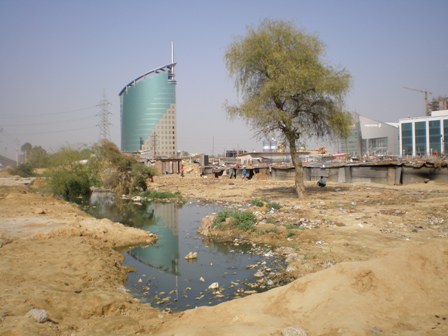
Gurgaon, a satellite town in the south of Delhi has become a symbol of the ‘Shining India’. People are dazzled by the glass-fronts of shopping-malls and corporate towers and fail to see the development of a massive industrial working-class that lies behind this ‘post-Fordist’ display of consumerism. Together with other industrial centres like the Pearl River Delta in China and the Maquiladoras in Northern Mexico the Delhi industrial belt has become a focal point of the formation of the global working class.


A local form of the global working class

The industrial areas of Gurgaon have seen the emergence of a specific form of class composition – hundreds of thousands of (migrant) garment workers work side by side with similar numbers of automobile workers (working in the assembly lines of India’s biggest automobile hub) and young call-centre workers, sweating under head-sets. We are forced to re-think our traditional understandings of who ‘workers’ are, how they struggle and how this struggle can become a process of self-empowerment, moving towards self-emancipation.

Specific structures of industries and the nature of the composition of work-force push us, first of all, beyond regional and national frameworks. At the most obvious level this happens because of the global market. In the spring of 2008 the Rupee reached its peak value in relation to the US-Dollar, and caused bad export conditions. The garment industry in Gurgaon dismissed thousands of workers and shifted orders to ‘low currency’ countries like Vietnam and Bangladesh. In autumn, the same year the Rupee plummeted; with it crashed American and European markets, sending shock-waves into the industrial areas of Gurgaon: credit crunch for real estate, cutting down of garment orders, slump in US-banking services. Workers belonging to certain locations, who might have otherwise thought that they had little in common with chai stall owners, faced a situation very similar to these owners – cut in bonuses and piece-rates, end of free company meals and transport and threat of job cuts. The potential for a socially explosive tea-party of English-speaking youth working night-shifts at call centres, migrant garment and construction workers and young skilled workers in car-part plants emerged in the Industrial Model Town – a mass base for an actual ‘internal threat’.

There is a second level at which the ‘collective work-force’ needs to be understood beyond the boundaries of factory walls or and units. This level is shaped by local, regional and global divisions of labour. Maruti Suzuki connects its assembly lines and welding-robots with production units of hundreds of outsourced suppliers via transport chains, these networks reach the work-shop slum-villages of Faridabad and the green-field industrial areas along the National Highway. Assembly plants around the globe depend on parts manufactured in Gurgaon by companies like Rico and Delphi. IT and BPO offices cooperate closely with branches overseas, while production in the huge garment factories is supplied via supervisor middlemen with piece-work from working (wo)men stitching ‘at home’.

At a third level, the nature of the work-force cannot be grasped in localized forms. The majority of workers migrate into the area, moving back and forth between urban industrial life and the village. Wages are too low to reproduce a nuclear family in Gurgaon and most workers leave their families in the villages. Similarly it is almost impossible to survive a long period of unemployment, or for that matter, a long period of strike in Gurgaon. Though disintegrating, the village still functions as the main backup in times of unemployment. The introduction of the National Rural Employment Guarantee Act (NREGA) or the general development of the agricultural market reverberates in the working conditions in Gurgaon. Workers arrive in Gurgaon with hopes, which in most cases are dead soon. They survive 16-hours shifts by keeping in mind village misery and paradoxically, also by glorifying it. Their hope of ‘not having to be a worker anymore’ expresses itself in plans to open a shop back home. Reality forces us to find a collective and social expression of this urge to abolish our existence as ‘workers’.

A major element of this ‘worker’ existence is the casualisation of work-force. In winter 2000/2001 Maruti Suzuki used a minor labour dispute to lock-out the permanent work-force, and replaced it through compulsory ‘Voluntary Retirement Schemes’ with temporary workers. This has also happened in other companies, to the point that 70 to 80 per cent of the average factory work-force is nowadays hired through contractors. Due to their mobility (or lack of stability) these workers are less interested in struggles for long running wage agreements and company pension schemes. They have ‘short-term’ desires and their anger too is directed at the immediate. The remaining casual and permanent workers are often young workers trained in various ITI-campuses all over India, employed with much less job security and at lower wages than the old permanent work-force. In the garment factories the skilled tailors working at piece-rate, producing ‘full-piece’ garments are increasingly being put under pressure by chain-systems employing 20 less ‘skilled’ workers to produce the same garment using a greater division of labour based on CNC-cutting and embroidery machines. In Kapashera, a workers’ dormitory ‘village’ where about 200,000 textile workers and families live close to the main industrial area, dozens of ‘CNC-courses’ and six week basic tailoring courses are offered by small-scale informal schools.

In this complex scenario the majority of workers do not face a single ‘company boss’ in a formal way; they face a multiplicity of bosses. Due to the real estate boom which catapulted local farmers out of their fields into landlordism and business, a specific coalition of the local political class, landlords, labour contractors, police and company-hired goons became a repressive front ready to quell expressions of workers’ unrest. This local front of the ruling class is complemented by a faceless front of multi-national investment and central government policies.

Old Type of Struggles: Locked-Out in Dead-Ends

Under these general conditions, struggles which remain within the boundaries of the classical company/trade-union structure normally end in defeats and/or institutionalisation. There have been many ‘union’ struggles in Gurgaon in the last few years and they seem to follow a certain pattern.(1)

There is discontent among permanent workers as well as workers hired through contractors. In most cases some ‘under-the-surface’ struggles pre-date the ‘official conflict.’ For instance, at Honda HMSI ‘spontaneous’ canteen occupations took place before the ‘official’ struggle for union recognition began. In this phase certain sections of workers get in touch with union officials hoping that registration of a union will strengthen their position. Representatives emerge; member-lists are required for the application. The company tries to put pressure on the emerging ‘leadership’ and in many cases provokes a situation where suspension of ‘outstanding’ workers can be declared. In many cases companies ask the remaining work-force to sign individual letters of ‘good conduct’, trying to single out the supporters of the struggle. Unions, interested only in their self-propagation ask the workers not to sign: a struggle within the classical framework is easier to organise once workers are victimised, although their actual power might be greater once they are back inside the factory. An unofficial lock-out takes place; often workers hired through contractors, who expect little gains from a company union, either enter the factory or additional workers are hired to keep up production. Often these new workers are hired from the local population of the surrounding villages – another division between them and the mainly migrant, original work-force. Companies are usually prepared for the lock-out and subsequent problems in production, either by piling-up extra-stock or by getting parts from other suppliers. ‘Unofficial unrests’ get structured into classical forms, often managed by the main union advisors; protests in front of the factory gate, demonstrations, meetings with political leaders – the martyrdom of workers becomes an opportunity for leaders to stage themselves. In most cases the conflict gets limited to a single company, and attempts to connect to the wider struggle are not made. The state and companies are easily able to deal with these ritualistic forms of struggle, either through repression or through entangling it in a long legal dispute. The results of these disputes usually exclude the workers hired through contractors who were also part of the initial struggle. Furthermore, the cases for re-instatement of victimised workers often run for years. The recognition of a company union is followed by silence.(2)

Once in the trap of a lock-out workers can do little more than wait for the next symbolic show of solidarity. In the case of the recent lock-out at the Maruti fuel-pump supplier Denso, in Manesar, thirty-six union members were suspended on 17th February 2010 and about 500 workers refused to sign papers of ‘good conduct’. Since mid-February they have been sitting outside the factory while newly hired workers are kept inside around the clock. Even before the lock-out Denso had already ordered additional parts from its Thailand plant; they were prepared. In nearby Faridabad, workers of another Maruti supplier, AC manufacturer Sanden Vikas, were ‘locked-out’ at the same time. The union did not facilitate direct links between these two work-forces. The suggestion came up to write a common letter to the Maruti Suzuki management – admittedly only symbolic of workers’ coordination, which could nonetheless have had some impact. Another idea which came up was to go in small numbers and stand with placards in front of Maruti or other local factories. Denso runs factories around the globe and some effort to let workers and managements in these factories know about the situation in Manesar could have been made (3); small steps which could help spread the word and perhaps create direct links between workers of the supply-chain. This did not happen; instead we saw one or two union demonstrations and bored young workers sitting and playing cards. According to a Denso worker, on 22nd March 2010, the company took back 23 of the 36 suspended union representatives and sent all Denso workers for a one week training to a local ‘World Spiritual University’ ashram, to find mental peace. When they returned to the factory most of the workers were shifted to new jobs in different departments, at new machines, with new work-mates.

A New Generation of Workers and their Struggles

There is a need to discuss with workers the shortcomings of traditional forms of waging struggles, and need to consider the possibility of the emergence of a new form in the light of the actual experiences of wildcat strikes and factory occupations in Gurgaon in the last few years. These struggles have largely remained unknown to the ‘wider public’. Unfortunately, left activists usually get to know of workers’ struggles only when they have gained a sort of ‘official’ status, which generally means when they are repressed. The lathi-charge at the Honda factory in 2005 mobilised the left, as did the murder of a worker at Rico; by and large the left took a ‘civil rights’ position on these incidents and no attempt to analyse the basis of workers’ power and self-activity was made. The struggles of a new generation of workers already provide some answers and ask many questions relevant for the future; for instance they raise questions about how struggles are to be extended from the factory base, avoiding ‘unnecessary’ direct confrontation with the state forces, and show us the pitfalls of formal representation.

In April 2006 more than 4,500 temporary workers occupied Hero Honda’s Gurgaon plant for several days, demanding higher wages and better conditions. The company cut water and electricity, but asked the police not to enter the factory. No support came from outside the plant. The workers sent a small delegation to negotiate, and the delegation was bought off. The delegates returned promising fulfilment of all major demands once production is restarted and they then disappeared. Only some demands were actually met by the management. When the factory occupation ended, workers at the Hero Honda supplier, Shivam Autotech, occupied their plant which was close by and raised similar demands. Workers at the KDR press-shop in Faridabad, who supply Shivam Autotech with metal parts, worked reduced hours during these days.

In September 2006, after temporary workers at Honda HMSI, Manesar were not included in a union deal, they occupied the canteen of the plant, supported from the outside by the next arriving shift. The company reacted by cutting water supply. The company and the union asked them to go back to work.

In January 2007 2,500 temporary workers working at the car-parts manufacturer Delphi, in Gurgaon, went on a wildcat strike, blockading the main gate. The company threatened to shut-down and relocate the factory and asked the union of the 250 permanent workers to get the temps back to work. After two days the blockade was lifted. In August 2007 the temps at Delphi struck again, this time for few hours and without prior notice, demanding the payment of the increased minimum wage and succeeded. Many of the workers live together in back-yards of nearby villages, sharing food, mobile phones and information about jobs.

In August 2007, after the Haryana government had increased the minimum wage, over a dozen companies in Faridabad and Gurgaon faced spontaneous short strikes mainly by casual workers, demanding the payment of the new wage. In most cases these actions were successful (4).

In May 2008 after not having been accepted as members by the permanent workers’ union the temporary and casual workers at Hero Honda in Dharuhera went on a wildcat strike and occupied the plant for two days. The management and the permanent workers’ union promised betterment in their situation. The temporary and casual workers then tried to register their own union – a process which ended in suspension of leaders and a mass lock-out in October 2008.

It would be reductive to label these struggles ‘spontaneous’. We need spaces to meet in the industrial areas to analyse the process of social production and the already existing day-to-day experiences of organisation and subversion within factories, along supply chains, in the back-yard living quarters, and in villages – spaces for self-inquiry. If there is to be a communist party it should celebrate the collective worker that discovers itself by turning its social cooperation against its proclaimed precondition: capital. A part of this proletarian self-reflection must be the development of a structure of mutual aid, practical support and coordination.(5)

Notes

(1) The list of examples is way too long. Just to mention a few in Gurgaon: Maruti lock-out in 2000, Honda HMSI in 2005, Amtek in 2006, Automax in 2008, Mushashi and Rico in 2009, Denso and Sanden Vikas in 2010.

(2) After recognition of the union at Honda HMSI the number of workers hired through contractors and the general productivity increased.

(3) It is difficult to rely on the classical union structure for these kinds of international links. When the dispute at Rico stopped GM and Ford assembly lines in the US and Canada due to missing parts the comment of a United Automobile Workers official in Michigan was: “We are experiencing the effects of outsourced suppliers, and we hope they would be able to resume production as quickly as possible so we can in turn resume production” Interestingly enough this comment was made after the UAW had signed an agreement to lower wages to ‘save jobs’, which were being disputed by many workers on the shop-floor. While Denso workers in Manesar were locked-out, Denso workers in Tychy, Poland, organised protests for wage hikes matching the wage increases for FIAT workers.

(4) Today the situation seems even more explosive, given that the April 2010 ‘minimum wage hike’ of 30 per cent for Delhi workers does not compensate for the enormous inflation in food and transport prices.

(5) Comrades of Faridabad Majdoor Talmel are about to open some physical spaces for workers’ meetings in Faridabad, Okhla, Gurgaon and Manesar. For more information, visit Gurgaon Workers News and Faridabad Majdoor Samachar.

We need to protest and protest peacefully. But over what?

Gautam Navlakha, Sharmila Purkayastha & Asish Gupta

Any democratic response to end the war which has been initiated by the Indian State is welcome. However, there are a few questions in the light of write up for the planned peace march in Raipur on 5th May 2010.

1) Why is peace delinked from ‘causes like exploitative, iniquitous model of development etc’? More urgently, what is this peace about? Undoubtedly, war is undesirable, but to believe in peace marches without a thought to justice, is rank bad faith. Clearly, those who wish to march in Raipur (to where?) saying no to violence, cannot bear too much reality.

2) By saying no to violence, the participants and organizers have equated the two sides. It is one thing not to care for Maoist violence but to equate state violence with that of the Maoists is to willfully ignore the coercive nature of state power. The government has been cagey in telling the total paramilitary strength that has been deployed in the wake of Operation Green Hunt. Unofficially, it is known that no less than 67 battalions have been sent to 9 states, which means at least 67000 armed personnel. The elite COBRA force has been created to fight the Maoists. Besides, 20 more schools will be set up to train the paramilitary under the army. Why will a peace march not protest this heavy militarization in the name of countering Maoism?

3) Undoubtedly, there are many who do not agree with the Maoists. But they should have the courage to come out and criticize the Maoists for their ideology and actions. Why do they take this confused road which shows neither courage nor conviction?

4) The stated purpose of the march is to end the ‘heavy loss of life of poor people, especially of adivasis’ arising out of the crossfire between the state and the Maoists. If this is so, it is a very serious matter. Can some details be provided to understand this, particularly since the extensive reports in the Indian People’s Tribunal did not confirm this? By repeating the sandwich theory, the advocates of this peace march have created a theory which satisfies the middle class distaste for violence and patronizing belief in the passivity of the poor. Why is it so hard to understand that the poor may not wish to conform to the middle class dictates of passivity?

5) How does Vanvasi Chetna Ashram (VCA) manage and synthesize these confusions mentioned above? It would be instructive to recall that when the December padayatra in Dantewada was planned here in Delhi (sometime in early November), the purpose of the padayatra was to visit the different villages which had been emptied out over the last few years. The purpose of the padayatra was to understand how people were coping in the present condition of operation green hunt. How does VCA forget its own initiatives?

6) We need to protest and protest peacefully. But over what? We need to protest against Operation Green Hunt, against Operation Mine Hunt, against Operation Land Grab. It is only then that peace can be meaningful.

Peace March in Chhattisgarh from May 5

Azadi Bachao Andolan

The country is in the midst of a civil war. In the estern part, West Bangal, Odisha, Jharkhand and especially in Chhattisgarh, violence, both by Mioists and by the state, has erupted resulting in heavy loss of life of poor people, especially of adivasis.

People, who believe in peace and non-violence, are facing the question : what can be done right now? (At the present moment, we are not discussing the causes like exploitative, iniquitous model of development etc. which has led the country to the present crisis). Out of the meeting with Gandhians like Amarnath Bhai at Sevagram on April 9 and jurists like Justice PV Savant, scientists like Prof Yash Pal, Dr. P.M. Bhargava, Dr. Vandana Shiva, social activists like Swami Agnivesh during Independent People’s Tribunal in Delhi on April 10 and 11 and the senior journalist Kuldip Nayar, an idea has emerged: 50 persons, who are known in the country for their integrity and who believe in peace and non-violence, should take out a peace march in Chhattisgarh as early as possible. These 50 peace marchers will be joined by others also.

The Peace-March will start form Raipur (Capital of Chhattisgarh) on May 5, 2010.

Peace marchers are requested to reach Raipur by noon of May 5.

The details of Peace March, assembly point in Raipur etc will be communicated soon.

Those, who have already given their consent to participate in the Peace March, include Prof. Yash Pal (Former UGC Chairman), Dr. P.M. Bhargava (famous bioscientist), Narayan Desai (Veteran Gandhian and Chancellor of Gujrat Vidyapeeth), Kuldip Nayar (Senior Journalist), Justice Rajender Sachchar (former chief justice of Delhi High Court), Amarnath Bhai and Lavanam (Veteran Sarvodaya leaders), Ms. Radha Bhatt, President, Gandhi Peace Foundation, Prof Anil Sadgopal (Educationist and President of All India Forum for Right to Education), Arvind Kejariwal (Magsaysay Awardee), Prof. Jagmohan Singh (Historian and Nephew of Bhagat Singh).

Lovers of peace and non violence who want to end civil war in the country and , wish to join Peace March should contact Kuldip Nayar (Ph. 09818309444) e-mail kuldipnayar09@gmail.com) or Dr. Banwari Lal Sharma (0532-2466798, 09235406243) e-mail azadi.bachao.andolan@gmail.com)

Custodial Death of Gangula Tadingi arrested in connection with CMAS (Narayanpatna)

A PUCL ( Bhubaneswar ) Report

Gangula Tadingi, a poor adivasi man, aged about 40, died on 12th April 2010 in judicial custody, reportedly of Tuberculosis. He was an under trial prisoner kept in Koraput District Jail. Tadingi was one of the 133 people arrested in connection with the alleged attack by the Chasi Mulia Adivasi Sangha on Narayanpatna Police Station on 20th November 2009 in which two adivasi people were killed and many more injured in police firing. On the incident of police firing, the PUCL Bhubaneswar had written to the State Human Rights Commission making an appeal for an investigation into the incident. There has been no response from the Commission on this even after six months.

When the news of Tadingi’s death was reported in a section of local media one of the PUCL members from Bhubaneswar unit visited Koraput during 16th-17th April 2010 to find out the circumstances leading to this death in custody. The following report is based on the member’s interviews with the jail authorities i.e., the Superintendent of Jail, the Jail Doctor, the District Collector and the Superintendent of Police Koraput, Dr.Niranjan Das, the TB specialist at the District Hospital Koraput, Mr.Nihar Ranjan Pattanaik and Mr.Gupteswar Panigrahi, lawyers for the deceased Tangidi as well as for other arrested people of Chasi Mulia Adivasi Sangha and one NGO activist who visited the victim’s village and met his family members. An interview with some of the jail inmates was refused by the jail authorities citing ‘security’ concern.

Version of Sri Brahmananda Sahu, Superintendent of Jail: Gangula Tadingi was admitted into the jail on 17.12.09. To his knowledge he had no health problem at the time of entry. He was detected having TB two months ago, treated by the jail doctor in the jail hospital till 7th April when he was shifted to the District hospital as his condition worsened. He died on 12th April. His family was not informed of his illness and only when he died a message was sent home. On asking why Tadingi’s family was not informed of his illness, even after he was admitted in the district hospital, the Jail Superintendent said he had tried. He said he had sent the message to the Narayanapatna Police Station and the PS did not convey the message to the family.

Tadingi’s family was sent for after he died and after doing the post-mortem the body was handed over to his wife. The body was buried in Koraput itself as the district administration could not provide a vehicle to transport the body to Tadingi’s village.

Tadingi was last produced in the Court on 19.2.10. On asking why he was not produced in the court for nearly two months, when he should have been produced once in every 15 days, the Superintendent said that the jail authorities could do nothing about it, because, for security reasons, unless adequate police force was provided the under trial prisoners couldn’t be taken to the Court.

Version of Dr.L.D.Nayak, the Jail Doctor: At the time of entry into the jail, Gangula Tadingi had reported body ache and was given medicines for that. He had told the doctor that the police had badly beaten him up before he was brought to the jail. When asked whether this matter was recorded in the register the doctor said that it wasn’t as ‘there was no external injury marks’. According to the jail doctor Tadingi was continuously complaining of fever and stomach ache and was diagnosed having Pulmonary Tuberculosis in January 2010. Since then he was treated in the jail hospital till 7th April when he was shifted to the District Hospital . On asking whether Tadingi was kept in a separate room or along with other patients in the same room the doctor said that he was kept in a separate room. When asked why did Tadingi die when TB is curable and when he was saying that he was satisfied with the treatment and the diet provided to him the doctor replied by saying ‘it would be known only from the post-mortem report’. When asked whether he suspected anything which could have been caused by the police beating he replied, ‘possibility of an internal injury can not be ruled out’. The doctor also told that Tadingi was not the only one who had complained of police beating – many people arrested in connection with Chasi Mulia Adivasi Sangha had complained of the same.

When asked how many TB patients are there in the jail presently the doctor said there is one more TB patient but there might be more also since not all inmates (above 500 people are kept in the jail) are being examined for TB. When asked why aren’t they being examined, he said that unless somebody comes of with symptoms they don’t examine. And, “Tribal people, being illiterate and unaware of the symptoms, would not complain of any illness unless it becomes serious”.

Version of Dr.Niranjan Das, TB Specialist of Koraput District Hospital: Gangula Tadingi was admitted in the District Hospital 7th April, 2010 . His treatment was alright. Then how did he die when TB is curable? “That will be known from the post mortem report”, was his reply. The doctor then mentioned that on 10th April he had recommended the jail authorities to shift Tadingi to the MKCG Medical College Hospital , Berhampur for further diagnosis. But the jail authorities did not shift him. He also developed jaundice and died on 12th April.

Meeting with Rajesh P.Patil, District Collector, Koraput:
The district collector told that he had sent his interim report to the NHRC on the death of Gangula Tadingi within twenty-four hours of the incident. The final report would be sent once the post mortem report is available. When asked for a copy of this report he said, “I can’t give it like that. You apply it through RTI”. When asked whether he found any negligence on the part of the jail authorities in the treatment of Tadingi, he said he didn’t. When asked if there was no negligence in the treatment then how did he die, his reply was, “We have to wait for the post-mortem report”.

On the question of not producing Tadingi in the Court, thereby not giving an under-trial prisoner the opportunity to inform the court whether he was getting proper treatment or not, the collector said that that job is looked after by the court and the jail authorities and the district administration has nothing to do with it. The district administration, on its part, is trying to release on bail most of the under-trial prisoners in Narayanpatna case. They have appointed a nodal officer to look into this.

Did he visit the jail regularly in his role as a member of the District Jail Committee to look into the health and hygienic conditions in the jail and did he know of the illness of Tadingi and enquire into the treatment he was getting? Does he know whether TB patients are kept in separate room/ward or allowed to be kept with other patients? To these questions the collector replied that he visited the jail as a member of the Jail Committee, found the jail conditions alright but did not know of the illness of Tadingi. He said he didn’t know whether TB patients were kept separately from other patients or not.

When asked how the District administration could be so insensitive as not to provide any help to Tadingi’s family to take the body to his village, he said, “Who said that we didn’t help. We had arranged for a vehicle but the driver was not willing to go. You know the situation in Narayanpatna. I was informed about the case at the last moment. We have sanctioned an amount of Rs.10000/- from the family benefit scheme”.

When asked, why is that a civil liberty organization denied access to the jail inmates and, when we are denied access, how can we believe that everything is alright inside the jail walls, he said, “It is for security reasons. There are Maoists in the jail. So there are restrictions in meeting. But if the Superintendent of Police allows you to meet I have no objection”.

Meeting with Shri Anup Sahu, Superintendent of Police, Koraput
On asking why the Narayanpatna police did not communicate the message sent by the jail authorities to the family of Ganguly Tadingi, the SP said, “It’s not easy. I, myself, haven’t been able to communicate with my own people in Narayanpatna police station for the last three days. Roads are being cut off so often. What do you expect in such situation?”

“It is not our responsibility to see whether the under-trial prisoners are produced in the court or not. It is for the court and the jail authorities to see to it”, was the response when told about what the jail authorities were saying about the non-cooperation of the police in production of under-trial prisoners in court.

Meeting with the Lawyers defending Gangula Tadingi:
“Not producing Gangula Tadingi in the court for nearly two months is not an exception; rather it is the norm. There is no doubt that the jail authorities and the police take a casual attitude of their duty to produce the under-trial prisoners at every adjournment. Citing security reasons is only a plea.

“Tadingi was not given proper diet, required for a TB patient, in the jail. He was not kept in a separate room in the jail hospital. He was kept in the same room along with other patients. Other inmates of the jail have reported these facts. We got to know of Tadingi’s illness only when he was shifted to the District Hospital .

“After the death of Gangula Tadingi, all inmates skipped one meal as a mark of solidarity but some of the inmates sat on a hunger strike demanding suspension of the Jail superintendent and the jail welfare officer, compensation for his family. They had other demands as well, such as regular production of the under-trial prisoners in the Court, withdrawal of cases against people associated with Chasi Mulia Adivasi Sangha and to stop operation green hunt etc. During the hunger strike the jail authorities were reluctant even to allow the lawyers to meet their clients even though it was reported that their conditions were serious.”

Discussion with an NGO activist who visited the village of Gangula Tadingi and met the family members:
Gangula Tadingi was a poor agricultural labourer. He was one of those adivasis who supposedly ‘surrendered’ before the police after the Narayanpatna police firing incident. He was asked by the police to report at the police station once in every week and Gangula had reported twice. When he went to report for the third time on the third week he was arrested. Tadingi’s wife reported that he didn’t have any health problem before the arrest. She was not informed by the jail authorities that her husband was ill and that he had TB. Even when she reached the Hospital Morgue, after getting news of Tadingi’s death, she was not told how he died. The police did not make any arrangement to carry the dead body to their village. The police only offered some money but didn’t help to arrange for a vehicle. Since they didn’t know anybody in Koraput who could help in arranging a vehicle they left it to the police to do whatever it wanted to with the dead body. The family members have heard that the government would give them an amount of Rs.10000/- but are yet to receive it. The family has a job card under NREGS but not a single entry has been made in it. Tadingi’s wife, Kamala Tadingi is in poor health herself and since her husband’s arrest has been struggling to feed herself and her three minor children.

Observations and Demands:

1. The death of under-trial prisoner Gangula Tadingi is unnatural and unfortunate. It is a violation of right to life of the victim.

2. The victim was not produced in the Court, neither physically nor through video linkage, within 15 days interval, which is a mandatory provision under Code of Criminal Procedure and a statutory right of an under-trial prisoner. It has been observed that the other under-trial prisoners of the same jail, associated with Chasi Mulia Adivasi Sangha, are also not produced in the Court at regular interval.

3. The visits of District Collector and other members of the District jail Committee to prisons to look into the health and hygiene conditions, medical and other facilities appear to be ritual visits. It does not seem to satisfy the objective of the visit of the team to look into the jail conditions in general and the rights of the under-trial prisoners in particular.

4. The family of the victim is in a distressed condition which has been deprived of its sole earning member.

5. Different reports have been collected regarding whether the victim, a TB patient, was kept separately or along with other patients in the jail hospital. It may be recalled that according to one sample study by the NHRC nearly seventy-nine percent of deaths in judicial custody (other than those attributed to custodial violence) were as a result of infection of Tuberculosis.]

6. The district administration did not make necessary arrangements to transport the dead body of Gangula Tadingi from Koraput to his native village for cremation as per the tradition of the community. It is a clear violation of human right of the victim’s family.

7. Not allowing the civil liberty organizations, in the name of security, to interact with any of the jail inmates does not appear to be prima facie valid. It raises the suspicion that the rights of the under-trial prisoners/convicts, and specifically, the basic rights of the inmates relating to health, hygiene and medical facilities are not properly protected.

Considering all the above circumstances with regard to the death of Gangula Tadinga in judicial custody, and the larger issue of the rights of prisoners, we demand that:

1. An independent inquiry, preferably a judicial one, be instituted to look into all aspects that led to the custodial death of Gangula Tadingi and officials responsible be punished accordingly;

2. The family of Ganguly Tadingi must be adequately compensated for the family lost its sole earning member;

3. The mandatory provision as laid down under section 167 (2) (b) of the Code of Criminal Procedure be scrupulously implemented to ensure the production of under-trial prisoners in the Court once in every 15 days. And there should be proper communication between each prisoner and the concerned Magistrate in every case; and

4. All inmates of the jail should be medically examined to ensure early detection of any serious ailment and proper medical attention be provided accordingly.

Released to the Press by Pramodini Pradhan, Convenor, People’s Union for Civil Liberties (PUCL), Bhubaneswar on 22nd April, 2010

Video: Abaixo o estado fascista e expansionista indiano – Brazilian protest against Operation Greenhunt

Condemn the use of Capital Punishment against 3 Kashmiris

COMMITTEE FOR THE RELEASE OF POLITICAL PRISONERS
185/3, Fourth Floor, Zakir Nagar, New Delhi—25

Giving Death Sentence to 3 Kashmiris and rigorous life imprisonment to another in the Lajpat Nagar Blast Case vindicates the observation that “being a Kashmiri itself is a crime to be punished in India!

Strongly Condemn the use of Capital Punishment by the Government of India!

Abolish Capital Punishment!

After 14 long years, a Delhi Court has finally given death sentence to three Kashmiris—Mohd Naushad, Mohd Ali Bhatt and Mirza Nissar Hussain—in the 1996 Lajpat Nagar blast case while putting Javed Ahmed Khan under rigorous life imprisonment. While two others—Farooq Ahmed Khan and Farida Dar—were released as the court observed that the 14 years that they had spent in the prison would be considered as their punishment. Here there is a catch. A week before the court had acquitted 4 others as it had found them innocent, that too after 14 long years! So the question that arises to any discerning mind is that if two have been released as their 14 year incarceration is being taken as punishment by the Hon’ble Court for them, then why is it that the court silent on the same quantum of years spent by the acquitted four. Can the court give back their 14 long years? Can it compensate for the physical and mental injury along with the social stigma that these four and their kith and kin have gone through? Who should be held accountable for such travesty of justice?

It should be noted that the Court has rapped the police for shoddy evidence and irresponsible conduct which it has termed as lack of seriousness. How can such criminal lapse on the side of the investigating agencies make life miserable for people who can only get justice that too to be declared innocent after almost spending a life sentence! So when one of the persons who have been on trial was on record saying that “being a Kashmiri itself is a crime to be punished in India” the court sentence proved to be a grim reminder, a tragic replay of the gross injustice meted out to the people of Kashmir by the Indian judiciary.

We at the CRPP reiterate that every democratic mind should raise this question about the authorities who have falsely implicated them and fed all kinds of insinuating and incriminating stories in the media on their so-called involvement. Will they ever stand for trial? Or raising a question against them would affect the morale of the investigating agencies? Once again what comes to sharp focus is a continuing story of calculated assault on the lives of particular people who have been targeted for their political convictions. More than a case of showing how fair the system is—as it has acquitted the genuinely innocent and tried the ones for their “various roles”—this once again brings forth the ugly face of blatant violation of procedures and rights of the accused, let alone their right to represent themselves without being prejudiced against.

Despite shoddy evidence and irresponsible conduct from the side of the police, it did not stop the court to give death sentence to 3 Kashmiris which is a punishment that has been long given up by many civilised countries. India is yet to sign this International treaty to which many of the democracies in the world are signatory against a worst form of barbaric punishment that can only further criminalise the people and the system. We demand unequivocally to abolish Capital Punishment and demand the Indian Government to immediately sign the International Treaty abandoning death penalty as a form of punishment.

Given the way things are unfolding for the people of Kashmir all claims of the Government of India about a bill against torture or allegedly safeguards against that sounds like a cruel joke as many of such detention centres in Kashmir are illegal and secret.

Ever since the news of the sentencing of six people along with the acquittal of four of the 1996 Lajpat Nagar blast case the valley of Kashmir has witnessed series of protest demonstrations, and complete shutdown. This reflects the general apathy of a people who have been subjected to the worst kinds of human rights violations.

Illegal detentions, trumped up cases and imprisonment being a common way of life for the average Kashmiri, the question of the political prisoner and his/her status and safeguards against all forms of torture and intimidation becomes paramount. While this is being written there are several people who have been kept behind bars including leaders for protesting against the gross violations of the civil and political rights of the people of Kashmir. In fact this anger is evident in the complete shutdown of the valley and when the people and their leaders say that they are being targeted for their demand for the Right to Self-Determination.

In Solidarity,

Gurusharan Singh (President), Amit Bhattacharyya (Secretary General), SAR Geelani (Working President), Rona Wilson (Secretary Public Relations)

CPI leader Manish Kunjam contextualises the Bastar violence

Manish Kunjam, a two-time MLA of the Communist Party of India (CPI), contexualises [the Bastar] violence:

“The area is mostly dominated by people of the Gondi Koya tribes, who rely on forest produce to sustain their livelihood. They sell mahua [a local fruit mostly processed to make liquor], tendu patta [a leaf from which bidis are made] and imli [tamarind] in the market. Historically, these people were exploited by Forest Department officials, forced into unpaid labour, and beaten up at the first sign of resistance. I am a witness to such kind of gruesome exploitation.

“They are very attached to their land, but because those lands came under the control of the state after Independence, the tribal people were suddenly seen as encroachers. This led to a great mess, the brunt of which the people are bearing even today. To add to this, the lands of these people were given away to private miners and local contractors. The naxalites fought against this injustice and became the leaders of the tribes here.

“In a phase where all the mainstream Left parties were concentrating only on workers’ issues and parties such as the Congress and the Jana Sangh [later on, the Bharatiya Janata Party] were party to the exploitation of tribal people in Bastar, the naxalites were the only force that spoke up for them and filled that political vacuum.”

He said even today the government did not have a plan to address the real livelihood issues of the tribal people. The implementation of the Forest Rights Act, 2006, which should have given forest-dwellers their historical right to land, was in disarray, he added. “There was a show of distribution of pattas [land ownership documents] in the beginning but even that is not happening now.”

He pointed to the two major memorandums of understanding (MoUs) that have been signed with the Tatas and Essar Steel, which will permit them to extract minerals here. He said: “The Bastar region has an abundance of minerals such as bauxite, tin and dolomite. Apart from this, it is also rich in timber. Instead of empowering the tribal people and giving them their right to these resources, the government is interested in shipping the resources out. In a place like Bastar, which has seen no development since Independence, a reaction against the state’s forces is bound to happen. The naxalites are just the one force but the problems of the tribal people are real. In this spree of violence, however, the naxalites do not realise that the jawans they killed were also poor people working for a livelihood and not class enemies as such. They only assist the class enemies bound by their duty.”

He felt that the increased deployment of security forces to counter the naxalites was a disguised attempt to enter those villages where Salwa Judum (an anti-Maoist vigilante group, meaning people’s peace movement in the local Gondi language) could not enter. “Every day, we see false encounters and physical torture by the police. In such a case, a villager has no choice but to retaliate either with the Maoists or alone.”

Excerpted from Frontline’s report, “In the war zone” by AJOY ASHIRWAD MAHAPRASHASTA (Volume 27 – Issue 09 : Apr. 24-May. 07, 2010)

Public Meeting: Indian State’s War on People and the Assault on Democratic Voices (April 24)

FORUM AGAINST WAR ON PEOPLE

Public Meeting
Indian State’s War on People and the Assault on Democratic Voices

3PM-8PM, 24TH APRIL 2010
Gandhi Peace Foundation, Deen Dayal Upadhyay MARG, ITO, DELHI

SPEAKERS: Randhir Singh, Justice Rajender Sachar, PK Vijayan, Madan Kashyap, Sumit Chakravorty, Neelabh, B D Sharma, S A R Geelani, Aparna, Kabir Suman, Darshanpal, Arundhati Roy, Ravinder Goel, Karen Gabriel, N Venuh(NPMHR), S R Sankaran(to be confirmed), Kalpana Mehta, Rajkishore, Varavara Rao, G N Saibaba, Mrigank, Ish Mishra, Radhika Menon, Shivmangal Sidhantkar and others

Operation Green Hunt is an unprecedented military offensive on the people: Indian government has been at war with the people of Kashmir and the North East for decades. In the name of ‘national security and integrity’ and ‘national interest’, the government has been trying to crush the democratic aspirations of these oppressed nationalities with state terror. Through Operation Green Hunt, the government has brought its war on people to the heart of India. If the total number of government forces presently engaged in this Operation is taken in its entirety (including the paramilitary forces and the state police) it comes close to a quarter of a million (2.5 lakh). This is more than double the US forces presently deployed in the occupation of Iraq —approximately 1.2 lakh— and bigger than the armies of Australia, Netherlands and South Africa put together. The war preparations alone speak volumes about the real intentions of the government. Air Force helicopters equipped with guns are used against the adivasis, airstrips are constructed in Raipur and Jagdalpur, tens of Jungle-Warfare schools are established to train the forces in special operations, new barracks and bases to station armed forces are prepared all over the war zone, and public buildings such as schools, panchayat houses and health centres are converted to camps for the Security Forces and torture chambers. In the name of fighting Naxalites/Maoists, new armed forces such as the CoBRA, Jharkhand Jaguar, C-60, etc are raised with public money to unleash terror on the adivasis. With a heinous intent, special emphasis is given by the government to recruit adivasi youths into government forces and state-sponsored vigilante gangs to instigate a bloody internecine war. To top it all, army commanders are deputed to oversee the war operations while the US is providing ‘advisors’, military intelligence, satellite surveillance and overall ‘tactical guidance’.

The hidden objective behind this unprecedented military offensive is to crush all forms of people’s struggles and revolutionary movements so as to clear the way for the giant multinational companies, with whom hundreds of MoUs have been signed by the government. Till September 2009, MoUs worth of Rs.6,69,338 crores have been signed in the adivasi regions of these states (which is 14 percent of the total pledged private investment in the entire country). Arcelor Mittal alone is planning to invest $24 billion for the production of iron-ore in the mineral-rich regions of Jharkhand and Orissa. Likewise, the financial worth of the unexplored bauxite deposits of Orissa alone is estimated to exceed $4 trillion. The powerful foreign and Indian corporations are lying in wait for the government clears the land of the adivasis and smash their resistance, so that they can move into the land with earth-diggers and empty the land out of its minerals. The stage has been set to undertake what has been termed by a Government-appointed committee as the “biggest land-grab after Columbus”. The target this time is not the indigenous inhabitants of North America, but the adivasis of central and eastern India.

The ongoing War on People leaves a trail of devastation and death: In the wake of this war imposed by the government on our own people the death-count in mounting. In a region where 40 people are said to be killed every week on an average (Outlook, 22 February 2010), what the corporate media has missed or has deliberately overlooked is the sheer number of adivasis who died in the hand of the government’s armed forces. Whereas the government has claimed success in killing around 170 ‘Maoists’/‘Naxalites’ during the joint operations under Operation Green Hunt till now, whereas the media quoted the Maoists saying that none of the killed were the members of their organisation. There are reasons to believe that a great part of the dead were unarmed and defenceless villagers killed in cold blood by the joint forces in fake encounters. The killing of adivasis in Gompad, Singanmadugu, Tetemadugu, Dogpadu, Palachelim, Palad, Kachalaram and scores of other villages in Chhattisgarh seems to have followed such a pattern.

An attack on democratic voices: By these acts of fascist repression, the government has made it very clear that the Naxalite movement is not the only target of its war operations. Any movement, organisation or individual that fights for people’s demands and against government policies, is to be branded as a part of the Naxalite/Maoist movement and suppressed by the government through Operation Green Hunt. Swapan Dasgupta, the editor of the journal People’s March in Bengali and owner of Radical Publications was arrested. He died in police custody on 2nd February 2010 even before his trial began due to police torture. He has become the first martyr to fall under the draconian UAPA. Lalmohan Tudu, president of People’s Committee against Police Atrocities (PCAPA) in Lalgarh was picked up from his house and shot dead by the paramilitary forces on 23rd February, 2010. On 20th November 2009, Wadeka Singana, the president of the Chasi Mulia Adivasi Sangh (CMAS), Narayanpatna in Orissa along with another activist was shot dead by the police during a rally to protest against the atrocities committed on women by the government’s armed forces. Two of the CPI(ML) leaders Ganapati Patro and Tapan Malik have been arrested on numerous trumped up charges. In Kalinganagar 28 platoons of special police were used to attempt to forcibly acquire land for a road in service of Tatas. When the Bisthapan Birodhi Janmanch Sukinda led adivasis protested, police firing on 30th March 2010 led to bullet injuries to 16 tribal people. Repression is intensifying in the anti-land acquisition movements of Niyamgiri and Jagatsinghpur and against movements under Lok Sangram Manch in Rayagada of Orissa.

The Vanavasi Chetna Ashram of Himanshu Kumar, a Gandhian social activist working in Dantewada for the past 18 years among the adivasis and fighting against the atrocities of Salwa Judum, was razed to the ground on 17th May 2009. In three eastern districts of Uttar Pradesh no mass activity is allowed by declaring these districts as ‘Naxal-infested.’ Two PUCL activists, Sheema and Vishwa Vijay were arrested in Utter Pradesh. Hundreds of leaders of farmers’ organisations in Punjab were arrested to prevent their democratic right to protest against state killings of farmers and other leaders. Thousands have been imprisoned in jails all over the country and tortured for allegedly being Naxalite/Maoist ‘sympathizers’. People’s organisations like PUCL, IAPL, PUDR, RDF, PDFI, CRPP, APDR, DSU, etc. and their activists have been falsely implicated by the government. This is an attempt to unleash state terror in order to curtail our democratic rights and to silence all voices of dissent against this genocidal Hunt of the Adivasis. A climate of undeclared emergency now prevails in the country in the wake of this war on people and the assault on democratic space by the Indian State.

The Home Minister, who has been campaigning desperately to mobilise support for this US-dictated war on the poorest of the poor, has even gone to the extent of denying the existence of Operation Green Hunt! Similarly, he continues to utter the rhetoric of ‘Talks’ while refusing to take a single step towards creating a conducive atmosphere for any negotiation to take place. Such, lies, hypocrisy and double-talk by Chidambaram with the support of the Arnab Goswamis, Rajdeep Sardesais and his other wily allies in the corporate media, has not been able to hide the truth of this war. Even the Supreme Court of India, while hearing a petition on the ‘disappearance’ of 12 adivasis from Gompad village of Dantewada district during Green Hunt, castigated the government’s offensive. The court observed, “Some of the reports appearing in the media are disturbing. Over two lakh people have been displaced in this fight… Where will they go? What will they grow?” (IBN Live, 17 February 2010).

The resistance to the government’s war on people is growing: The millions of adivasis under direct attack from the state’s offensive are using all means to defend themselves and their jal-jangal-jameen. The democratic and progressive sections of the country have also come out against the government’s war on the people in the last few months. Individuals and organisations within India and abroad have in one voice condemned the government’s genocidal war. Hundreds of protest rallys, dharnas and demonstrations are being organised in different parts of the country and outside. Peasants, workers, employees, intellectuals, artists, writers, civil rights activists, students etc. have registered their strong protest against the government, and demanded an immediate halt to the Operation Green Hunt. The need of the hour therefore is to unite and build the broadest possible solidarity among the people against this war and intensify the resistance. Only an unceasing wave of mass resistance can stop government’s assault on struggles against sale of the country and plunder of resources and suppression of democratic struggles.

In memory of Pyla Vasudeva Rao, a leader of the Srikakulam Armed Struggle

Naujawan Bharat Sabha (NBS)
Delhi Committee

A memorial meeting for Com. Pyla Vasudeva Rao
Date: April 20 2010 (Tuesday), Time: 5:30 PM o
Venue: Gandhi Peace Foundation, Deen Dayal Upadhyay Marg (near ITO)

Veteran communist revolutionary of India and one of the foremost leaders of the glorious Srikakulam Armed Struggle Pyla Vasudeva Rao breathed his last at 10:00 AM on April 11, 2010 after fighting cancer. He was 78 years old at the time of his death; of these he had party life of 58 years of which the last 42 years were spent in underground.

Born in 1932 in Rittapadu village of Srikakulam dist, Com. Pyla joined the united Communist Party in 1953 when a party unit was formed in his village. Taking up a teacher’s job on the Party’s instruction, many of his students joined the revolutionary communist movement. He became a professional revolutionary in 1962 and also a member of the district committee of the party.

In response to the clarion call of the Great Naxalbari Peasant Armed Struggle, the Srikakulam Girijan Armed Peasant Struggle started on 25thNovember 1968 and on the decision of the party, Com. PV went underground. As a member of the Srikakulam leadership, Com. Pyla became part of the CPI(ML). He participated in the 1970 CPI(ML) Party Congress (first after Naxalbari). In Srikakulam movement he worked alongside Comrades Panchadi Krishnamurthy, Vempatapu Satyam, Adibhatta Kailasam, Subbarao Panigrahi and others.

Between 1969-70 many important leaders of Srikakulam leaders were martyred and the movement suffered huge losses and setbacks. CPI(ML) PC was reorganized of which Com. Pyla became the secretary. Opposing the line of individual annihilation, Com. Pyla resigned as PC secretary and joined with other Srikakulam comrades to revive CC led by S.N. Singh. Since then he was a member of the Central Committee of the Party. In 1974, APRCP led by Com. CP Reddy merged with the CPI(ML) led by Com. SN Singh and Srikakulam movement became part of the state movement. Com. Pyla was elected state committee secretary in 1976 when Com. P. Ramanarasaiah was killed in a fake encounter.

He was re-elected to the CC in the 1980 Special Congress. For long the Party in AP was identified with his name.

Com. Pyla consistently practiced and supported the revolutionary mass line and struggled against rightism and revisionism. He was an ardent votary of an armed agrarian revolution and of building areas of sustained resistance. His death comes at the time when the peasants of India are rising in many parts against the decadent rule of the ruling classes, against landlord oppression and forcible displacement. Srikakulam Armed Struggle continues to inspire the revolutionaries and struggling people of the country. Srikakulam Armed Struggle which reached the highest point in terms of resistance and people’s participation among all the struggles inspired by Naxalbari continues to serve as a beacon light for the present revolutionary movement. Com. Pyla as one of the leaders of that movement continues to live in the memory of the revolutionaries and the struggling people of the country.