Following is the video of a seminar organised by Correspondence and Kudos, the Literary Society of Hindu College (University of Delhi) on 4th March, 2010 with the aim of initiating a discussion on radical student and university politics.
‘The popular must redistribute the classic’: An interview with Prasanta Chakravarty
December 31, 2010 by 2 Comments
Paramita Ghosh talks to Prasanta Chakravarty, who teaches in the Department of English, University of Delhi, on the current state and dynamic of the Indian publishing industry, contemporary fiction and the culture of reading.
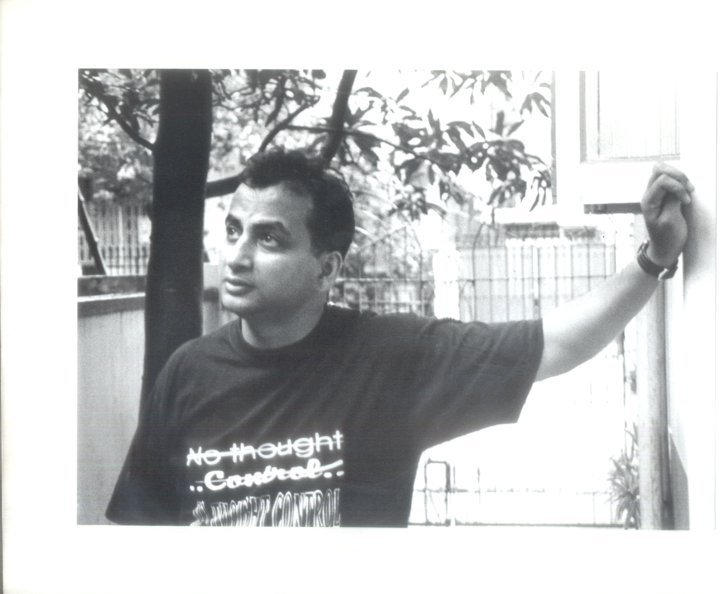
Paramita Ghosh (PG): Your project Humanities Underground is an attempt to rescue the Humanities from the skill-oriented courses that university education is slowly turning into. One would have thought this is more rampant in professional courses like management and so forth. But we see publishing, which is supposed to promote literature, is also going the same way with the birth of categories like chick-lit, books to be read in the metro, page-turners to be gobbled at the airport-lounge. How does one explain this attack or shift in emphasis in the arts/humanities/publishing?
Prasanta Chakravarty (PC): First of all, Humanities Underground is a collective umbrella and much will depend on the enthusiasm of a large number of people who are in their own little ways being affected by this onslaught on the varied and nuanced world. It is also about nurturing a critical, oppositional edge that humanities provide. But we are not trying to rescue anything. No one can and should get in that kind of a saviour mode. It is an online forum for sharing ideas at this point, a venture to see whether there is enough interest in facing the variegated and uncertain world that we live in. The initial signs are quite encouraging. We are receiving a collective surge of questions and commentaries and from different parts of the country and the world too. Debates are happening. Our aim is modest at this stage: to create a space where interested people can share ideas and imagination and work out strategies in order to take on the rapid watering down of reading habits and writing styles, without being self-congratulatory.
The shift you are referring to is interesting. Now I think this dichotomy between classical and popular is often fallacious. The idea of taste is often constructed. In that sense the emergence of the genre of novel itself in the 19th century was a popular venture, or the genre of ‘essay’, which started even earlier as a modest attempt to reflect and ruminate, is now solidly mainstream. So, in that sense this rush for chick-lit or graphic novels show an interesting shift and may become important markers of our times. But the point is about homogenisation. Young and old are often looking to merge in with the available, with the herd rather than look for possibilities. There indeed are publishers, often in regional literatures, who are still taking chances with the subtleties and criticality that literature, art and performance provide us. We have a generation of students who are not even bilingual though they routinely learn French or Sanskrit as a second language in school. What is this strange phenomenon? In Delhi University we are noticing with intrigue that some of our best students who receive astronomical grades in schools and colleges often cannot even write correct English, and notions of style have disappeared from the canvas all together. Humor, for instance, as an art, is a rare commodity. Something strange is happening which Humanities Underground is trying to fathom and explore.
PG: Writing and being a writer is such a glamorous profession these days. Why does everyone want to be a writer? Has the increase in number of publishing houses, the volume of publishing, the appearance of so many literary ‘forms’ contributed to the sense that everyone has a story to tell, everybody can tell stories? Why has this particular approach to ‘form’ become so important in literature now?
PC: There is this democratisation of writing in New India, which is great. This is not unlike the phenomenon that now our best cricketers and popular singers are coming from every region of the nation. Quizzards need not gruel in a Siddhartha Basu type format; KBC will and have replaced that kind of prime-time investment in the esoteric and variegated sense of trivia sharing. Literature likewise has become more user-friendly and accessible: from the potential authors’ standpoint as well as from the reader’s perspective. But this logic of massification, instead of democratisation and freeing literature from its shackles, is actually narrowing down possibilities. Shelf life has diminished and that is fine by the author and the publisher as long as they can fill it up with the next miraculous uproar. In actuality, forms are always changing, they evolve. The logic of this kind of assembly line plays safe and is often brilliantly finessed to homogenise forms. The argument is always democratic and making a quick buck for everyone, which is a formidable one to surpass. This is what we are witnessing in non-vernacular writing at this point. How many of us routinely read poetry or plays? The glamorous always stood out and reserved a maverick space at one point. That idea is being overturned by playing onto the logic of reaching out and by hammering accessibility.
PG: Do you see this phenomenon as a lack? Does it have to do with our culture of reading, which is changing or is India really turning into a nation of writers?
PC: Again, this is not a story of crisis. I would see it as a shift in sensibility as we, as a nation, accommodate to a more conservative and individualised time. I believe Indians still read a lot and a variety of things too. It is a truism that we are an extremely conscious people, politically and aesthetically. Good or hard-hitting artistic production will be appreciated at the end of the day. But that is not coming into focus because people who matter are actively interested in suppressing these factors. Some of our best minds are thus missing on the variety and depth and criticality that even contemporary literature provides. The popular always helps to redistribute the classic. The habit of being in touch with the enduring also means you are in touch with pulse of the everyday life. One is not opposed to the other.
PG: Has the thin dividing line between popular/commercial and ‘high’ fiction confused Indians? A couple of decades ago, for example, a James Hadley Chase pulp story and a Graham Greene novel would not have the same production value, imprint and publishing hype—as they now do if we draw equivalences in current writings. Chick-lit space is eating into, say the shelf space that could accommodate the likes of Amitav Ghosh or Rohinton Mistry. We are producing more of the Chetan Bhagats than Vikram Seths.
PC: Yes, it has perhaps. The confusion, as you call it, is deliberate and well worked out, as I said, but we cannot afford to be judgemental on the buyer and clamp down with the Seths and the Ghoshs of the world onto him. That will be an enormous exercise in misplaced condescension. And besides we all grew up on Hadley Chase and the likes! But we also read voraciously—all kinds of other stuff. That is the more difficult but sure-shot way of tackling the blundering homogeneity that we see in the marquee these days. The idea of choice is quite narrow, if seen closely. All conscious Indians must push each other to carry on with the habit of greedy reading. Old book stores and the newest one on the street are equally important institutions. Variety fosters thinking, and thinking, in turn, breeds criticality and opposition to our herd-instincts.
PG: If one is to push a bit further, one notices two kinds of writers that are getting rejected—those who obviously can’t write, but also those who can ( I am thinking of radical/avant-garde) have little scope to be noticed. I guess I am making this claim because I find it really hard to believe that in 25-30 years of mainstream English language and fiction publishing we have few exemplary writers, and even those whom we can’t really claim as ours often. Why do you think ‘serious literature’ is no longer coming out of our publishing houses? Is the logic that no one is interested in more reflective stuff valid? What do your students in Delhi University, for example, read outside of their course work?
PC: Yes, it is selective usage of the radical that the market prefers. Some writers are pegged as radical and hence their saleability. But I do not see much of avant garde writing in the modernist sense of the term in English langauge writing from India at least. Avant garde does not necessarily mean radical or let us say, such a kind of radicalism is much more bohemian (not busy and straightforwardly progressive) and experimental in form and style. I mean, G.V. Desani’s All about H. Hatter was truly avant garde. Not very often now in fiction we see that kind of devil-may-care approach, at least. You still see that, but in vernacular writings. Serious literature does come out of certain English press too but the problem is reverse: they are but too self-consciously serious. People who subscribe to them, missionaries of sorts, are likely to create a false dichotomy of the classic and the popular and wallow in their cocooned world.
True, many of my students do think in terms of course work but a large section of them in fact indulge in all kinds of readings too: from philosophy to history to various forms of contemporary literature. Writings from Latin America, parts of Asia and Africa are extremely popular with many of my students, which I see as a continuity of sorts with the earlier generation. There is a fair investment in Urdu and Hindi, which is wonderful. Some of them invest in translated works. Many participate in a variety of literary and analytical activities on the internet. But as I said, reading habits often need some kind of jumpstart from time to time; the milieu has to be fostered. That could be done possibly by sharing and exchanging ideas, by deepening debates.
PG: There has been a similar publishing culture in the West—similar turbulence and shifts, one would think. But why is it that in India there is no space or culture for promotion of independent, parallel publishing like, say, Zubaan and Katha? The US does, for instance, have a publishing house like poet Lawrence Ferlinghetti’s City Lights, does it not?
PC: I am not an expert on publishing but there may be a variety of reasons. One, as always, it is really difficult to survive in India on a small publishing space even if you are idealistically motivated. In Kolkata, in the past few years, a wonderful independent publishing house has emerged: Gangchil. But they do not even have a temporary space to work on and distribution is a perennial headache. This is a pretty standard story all around the nation. City Lights has evolved over a period of time. It could have sputtered but for the brilliant editorial and marketing intervention of Nancy Peters in 1971. The point is independent publishing too must innovate and professionalise within its ideal and radical space. In India sometimes independent publishers have tried to come under a common umbrella for distribution and so forth. For instance, The Independent Publishers’ Group (IPG) is a partnership of 10 small/medium publishers and publisher-distributors based in Delhi that started a few years ago. Daanish, LeftWord, Samskriti, Social Science Press, The Book Review Literary Trust, The Little Magazine, Three Essays Collective, Tulika, Women Unlimited, Zubaan and Kali for Women comprise the IPG.
Often more upcoming mainstream houses like Yoda, Navayana or Seagull are also publishing interesting and tantalising stuff. Or sometimes motivated zeal make things happen, where financial worries could be handled in other ways: as the Writers Workshop experiment has successfully depicted.
The other side is readership. It is often difficult to build up a loyal and solid base of readers who would be interested in the forms of writings that independent press have often traditionally supported: poetry, pamphlets, non-fiction, plays and so forth. It takes time and energy for such a long haul. The investment is thankless. It is really a culture around the variegated that I return to, which one tries to develop and inculcate. Oppositional and critical publishing houses are fewer, as you say, but that space is more alive in the vernacular. It is possible to conceive such locales in the English speaking world too. I am hopeful.
Anu Muhammad on India’s role in South Asia
December 31, 2010 by Leave a Comment
For the full interview, click.
During the recent visit of India’s Finance Minister to Bangladesh, India signed an agreement offering $1-billion credit facility to Bangladesh at a particular interest rate, which many in Bangladesh have found “disgraceful” and “too high”. This line of credit for Bangladesh was the one-time single-largest credit package offered by New Delhi to any other country. And it has been frequently noted that through such lines of credit, India, like other more advanced countries, has been facilitating the overseas expansion of its domestic capital. What is your assessment of the present Indo-Bangladeshi relationship? Don’t you find streaks of sub-imperialism (both in economic and political terms) emerging in this relationship as in the case of India’s relationship with Nepal and Sri Lanka?
Anu Muhammad: The question of India is very important for us. Without locating India and the role of Indian corporate big capital we cannot get rid of overall hegemony of global capitalism. India has the highest number of rich people but contradictorily India also has the highest number of poor people. The current Indian state is not representing Indian people but is representing Indian big capital. India for South Asia is the same as what the US is for the world. It is hegemonic, oppressive and undemocratic. The present India should be characterised with the rise of big capital, unprecedented accumulation of wealth and power in few hands, and its linkages with global monopoly capital. This India can be termed as sub-imperialist within the global capitalist system, and within South Asia it is imperialist. This India has recently increased its military expenditure to a record high level, also building military alliances with the US. They are both now trying to take control of the Bay of Bengal. With the increasing interests of India, China and the US in Bay of Bengal, the possibility for creation of new alliances or conflicts is rather high. Either way, Bangladesh is going to suffer.
Now global corporate bodies including the ADB, the WB or MNCs consider India a regional centre. Therefore, their projects are selected in line with the interest and long-term programme of Indian big capital. For example, the coal that the British company, Asia Energy, wanted to extract, when it attempted to start open-pit mining in Phulbari, was supposed to be exported to India. When the US oil multinational UNOCAL was trying to export gas, the destination was once again India. Now a number of projects have been conceived to build new coal-based power plants in Khulna and Chittagong. It is apparently a joint project, but the result will be different for the two countries. Bangladesh will have carbon emissions and dispossession of farmers that will create social tension and human tragedy, but Indian companies will earn huge profits.
Indian big business has access to huge potential market in Bangladesh, especially after the SAP. India’s presence is very high in every sector in Bangladesh. It is trying to monopolise each of those sectors, started utilising aid or credit, very well-known instruments of imperialist control and influence. Recently, India granted 1 billion USD loan to Bangladesh for building its own transit facilities. This transit is going to change everything in South Asia. Bangladesh is entering into the ambit of India’s military, political and economic domination on a scale not seen before.
I don’t know, how far the military aspect of the domination will go, but economically India is going to have a commanding authority over Bangladesh. India is claiming that Bangladesh is the land of terrorists and they erected fences around border, then how can they feel comfortable in taking their goods through Bangladesh? Yes, it will be used as an excuse. So, they will demand more regional security coordination under India’s control. The security system of Bangladesh will be subordinated to India status and interests.
Indian sub-imperialism behaves similarly with Nepal, Sri Lanka and other smaller countries in the region. In this context, people’s movements of India, Nepal, Bhutan, Sri Lanka, Pakistan, Bangladesh and other neighbouring countries should have a very high level of cooperation and coordination to strengthen united struggles for building a free, democratic and different South Asia not polluted by Indian or big capital’s hegemony.
Anu Muhammad on Micro-Credit in Bangladesh
December 31, 2010 by Leave a Comment
For the full interview, click.
How do you assess the role and performance of micro-credit? How much has it contributed to the capitalist penetration of rural Bangladesh and its integration in the global network of finance capital?
Anu Muhammad: Micro-credit in different forms has been in practice for long in this region. Dr. Muhammad Yunus (Grameen Bank) and Fazle Hasan Abed (BRAC) could institutionalise it and could attract global attention through its monetary success. Initially, their micro-credit programmes began with the promise of poverty alleviation, gradually its success showed its strength in other areas. Currently, BRAC, Grameen Bank and ASA control more than 80 per cent of the micro-credit market. From micro-credit business these organisations have accumulated a lot of capital and shown that micro-credit can become a corporate success. They have also linked multinational capital with the micro-credit network.
For instance, Grameenphone started its operation by relying on micro-credit, offered borrowers mobile phone as a commodity form of micro-credit, on condition of paying back in installments. Its initial declared aim was to ‘help poor’, ‘alleviate poverty’, now Grameenphone has become the largest company in Bangladesh with 90 per cent of its subscribers being non-poor urban people. Grameenphone is actually an entity of Telenor, Norway. They started with the poor and relied on micro-credit and then at one point migrated to more profitable areas. Grameen Bank has opened many other businesses, has developed joint venture companies with French companies such as Denon and Veolia (a water company), all in the name of poor. Intel and many other companies are coming to Grameen Bank to make use of its wide network through micro-credit.
The same thing is true also for BRAC. BRAC was initially interested more in education, health and other essential public services. With its increasing accumulation of capital through micro-credit, it shifted to the business of textile, printing, education (including setting up of a university). It is also in business with multinational seed company Monsanto. In fact, its focus on education and health care for the poor shifted more towards commercial activity. Thus the micro-credit operation, in its process, has successfully been used as a weapon to make macro business to grow in tandem with global capital.
But question remains, what about the much publicised objective, i.e., poverty alleviation through micro-credit? If we look at the hard facts, compiled from different studies (not sponsored by BRAC or Grameen Bank), we find a new debt trap for the poor people has been created by micro-credit. You cannot find more than 5-10 per cent people who could change their economic conditions through micro-credit. The people who could change their economic conditions were those who had other sources of income. If we closely look into the system of micro-credit it appears clearly as a means to create a debt trap. If you take loan, you have to repay in weekly instalments and it means you have to be active, healthy and working all over the year, which is not possible. In fact, it is impossible for the poor millions, who constantly live in adverse conditions, to keep paying weekly instalments all over the year. If there are any unfavourable circumstances you are bound to be a defaulter. And once you become a defaulter it creates a chain and you have to take loan from another lender/NGO to repay the same. Micro-credit has connected the rural areas and the population with the market but has made done that by pushing them into a chronic debt trap.
Today Dr. Yunus is not talking any more about sending poverty to museum. He has come up with a ‘new’ idea of social business, which is also unclear and seems to be fraudulent. The impact of micro-credit is now well understood by people around, especially millions of victims. However, the IFIs and global corporations seem to be very happy with these experiments, as they find that the poor people can become very useful objects for profitable investment of finance capital. Thus the WB, HSBC, Citibank, and other multinational banks are entering into the micro-credit market. Bangladesh has given a gift to crisis-ridden global capitalism, which has consequently found the market of four billion poor through micro-credit. It is very relevant here to quote the Wall Street Journal, an important part of the global corporate media. It said: “Around the world, four billion people live in poverty. And western companies are struggling to turn them into customers.” (26 October, 2009). Obviously, micro-credit is a very useful instrument to go with this objective.
Statement on the Binayak Sen Judgement
December 31, 2010 by 2 Comments
We are deeply anguished by the convictions and sentences of Dr. Binayak Sen, Piyush Guha, and Narayan Sanyal by the additional district and sessions judge of Raipur for sedition. We also note that in a separate case, Asit Sengupta was convicted and sentenced to eight years imprisonment for his work as magazine editor and publisher. Sanhati strongly condemns their convictions and sentences.
Convicting Dr. Sen of sedition and treason against the country, when he has devoted his life to service for the poorest citizens of India, yet again illustrates the disdain of the state towards its citizens and democracy. The real crime of Dr. Sen in the eyes of the government has been his protest against the state-sponsored vigilante force of Salwa Judum, and his efforts to bring to light the atrocities committed by this vigilante army on the indigeneous population of Chattisgarh. The state has attempted to make an example of Dr. Sen to all dissenting against its policies or protesting repression. Nevertheless, the state will fail in its attempt to create a fear psychosis among political and social activists; its efforts will only lead to the strengthening of resistance against state repression.
The charge made out by the prosecution against Dr. Sen was that he was responsible for passing letters from Narayan Sanyal lodged to Piyush Guha. Examination of witnesses and evidence presented by the defence demonstrated that the meetings in prison between Dr. Sen and Narayan Sanyal, the jailed Maoist leader, followed all legal norms and were based on the capacity of Dr. Sen as a physician and a human rights activist. When the accusations against Dr. Sen could not be supported by evidence in court, the government brought up other trumped-up charges and falsified evidence, much of which was glaring in its absurdity. That the court chose to overlook all this, has exposed the nature of our judicial system to the entire world.
It is necessary at this juncture to also mention that numerous undertrial political and social activists are today incarcerated in various prisons in India or languishing in jail for prolonged periods without trial, charged under various draconian state or central laws. These laws, and various draconian provisions of the criminal penal code, are being used to clamp down upon resistance movements against various anti-people policies pursued by the Indian state. The charges against Dr. Binayak Sen, and the travesty of justice in the name of his trial, have brought this hard truth to the fore.
We strongly condemn the convictions and sentences against Binayak Sen, Piyush Guha, Narayan Sanyal, and Asit Sengupta. We demand that the injustice meted out to them in the name of dispensing justice be rectified immediately. We also demand that the state immediately stops the systematic usage of various draconian laws and charges of sedition against activists to silence all voices of dissent.
On the Saxena Committee Report on the Forest Rights Act
December 30, 2010 by Leave a Comment
Campaign for Survival and Dignity
The controversial Saxena Committee on the Forest Rights Act has submitted its report, which has finally been made public. We know that this report will be projected as pro-people and pro-rights. But this report will be most useful to those who set it up – a Ministry and a forest bureaucracy (see the note below) that wants more power, while presenting a facade of being sensitive and pro-people. Here are some reasons why.
Regarding the implementation of the Act, the Committee has endorsed what we and others have been pointing out for a long time. It points out the problems in rights recognition, recommends action against illegal evictions, and calls for recognition of community rights, coming to the same conclusions as the Council for Social Development report and what the movements have been saying. It identifies the forest bureaucracy as a major problem. In itself, this is welcome. But when it comes to what should be done about these problems, and especially about MoEF and the forest bureaucracy, the report falls apart.
On the Environment Ministry: The Committee’s recommendations target everyone except the Environment Ministry, the Central agency most responsible for policies in violation of the Act. Out of eleven pages of findings in chapter 11, MoEF’s actions are covered in half a page. The most dangerous of these actions (click here to know more) – illegal forest diversion for corporate projects; rapidly expanding afforestation and “conservation” programs with enormous potential for land grabbing and conflict; and the huge sums of money being deployed for this – are barely touched in the recommendations. The chapter on development projects admits “some clearances” were illegal. But there has not been a single case where the Ministry has complied with the law on diversion, and the Committee neither recommends cancellation of illegal clearances nor justice for those whose rights have been illegally violated. There are no recommendations on afforestation, except for vague statements that policies should be “reviewed” and should “respect the FRA.” Whose job is it to review these illegal actions, if not this Committee?
On Joint Forest Management: The Ministry’s current favorite program – Joint Forest Management (click here to know more) – is being expanded across the country and is a major tool in the Forest Department’s efforts to block communities from managing forests or exercising rights. It is condemned in the first half of chapter 8 of the report and in one part of the recommendations; but other parts say it should continue in most areas and even that it has “advantages.” Then, the “alternative recommendations” (signed by half the members of the Committee) condemn it again. Thus the Ministry can do pretty much anything on JFM and still claim the Committee’s endorsement.
On “redefining forest governance”: On this issue – which was said to be the Committee’s raison d’etre – the report says that the status quo of Joint Forest Management and Forest Department supervision should continue in the vast majority of forest areas (those where communities do not file formal claims for community forest resource rights). The “alternative recommendations” say there should be changes, but agree that there is no legal requirement for them (they would need “a new statute or amendment of existing statutes”). This is the escape clause the forest authorities have been looking for. After the structure of the Forest Department has been identified as being the single biggest reason for the failure to respect the law, when even the Home Secretary has attacked their zamindari attitude and abuse of power, the committee legitimises the status quo until there is a “new statute or amendment of existing statutes”. This is a total misreading of the law and a backpedaling on the most crucial issue in forest areas today.
Riddled with other contradictions: On non-timber forest produce, crucial to people’s livelihoods, the report identifies many problems, but then only says free sale should be permitted – while advocating continuation of other existing structures, which numerous government reports have condemned (the “alternative recommendations” disagree). Satellite imagery (currently a major tool for rejections) is endorsed and celebrated as a mode for verifying rights in one section, which however also contains one sentence admitting it “cannot verify the existence of any right under the Act” (p. 66). On whether or not people should be removed from wildlife habitats, the report advocates two diametrically opposed views in the same paragraph (p. 131), one of which is called “dissenting” – but is in the main text. After describing critical tiger habitat notifications as “in violation of the Act”, once again it only recommends a “review” (p. 217).
In sum, the report is a mishmash that permits the Environment Ministry to do what it pleases, and still to claim the mantle of being pro-people. Indeed, almost any point raised in favour of people can be contradicted by citing some other part of the report.
When the Campaign was invited to join this Committee, we declined for precisely this reason. It is not the findings of government committees that matter, but whether and how they can be used by the powers that be. The nature and constitution of this committee, as reflected in its report, lent themselves to precisely such manipulation. We can be sure that all the ambiguities and contradictions in this report will be exploited to the fullest extent, even as the positive points it raises will be quietly discarded except where they serve the establishment’s interests.
The struggle in forest areas is today reaching a pitch where the Central government is on the back foot. Whether in Vedanta and POSCO, or in the hellholes of Operation Green Hunt, or in the anti-dam movements of the Northeast, we see people resisting a brutal machine that respects neither law nor life. The forest bureaucracy is one crucial cog in that machine. Let us not permit it to clothe itself in the language of rights and hide its true face.
Note: The fiction of a “joint committee” does not require much attention. This “joint committee” includes six forest officers, one of whom is co-chair, as against one Tribal Ministry representative. Meanwhile, as the report itself describes, this “joint committee” was first notified by the Environment Ministry alone, which then roped in the Tribal Ministry after criticism. In August, the Tribal Minister chose to write to the Environment Minister to complain about the Committee’s functioning, not to the chair, showing who actually controls the Committee. Finally, the report itself declares that the Tribal Ministry member “hardly attended the meetings of the Committee, nor sent his representative.” The “joint committee” fiction was just the result of pressure from the Environment Ministry on an apathetic and weak Tribal Ministry, in order to escape the charge of exceeding its mandate.
Halt the Repression and End the Attack on Democratic Rights
December 29, 2010 by Leave a Comment
Campaign for Survival and Dignity
The conviction of Dr. Binayak Sen and his co-accused, Narayan Sanyal and Piyush Guha, is yet another sign of how little democratic freedoms appear to matter to the government. On the basis of what appears to be non-existent evidence, a trial court has convicted all three of (among other charges) sedition, the “crime” that Gandhi once referred to as the “prince of all political sections designed to suppress the liberty of the citizen.”
Meanwhile, literally tens of thousands of other people languish in prison, and many tens of thousands more face ongoing criminal charges, for equally ridiculous and flimsy reasons. Hundreds of adivasis are in prison in Dantewada and other areas of Operation Green Hunt without even being charged. Protesters who do nothing but demand respect for the law find themselves in jail; at this moment, around 2,000 members of the Satyashodhak Grameen Kashtakari Sabha (a member organisation of the Jangal Adhikar Sangharsh Samiti, affiliated to the Campaign) are in jail in Nandurbar District, Maharashtra, for demanding basic amenities like ration cards and respect for forest rights. Avinash Kulkarni, Bharat Powar and a number of other forest movement activists spent almost six months in jail in Gujarat, and still face charges of, inevitably, sedition and waging war against the state (see earlier press statement).
Even as democratic rights are thrown to the winds, we find the laws being violated and land and resources being grabbed on a massive scale across the country. The state machinery has turned itself into a mercenary cabal, sold to the highest bidder; on POSCO, fully two and a half months after the Enquiry Committee found gross violations of law, nothing has been done. Huge sums of money are being funneled into land-grabbing schemes across the country.
It is not seditious, apparently, to have brazen contempt for justice and people, or to engage in daylight robbery of the country’s money; but it is seditious to talk of rights and law. This is the farce enacted by a government that never tires of talking of the “rule of law.”
Third Anuradha Ghandy Memorial Lecture
December 28, 2010 by Leave a Comment

The Road to New Democracy in Nepal: Problems and Challenges
The Anuradha Ghandy Memorial Committee
cordially invites you to
3rd Anuradha Ghandy Memorial Lecture
Speaker: Baburam Bhattarai
(Senior Member of the Politburo, UCPN (Maoist)
and former Finance Minister of Nepal)
Friday, 14th January 2011
6.00 pm
Venue: Rama Watumull Auditorium (K. C. College)
Dinshaw Wacha Road, Churchgate, Mumbai, 400020
Baburam Bhattarai, one of the leading personalities of the Unified Communist Party of Nepal (Maoist) is, in his own words, “a typical representative of a Third World educated youth of peasant background, who finds the gross inequality, oppression, poverty, underdevelopment and exploitation of the overwhelming majority of the population in a class-divided and imperialism-dominated world just intolerable, …”. Along with Prachanda, since 1996 he has been at the helm of one of the world’s most significant mass movements for freedom and democracy. A “highly intellectual politician”, he is the author of a large number of books and articles, among which are The Nature of Underdevelopment and Regional Structure of Nepal: A Marxist Analysis (2003), and “Let’s Give No Legitimacy to the Beneficiaries of the New Kot Massacre” (Kantipur, the Nepali language daily, June 6, 2001) which immediately made historical waves.
Introduction to the Lecture Series: Anuradha Ghandy (1954-2008) was a leading organizer and thinker of the revolutionary movement in India. Early on, she developed a sense of commitment to the poor; she joined them in their struggle for bread and roses, the fight for a richer and a fuller life for all. Tragically, cerebral malaria took her away in April 2008. The memorial lecture is instituted in her memory to celebrate the spirit that made her selflessly adopt the cause of the damned of the Indian earth—the exploited, the oppressed, and the dominated—as her own. She was a role model in whatever she did, whether it was teaching sociology to post-graduate students at Nagpur University, or as a founder-member of the Committee for the Protection of Democratic Rights, Mumbai, or as head of the Central Mahila Sub-Committee and member of the CC of the CPI (Maoist) —bold, courageous and decisive, yet kind, gentle and considerate.
On “The Crisis of Neoliberalism”
December 24, 2010 by Leave a Comment
An interview with Gerard Dumenil on his new book (coauthored with Dominique Levy) The Crisis of Neoliberalism (Harvard University Press, 2011). Courtesy: The Real News
Part I
Part II
 Radical Notes
Peripheral Economy, Global Capital and Movements in Bangladesh: An Interview with Anu Muhammad
Anu Muhammad is an eminent Marxist and a renowned academician from Bangladesh. He is currently serving as Professor in the Department of Economics in Jahangirnagar University, Savar, Dhaka. He is also the general secretary of National Committee to Protect Oil, Gas, Mineral Resources Power and Ports and has been involved in various people’s movements in Bangladesh. He, along with the committee, played an instrumental role in the success of the Phulbari Movement against Open Pit Mining in Phulbari, Bangladesh. He writes extensively on globalisation, social transformation, gender, NGO and energy issues and has authored more than 20 books. In this interview Prof Muhammad speaks to Manoranjan Pegu on the politico-economic trajectory of Bangladesh, in the context of capitalist globalisation and ensuing geo-political changes in South Asia, and assesses the significance of recent popular unrest in the country.
Manoranjan Pegu (MP): How do you characterise the overall nature of the Bangladeshi economy, and its location in global capitalism?
Anu Muhammad (AM): Within the global capitalist system, Bangladesh can be considered a peripheral capitalist economy. We are experiencing a phenomenon where the situation in peripheral countries such as Bangladesh is unfolding in a way very different from the standard definition. Here the state has been very effective in creating a repressive mechanism, but it has not been able to work towards formulating its own policies. Practically, it operates under a ‘bigger state’, which is the larger framework of the global capitalist power structure. The policies the government tries to implement are mostly formulated outside the national parliament and even outside people’s knowledge. The policies are formulated under different projects supported by the World Bank, IMF, DFID, USAID or some or the other UN organisation. We find presence of consultants from these agencies in every policy process and projects, which needless to say are favourable to corporate interests.
It is a phenomenon where the system of imperialism works by ‘manufacturing consent’ within the ruling class, accommodates them within the larger global capitalist system to partner them in grabbing resources, and control the total economy and its potential. There are, of course, different political parties that comprise the ruling class. We have seen them in power in different phases of our history, we have experienced military rule too. At the level of policies, however, there has been a clear continuity, the nature of the government notwithstanding. Although the parties do not like each other or quarrels often among themselves, they implement the same policies as the policies represent the same classes and the same global corporate interests. The local ruling classes find their existence, power, security and affluence by being connected with the global empire. So, this is some sort of a negotiated arrangement the local and the global ruling classes have. With the so-called foreign aid, they have built a major support base – consultants, big private sector owners and beneficiaries from different projects. In the process, these bureaucrats, consultants, media and the ruling classes have become a vital pillar of global capital and they try to rationalise these grabbing of common resources as ‘development’.
MP: Can you briefly trace the trajectory of economic development in Bangladesh? What has been the role of foreign capital in this regard? What is the state and nature of Bangladeshi capital?
AM: In 1971, after getting independence, the initial promise was different. It was expected that Bangladesh would take a different route to development. But that promise and expectation could exist only for a very short period. As the US government’s position towards Bangladesh liberation war was hostile, the rulers did not favour the US immediately after independence. That World Bank (WB) and the IMF were also in a shaky position. Since 1973-74, the government’s position kept changing, what with the post-Liberation rulers beginning by favouring the rising rich locally and the US government globally. In 1973, the World Bank and IMF re-entered the region and the relations with the US government also began to change. After 1975, this process became stronger under military rule. It became entrenched during the 1980s under another military regime. This decade was very important in setting the present economic direction of Bangladesh.
During this period, the neo-liberal programmes became more synchronised and were rendered visible on a global scale. Bangladesh had military rule then; right-wing regimes under Margaret Thatcher in the UK and Ronald Reagan in the US were in power. All neo-liberals had succeeded in asserting their power globally through military aggression and/or financial institutions. During the same period, the Structural Adjustment Programme (SAP) was formulated by the WB-IMF and imposed on peripheral economies, Bangladesh was also a victim. Any type of autocratic rule is very useful in implementing these disastrous programmes, military rule, therefore, was very convenient for the global power. Most of the policy reforms for wholesale privatisation, trade liberalisation, withdrawing of the state’s responsibility and other related things took shape during this period. During the 1980s WB and the Asian Development Bank (ADB) entered into the energy sector and concluded that energy sector should invite foreign private companies. This was the beginning of a new phase. Accordingly, signing of production sharing contracts (PSCs ) with multinational oil companies began in the early ’90s.
Although major political parties of the country opposed the autocratic government and its policies since 1982-83, and that government was overthrown through a mass uprising in 1990, these parties as soon as they got elected, one after another (1991 and 1996, again 2001 and 2009), became busy in implementing the same policies formulated under the military regime. So, elected and non-elected, military and non-military, made no difference in the realm of government policy because ultimately all those governments represented the same class and imperialist interest.
Since 1982, governments have become more and more hostile towards public enterprises. Adamjee Jute Mills, the biggest jute mill in South Asia, and other public sector jute mills were shut down as a result of the jute sector development credit from the World Bank. The public enterprises were running losses and were going through negative growth because of motivated policies of successive governments. On the other hand, export-oriented industries have been experiencing the highest growth, of about 8% per year, thanks to the support and favourable policies of successive governments. Because of these opposite movements net employment and net industrialisation have not moved upward.
With the help of neo-liberal policy support, accumulation of capital, through grabbing of public property, institutions and money, has acquired a fresh momentum. The richest people in Bangladesh are those who have been the main defaulters in public banks. These people also occupied government lands, agricultural lands, wastelands, forest land, wet land. Meanwhile, the grabbing of financial resources too has gone on side by side. We find a new form of colonisation from within, a phenomenon that has led to the emergence of a good number of super-rich people, on the one hand, and a new flow of uprooted, very poor people, on the other. On the one hand, we find dazzling shopping malls, high-rise buildings, cars; and on the other, floating people and dismantled public institutions. This rich class has also discovered a rather profitable business proposition in real estate, directly linked to land-grab, too.
Because of SAP-related policies, crisis of public institutions in health and education sectors has intensified. The path has been cleared for the establishment of many private hospitals, clinics, coaching centres, private universities and colleges. That, needless to say, has made all these services very costly. Media institutions linked with big business houses have also been flourishing. The lumpen rich have become the strong support base of the International Financial Institutions (IFIs). Import liberalisation and unfavourable policies towards domestic industries have badly affected domestic market-oriented industries. Malls have found a more favourable policy atmosphere than mills. This mill to mall phenomenon has failed to create enough jobs. Lack of employment opportunities and continuous migration of job-seeking people to the urban areas have triggered growth of the informal sector that is unstable and uncertain. Thanks to the growth of export-oriented garment industries, we have also been experiencing an increased feminisation of the working class.The growth of the new female working class has been giving birth to new forms of resistance too.
To get a perspective, we have to look at another important phenomenon in the same period, the NGO sector. The growth of a large number and network of NGOs is an outcome of both state and market failure. The NGO became a necessity because of rising poverty and inequality. There was a widespread belief that NGOs would fill this vacuum and help in diminishing poverty and inequalities. After working for more than three decades, it has now been proved that NGOs cannot alleviate poverty or inequality. If we look at the number, both scenarios have deteriorated. By 1995 the percentage of people living below poverty line was 48% and according to the WB reports it came down to 40% by 2005, but it has again increased to 48% in 2008. This means that the population under poverty line has increased since 1995.
However, a good number of middle-class people have got involved with this sector as employees, consultants, suppliers and so on. Many NGO honchos have emerged as part of the affluent section of society. Therefore, beneficiaries of the poverty alleviation programmes, or micro-credits etc, are not the poor, but a section of the middle class and the wealthy. In fact, with a few exceptions, creating an NGO has become a good way of earning money in the name of the poor, environment, gender, human rights. That has also led to a spread of a begging culture. This growth of NGOs is also a neo-liberal phenomenon, where the state’s responsibility towards its citizens is thoroughly reduced and the market is given full authority in every sphere of life. In this model, the NGO is a supplement to as well as an instrument of market economy.
MP: When did Bangladesh open up its boundaries and adopt neo-liberal policies and how do you contextualise the anti-mine movement in Bangladesh?
AM: Let me discuss the point in historical perspective. The history of Bangladesh and India has some fundamental differences. After independence India opted for a national protectionist policy for the local and heavy industries. Its priority was to build up national industrial capabilities and public sector institutions. Up to the 1990s that policy not only helped the Indian bourgeoisie grow but also founded a very strong industrial base. By the time India decided to adopt the neo-liberal path, the country had its own big group of companies. So, when it opened up, Indian big entrepreneurs became the biggest beneficiary and all the foreign investments had to come in joint collaborations, they had to compromise with big Indian corporate groups and Indian groups also started investing in other places. But in case of Pakistan, the rulers had no national perspective from the very beginning. They assumed the place of a client state of the US. The US has successfully used Pakistan as an instrument to materialise their regional strategy to expand their hegemony. Pakistan was always dependent on the US advisers. Thus, Pakistan grew with an over-developed military-civilian bureaucracy, dependants on the WB and the US state department.
Bangladesh, within a few years of independence from Pakistan, replicated the same system. Soon Bangladesh was trapped in the WB-US hegemonic model, where economic reforms took place not to develop its potential but to create a vicious cycle of dependence. Wholesale privatisation and opening up of the Bangladeshi economy to multinational capital and creating a group of lumpen rich became the main agenda of economic reforms. I discussed earlier its nature and consequences.
Now we come specifically to the energy sector. Up to 1974 there were some gas fields owned by the Shell. In 1974, the government nationalised all those gas fields and established Petrobangla, a national institution to take control of the energy sector. This was a good beginning. Although there were a few pockets of gas offshore, most of the gas fields were owned by the national institution. A generation of skilled human resources could be developed because of this. Until the late ’90s, almost 100 per cent gas production was done by the national agency; the same was true for power generation and distribution. As a result, both gas and power could be produced at a very low cost and distributed at a low price. Petrobangla and Power Development Board (PDB) were both making profits, although gas and power tariffs were much lower until the late ’90s.
Since 1980s, as I said earlier, a shift in this policy began. It started in 1982 with the WB and the ADB conducting an “energy sector feasibility study”. Conclusions of every study done by these agencies are well known: privatise, commercialise, hand over national resources to MNCs, etc. The same thing happened here too. The study argued that Petrobangla (a profit-making body) was a white elephant. They prescribed that to develop the energy sector two things were urgently needed:
1. To allow foreign private investment, and
2. For best utilisation of gas resources, export it to India.
Following these recommendations, steps were carefully synchronised to open up the energy sector to foreign private capital, the MNCs. Following necessary steps, signing of PSCs with oil MNCs for exploration of gas resources began in 1993-94. Now most of the rich gas blocks are with the MNCs: Chevron, Santos, Cairn Energy, Shell etc. They produce about 50 per cent of the gas supply. Government policy remains completely biased towards these companies, although their price of gas is 30 times more than the national agencies that are suffering from not only funds crunch but also from a lack of policy support to utilise and develop their capability. Because of the higher price of MNC supply, Bangladesh is now facing increasing fiscal deficit; currently it is more than 20 billion takas per year. The same thing has happened in the power sector since the mid ’90s. In the name of development, construction of public sector power plants was stopped after the IFIs signalled that they would not finance such constructions. Gradually, this sector has also been handed over to the Independent Power Producers (IPPs) or MNCs. Bangladesh is suffering from another 15-billion-taka loss per year for high-cost power purchase. All these figures will increase further with their increasing share. As a logical outcome of these ‘development’ initiatives, periodic price rise of gas and power becomes routine, making the economy more costly and less competitive.
As usual, the same design was secretly imposed on the coal sector. In 1994, Australian Mining Company BHP came to Bangladesh to explore the possibility of coal mining in Phulbari. In the mineral rules of 1968, there was 20 per cent royalty, but after signing the feasibility agreement with BHP that was reduced to six per cent. That was itself illegal because after signing the agreement, you cannot change the rule. In 1997, BHP left Bangladesh after realising that it would not be technically feasible for open-pit mining in Phulbari because of its depth, water system and geological structure. But a mysterious thing happened before they left. A company registered in the UK was born and BHP transferred its license to that company named Asia Energy. How could it happen that such a big company transferred its license to a newly formed company, and how could the government permit that?
Before 2005, people of that area, and we who work with the National Committee, were unaware of these things because strict secrecy was maintained. When Asia Energy started public contact in 2005 for eviction, people realised that something very bad was going to happen. In the beginning, people were told that good things would happen and people were promised a lot of compensation. But at one point people realised the real dangers of open-pit mining and the company’s fraudulent activities. They started protesting against the project from the end of 2005. People formed local organisations and contacted us. In the beginning, we tried to understand open-pit mining and its probable impact. We contacted the relevant government agencies for their papers and assessment, but there were no papers, documents or assessment reports from the government. So we had to go through the Asia Energy documents to understand it, started studying Asia Energy documents from the net and the pamphlets distributed within the community. After deconstructing their propaganda documents, ‘studies’ and publications we became convinced that the project would be highly disastrous for the area and for the country as a whole. We were also convinced that we had to stop it to save our water resources, fertile land, people’s lives and livelihood and above all coal resources.
We went there and stayed there. In the National Committee, we have political parties, academics, experts and individuals. It grew as a new form of socio-political movement with its working experience on national interest, especially against bad deals with the MNCs in the past 12 years. The Phulbari movement is a huge experience for us, it has shown how people from different ethnic groups – women and men – joined the resistance movement despite the fact that many from among their leaders were in cahoots with the company. The movement is unprecedented, both in terms of the scale of the uprising and the consciousness it has ignited, and is till date successfully resisting this imperialist grabbing project.
MP: How do you assess the role and performance of micro-credit? How much has it contributed to the capitalist penetration of rural Bangladesh and its integration in the global network of finance capital?
AM: Micro-credit in different forms has been in practice for long in this region. Dr. Muhammad Yunus (Grameen Bank) and Fazle Hasan Abed (BRAC) could institutionalise it and could attract global attention through its monetary success. Initially, their micro-credit programmes began with the promise of poverty alleviation, gradually its success showed its strength in other areas. Currently, BRAC, Grameen Bank and ASA control more than 80 per cent of the micro-credit market. From micro-credit business these organisations have accumulated a lot of capital and shown that micro-credit can become a corporate success. They have also linked multinational capital with the micro-credit network.
For instance, Grameenphone started its operation by relying on micro-credit, offered borrowers mobile phone as a commodity form of micro-credit, on condition of paying back in installments. Its initial declared aim was to ‘help poor’, ‘alleviate poverty’, now Grameenphone has become the largest company in Bangladesh with 90 per cent of its subscribers being non-poor urban people. Grameenphone is actually an entity of Telenor, Norway. They started with the poor and relied on micro-credit and then at one point migrated to more profitable areas. Grameen Bank has opened many other businesses, has developed joint venture companies with French companies such as Denon and Veolia (a water company), all in the name of poor. Intel and many other companies are coming to Grameen Bank to make use of its wide network through micro-credit.
The same thing is true also for BRAC. BRAC was initially interested more in education, health and other essential public services. With its increasing accumulation of capital through micro-credit, it shifted to the business of textile, printing, education (including setting up of a university). It is also in business with multinational seed company Monsanto. In fact, its focus on education and health care for the poor shifted more towards commercial activity. Thus the micro-credit operation, in its process, has successfully been used as a weapon to make macro business to grow in tandem with global capital.
But question remains, what about the much publicised objective, i.e., poverty alleviation through micro-credit? If we look at the hard facts, compiled from different studies (not sponsored by BRAC or Grameen Bank), we find a new debt trap for the poor people has been created by micro-credit. You cannot find more than 5-10 per cent people who could change their economic conditions through micro-credit. The people who could change their economic conditions were those who had other sources of income. If we closely look into the system of micro-credit it appears clearly as a means to create a debt trap. If you take loan, you have to repay in weekly instalments and it means you have to be active, healthy and working all over the year, which is not possible. In fact, it is impossible for the poor millions, who constantly live in adverse conditions, to keep paying weekly instalments all over the year. If there are any unfavourable circumstances you are bound to be a defaulter. And once you become a defaulter it creates a chain and you have to take loan from another lender/NGO to repay the same. Micro-credit has connected the rural areas and the population with the market but has made done that by pushing them into a chronic debt trap.
Today Dr. Yunus is not talking any more about sending poverty to museum. He has come up with a ‘new’ idea of social business, which is also unclear and seems to be fraudulent. The impact of micro-credit is now well understood by people around, especially millions of victims. However, the IFIs and global corporations seem to be very happy with these experiments, as they find that the poor people can become very useful objects for profitable investment of finance capital. Thus the WB, HSBC, Citibank, and other multinational banks are entering into the micro-credit market. Bangladesh has given a gift to crisis-ridden global capitalism, which has consequently found the market of four billion poor through micro-credit. It is very relevant here to quote theWall Street Journal, an important part of the global corporate media. It said: “Around the world, four billion people live in poverty. And western companies are struggling to turn them into customers.” (26 October, 2009). Obviously, micro-credit is a very useful instrument to go with this objective.
MP: Due to more and more integration of the local economies into global capitalism, they have become vulnerable to the ups and downs in the global market. What has been the impact of the recent financial crisis on the Bangladeshi economy?
AM: The financial crisis has not affected Bangladesh much. As the number of Bangladeshis working abroad is very large, about seven million send remittances from overseas. The remittance recently crossed 10 billion USD, highest among the LDCs. It helped significantly to create a healthy foreign exchange reserve, kept the balance of payments under control, crucial in the recent financial crisis and global price rise of oil. If remittances would not have been so high, Bangladesh could have faced a much bigger crisis due to the effect of SAP. However, overseas employment has run into some problem in West Asia, Malaysia and North America.
Another probable problem area could be our export market. This is concentrated in garments, and the markets for the same are also concentrated in North America and Europe. There was a very high possibility of negative impact on the export market. However, the demand in this sector did not get impacted much, though there was a downward trend in 2008-09.
So, overseas remittances and export earnings played a key role in keeping macroeconomic stability in order. But the story did not end there. People with low and mid income reeled under the impact of the global crisis and price rise. There was a sudden rise in the price of essentials, including rice, in the home market. It was estimated that an additional 10 million (or more) of the population were forced to go down under the poverty line during this period.
MP: Has the crisis impacted foreign direct investment in Bangladesh? Has the World Bank, ADB or IMF decreased their funds?
AM: FDI in Bangladesh has been concentrated in energy and telecommunications. Investors in these sectors are in a very good shape, enjoying super-profits and other benefits because of very favourable policies of the government. New investments are also taking place. However, awareness is rising against harmful investment in energy and power sectors. Funding in the name of aid is not necessarily made for the need of countries like Bangladesh, but is related with their employment, market creation for their goods and making the economic policy compatible with the larger interest of the global empire. Thus in their own interest aid will not decline. IMF has been trying repeatedly to tag Bangladesh with new credit. WB and ADB are busy selling new projects. If the so-called foreign aid decreases I would be happy. Foreign aid comes in the disguise of facilitating poverty alleviation but it actually facilitates the entry of global grabbers of resources into Bangladesh. The ‘aid’ business has also created an unnecessary, long-term liability, and strengthened pressure from the corporate bodies to make policies for their benefit. The ‘foreign aid’ process is closely associated with increasing corruption among officials, ministers, consultants; dismantling of public institutions and, above all, erosion of national capability, confidence and vision.
MP: You have long been associated with struggles against dispossession and corporate grabbing. What is your assessment of the process of primitive accumulation in Bangladesh, and what are the modes through which this process is realised?
AM: Currently, the phenomenon of Bangladesh is closely linked with the present phase of global capitalism. The accumulation of capital, both globally and in Bangladesh, are characterised by land grab and dispossessing people. Our ruling class is accumulating property by grabbing common resources such as land, river, forests and so on; and the global empire is accumulating by occupying resources, new land or country. In Bangladesh, global corporate bodies are interested more in natural resources under the soil or water. The MNCs or global oil companies, which are already occupying the onshore gas resources in Bangladesh, are now trying to take control of the Bay of Bengal. The Bay of Bengal is important for US military hegemony in the region, thus US companies are trying to take ‘legal position’ as forerunner. Global capital has been trying to grab coal mines in Bangladesh, and to ensure higher profits they are pushing for open-pit mining, which is threatening dispossession of millions of people, destroying water resources, fertile land and ecology.
The important feature of the present-day imperialism is that it doesn’t have to go everywhere with its military to grab land. The WB, IMF and other such managerial bodies of global capital, act as ‘civilian military’ to ensure compatible policies for plunder in the name of development. These policy reforms are sufficient to legitimise new form of occupation and grabbing. That is possible if they have the local ruling classes with them.
MP: You have been in the leadership of various people’s struggles against dispossession, and in recent years, people have also talked about a growth in workers’ militancy in Bangladesh. What is your assessment of the people’s movements here? What are the problems and prospects of counter-hegemonic movements in Bangladesh?
AM: We have recently witnessed militancy among garment workers. Garment workers form a new social force that became visible in the ’90s. The gender composition of the working class has also changed due to the increasing presence of garment workers, who are mostly women, within the larger Bangladeshi working class. They are suffering from low wage, abuse, job and physical insecurity and also sexual harassment. The government and the capitalist class have made policies to ban trade unions. This repression itself created resistance, mostly spontaneous. In 2006, it created a mass uprising in Dhaka and surrounding areas. The rising anger due to inhuman working conditions, low wage and sexual harassment against women has compelled them to burst out with their discontent on to the streets again and again. Workers’ mobilisations have faced severe repressions every time, but this has tremendous impact on the working class in general.
Before the garment industry reached this stage, most of the working class was in public enterprises. Adamjee Jute Mill (large-scale private sector during the Pakistan period) has been the centre of working class resistance since the ’60s. I consider its closure in 2002 as not only an economic onslaught but a political act against the working-class movement. The global and local ruling classes tried to dismantle the potential of massive workers’ mobilisation. But the ruling class is, as always, unable to understand the dynamics of the working class. They closed down big enterprises, including Adamjee, and thought that it was the end of the workers’ resistance. But in 2006 within four years of Adamjee’s closure, Dhaka almost collapsed because of the garments workers’ resistance.
I think the prospect of counter-hegemonic movements in Bangladesh is also related to people’s movements in other parts of the world. Now we are becoming more and more global and the issues are also kind of similar. And so are the enemies. The movements in other parts of the globe inspire us as our movements do the same for the other areas. In Bangladesh, we are witnessing the re-birth of a counter-hegemonic movement. After the fall of Soviet Union, left movements in Bangladesh, like many other places, were faced with multi-faceted ideological crisis. The phase we are passing through now in the world is a phase that has to be highly creative. We have experiences of successes in Soviet Union, Latin America, China, Vietnam and so on, but we have also had failures. This recognition of failure along with successes is very important for going ahead with a clear vision.
In the late ’90s we formed a new united platform with number of left parties and other non-party persons to speak out and mobilise against, and resist imperialist hegemony. After our successful resistance against a number of anti-people projects of the MNCs, we discovered the rebirth of people’s confidence. From our experience of people’s movements on different issues, we find the potential of a breakthrough is very bright. No doubt, we need to be very creative and innovative. At this point, revolutionary militancy and revolutionary academic work should go together. As the World Bank, IMF and other corporate bodies, along with their embedded consultants, academics and media have created a strong hegemony of ruling ideas; we need well-organised efforts to break this hegemony to bring real alternative into social consciousness. Radical movements demand counter-hegemonic ideology. In Bangladesh we are now trying to address those issues.
MP: During the recent visit of India’s Finance Minister to Bangladesh, India signed an agreement offering $1-billion credit facility to Bangladesh at a particular interest rate, which many in Bangladesh have found “disgraceful” and “too high”. This line of credit for Bangladesh was the one-time single-largest credit package offered by New Delhi to any other country. And it has been frequently noted that through such lines of credit, India, like other more advanced countries, has been facilitating the overseas expansion of its domestic capital. What is your assessment of the present Indo-Bangladeshi relationship? Don’t you find streaks of sub-imperialism (both in economic and political terms) emerging in this relationship as in the case of India’s relationship with Nepal and Sri Lanka?
AM: The question of India is very important for us. Without locating India and the role of Indian corporate big capital we cannot get rid of overall hegemony of global capitalism. India has the highest number of rich people but contradictorily India also has the highest number of poor people. The current Indian state is not representing Indian people but is representing Indian big capital. India for South Asia is the same as what the US is for the world. It is hegemonic, oppressive and undemocratic. The present India should be characterised with the rise of big capital, unprecedented accumulation of wealth and power in few hands, and its linkages with global monopoly capital. This India can be termed as sub-imperialist within the global capitalist system, and within South Asia it is imperialist. This India has recently increased its military expenditure to a record high level, also building military alliances with the US. They are both now trying to take control of the Bay of Bengal. With the increasing interests of India, China and the US in Bay of Bengal, the possibility for creation of new alliances or conflicts is rather high. Either way, Bangladesh is going to suffer.
Now global corporate bodies including the ADB, the WB or MNCs consider India a regional centre. Therefore, their projects are selected in line with the interest and long-term programme of Indian big capital. For example, the coal that the British company, Asia Energy, wanted to extract, when it attempted to start open-pit mining in Phulbari, was supposed to be exported to India. When the US oil multinational UNOCAL was trying to export gas, the destination was once again India. Now a number of projects have been conceived to build new coal-based power plants in Khulna and Chittagong. It is apparently a joint project, but the result will be different for the two countries. Bangladesh will have carbon emissions and dispossession of farmers that will create social tension and human tragedy, but Indian companies will earn huge profits.
Indian big business has access to huge potential market in Bangladesh, especially after the SAP. India’s presence is very high in every sector in Bangladesh. It is trying to monopolise each of those sectors, started utilising aid or credit, very well-known instruments of imperialist control and influence. Recently, India granted 1 billion USD loan to Bangladesh for building its own transit facilities. This transit is going to change everything in South Asia. Bangladesh is entering into the ambit of India’s military, political and economic domination on a scale not seen before.
I don’t know, how far the military aspect of the domination will go, but economically India is going to have a commanding authority over Bangladesh. India is claiming that Bangladesh is the land of terrorists and they erected fences around border, then how can they feel comfortable in taking their goods through Bangladesh? Yes, it will be used as an excuse. So, they will demand more regional security coordination under India’s control. The security system of Bangladesh will be subordinated to India status and interests.
Indian sub-imperialism behaves similarly with Nepal, Sri Lanka and other smaller countries in the region. In this context, people’s movements of India, Nepal, Bhutan, Sri Lanka, Pakistan, Bangladesh and other neighbouring countries should have a very high level of cooperation and coordination to strengthen united struggles for building a free, democratic and different South Asia not polluted by Indian or big capital’s hegemony.