Human Rights Council resolution on Sri Lanka crimes: More of the same nonsense causes huge protests

Ron Ridenour

United Nation’s Human Rights Council’s passed a resolution on March 21, the third in four years, concerning Sri Lanka’s conduct towards Tamils. The vote was 25 for, 13 against with eight abstentions. Those opposed rejected any criticism of Sri Lanka as “foreign meddling”. (1)

The US-led resolution A/HRC/22/L.1 “Promoting Reconciliation and Accountability in Sri Lanka” “noted” that the National Action Plan put forward by Sri Lanka to implement the recommendations made in its own Lessons Learnt and Reconciliation Commission (LLRC) “does not adequately address serious violations of international humanitarian law.”

Sri Lanka’s government is then called upon to conduct an “independent and credible” investigation into allegations of human rights violations.

One paragraph goes a bit further than the previous US-led resolution last year. It expresses “concern at the continuing reports of violations of human rights in Sri Lanka, including enforced disappearances, extra-judicial killings, torture and violations of the rights of expression, association and peaceful assembly, as well as intimidation of and reprisals against human rights defenders, members of civil society and journalists, threats to judicial independence and the rule of law, and discrimination on the basis of religion and belief.” (2)

While the US resolution also stated that Sri Lanka’s government (GoSL) has failed to devolve political authority to Tamils, it expressed thanks for having facilitated “the visit of a technical mission from the Office of the United Nations High Commissioner for Human Rights.” It “notes” the High Commissioner’s “call for an independent and credible international investigation into alleged violations of international human rights law and international humanitarian law,” without suggesting such itself. No remedies are demanded. The resolution simply concludes by suggesting further reports “monitoring progress”.

No more white-wash

A day before the vote, the greatest pro-Tamil protest in years took place with upwards of one million people in India’s state Tamil Nadu. They denounced the US-led resolution as “ineffectual” for calling upon the Sri Lanka government to investigate itself. Protestors demanded that the GoSL be investigated by an independent international body for its war crimes and genocide against the Tamil people.

Varieties of colorful actions, including civil disobedience, occurred in several Tamil Nadu cities and schools. People denounced the “empty resolution further diluted by New Delhi.” They called for a UN plebiscite for Tamils in the north of Sri Lanka. (3)

For the first time since the end of the civil war, significant numbers of Tamils have publicly protested the US for meaningless “slaps on the wrist”. Thousands of Tamils in many countries in the Diaspora demonstrated against the resolution, burning it before the US embassy in several cities. Protestors now view the US as actually “facilitating the agenda of the genocidal state”.

Critics assert that the US and Europe are not seriously advancing the rights of Tamils nor actually sanctioning GoSL for its brutal war crimes, and certainly not its 65 year-long genocide against the minority Tamils. They point out that the US, its side-kick Israel and NATO countries, always aided the Sri Lankan government.

The Western powers provided Sri Lanka’s military with weaponry, money, counter-intelligence, and training to win the long war against Tamil nationhood. Then, since their mutual victory, the Western axis criticizes the Asian government for having committed excesses. This “human rights” approach is the best of all possible worlds for Western dictates: world domination for the cause of humanity is what they say if you read between the lips of communicators for globalization. (4)

China, Russia, Iran, India and Pakistan also militarily and economically assisted Sri Lankan governments in avoiding federalism for the two peoples—majority Sinhalese and minority Tamils—yet they did so without the hyperbole of “protecting human rights”. Unfortunately, Cuba and its seven associates in the Latin American-nation Bolivarian Alliance of the peoples of the Americas (ALBA) got caught up in the geo-political game and supported Sri Lanka.

The two ALBA countries on the Council, Ecuador and Venezuela, voted for Sri Lanka’s stance, while six other Latin American countries voted to criticize it. The Africa and Asian governments were divided in three ways. There was no obvious “first world,” “third world” juxtaposition. (1)

The conciliatory role India’s Congress party-led government plays to placate Sri Lanka with massive economic aid, and by diluting the original draft of the both 2012 and 2013 resolutions, led the Tamil Nadu DMK (Dravida Munnetra Kazhagan) party to withdraw its participation in the coalition UPA (United Progressive Alliance) government. By losing 18 seats in the government, including the minority party’s five ministers, Congress President Sonia Gandhi felt compelled to state that, “We are fully committed to the cause of Lankan Tamils and an impartial inquiry should happen into the allegations of atrocities against them.”

Apparently, at the last minute, the weakened UPA government leadership tried to amend the final draft with stronger words, according to the newspaper “The Hindu”.

However, DMK Chief Muthuvel Karunanidhi said, “There were no strong words of censure against Sri Lanka in that resolution, which indicated that there was no scope at all to incorporate amendments suggested by the DMK like including the word ‘genocide’.”
Karunanidhi said, on March 19, this justified the decision to pull out of the government, which forces the Congress party to rely even more so on opposition parties, in order to continue to rule.
The new resolution has not ceded to demands of human rights bodies and almost all Tamil political parties and grass roots organizations for an independent international investigation, which UN High Commissioner for Human Rights Navaneetham Pillay also asserts is necessary.

She has consistently upheld the findings of the “Report of the Secretary-General’s Panel of Experts on Accountability in Sri Lanka” delivered to Secretary-General Ban Ki-moon on March 31, 2011.

“The Panel found credible allegations associated with the final stages of the war. Between September 2008 and 19 May 2009, the Sri Lanka Army advanced its military campaign into the Vanni using large-scale and widespread shelling causing large numbers of civilian deaths. This campaign constituted persecution of the population of the Vanni. Around 330,000 civilians were trapped into an ever decreasing area, fleeing the shelling but kept hostage by the LTTE [Liberation Tigers of Tamil Eelam]. The Government sought to intimidate and silence the media and other critics of the war through a variety of threats and actions, including the use of white vans to abduct and to make people disappear.

“The Government shelled on a large scale in three consecutive No Fire Zones, where it had encouraged the civilian population to concentrate, even after indicating that it would cease the use of heavy weapons. It shelled the United Nations hub, food distribution lines and near the International Committee of the Red Cross (ICRC) ships that were coming to pick up the wounded and their relatives from the beaches. It shelled in spite of its knowledge of the impact, provided by its own intelligence systems and through notification by the United Nations, the ICRC and others. Most civilian casualties in the final phases of the war were caused by Government shelling.”

The new resolution is virtually the same as the one put forth by the US last March when the HRC made a shift from the pro-Sri Lanka resolution of May 2009.  In March 2012, a majority (24 for, 15 against and 8 abstentions) voted to criticize the Sri Lankan government for “not adequately address[ing] serious allegations of violations of international law” when conducting its final phases of war against the liberation guerrilla army LTTE (Liberation Tigers for Tamil Eelam). Nevertheless, the statement simply asked the government to investigate itself. (5)

Despite the UN panel of experts’ 214-page report and recommendations, and those of the High Commissioner, no session of the Human Rights Council has discussed those recommendations.

While US-NATO conducts war crimes against several countries in the Middle East and Africa, progressive governments in Latin America, along with Russia-China-Iran-Pakistan, view the US role in Sri Lanka as hypocrisy. This motivates those governments to back Sri Lanka as a “victim” of US-European meddling. In so doing, they are silent about the crimes against the Tamil people.

Venezuela, a new member on the HRC replacing Cuba, voted against the slap wrist resolution. Parting from journalistic style, I would suggest that Venezuela, in the spirit of its recently deceased leader, Hugo Chávez, would take the bull by the horns. Take the moral, solidarity path and admit war crimes wherever they are committed and oppose them. That goes for Sri Lanka, and it goes more so for the US-UK-NATO axis. Publicly chastise Sri Lanka for its brutality, and then introduce a new HRC resolution indicting the Western axis for the untold amount of human blood and planet destruction it causes with its aggressive profit-grabbing wars.

Future Actions

There is a shift in the wind. Tamils are righteously upset with the US-UK axis. The multitude of Tamil groups especially some international ones in the Diaspora, have relied upon the axis to come to their aid. After four years of getting nowhere, great numbers of Tamils are awakened.

Some pro-Tamils groups are calling upon the Commonwealth Ministerial Action Group (CMAG) to prevent the Sri Lanka being rewarded as planned by hosting the Commonwealth’s grand summit this November.

The moderate Sri Lanka Campaign for Peace and Justice wrote: “If the Commonwealth continues as usual then the Government of Sri Lanka will be able to use this to whitewash their crimes, and derail the process of reconciliation. The cycle of violence will continue.”

The group initiated a petition to sign pressuring Commonwealth countries to follow “the Canadian Prime Minister’s example and announcing that if the summit happens then they will not go.” (6)

A more activist movement is expected to grow now!

Notes:

(1) The Vote:
YES: Argentina, Austria, Benin, Brazil, Chile, Costa Rica, Cöte d’Ivoire, Czech Republic, Estonia, Germany, Guatemala, India, Ireland, Italy, Libya, Montenegro, Peru, Poland, Republic of North Korea, Republic of Moldova, Romania, Sierra Lone, Spain, Switzerland, USA

NO: Congo, Ecuador, Indonesia, Kuwait, Maldives, Mauritania, Pakistan, Philippines, Qatar, Thailand, Uganda, United Arab Emirates, Venezuela

ABSTAIN: Angola, Botswana, Burkina Faso, Ethiopia, Japan, Kazakhstan, Kenya, Malaysia

NO VOTE: Gabon

(2) http://www.thehindu.com/news/unhrc-adopts-resolution-on-human-rights-violation-in-sri-lanka/article4533969.ece

(3) http://www.tamilnet.com/art.html?catid=13&artid=36151

(4) http://www.ronridenour.com/articles/2012/0525–rr.htm

(5) See: http://www.ronridenour.com/articles/2009/1116–rr.htm

http://www.ronridenour.com/articles/2012/0323–rr.htm

(6) )  http://www.change.org/petitions/prime-minister-david-cameron-do-not-attend-the-commonwealth-summit

Marx on Capital Punishment

London, Friday, January 28, 1853

The Times of Jan. 25 contains the following observations under the head of “Amateur Hanging”:

“It has often been remarked that in this country a public execution is generally followed closely by instances of death by hanging, either suicidal or accidental, in consequence of the powerful effect which the execution of a noted criminal produces upon a morbid and unmatured mind.”

Of the several cases which are alleged by The Times in illustration of this remark, one is that of a lunatic at Sheffield, who, after talking with other lunatics respecting the execution of Barbour, put an end to his existence by hanging himself. Another case is that of a boy of 14 years, who also hung himself.

The doctrine to which the enumeration of these facts was intended to give its support, is one which no reasonable man would be likely to guess, it being no less than a direct apotheosis of the hangman, while capital punishment is extolled as the ultima ratio of society. This is done in a leading article of the “leading journal.”

The Morning Advertiser, in some very bitter but just strictures on the hanging predilections and bloody logic of The Times, has the following interesting data on 43 days of the year 1849:

Executions of: Murders and Suicides:
Millan March 20 Hannah Sandles March 22
M. G. Newton March 22
Pulley March 26 J. G. Gleeson — 4 murders at Liverpool March 27
Smith March 27 Murder and suicide at Leicester April 2
Howe March 31 Poisoning at Bath April 7
W. Bailey April 8
Landick April 9 J. Ward murders his mother April 13
Sarah Thomas April 13 Yardley April 14
Doxey, parricide April 14
J. Bailey kills his two children and himself April 17
J. Griffiths April 18 Charles Overton April 18
J. Rush April 21 Daniel Holmsden May 2

This table, as The Times concedes, shows not only suicides, but also murders of the most atrocious kind, following closely upon the execution of criminals. It is astonishing that the article in question does not even produce a single argument or pretext for indulging in the savage theory therein propounded; and it would be very difficult, if not altogether impossible, to establish any principle upon which the justice or expediency of capital punishment could be founded, in a society glorying in its civilization. Punishment in general has been defended as a means either of ameliorating or of intimidating. Now what right have you to punish me for the amelioration or intimidation of others? And besides, there is history — there is such a thing as statistics — which prove with the most complete evidence that since Cain the world has neither been intimidated nor ameliorated by punishment. Quite the contrary. From the point of view of abstract right, there is only one theory of punishment which recognizes human dignity in the abstract, and that is the theory of Kant, especially in the more rigid formula given to it by Hegel. Hegel says:

“Punishment is the right of the criminal. It is an act of his own will. The violation of right has been proclaimed by the criminal as his own right. His crime is the negation of right. Punishment is the negation of this negation, and consequently an affirmation of right, solicited and forced upon the criminal by himself.” [Hegel, Philosophy of Right]

There is no doubt something specious in this formula, inasmuch as Hegel, instead of looking upon the criminal as the mere object, the slave of justice, elevates him to the position of a free and self-determined being. Looking, however, more closely into the matter, we discover that German idealism here, as in most other instances, has but given a transcendental sanction to the rules of existing society. Is it not a delusion to substitute for the individual with his real motives, with multifarious social circumstances pressing upon him, the abstraction of “free-will” — one among the many qualities of man for man himself! This theory, considering punishment as the result of the criminal’s own will, is only a metaphysical expression for the old “jus talionis” [the right of retaliation by inflicting punishment of the same kind] eye against eye, tooth against tooth, blood against blood. Plainly speaking, and dispensing with all paraphrases, punishment is nothing but a means of society to defend itself against the infraction of its vital conditions, whatever may be their character. Now, what a state of society is that, which knows of no better Instrument for its own defense than the hangman, and which proclaims through the “leading journal of the world” its own brutality as eternal law?

Mr. A. Quételet, in his excellent and learned work, l’Homme et ses Facultés, says:

“There is a budget which we pay with frightful regularity — it is that of prisons, dungeons and scaffolds…. We might even predict how many individuals will stain their hands with the blood of their fellow men, how many will be forgers, how many will deal in poison, pretty nearly the same way as we may foretell the annual births and deaths.”

And Mr.Quételet, in a calculation of the probabilities of crime published in 1829, actually predicted with astonishing certainty, not only the amount but all the different kinds of crimes committed in France in 1830. That it is not so much the particular political institutions of a country as the fundamental conditions of modern bourgeois society in general, which produce an average amount of crime in a given national fraction of society, may be seen from the following table, communicated by Quételet, for the years 1822-24. We find in a number of one hundred condemned criminals in America and France:

Age Philadelphia France
Under twenty-one years 19 19
Twenty-one to thirty 44 35
Thirty to forty 23 23
Above forty 14 23
Total 100 100

Now, if crimes observed on a great scale thus show, in their amount and their classification, the regularity of physical phenomena — if as Mr. Quételet remarks, “it would be difficult to decide in respect to which of the two” (the physical world and the social system) “the acting causes produce their effect with the utmost regularity” — is there not a necessity for deeply reflecting upon an alteration of the system that breeds these crimes, instead of glorifying the hangman who executes a lot of criminals to make room only for the supply of new ones?

Courtesy: marxists.org

Nurses celebrate International Women’s Day

Today (9 March), large numbers of nurses from Delhi & NCR hospitals gathered under the banner of Nurses Welfare Association and Centre for Struggling Women (CSW) to celebrate International Women’s Day. The meeting was called to discuss problems such as lack of safety for women nurses, strenuous work schedules due to poor nurse to patient ratios, pay disparity between private hospital and government hospital nurses, etc. The nurses decided to use the historic occasion of International Women’s Day to come together, especially due to growing concerns regarding rising incidents of sexual violence on women in the city.

The meeting commenced with two prominent panelists, Dr Mary John (Professor of Economics, J.N.U.) and Dr Bijayalaxmi Nanda (Asst. Professor, Miranda House, D.U.), addressing issues like gender discrimination in workplaces. Other speakers like Mrs. Krishnakumar from the Nurses Welfare Association encouraged the nurses to voice their concerns about harassment and exploitation at workplaces. Maya John from the woman’s organization, Centre for Struggling Women, emphasized that for sexual violence and discrimination to come to an end it was necessary for greater numbers of women to enter public spaces, and hence, for greater employment generation. She argued that such enhanced participation of women in the workforce would effectively challenge existing discrimination in workplaces.

Maya speaking at Public Meeting of Nurses

Anxious about the daily risks they face while commuting to work as well as when at work in hospitals, women nurses discussed how existing laws regulating workplaces need to be re-assessed. Many of the nurses complained of harassment by patients’ visitors, as well as male hospital staffers. However, they felt that such sexual harassment was made worse by the fact that most of them were in highly exploitative work contracts. Many nurses, for example, expressed how growing contractualization of work was forcing them into more vulnerable conditions. They discussed how the lack of government hospitals was compelling most nurses to enter contract jobs in private hospitals/clinics where salaries were low and on an average ranged from just Rs. 5000-10000 rupees per month. Moreover, the simple fact that many private hospitals force their nursing staff to work extra shifts, do overtime, etc. and do not at the same time provide for something as basic as transportation to their women employees, is indicative of the conscious ways in which hospital managements’ are putting their women work force at continuous risk. Similarly, by not providing on-campus accommodation to their nursing staff, most hospitals were compelling nurses to commute unsafe distances after their evening shift.

Public Meeting of Nurses

Many nurses employed across Delhi-NCR hospitals also complained that hospital bouncers are often used to physically and verbally intimidate nurses who speak out about unsafe and exploitative work conditions. The nurses also highlighted how the local administration and local police stations have proved to be very lax in their response to complaints made by nurses about sexual harassment, stalking, and even complaints concerning the use of bouncers by hospital managements during nurses’ strikes.

In this light, the nurses discussed and passed a resolution/demand charter. This charter included demands like pressing the Government to constitute a wage board for the health sector, to create more government funded nursing colleges and government hospitals, and to properly regulate work conditions in hospitals, i.e. by conducting regular safety audits. According to the nurses, the safety audits would help regulate: (i) work hours/shifts given; (ii) whether a safe atmosphere exists in and around hospitals; (iii) whether the recent Supreme Court ruling against the bond system (i.e. surrender of original certificates to the hospital management for the period of contract) is being followed in all hospitals and nursing homes; (iv) whether written work contracts are being provided to all employees; etc. The nurses believe that it is through such regular safety audits that the Government can assess whether such essential work conditions exist in workplaces or not. Moreover, in the light of how unregulated private transportation is in the Delhi-NCR region, the nurses also resolved to petition the Government to make it mandatory for all hospitals to provide transportation to their staff. In addition to this, it was also felt that a better managed and more accountable public transport had to be introduced by the Government in order to replace various modes of unregulated private transport—a measure which will go a long way in ensuring safety of women commuters.

Lastly, the issue of regulating the functioning of police stations was also raised in the meeting. After many nurses recounted their experiences at local thanas where their complaints were not entertained, the gathering of nurses decided to press for some concrete action on this front. The nurses felt that lodging of FIRs and placing of police stations under CCTV surveillance in order to encourage prompt police action, has become a non-negotiable demand. The fact that many women, including those who face sexual harassment at home or in workplaces, are still afraid to file complaints with the Police, or, have been turned away by police stations, is a serious problem that the nurses will address collectively, and raise with the concerned authorities.

Maya John, Convener, Centre For Struggling Women, 
Contact: 9350272637, 9540716048, cswdelhi@gmail.com

RESOLUTIONS PASSED IN 09.03.2013 MEETING OF NURSES

We, members of the nursing community in India, solemnly resolve to press forward with the following common concerns and demands:

  1. Organize and mobilize other nursing and health personnel on the need for a wage board for health sector

  2. Expose institutions that are violating the recent Supreme Court ruling against the bond system

  3. Intensify the struggle for more public-funded nursing colleges

  4. Provision of compulsory transportation for all nursing and health personnel

  5. Provision of on-campus residential facility by hospitals

  6. Enhanced security provisions in and around hospitals so as to prevent assaults (including sexual assaults) on nursing staff

  7. Mandatory consultation with nursing representatives while formulating work-related provisions such as shift-timing, dress code, etc. This is essential so as to prevent practices like assigning night duty to a single female—a practice which often exposes the lone nurse to harassment by ward-boys, other male staff, etc.

  8. Provision of greater educational and job opportunities for women, especially in terms of starting more government hospitals

  9. Intensify the on-going struggle against contractualization of the nursing profession

  10. Parity in the salary-scales of nursing tutors and government college lecturers

  11. Complaints of sexual harassment, violence and intimidation of women should be filed immediately by the concerned police station. Non-filing of FIR and/or lack of prompt police action should result in severe action against concerned SHO as such behaviour amounts to dereliction of duty

  12. Conducting of regular safety audits of hospitals by the Government so as to assess whether necessary conditions of security are provided to hospital staff and whether nursing staff are not being exploited

  13. Parity in salaries of nurses working in private hospitals and those working in government hospitals

  14. Protection of labour rights and fundamental rights like freedom of speech and assembly, during agitations/strikes called by nursing staff. District officials and police authorities should take strict action against hospitals for using bouncers to intimidate nursing staff. The responsibility of any untoward incidents like assault on nurses in struggle lies with local/district authorities who should be made accountable

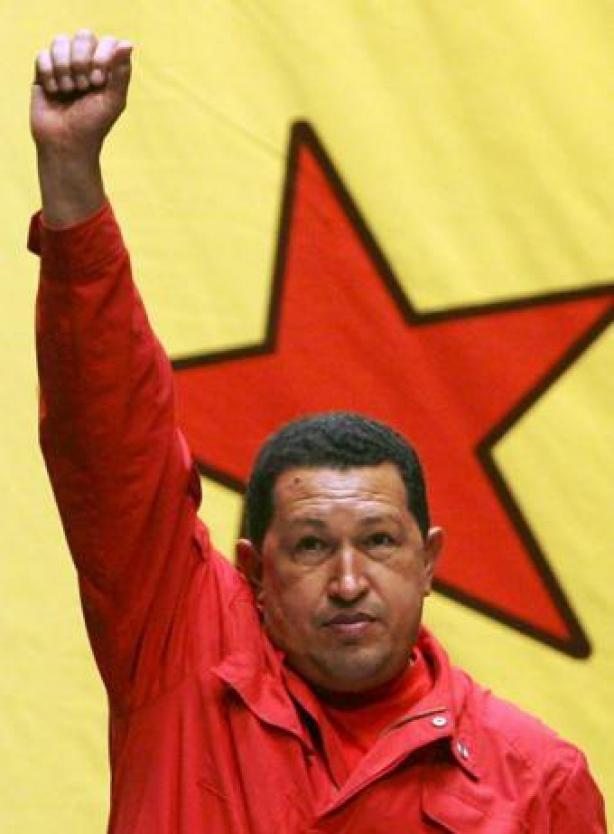
Chavez: The Man in the Red Beret

Peter McLaren

The historical debates surrounding the legacy of Hugo Chavez have begun. Perhaps one day I will join these debates. But not now. Attacks on Chavez “the dictator” or Chavez the charismatic “opponent” of the United States will demand from the left a spirited defense. Perhaps I will join such an effort in the months and years ahead. But not now. In this brief space I want to speak about Hugo Chavez as a leader who inspired a generation to believe that an alternative to capitalism could be fashioned from a reinvention of the state by the popular majorities.

chavez-red

The popularity of Chavez had a world-historical reach and it would not be a mistake to analyze his charismatic leadership in the context of a personality cult like that of Fidel, Che, or Subcommandante Marcos, for instance. To do this is not to diminish the importance of his role as a figure that could galvanize millions on the left and animate their faith that a more humane alternative to capitalism was a possibility, once the battle against U.S. imperialism was won. Chavez, whose father was of Indian descent and his mother, of African descent, was often the object of racial derision by the Venezuela’s white ruling elite, who did not hide their racial separateness from the rest of the Venezuelan population, four-fifths of whom could be described as indigenous-mestizo-mulatto-African.  I remember one day, after a particularly long march down the streets of Caracas supporting President Chavez, I went from store-to-store in an attempt to purchase a popular Chavez doll as a souvenir.  But there was not a single doll to be found.  I was told that I could find one in Altamira, an affluent east Caracas neighborhood.  I was surprised. A fellow camarada laughed at my expression and told me that the white ruling elite – often referred to as “esqualidos” (a colloquialism for squalid people) – had plenty of Chavez dolls available in their upscale stores.  Referring to Chavez as “ese mono” (that monkey), they would tie the dolls to the bumpers of their cars and drag them through the streets.

Insinuating itself into our daily life as an ideology as much as a set of accumulation practices and processes of production, neoliberal capitalism pretends to the throne of democracy-building, but in reality it has hastened its demise. Capitalism wears a coquettish and self-effacing sheen of timelessness, inviolate consistency, and seamless immutability, but that sheen is not any more permanent than the lipstick on a mirror, or than the Barry Manilow hits played on vibraphone wafting through the shopping malls, or than one of Charles Bukowski’s famous beer farts. What makes capitalism seem indelible yet imitable is the fact that it makes certain people very rich, and these paragons of the capitalist class are those that the state media apparatuses parade in their garish media outlets – the movie stars, the corporate moguls, the trend-setters, the celebrities and the culture brokers. While news of celebrity cellulite shakes us awake with amphetamine alertness, Hollywood gossip barons, equipped with the most profound and galvanizing lucidity available, provide us commentary on which star has the best bikini body. At the same time, we remain emotionally drowsy to the pain and suffering of people who struggle and strain against falling household wealth, unemployment and lack of food and medical care. And we rarely cast our eyes south of the border.

Hugo Chavez raised the stakes for North Americans. He showed us that a President could be democratically elected many times and still direct the majority of his efforts at helping the poor and disenfranchised help themselves. He made us aware that the comfort we enjoyed in the United States was a direct result of the enforced dependency that the US created with Las Americas. He showed the world that the class struggle is no longer demarcated by men in boiler suits or railhead pants versus factory owners in top hats, continental cross ties and double-breasted vests. Or the sans-culottes versus the breech-garbed ruling class. Or financiers with capes and silver-tipped canes exploiting the labor power of frutiers, cobblers and copper miners lugging lunchpails of lost dreams. The struggle, as he would tell us in his weekly television show, Alo Presidente, is the transnational capitalist class against all those who depend upon wages for their labor. He showed us that we need cultures of contestation that are transnational in scope to end the exploitation of capitalism.

Chavez’s Bolivarian Circles (named after Simon Bolivar serve as watchdog groups modeled after Cuba’s Committee for the Defense of the Revolution and function as liaisons between the neighborhoods and the government as well as fomenting support for Chavez) were important in combating business leaders and dissident army generals whom, with U.S. support, were trying to overthrow the Chavez government. Members of the Bolivarian Circles would bang on hollow electricity poles to warn against mobilizations by the opposition and to rally supporters across the city’s working-class neighborhoods. They were an example of self-determination for sovereignty as evidenced by the Bolivarian declaration “Nuestra America: una Sola Patria” (Our America: one motherhood)  which rejects an ideological loyalty to “America” as an America defined by a capitalist laden value system that favors imperialism and exploitation for increased profit margins.  Chavez created an infrastructure for communal councils and for self-management in factories and cooperatives and for participation in social programs. This was an astonishing accomplishment because never before did the people living in the barrios have a real chance to participate in the government. For a leader to take the position of working from a preferential option of the poor and powerless and to be re-elected more times than any other leader in the western hemisphere (in the same amount of time) – and to survive a U.S.-supported coup in 2002 and oil strikes that crippled the economy- that is quite a feat. Even Jimmy Carter has praised the election process in Venezuela as among the fairest he has observed.

Chavez’s policies pointed towards the importance of ‘development from below’ which could be achieved through the democratization of the workplace by way of workers’ councils and a major shift of ownership of production, trade and credit in order to expand food production and basic necessities to the poor who inhabit the ‘internal market.’ Once President Chavez was able to control the oil industry, his government was able to reduce poverty by half and extreme poverty by 70 percent.  Chavez helped turn Venezuela from being one of the most unequal countries in Latin America to (after Cuba) being the most equal in terms of income.

Capitalism works through a process of exchange-value, whereas Chavez was more interested in the process of communal exchange—that is, to cite but one example, exchanging oil for medical care in a program with Cuba in which Cuban doctors were brought into Venezuela and were set up in various barrios.  I remember once I was very ill with a fever off the charts and had to call a doctor, but before the doctor arrived I struggled in vain to pull  my Che t-shirt over my drenched body to express a sign of solidarity from this ailing gringo.  Chavez followed the principle of “buen vivir” which can be translated as “to live well.”  But this term, which has indigenous roots, is very different from the North American term, “the good life.” Buen Vivir requires that individuals in their various communities are in actual possession of their rights and are able to exercise their responsibilities in the context of a respect for diversity and in accordance with the rights of ecosystems.  It’s about social wealth—not material wealth.

I remember how much I enjoyed teaching at the Bolivarian University of Venezuela, located near the Central University of Venezuela – part of Mission Sucre, which provides free higher education to the poor, regardless of academic qualification, prior education or nationality – housed in the ultra-delux offices of former PDVSA oil executives that Chavez had fired for their attempt to bring down the government.  College enrollment doubled under Chavez.  Student projects were insolubly linked to local community improvement. At a graduation ceremony in the early years of the university, Chavez famously said: “Capitalism is machista and to a large extent excludes women, that’s why, with the new socialism, girls, you can fly free.”

Chavez set up a structure to offer employment for the graduates of UBV through a Presidential Commission that enabled new graduates be placed around the country in development projects. The graduates would receive a scholarship that was slightly above the minimum wage. Some of these projects involved Mision Arbol (Tree Mission), recovering the environment damaged by capitalism such as the Guaire River.  When I was first invited to Venezuela by the government to help support the Bolivarian revolution, I remember speaking at the Central University of Venezuela.  The students who attend this university are mainly the children of the ruling elite. Not many were Chavistas, well, at least not when I spoke there. After I announced to the students present that I was a Chavista (Soy Chavista!), I was told later that some students in retaliation had ripped my portrait off of a mural student had created of critical theorists. Yet I was able to have very good conversations with some of the students there in the years that followed.

I was privileged to be a guest several times on Alo Presidente, once when sitting next to Ernesto Cardinal.  I listened to Ernesto wax eloquently about Chavez, and Chavez’s dream of bringing humanity together through a deep spiritual love.  I attended meetings of the misiones, social programs in health, education, work and housing, set up by Chavez when he came into office in 1999 to help the poor to become literate, to finish high school, to organize their communities and to get medical attention.

In 2005, when President Chavez offered residents of the Bronx a new type of program to heat homes, it was ridiculed as a cheap publicity stunt in the US media. Chavez was using the profits from his nation’s rich oil reserves to enact social spending programs, and was offering residents of the Bronx the same deal, which meant he would provide home heating oil to economically disadvantaged residents at a major discount—through Citgo—provided the savings that were made were reinvested into programs that benefitted the poor. Veteran Congressman José Serrano has since voiced his praise of Chavez for instituting this program in his district.

Although I met President Chavez half a dozen times, I only had one conversation with him. He thanked me for my work in critical pedagogy, and for my willingness to share some of my work with those in the Bolivarian revolution. But he reminded me that I have as much to learn from the people of Venezuela, and that I needed to maintain that attitude in my work. He turned out to be right.

Hugo Chavez Frias rode the Angel of History like a wild stallion across the fiery firmament of revolution, drawing back the curtain on imperialism’s ‘southern strategy,’ and advancing the cause of a twentieth century socialism. He was a solider, in essence, one with sufficient humanity to stare directly into the heart of capitalism and warn us that it pulsed with leakages of sequestered oil and that its ‘cap and trade’ compassion was market regulated. Hugo Chavez was crowned by history with a red beret and gave us pride to be warriors for social justice, marching towards a new future.