Censor Board denies certificate to “Flames of the Snow”

New Delhi, June 22: Indian Censor Board has refused to certify ‘Flames of the Snow’, a documentary on Nepal, for public screening. The Board feels that the film ‘tells about Maoist movement in Nepal and justifies its ideology.’ It feels that ‘keeping in view the recent Maoist violence in some parts of the country’, the permission of its public screening can not be given. Produced under the joint banner of ‘GRINSO’ and ‘Third World Media’, the 125 minute film has been produced by Anand Swaroop Verma, a senior journalist and expert on Nepalese affairs. He has also written the script for the film. The film has been directed by Ashish Srivastava.

Reacting to the decision of the Board, Mr. Verma said it is quite surprising as the film does not have any reference at all to the current Maoist movement in India. The film is only about the struggle of the people of Nepal against the despotic Monarchy and the anarchic reign of Ranas. With the formation of Nepal in the year 1770 by Prithvi Narayan Shah, the foundation was laid for Monarchy in Nepal which was finally given a burial in the year 2008 when Nepal was declared a Republic. Thus 238 years of Monarchy also included 105-year rule of Rana dynasty which is known as the black chapter in the history of Nepal.
Talking about the film, Mr. Verma further said that the film actually shows how in 1876 Lakhan Thapa, a young man from Gorkha district organized the peasants against the atrocities being unleashed by the rulers of Rana dynasty and was, later, put on gallows by these rulers. Even today, Lakhan Thapa is remembered as the first Nepali martyr. Exploring the movements led by ‘Praja Parishad’ and ‘Nepali Congress’ against the despotic system, the film focuses on the armed struggle carried on under the leadership of the Maoists for 10 years and unfolds the story of how the movement mobilized the Nepalese people by first attacking and dismantling the feudal system in the rural areas and subsequently taking the people’s movement to the urban areas bringing more urbanites into its fold.

The film begins with the establishment of monarchy in Nepal, further touching the developments like the elections for the constituent assembly, the emergence of Maoists as the largest party in the elections and finally ends by showing the decline and complete disappearance of Monarchy and Nepal being declared a Republic.

Taking note of the objections put forward by the Censor Board, it seems that the Board will never give its certification to any political film made on Nepal since no political film on Nepal can escape underlying the prominent role of Maoists. Maoist party was heading the government in Nepal till May 2009 and even today is the largest party in the Constituent Assembly and is the main opposition party. Moreover its president Pushp Kamal Dahal ‘Prachand’ as the Prime Minister of Nepal had visited India on the invitation of the Government of India.

Mr Verma is now submitting his film to Revising Committee of the Board.
China: Some thoughts on Foxconn and the Honda strike

Lang Yan, China Study Group

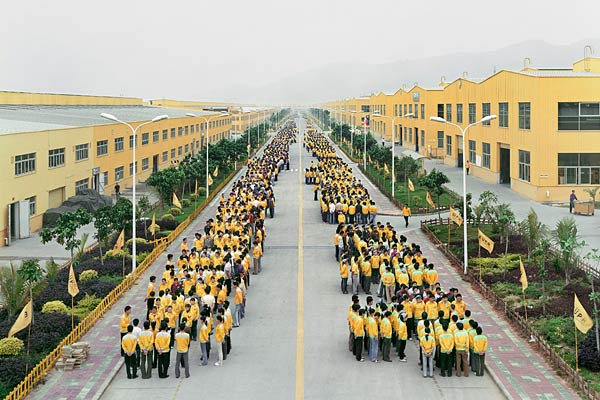
While I was walking around the Shanghai World Expo on a weekday a couple of weeks ago I met a group of workers from a nearby clothing sweat shop. Their company had sent them to the Expo for the day (for which they had to trade their only day off, Sunday). They were too tired to enjoy the Expo as they worked 14 hours a day, six days a week. While this may seem like a nice gesture on the part of the company, the workers also explained that the company was moving much of their production to another building that week, because a worker burned much of the factory down after not being paid on time. I heard this story just as the news of the Foxconn suicides began to break into the media and shortly after that the Honda strike began.

Within public discussion, the Honda wildcat strike has transformed the meaning of the Foxconn suicides. Early interpretations of the Foxconn suicides tended to argue that the suicides should either be understood as individual psychological issues and as copycat suicides, on the one hand, or a result of the particularly brutal and alienating conditions at Foxconn, on the other. Some marshaled statistics to show that there were no more suicides at Foxconn than the social average when one considers the size of Foxconn (for example, see Tom Holland “Why there’s less to the suicides at Foxconn than meets the eye” and Michael R. Phillips “Foxconn and China’s Suicide Puzzle Workers: may not be taking their own lives for the reasons everyone thinks”). Statistics average out, in other words, the social difference of the militarized factory space; Foxconn was treated as a normal social space, a city. (For a discussion of suicide rates and Foxconn, see EastSouthWestNorth #19. Notable also is that the Chinese rate of suicide for people 15 to 34 is quite high. See Suicide main cause of death in 15 to 34-year-olds.)

Analysis of the social and work conditions at Foxconn also appeared. The particularly militarized and alienating work environment at Foxconn is a result of capital’s relentless drive to lower assembly costs and the Asian subcontracting regime; reform-era China and the CCP have been a willing partner in that effort. Activists and scholars have argued that Foxconn is one of the worst factories in terms of it labor regime, with a very long (usually about 70 hours) work week (since the pay structure means that workers must work a lot of overtime) and a very rapid assembly line. Foxconn was able to become the world’s largest assembly company exactly because of its harsh Taylorist production process, which cuts up the process into highly regimented movements, its ability to intensify labor exploitation and its repressive management style (See this article by Andy Xie for some analysis and background on the Taiwanese management style). There are reports that Foxconn initially responded to the suicides by pushing workers to sign contracts that they would not commit suicide, and stating that their families would not receive compensation if they did. It went so far as to state that suicide harmed Foxconn’s reputation.

But the successful Honda wildcat has changed the discussion. The suicides and the strike are being put into the context of changing labor relations in China, with many now arguing that Chinese labor is at a turning point.

For example, NPR’s Marketplace (Honda, Foxconn workers demand more power) argues that a “labor shortage in China is empowering workers to demand better wages and treatment at their workplaces….” In a discussion of the Honda strike, Reuters notes that “[s]ome other foreign companies have begun to address workers’ discontent over pay and working conditions. Taiwan’s Hon Hai Precision Industry Co Ltd for instance plans to raise salaries by about a fifth at its Foxconn International unit, maker of Apple Inc’s iPhone, as it struggles to stop a spate of suicides and quell public anger.” Foxconn has said that it will raise base salaries by 30% now with more raises to come in the near future. Clearly this wasn’t only caused by the suicides, however. Foxconn was planning a salary increase earlier in the year in response to the difficulty hiring workers due to labor shortages.

The Honda strike (workers’ demands included wage increases from about 1,500 yuan (less than $220 US) to about 2,300 yuan ($337 US) for higher paid workers) is likewise getting more press than any other worker action in recent years.

China’s economic stimulus has given large subsidies for car sales, and car manufactures are attempting to rapidly increase production in China. Honda plans to add a third to its Chinese production by 2012. But its integrated production process is vulnerable to strike activity. This is particularly true of transmission plants, which are highly automated and expense to construct. Thus they are usually put in the most stable regions, notes the New York Times. But the stability of the Chinese working class is now in doubt. According to the Wall Street Journal:

“The strike has exposed unexpected vulnerabilities in Honda’s China supply chain. Because of the relative absence of labor unrest in China, Honda makes do with only one source of transmissions there, the Foshan factory that supplies roughly 80% of demand, according to Mr. Fujii. The rest are brought in from Japan. Typically, Honda insists on at least two suppliers of parts, partly to protect against any industrial action that might cripple production.”

While quick to tamp down any political interpretation of the workers’ activity, the New York Times argues that in the beginning the state allowed media coverage of the strike because it wants to push up internal demand. On the other hand, the China Daily (in an article now taken off their website) used the strike to editorialize that the Chinese state needs to do more to raise the wages of workers. Since the end of the strike, Chinese media coverage has continued while broadening its analysis. At the same time, the government seems to be increasing its efforts at raising the wages and internal consumption. This follows several years of increased investment for rural China, which means there is less pressure for peasants to migrate out for work.

Broader Implications: First question looking forward:

What does this mean in terms of the changing Chinese political economy? A few points: Increasing wages in China could help rebalance the global economy. As their wages increase Chinese workers will be able to spend more (the wage share of GDP fell from 56.5 percent in 1983 to 36.7 percent in 2005). A rise in internal demand will mean a drop in the savings rate in turn forcing a rise in the savings rate in the US. This will likely also mean inflation, which is already a problem with the huge Chinese stimulus, yet inflation is also another way–other than a direct change in the exchange rate–for the Chinese state to rebalance its trade relationship with the US. The power of the export manufacturers in China seems to have been able to keep the state from changing the exchange rate to any great extent, but inflation might help take care of this for the state. Of course inflation will eat into wage increases and possibly lead to more social unrest. Meanwhile, the Beijing government announced on June 3rd that it was raising the minimum wage by 20% in response to inflation–the past few years it was raised about 10% per year. Other regions are following suit.

The June 7th issue of The Economic Observer (Jingji guancha bao) has articles on the labor situation noting that both the Honda strike and the situation at Foxconn are symptoms of a broader change going on in the Chinese labor market. One article argues that China has reached the “Lewisian turning point”. Arthur Lewis argued in 1954 that, for a period of time, developing countries could rely on rural surplus labor to keep wages from rising. This would allow them to industrialize without wage inflation. But once rural surplus labor is absorbed by the industrial economy and the labor market unifies wages will begin to increase more rapidly. The influential economist Cai Fang has been predicting this shift for some time, and in 2007 edited a volume on the turning point called “The Coming Lewisian Turning Point and its Policy Implications.”

Arthur Kroeber argued in the March issue of China Economic Quarterly that China’s cheap labor regime was coming to an end and that wage inflation will drive up the consumption share of GDP. In the planning for the 12th Five Year Plan, the CCP itself emphasizes this rebalancing and the important role that raising the wage share of GDP should plays in the process. At the same time, some commentators seem to be taking this argument a bit too far. Andrew Peaple states that “the dynamics of China’s economic development are moving inexorably in favor of the country’s workers.” While this will change the shape of the Chinese economy, its effect on capital will be mixed. Higher wages will mean more consumption, helping many companies as much as it hurts. But the assembly and clothing industry in the Southeast will be hit hard, as those plants are both more easily moved to other, cheaper-wage countries and have thinner profit margins. It is too early to say what this transition (of the Chinese economy and of the Chinese labor process) might mean more globally.

A second question looking forward:

Does the Honda strike indicate increasing self-activity of the working class in China? Certainly the example of the success of workers in the Honda strike in winning some wage increases (initially about 24% but in the end much more) might spread to other workers in China. Also, the strike itself was very highly organized, leading to the participation of about 1,900 workers (including a large number of low-paid interns). The workers seemed split, however, when gave in to a lower wage increase than initially demanded. The People’s Daily reports that the hold out group was involved in a confrontation with representatives of the state union, the ACFTU. (The local ACFTU seems to be playing a more conservative role–by protecting Honda–than even the state-run media.) The World Socialist Website details the attempts by the company to split the workers by putting pressure on the interns to sign no-strike pledges in return for smaller wage increases. According to The China Daily, the strikers also demanded changes in work conditions, more transparency in company finances (this seems like a reflection of the history of worker democratic involvement in enterprise management in China), and a change in union representatives. The New York Times points out that workers complained that Japanese employees at the Honda plant make about 50 times that of Chinese workers. It is likely that nationalism has also played a role in how this strike has been reported in China. Most of the workers held out, however, and the agreement reached will lead to high wage increases. Kroeber talking Reuters stated that “Foreign investors have been lulled into a false sense of security that China has a docile work force. There’s nothing intrinsically docile about the Chinese labor force. There was a period when everything was kind of fine; now we are entering a period of more constraint.” Following the Honda strike, workers at a Hyundai factory near Beijing went on strike, but returned to work after they were immediately promised wage increases. Over 5,000 textile workers in Pingdingshan, Henan have been out on strike since May 14th at a factory privatized in 2006.

As the WSWS notes of the Honda strike:

The strike is a sign of sharpening class tensions in China amid the worsening global economic crisis. While China’s economic growth rate continues to be high, propped up by huge stimulus spending, the gulf between rich and poor is widening. Last year there were 98,568 labour disputes filed in Chinese courts, up 59 percent on the previous year. Most disputes, however, were not reported.

It remains to be seen, however, how successful the CCP’s attempt at economic transition will be. We need to know how much of China’s growth and job creation is due to the stimulus and how sustainable it is. The unsustainable property market is creating an investment bubble. Just as likely as transition to a consumer-based economy, inflation could lead to stagflation once the property bubble bursts and the initial affects of the stimulus wear off. The real question is what then for the activity of the Chinese workers. They are clearly learning important lessons now. The fundamental question is whether their new found strength will lead to a break from the domination of capitalist accumulation or not.

GurgaonWorkersNews: Newsletter 26

GurgaonWorkersNews – Newsletter 26 (May 2010)

Gurgaon in Haryana is presented as the shining India, a symbol of capitalist success promising a better life for everyone behind the gateway of development. At a first glance the office towers and shopping malls reflect this chimera and even the facades of the garment factories look like three star hotels. Behind the facade, behind the factory walls and in the side streets of the industrial areas thousands of workers keep the rat-race going, producing cars and scooters for the middle-classes which end up in the traffic jam on the new highway between Delhi and Gurgaon. Thousands of young middle class people lose time, energy and academic aspirations on night-shifts in call centres, selling loan schemes to working-class people in the US or pre-paid electricity schemes to the poor in the UK. Next door, thousands of rural-migrant workers uprooted by the agrarian crisis stitch and sew for export, competing with their angry brothers and sisters in Bangladesh or Vietnam. And the rat-race will not stop; on the outskirts of Gurgaon, Asia’s biggest Special Economic Zone is in the making. The following newsletter documents some of the developments in and around this miserable boom region. If you want to know more about working and struggling in Gurgaon, if you want more info about or even contribute to this project, please do so via:

http://www.gurgaonworkersnews.wordpress.com
gurgaon_workers_news@yahoo.co.uk

In the May 2010 issue you can find:

1) Proletarian Experiences –
Daily life stories and reports from a workers’ perspective

*** Three Communists in Gurgaon
The industrial development and proletarian unrest in Gurgaon did not remain unnoticed. We talked to three communists who decided to focus their political activity on the vast landscape of working class formation. The comrades are part of the revolutionary Marxist-Leninist left, belonging to three different political organisations.

*** Service?! What the hell! / Reports from Service Proletarians, Street Labour Markets and Factory Workers in Gurgaon
Some voices of security guards and drivers, metal and textile workers. Some voices from workers looking for a job at corner labour markets, harassed by the police and other thugs.

2) Collective Action –
Reports on proletarian struggles in the area

*** Inflationary Proletarian Struggles
While opposition parties arrange token protests against the price hikes, workers on the ground battle for higher wages. In March 2010 Delhi government announced 33 per cent increase of minimum wages, but this hike hardly ever reaches shop-floor reality. In the aftermaths of the minimum wage increase we observe various spontaneous proletarian actions in Gurgaon and Okhla industrial areas. The combination of an interlinked (automobile) industry and organisational efforts like Faridabad Majdoor Talmel can become future lines of coordination and generalisation of the unrest.

*** Update on Struggles of Permanent Automobile Workers at Sanden Vikas and Exide
The first-tier supplying industry of the automobile industry is heating up under the double pressure of increasing demand of the assembly plants on one side and the more confident claims of the workforce on the other. The recent struggles at Denso, Sanden Vikas and Exide express the difficult position of a young permanent work-force: they appeal to the classical union form of struggle hoping to secure an increasingly precarious position. These classical forms detach them from the wider casual and temporary workforce and therefore from the true ‘material’ power-base.

*** Waterwars, Energy Crunch and Revolting Villages
Groundwater levels in Gurgaon drop dramatically, gobbled up by industry and upper-middle class life-style. Water and energy flows are diverted away from workers’ and peasants’ spheres. We document some struggles of ‘villagers’ against the lack of resources and oil-pipe-line projects crossing their fields.

3) According to Plan –
General information on the development of the region or on certain company policies

*** The Social Tsunami Impact / Snap-Shots against Capital-Class-Crisis
This is an attempt to introduce a regular update on general tendencies of crisis development in Indian – motivated by Greek shock-waves, naked shorts and potential spillovers. Apart from short glimpses on the macro-level of things we focus on general trends in agriculture and automobile sector: the current demise of the past and the toxicity of the future.

4) About the Project –
Updates on Gurgaon Workers News

*** Glossary
Updated version of the Glossary: things that you always wanted to know, but could never be bothered to google. Now even in alphabetical order.

Poems by Bilquis Zafirul Hasan

(Translated by Arjumand Ara)

POETESS

God does not give sufferings
Greater than the broadness of one’s bosom.
But in my heart He has put the vastness
Greater than the earth and heavens.

I

No
I do not complain, nor do I reproach You.
Like You, I too, have written stories, pure in nature.
I have carved characters, blameless and innocent.
Then instilled in them the sorrow of failures, unfulfilled desires,
Punishments and disgrace, as You did.
Sometimes, I crucified them upon the cross of guiltlessness.
Sometimes, I pushed them into the blind caves of solitude.
Sometimes I imprisoned them in the prisons of their own existence.
I pushed through their bosoms the daggers,
The wounds of which will never be healed.
But – what else could I do?
To make a story out of a story
One has to accomplish all these things.
Your limitations – who else, if not I, would understand.
I know, the way you have written me, as story
You did it, excellently!
OCEAN, O OCEAN!

Ocean! O ocean!
This dreadfulness of your streams,
These whirling vortex and roaring storms,
May only be a way of your flowing waters!
But – the straws?
They are facing gusts of the billowing waves,
Nobody knows, as to where they helplessly flow.

You are grand and magnificent – your depths are fathomless.
The surges of your waves are all boundless.
You may not know the pain of being fragile and helpless.
You may not have experienced all this,
As the roaring of boundless waves is always carefree and mindless;
To storm and surge is just a habit of flowing waters.

But these defenseless straws do always bear the brunt,
Of your flowing waters, of the storm of vortex.
If these straws get drowned, nothing would happen.
Neither your surges would be subdued nor your greatness would be questioned.
But when will end this pain of being wasted?
Ocean, O ocean!
SUICIDE

There are several ways of committing suicide.
She may choose any of them.
She may die by consuming poison,
Or by setting herself afire – after dousing kerosene.
By jumping from the seventh floor,
Or by throwing herself before a running train.
By hanging from a roof, or a ceiling fan,
Or by drowning herself in an ocean.
There are several ways, indeed.
Each of them more horrible than the other – and easy too.
But the most horrible is – to die while living.
In this, nobody can notice – that a person is dead.
This is no innovation –
Many have tried this before me,
And have succeeded.
And the best thing about this
is that
One takes no chance of being saved.
TREACHERY OF THE LAND

In fact, the land does not own any thing.
She is owned by one who gets her registered.
Before she bears fruit, she is divided among the owners;
Distributed in small patches.
One who owns one of her patches, has the right
To decide whether to cultivate
or not to cultivate her.
She is dug and beaten
Yet she yields the dues to those who are called her claimants.
The land – is always very faithful.
But there remains in her – something from being shared.
Otherwise, how do there grow
These wild cacti – boorish celsia.
These illegitimate, yet very own, children of the Land.
MELON AND KNIFE

Either a knife falls upon a melon, or a melon upon a knife,
It causes no harm to the knife.
Which, that gets cut, is always the melon.
The knife remains, as always it is, sharp and shining –
Prepared to cut another melon!

A hoodlum whistled while passing from her street,
Seeta no longer steps out her home – she is forbidden from going out.
A neighbour began to peep about – my brother sent his wife to her parents.
After being raped, Savitri died, committing suicide.
Yes! –  a knife falls upon a melon, or a melon upon a knife,
Melon has to get cut.
But,
Is there no difference between a woman and a melon?
BANU

What a great shock! Banu was not such a woman.
It is already past twenty years
When she first stepped into this house.
And during these twenty years – she did not utter a single word
(of dissatisfaction) to anybody.
– Neither a complaint, nor reproach.
She used to be busy in everyday chores, day and night.
Poor woman – she didn’t find time even to have a chat.
She used to live on – whatever was left from others consumption.
What about her desired articles? She was such a woman,
who did never change her clothes even on a festival!
She used to serve her mother-in-law, bear the whims of her sister-in-law.
For her brothers-in-law, for her father-in-law,
for her husband – for all – she was ready to sacrifice her life.
During these twenty years – she did not go to her mother’s house, even once.
From the day when she stepped down from her bridal palanquin
She did not cross the door of her husband’s house.
What happened then to such a woman?
Why did she consume the poison of rats? Who knows – why!
What a great shock! Banu was not such a woman!
DARKNESS

The darkness prevails only because
You did not light a candle, yet.
Do no sit idly
Light a candle – see for the fuse
Possibly, the electricity has gone
Because the wire is fused.
Then – change the fuse-wire.

If you do not know, how to make fused-wire – then
Sit frightened in this dim light of a candle
And pray for the morrow to come.
Sit for all night in this darkness.

Do remember – the darkness is
Only a name of no light.
Bring light and see – where does the darkness go?
GOOD WIVES – A SERMON

Dear good Ladies!
A woman is blessed with the promise of Heaven who
Adorns herself before her husband comes back to home,
Decorates her hair with strings of beads;
And keeps ready the odorous dishes of appetizing food.
Keeps ready fresh hot bread and soft bed;
Puts warm and cold water in two separate jugs –
(Yes, who know if he would like to use cold or warm water!
One cannot anticipate his desire.)
So that when her demigod, her master comes home,
He gets everything ready he needs, without demand.

And yes, dear ladies!
Do not forget to keep ready
A cane-stick, quite strong –
Who knows that the tired soldier, coming from the battle-ground of troubles,
Unfortunately,
Might be returning with injuries of failures.
When he comes back – he does not take the trouble to search for it.
He may push down with the help of this cane-stick
The colourful silken robe from the shoulders of his virtuous wife,
And Sprinkle the blood of his failures on her tender body;
So that he is able to sleep a blissful sleep.
(Yes, he is your metaphorical God. Were you allowed to worship someone other than God, its he, your husband. He saves you from the burning sun of the world, inside the secure walls of his house. Your subsistence depends upon the earnings of his hard work.)
Therefore, my dear ladies!
A woman is blessed with the promise of Heaven
Who spends her life as her husband willed.
If he calls the day night, she says it night.
She keeps herself alive for him, even if dying.
And she dies for him.
She would be sent to the Paradise, directly.
She would not be questioned for her sins,
They all will be pardoned.

In her sermon,
The preacher thus spoke, and then kept quiet.
She just announced the good news of deliverance of a pious wife.

But where will such a husband go?
– about this, she did not utter a word.

O God! O God!
For generations, in long queues, these are worthless maids!
Do instill in them a sense of being themselves.
HOUSE

No doubt – this is your house.
Your wealth was spent in its building.
It was your hard-earned money.

Your name is written on every brick.
But my blood – ? My toil – ?
What became the kneaded clay for these bricks – was my blood.
The walls of your house are raised over the base of my hard work.
How can you drive me out of this house?
I too, have written my labour,
With the ink of my blood, over each brick.
Do not give, if you don’t want to,
My right, my share, in this household.
Return it, as my wages.
I absolve you from paying back
My blood, which was spent on its building.
Bilquis Zafirul Hasan (born on September 1, 1938) is an Urdu poetess based in Delhi. Her first collection of poems Geela Eendhan (Damp Firewood) was published in 1996. Her second collection Sholon ke Darmiyan(Amidst the Flames) appeared in 2004. She writes short stories as well, and her only collection Weeraney Aabaad Gharon ke (Deserts of Inhabited Homes) was published in 2008. At first glance the mainstay of Bilquis (both in poetry and prose) seems to be the sufferings of woman. While writing on woman as mother, wife, beloved, or just a woman as opposed to man, we see her standing forlorn, unheard, neglected, abused and exploited in every role. However, the beauty of Bilquis’ narration lies in her moderate voice and subtle use of irony to drive home her point. She stands beside all, exploited and humiliated. Woman being the greater victim of injustice and abuse, she naturally walks to the centre of her poems. Besides woman, she is concerned with war, abuses of power, communal riots, besieged identities in a hostile environment, displaced and homeless people (see her poems on trampled Iraq, victims of Gujarat riots etc.). All the poems translated here are from Geela Eendhan.

Arjumand Ara is a prominent Urdu scholar, translator and activist. She is an assistant professor at the Delhi University, and is associated with the progressive writers movement. Recently, she translated the autobiography of Ralph Russell, a prominent indologist and Urdu scholar, who died in 2008.

Eva Golinger Misinterprets Solidarity: Support Tamils not Sri Lanka’s War Criminal Government

Ron Ridenour

Eva Golinger is known for her counter-intelligence analysis in the service of Venezuela’s peaceful revolution against the local oligarchy and the United States Empire. She is a noted author (“The Chavez Code: Cracking US intervention in Venezuela”). A dual citizen of the US and Venezuela, she is an attorney, and a personal friend of President Hugo Chavez, who dubbed her, La Novia de Venezuela (“the bride of Venezuela”). She is a frequent contributor to left-wing media around the world, and is the English editor of the Venezuela government newspaper, Correo del Orinoco.

Golinger is a name synonymous with solidarity and anti-imperialism. However, she recently inexplicably immersed herself into being a supporter for the most brutal, racist and genocidal government of Sri Lanka in a resoundingly irresponsible opinion piece printed in the Spanish daily version of Correo del Orinoco, May 15, and on May 21, published by the Caracas city government newspaper, Ciudad CCS. The piece was simply entitled, “Sri Lanka”. Printed in Spanish, I translate into English the major part of its content and analyze its errors with the goal of countering rumors she started, and in an effort to broaden support for a most maligned and oppressed ethnic group, the Tamils of Sri Lanka.

Golinger wrote that, in 2005, Sri Lankan “presidential elections occurred for the first time in nearly 30 years. Mahinda Rajapakse obtained victory with more than 58% of votes. He was reelected, January 2010 with more than 60%.”

“Rajapakse, Buddhist leader, is supported by a coalition of leftist parties, among them the Communist Party. In May, 2009, Rajapaske finalized the civil war, defeating the armed organization, LTTE.

“The LTTE had close ties with the CIA, and Washington negotiated an accord with them for establishing a military base in the country, if they obtained power. Upon its defeat, the LTTE had established numerous organizations—fronts in different countries around the world, seeking to create `a government in exile´ and hoping to isolate the current government of Sri Lanka. Last week, representatives of one of its fronts, Canadian Hart, passed through Venezuela; it met with government functionaries seeking support in its intent to weaken the relationship between the two governments.

“Instead of relating to the illegitimate opposition in Sri Lanka, Venezuela should shake the hand of an ally that also suffers imperial aggressions.”

Golinger is factually incorrect

1. Mahinda Rajapakse is not the first president elected. In 1982, J.R. Jayawardane won the first presidential election with 52.9% of the vote. The United National Party (UNP)—a pro-western party of the comprador bourgeoisie—introduced a new constitution after its 1977 landslide victory. Before then, the office of prime minister was the highest, and Jayawardane won that post and the UNP took 80% of the parliamentary seats. In 1978, the new constitution renamed the country, “Democratic Socialist Republic of Sri Lanka”, but this had nothing to do with socialism. The economy then, as now, was a capitalist one with a neo-liberal orientation much like Chile after the 1973 coup d´etat.

According to the Government Department of Census and Statistics own figures (2006/2007), 82% of the rural population lives under the national poverty line while 65% of the urban population is not able to meet the minimum level of per capita daily calorie and protein intake recommended by the government Medical Research Institute. See official figures on the government website.

There can be nothing “democratic socialist” about discriminating against 15% of its population, the Tamil ethnic group, making them unequal by legally restricting their rights and privileges. Such has been the case since independence from Britain, in 1948. Even the U.S. Library of Congress studied Tamils as an “alienated” group. In 1988, it published, “Sri Lanka: a Country Study”:

”Moderate as well as militant Sri Lankan Tamils have regarded the policies of successive Sinhalese governments in Colombo with suspicion and resentment since at least the mid-1950s, when the `Sinhale Only´ language policy was adopted…”

2. Rajapakse won the fifth presidential elections and with the least majority of all presidents, 50.29%, not 58% as Golinger wrote. [Wikipedia ]

Rajapakse is the current leader of the Sri Lanka Freedom Party (SLFP), founded in 1951 to represent the Sinhalese bourgeoisie. In 1960 elections, Sirimavo R.D. Bandaranayake became the world’s first woman prime minister. The Moscow oriented Communist Party and the Trotskyist Lanka Sama Samja Party (LSSP) formed the “United Front” coalition with the SLFP, in 1970. Now with three minister posts, the “old left” betrayed the young. Many Sinhalese leftist youth became disillusioned with the “old left” and after the SLFP returned to government, they rebelled. The so-called “leftist” government, with the CP and LSSP, branded this upsurge a “Che Guevarist uprising” and crushed the rebellion by killing about 20,000 mainly rural Sinhala youth, in 1971. The next year, these “left” parties drafted the first republican constitution in which Sinhalese was codified as the only official language and Buddhism the only the official religion—Tamils are not Buddhists. This eroded whatever support the “old left” had among both leftist Sinhalese and all Tamils. Since then neither the CP nor the LSSP has managed to get a single seat in the parliament independently. They are always with the capitalist party, SLFP.

3. Rajapakse won the January 2010 elections with 57.88%, not 60%, over his former chief general, Sarath Fonsekla, in charge of liquidating the LTTE (Liberation Tigers for Tamil Eelam). Fonseka’s party, New Democratic Front, received 40.15% of the vote. In desperation, a few Tamils voted for General Fonseka knowing that he was the main army force in carrying out the president’s orders in liquidating the LTTE, and massacring tens of thousands of Tamil civilians. The one difference between the two war criminals was that Fonseka later promised that he would release the rest of the interned Tamils and return their possessions and land. Tamils are crushed for now and resort to seeking a bit of breathing space. (Wikipedia entry on United People’s Freedom Alliance).

The egomaniacal president was not satisfied with just defeating his former general in the ballot box, he had him arrested and beaten, on February 7, shortly after the elections, and charged him with plotting a coup, which General Fonseka denies. A purge of scores of top military officers has occurred; a dozen or more Sinhalese and Tamil Journlists have been arrested. In the four years of Rajapakse rule, at least 23 journalists critical of his regime have been murdered: See 1 and 2.

4. “The LTTE had close ties with the CIA, and Washington negotiated an accord with them for establishing a military base in the country…” That is an outrageous and unsubstantiated allegation. In my month-long research last autumn, I found nothing to indicate Golinger’s unsupported claim. Looking up in Google for “LTTE and CIA”, nothing exists. When searching for LTTE and CIA and LTTE ties to CIA without quotation marks, nothing exists that binds them. I looked up some 200 hits and only found reference to the Golinger claim, and this was cited by a most skeptical Patrick J. O´Donoghue, news editor for the English-language website www.Vheadline.com, in a May 23 commentary. He said: “I couldn’t believe what I read in the Caracas CC blatt!” We have no way of knowing if the LTTE even met with the CIA, but in war most anything is possible. What we can know is that the US, and its CIA and Pentagon, have long supported the genocidal Sinhalese governments, and most certainly that of Rajapaske, and it placed the LTTE on its Foreign Terrorist Organization hit list in 1997. I will delve into this farther on.

5. Golinger’s claim that Canadian Hart is a front for the LTTE is denied by several solidarity groups in Canada who know that organization for its humanitarian work. See their perspective, “Venezuela: Eva Golinger’s misinformation endangers exiled Tamils’ fight for freedom”, at: http://vheadline.com/

6. Golinger depicts the Sri Lankan capitalist and genocidal government as an “ally” of Venezuela, one that she recommends her revolutionary government to “shake the hand of an ally that also suffers imperial aggression.” This boggles the mind, or “beggars belief”, as O’Donoghue wrote. Instead of opposing the Yankee Empire, her position is allied with imperialist United States and its allies Zionist Israel, the United Kingdom and other former European colonialists, as well as the emerging superpower and worker-exploiter China. (See my pieces “ALBA Let Down Sri Lanka Tamils”, “Equal Rights or Self-Determination”, and “The Terrorists: International support for Sri Lanka racist discrimination”. See the entire five-part series at: Radical Notes). There is no shred of evidence that the United States aggresses against Sri Lanka governments, on the contrary.

US Supports Sri Lanka Genocide

The Indian Ocean is a vital waterway where half the world’s containerized cargo passes through. Its waters carry heavy traffic of petroleum products. Sri Lanka cooperation is vital to the US Empire’s global interests. A separated Tamil state would complicate cooperation requirements.

The United States of America has been arming and financing Sri Lanka for most of the civil war period. [www.cdi.org/PDFs/CSBillCharts.pdf ] From at least the 1990s, the US has provided military training, financing, logistic supplies and weapons sales worth millions annually. A Voice of America installation was set up in the northwestern part of the country.

The United States government praised Rajapaksa for restarting the war already in July 2006, and officially ending the ceasefire in 2008. The US embassy in Colombo issued this statement: “The United States does not advocate that the Government of Sri Lanka negotiate with the LTTE…” (See www.globalresearch.ca)

On May 26, 2002, the Colombo English-language Sunday Times wrote about a joint military pact between Sri Lanka and the U.S., a development taken soon after the CSA was signed.

“The Acquisition and Cross Servicing Agreement [ACSA]…will enable the United States to utilise Sri Lanka’s ports, airports and air space. As a prelude to the signing of the agreement scheduled for July, this year, United States Naval ships have been calling at the Colombo Port for bunkering as well as to enable sailors to go on shore leave.

“In return for the facilities offered, Sri Lanka is to receive military assistance from the United States including increased training facilities and equipment. The training, which will encompass joint exercises with United States Armed Forces, will focus on counter terrorism and related activity. The agreement will be worked out on the basis of the use of Sri Lanka’s ports, airports, and air space to be considered hire-charges that will be converted for military hardware.”

US Assistant Secretary of State Christina Rocca was the key liaison person with the Sri Lankan government. [Rocca had been a CIA officer before joining the state department.] (See www.colombopage.com) The ACSA agreement was not finally signed until Rajapaksa came to power. It was U.S. citizen Gotabhaya Rajapaksa, Secretary Defense Minister, and brother to President Rajapaksa, who signed the agreement, on March 5, 2007. (Their younger brother, also a minister, is a US citizen as well.)

George W. Bush was especially glad for Sri Lanka’s state terrorism. In 2006, he encouraged the government to resume the civil war, which Bush financed with $2.9 million. The Pentagon provided counter-insurgency training, maritime radar, patrols of US warships and aircraft. This was a continuation of “Operation Balanced Style”, which uses U.S. Special Forces instructors since 1996.

At the end of Bush’s first term, the US was forced to cut back on aid given that it was bogged down in Afghanistan and Iraq. That, coupled with critical public opinion, organized by the Diaspora, of state terrorism and systematic discrimination of Tamils, prompted congress to make noises about abuses of human rights by not only LTTE but possibly by paramilitary forces linked to the S.L. government. Thousands of Tamils blocked highways in Canada, camped outside British parliament for months, some committed suicide in front of government offices, while Indian Tamils conducted paralyzing strikes. Nevertheless, in 2008, the U.S. granted $1.45 million in military financing and training to the Sri Lanka government out of a total of $7.4 million in total aid. The US made noises about a ‘humanitarian crisis’ when the Sri Lankan army was about to finish the war but it never took affirmative action to bring the war to an end nor to condemn the army or government.

Even after leading international observers, and some of the mass media, especially in the U.K. and France, began to expose S.L. government and the army’s systematic atrocities against Tamil civilians, and captured LTTE soldiers, the US continued to back up the Sri Lankan government, in contradiction to Eva Golinger. In mid-April, 2010, the U.S. and Sri Lankan military forces conducted military exercises in Eastern Seas (Trincomalee) for the first time in 25 years.

Said Lt Col Larry Smith, the US defense attache: “The joint exercise helped members from our two militaries to exchange best practices on how to address complex humanitarian challenges.”

He added: “The US and Sri Lanka have a long tradition of cooperation. We hope this partnership can be expanded.” http://jdsrilanka.blogspot.com/

Documentary film-maker John Pilger compares Sri Lanka’s genocide to Israel

“The Sri Lankan government has learned an old lesson from, I suspect, a modern master: Israel. In order to conduct a slaughter, you ensure the pornography is unseen, illicit at best. You ban foreigners and their cameras from Tamil towns like Mulliavaikal, which was bombarded recently by the Sri Lankan army, and you lie that the 75 people killed in the hospital were blown up quite willfully by a Tamil suicide bomber.” “Distant Voices, Desperate Lives,” New Statesman, 13-5-09.

When the U.S. does not want to be seen on the frontlines in a war, it sends in surrogates and Israel is its main partner in this war crime. Israel was officially re-awarded diplomatic relations, in May 2000, after Sri Lanka had severed them in 1970, in protest at Israel’s continued illegal expansion into Palestinian territory. (www.dailymailnews.com/)

Nevertheless, Israel continued to operate inside S.L. out of a special interests office set up in the US embassy. Under the table, Sri Lanka’s successive regimes embraced Israel’s military advisors, a special commando unit in the police, and Mossad counter-intelligence agents—who sought to drive a wedge between Muslims and Tamils. Israel sent Sri Lanka16 of its supersonic Kfir fighter jets, some Dvora fast naval attack craft, and electronic and imagery surveillance equipment, plus advisors and technicians. Israel personnel took part in military attacks on Tamil units, and its pilots flew attack aircraft. Tigers shot down one Kfir. Just before the end of the war, Prime Minister Wickremanayake was in Israel to make bigger deals with Israeli arms supplies. (See 1 and 2)

Sri Lanka government war crimes

Golinger even ignores ample evidence of extreme war crimes committed by her choice for president, Mahinda Rajapakse, against the minority Tamils. They have a righteous claim for liberation because of being subject to systematic discrimination, oppression and genocide. (Ibid: “Equal Rights or Self-Determination”.) Sri Lanka’s first president, J.R.Jayewardene, expressed the essence of this genocide to the “Daily Telegraph”, on July 11, 1983. “Really if I starve the Tamils out, the Sinhala people will be happy.”

In May 2009, Rajapakse had all the civilians who survived his gun fire placed into concentration camps, which he called “welfare villages”, much like those the Yankees concocted in Vietnam. In violation of United Nations international rules, as many as from 280,000 to one-half million people were forced interned. Today, one year later, 100,000 remain. Only two million S.L. Tamils remain in the country. Nearly one million have fled in the past three decades.

Even the U.S.’s choice for secretary-general of the UN, Ban Ki-moon, was displeased with these camps when he made a brief visit to one shortly after the war’s end.

“I have traveled around the world and visited similar places, but this is by far the most appalling scenes I have seen…I sympathize fully with all of the displaced persons.”

Several internationally respected organizations concerned about war crimes, and a few mass media journalists, have conducted interviews with IDPs, taken or viewed photographs, videos, satellite images—taken surreptitiously during the war—and have read electronic communications and documents from many sources. Some observers have been able to visit a camp or two.

On May 17, one of those organizations, the International Crisis Group, released its report, “War Crimes in Sri Lanka”. I cite from it:

“The Sri Lanka security forces and the LTTE repeatedly violated international humanitarian law during the last five months of their 30-year civil war…from January 2009 to the government’s declaration of victory in May [violations worsened]. Evidence gathered by the International Crisis Group suggests that these months saw tens of thousands of Tamil civilian men, women, children and elderly killed, countless more wounded, and hundreds of thousands deprived of adequate food and medical care, resulting in more deaths.

“This evidence also provides reasonable grounds to believe the Sri Lanka security forces committed war crimes with top government and military leaders potentially responsible.”

Here is a revealing example of this evidence.

On August 25, 2009, Channel 4 News (UK) broadcast raw footage, one minute long, showing S.L. government soldiers casually executing eight bound and blindfolded, naked Tamil men, believed to be LTTE combatants. This is a war crime according to all international agreements. Rajapakse’s government denied the authenticity of the photos, apparently taken by a S.L. soldier and provided to Channel 4 through the exiled group of Sinhalese and Tamil journalists, Journalists for Democracy in Sri Lanka. But internationally renowned forensic experts have validated its authenticity. (See 1, 2 and 3)

In a recent Channel 4 News broadcast by Jonathan Miller, two eyewitnesses spoke of systematic murder of all LTTE fighters caught or surrendered. One witness is a senior army commander: “Definitely, the order would have been to kill everybody and finish them off.” A frontline S.L. soldier told Miller: “Yes, our commander ordered us to kill everyone. We killed everyone.”

Even the head general in charge of defeating the LTTE, General Fonseka, spoke of having orders from the Defense Secretary to kill leaders without taking prisoners—“all LTTE leaders must be killed”. http://www.defenceforum.in/

Returning to the International Crisis Group war crimes report:

“Starting in late January [2009], the government and security forces encouraged hundreds of thousands of civilians to move into ever smaller government-declared No Fire Zones (NFZs) and then subjected them to repeated and increasingly intense artillery and mortar barrages and other fire. This continued through May despite the government and security forces knowing the size and location of the civilian population and scale of civilian casualties.

“The security forces shelled hospitals and makeshift medical centres—many overflowing with the wounded and sick—on multiple occasions even though they knew of their precise locations and functions. During these incidents, medical staff, the United Nations, the International Committee of the Red Cross (ICRC) and others continually informed the government and security forces of the shelling, yet they continued to strike medical facilities through May…”

Among the charges that must be investigated, wrote ICG, is “the recruitment of children by the LTTE and the execution by the security forces of those who had laid down their arms and were trying to surrender.”

Shortly after this report, Amnesty International released its report of torture in 111 countries. Among those A.I. condemns for the “politicization of justice” is Sri Lanka’s government. It also criticizes the UN “for its failure to intervene…By the end of the year, despite further evidence of war crimes and other abuses, no-one had been brought to justice,” A:I:’s Secretary General Claudio Cordone said. “One would be hard pressed to imagine a more complete failure to hold to account those who abuse human rights.” (See 1, 2 and 3)

Some leaders of ALBA countries may be under the impression that when westerners (A.I., ICG, Channel 4) protest about human rights abuse that this reflects the double speak language of white imperialism, or NGO imperialists. This is sometimes the case. But it is definitely not so with Sri Lanka. None of the western governments on the HRC wished to condemn Sri Lanka. They only condemned the LTTE and simply asked Sri Lanka to look into its own behavior during the war.

Do not take my word or those of A.I and ICG for this assessment alone but look at the conclusions drawn by internationally renowned figures with impeccable solidarity credentials, such as Francois Houtart, who, among other positions, is an honorary professor at the University of Havana. He chaired an 11-judge panel looking into war crimes charges against Sri Lanka’s government and army—the Permanent People’s Tribunal on Sri Lanka (PPT), held in Dublin in January. Among the many supporters of the panel and their conclusions is the senior advisor to President Daniel Ortega, Miguel D´Escoto. Ironically, Nicaragua is one of the ALBA countries that praised the Sri Lanka government and voted for their resolution at the HRC. The PPT’s conclusions approximate those allegations made by the above mentioned organizations: Sri Lanka committed “war crimes” and “crimes against humanity”. These conclusions are found on pages 14-15 of the 50-page verdict.

On the Qualifications of the Facts

“Summing up the facts established before this Tribunal by reports from NGOs, victims’ testimony, eye-witnesses accounts, expert testimony and journalistic reports, we are able to distinguish three different kinds of human rights violations committed by the Sri Lankan Government from 2002 (the beginning of the CFA) to the present:

• Forced “disappearances” of targeted individuals from the Tamil population;
• Crimes committed in the re-starting of the war (2006-2009), particularly during the last months of the war:
• Bombing civilian objectives like hospitals, schools and other non-military targets;
• Bombing government-proclaimed ‘safety zones’ or ‘no fire zones’;
• Withholding of food, water, and health facilities in war zones;
• Use of heavy weaponry, banned weapons and air-raids;
• Using food and medicine as a weapon of war;
• The mistreatment, torture and execution of captured or surrendered LTTE combatants, officials and supporters;
• Torture;
• Rape and sexual violence against women;
• Deportations and forcible transfer of individuals and families;
• Desecrating the dead;
• Human rights violations in the IDP camps during and after the end of the war:
• Shooting of Tamil citizens and LTTE supporters;
• Forced disappearances;
• Rape;
• Malnutrition; and
• Lack of medical supplies”
(See 1 and 2).

Conclusion

I urge ALBA members of the Human Rights Council—Cuba, Bolivia and Nicaragua—along with their brothers and sisters in Venezuela to recognize an error made when they promulgated Sri Lanka’s own resolution laid before the HRC and adopted by the majority, on May 27, 2009 –Resolution S-11/1, “assistance to Sri Lanka in the promotion and protection of human rights”.

The self-serving resolution only condemned the LTTE for acts of terror while praising the Sri Lankan government and supporting, naturally, its right to sovereignty. These ALBA countries, along with most members of the Non-Aligned Movement on the Council, let the entire Tamil people down, especially the Internally Displaced Persons. My assessment is shared by the people’s tribunal in paragraph 5.5:

“The Tribunal stresses the responsibility of the Member States of the United Nations that have not complied with their moral obligation to seek justice for the violations of human rights committed during the last period of war. After repeated pleas, and in spite of the appalling conditions experienced by Tamils, the UN Human Rights Council and the UN Security Council failed to establish an independent commission of inquiry to investigate those responsible for the atrocities committed due to political pressure exerted by certain Members.”

The PPT came to the opposite conclusion that Golinger does on all accounts. The US is not an actor of “aggression” against Sri Lanka’s government rather it is the case of one war criminal supporting another. The tribunal “highlights the conduct of the European Union in undermining the CFA of 2002. In spite of being aware of the detrimental consequences to a peace process in the making, the EU decided – under pressure from the United States and the United Kingdom – to list the TRM (Tamil Resistance Movement, which included the LTTE) as a terrorist organization in 2006. This decision allowed the Sri Lankan Government to breach the ceasefire agreement and re-start military operations leading to the massive violations listed above. It also points to the full responsibility of those governments, led by the United States, that are conducting the so-called “Global War on Terror” (GWOT) in providing political endorsement of the conduct of the Sri Lankan Government and armed forces in a war that is primarily targeted against the Tamil people.”

As solidarity activists, we advocate the right to resist and the necessity to conduct armed struggle once peaceful means fail to induce oppressive governments to engage in a process aimed at justice and equality—such is the case in Sri Lanka with the Tamil people, just as surely as it is in Palestine.

I find that most armed movements commit acts of atrocities, even acts of terror. The struggle for liberation in Cuba was an exception to the rule. Fortunately, it lasted just over two years. The armed struggle for liberation from Sinhala oppression against another indigenous group lasted for quarter of a century and, at the end, the LTTE clearly did resort to acts of desperation and terror. Other brave and righteous groups fighting for liberation, for equality and justice, such as Colombia’s FARC and Palestine’s PFLP, have also committed acts of terror. The ANC in South Africa was brutal in its struggle for liberation.

I wonder how I would act in such circumstances!

True solidarity activists have no choice. We must support the Tamil people. Today, they are in disarray. Various tendencies are in formation. But dialogue with them all is what solidarity forces must engage in around the world. One tendency is the new Provisional Transitional Government of Tamil Eelam (TGTE), which just formerly constituted itself in Philadelphia. Their coordinator, Visuvanathan Rudrakumaran, is a resident of the United States and an attorney. In February, he filed a suit in the US Supreme Court that would negate parts of the U.S. Patriotic Act and allow people to provide “material support or resources” to armed groups fighting for their liberation. Tamil Eelam advocates in the US have associated with the civil rights organization, Humanitarian Law Project, and along with supporters of the crushed LTTE and the PKK (Kurdish rebels in Turkey) are seeking to legitimize the rights of oppressed minorities to fight for liberation, if necessary with arms when peaceful means are impossible. See TGTE’s website.

My main motivation for siding with people who fight against oppression and for liberation is a matter of basic solidarity morality, and an understanding of this necessity for the suffering people. The basic reason why so many millions of people have respected and loved Che Guevara is because of this moral stance. To back any corrupt, capitalist, genocidal government—albeit in the name of support for “sovereignty”—is not consistent with Che’s and our collective moral stance.